
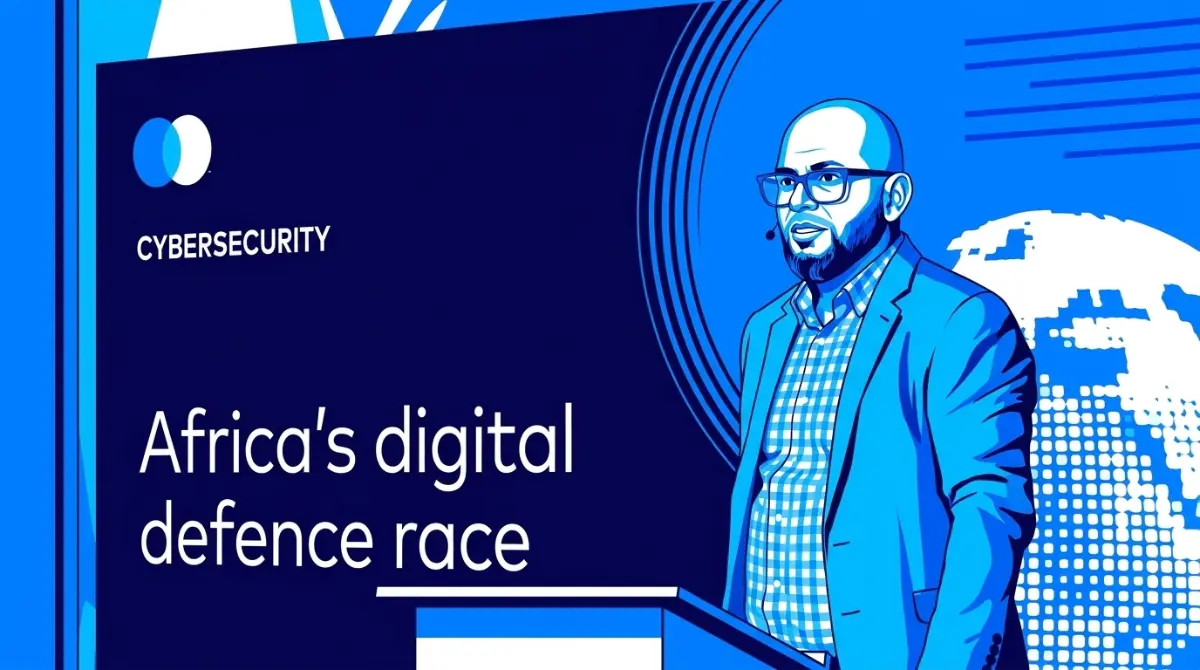


Africa Cyberattacks Jump 421% as 200,000 Jobs Go Unfilled
A new Mastercard whitepaper reveals African corporate networks suffered a 421% surge in cyberattacks, exposing a dangerous shortage of 200,000 trained security analysts as fast-growing mobile money hubs face advanced automated intrusion campaigns.
Inioluwa Ademidun | 12 Oct. 2026, 9:00 AM · 8 min read

Digital expansion across developing economies is running headlong into an aggressive wave of digital crime. Over the past five years, African economies bypassed legacy desktop computing, leaping straight into mobile money platforms, cloud-hosted microfinance applications, and instant peer-to-peer settlement networks. Millions of citizens opened digital bank accounts on cheap handheld devices, while retail merchants abandoned paper cash to accept digital payments. That rapid transformation created a massive attack surface that outpaced defensive preparation. On Monday, October 12, 2026, global payments network Mastercard published a comprehensive whitepaper detailing an alarming operational crisis across the continent. Corporate networks and financial institutions across Africa suffered an astounding 421% surge in cyberattacks over the preceding twelve months. At the same time, regional enterprises face an acute shortage of 200,000 certified cybersecurity professionals, leaving financial ledgers and public infrastructure exposed to hostile intrusions. We analyzed how digital financial networks manage growing operational strains in our report on machine tools amplifying cyber threats across African digital networks.
The numbers published in the Mastercard study show an unsustainable defensive imbalance. While financial technology platforms in Nairobi, Lagos, Cairo, and Johannesburg process billions of dollars in daily consumer trade, the teams protecting those transaction pipes are understaffed and overwhelmed. Automated intrusion tools, credential-stuffing scripts, and sophisticated ransomware syndicates are probing corporate firewalls around the clock. Chief risk officers report that their security operations centers receive tens of thousands of automated alerts daily, but lack the trained human analysts required to triage real breaches from background network noise. The systemic risk to regional banking infrastructure matches broader economic concerns we tracked when central banking authorities introduced strict payment concentration rules.
Mobile Money Networks as the Primary Target
To understand why cybercriminals are targeting African systems with such intensity, one must look at how capital moves across the region. Unlike Western nations where consumer payments rely on card rails backed by chargeback protections, African commerce is anchored in mobile wallets and direct bank integrations. When an attacker breaches a mobile financial portal or executes an unauthorized API call, funds leave the account instantly through irreversible settlement rails.
Criminal rings exploit this speed. Rather than mounting lengthy corporate espionage campaigns to steal intellectual property, syndicates focus on direct liquidity extraction. Attackers target merchant aggregators, micro-lending apps, and telecommunications money transfer engines, using automated SIM-swap scripts and social engineering rings to compromise account credentials. Once inside, funds are laundered across multiple digital wallets and converted into decentralized tokens within minutes, leaving corporate compliance officers with zero practical recourse. The rapid expansion of mobile payment infrastructure was detailed in our coverage of PalmPay targeting $100M to expand digital banking services.
The Human Capital Deficit and the Missing Defenders
The core vulnerability driving the 421% attack surge is not defective software code; it is an acute shortage of skilled human defenders. The Mastercard whitepaper calculates that African enterprises need at least 200,000 additional cybersecurity specialists immediately to achieve baseline defense standards across banking, telecommunications, and governmental operations.
This personnel deficit stems from structural educational gaps. Regional universities continue graduating thousands of computer science students trained in generic software programming, while dedicated cybersecurity degree programs, practical penetration laboratories, and cloud incident response courses remain rare. Young graduates lack hands-on experience configuring enterprise firewalls, analyzing memory dumps, or conducting reverse-engineering on polymorphic malware. Consequently, corporate hiring managers find themselves bidding for a tiny pool of senior talent, driving salaries out of reach for regional startups and municipal public agencies. The broader challenges of training skilled technical talent across developing markets were examined in our report detailing The Global Brain Drain to Western Technology Hubs
Compounding the local training deficit is an unrelenting talent migration. When an African software engineer or security analyst attains international certifications like CISSP, CEH, or AWS Security Specialty, they become prime recruitment targets for multinational corporations in North America, Europe, and the Middle East. Western technology firms and corporate banks, facing their own domestic hiring shortages, offer compensation packages denominated in hard currencies that local businesses cannot match. A talented security engineer in Lagos or Nairobi can earn quadruple their local salary by accepting remote contracts with European banks or securing work visas in London or Toronto. This persistent brain drain strips regional enterprises of their most capable defenders, leaving junior staff to guard complex national payment networks against global criminal syndicates. The economic implications of international talent competition were evaluated when visa regulations disrupted technical talent mobility across international corridors. While financial platforms absorb the majority of commercial attacks, the threat has spread into essential public utilities and healthcare networks. Over the past year, international ransomware groups began targeting municipal electricity boards, regional hospital records, and national port logistics systems across East and West Africa. These public agencies operate on tight municipal budgets, running legacy operating systems and unpatched network switches that have remained untouched for years. When a ransomware gang encrypts a hospital patient database or locks the billing system of a municipal power distributor, the consequences are immediate and dangerous. Municipal administrators, lacking off-site backups or incident response retainers, often face agonizing choices: pay extortion ransoms in cryptocurrency or watch public services grind to a complete halt. How infrastructure vulnerabilities disrupt urban economies was explored in our analysis of operational shocks threatening public electrical grids. Another major factor accelerating the attack rate is uncoordinated cloud adoption. Eager to reduce physical hardware spending and avoid local power outages, African banks and retail merchants migrated internal databases to international cloud providers like Amazon Web Services, Microsoft Azure, and Google Cloud. While major cloud providers maintain secure physical data centers, securing cloud configurations remains the legal responsibility of the corporate customer. Lacking experienced cloud architects, corporate IT teams routinely deploy storage buckets with public read permissions, leave administrative API keys exposed in public code repositories, and fail to implement multi-factor authentication on corporate email servers. Criminal scanners crawl the web constantly, detecting misconfigured cloud containers within seconds of deployment. An open storage bucket can leak millions of national identity numbers and financial records before an administrator even notices the error. Protecting corporate data against unauthorized access was examined in our report on the Revolut data breach involving fake administrative requests. Defending against cross-border digital crime requires international legal coordination, yet African regulatory frameworks remain fragmented across different regional economic blocs. While the African Union adopted the Malabo Convention on Cyber Security and Personal Data Protection, only a minority of member states have formally ratified and domesticated the treaty into binding national law. A criminal syndicate operating out of one jurisdiction can target banking customers in a neighboring country with near-total legal impunity. Extradition treaties for computer crimes are rare, national police departments lack digital forensics units, and judicial magistrates often lack the technical training required to evaluate digital server logs in criminal trials. This enforcement vacuum emboldens domestic hackers and invites international syndicates to use the continent as a staging ground for global campaigns. The necessity of standardized regulatory oversight was detailed when we covered African nations developing modern data protection regulations. The sudden 421% surge in incidents is directly tied to the commercialization of automated attack tools. In earlier decades, penetrating an enterprise firewall required advanced programming knowledge and manual network reconnaissance. Today, criminal forums sell automated exploitation kits for a few hundred dollars. These automated packages use machine learning models to generate convincing phishing messages in regional languages like Swahili, Hausa, Yoruba, and Amharic, mimicking the exact tone and visual branding of local commercial banks. The software rotates proxy addresses, tests stolen credentials against thousands of retail websites simultaneously, and alters malware signatures to evade basic antivirus detection. Low-skilled actors can launch large-scale intrusion campaigns from a mobile phone, overwhelming corporate security perimeters through sheer volume. The proliferation of automated intrusion software was analyzed in our review of machine tools lowering technical barriers for digital intrusions. Solving the cybersecurity crisis will require deliberate cooperation between international payment networks, sovereign governments, and regional technology ventures. Mastercard announced that it is funding cybersecurity academies across Kenya, Nigeria, and South Africa, partnering with local educational institutions to train and certify 50,000 junior security analysts over the next three years. At the same time, regional telecommunications giants like MTN, Safaricom, and Airtel are deploying specialized security operations centers to monitor domestic mobile traffic. These telecom operators are using automated behavioral telemetry to spot anomalous fund movements and block fraudulent SMS campaigns before they reach consumer handsets. Public-private partnerships that combine international threat intelligence with localized network visibility represent the most viable path to closing the defensive deficit. The expansion of regional telecom infrastructure was explored in our analysis of Airtel Africa committing $1.1B toward network expansion. The findings published in the Mastercard whitepaper deliver an undeniable warning to corporate boards and political leaders across Africa. The continent digital economic expansion cannot survive if the digital infrastructure carrying that commerce remains defenseless against international extortion rings. Building high-speed fiber backbones, launching 5G networks, and issuing digital banking licenses are hollow achievements if financial accounts are drained by automated scripts. African institutions must recognize that cybersecurity is not an optional IT expense, but a fundamental pillar of national sovereignty and economic survival. Filling the 200,000-job deficit and hardening corporate systems will determine whether the continent digital revolution generates lasting prosperity or becomes an open hunting ground for the modern criminal underworld. Read More on TechRobust:Ransomware Enters Municipal Utilities and Healthcare
Cloud Migrations Without Adequate Security Fences
Regulatory Fragmentation Across Regional Trade Blocs
The Rise of Automated Crime Tools and Script Kits
Building Sovereign Cyber Defenses and Training Pipelines
Securing the Digital Frontier

Inioluwa Ademidun
 LinkedIn
Inioluwa Ademidun
Expertise:African Tech Ecosystem, Early-Stage Startups, Emerging Market Dynamics, Venture Capital & Tech Reporting, Product Management
Award:TechRobust Contributor of the Year 2025
Inioluwa is a Senior Product Manager by day and an investigative technology reporter by night, bridging the gap between scalable software architecture and high-impact journalism. She delivers deep-dive analysis on venture-backed founders, regulatory shifts, and grassroots tech ecosystems across Africa and global emerging markets.