
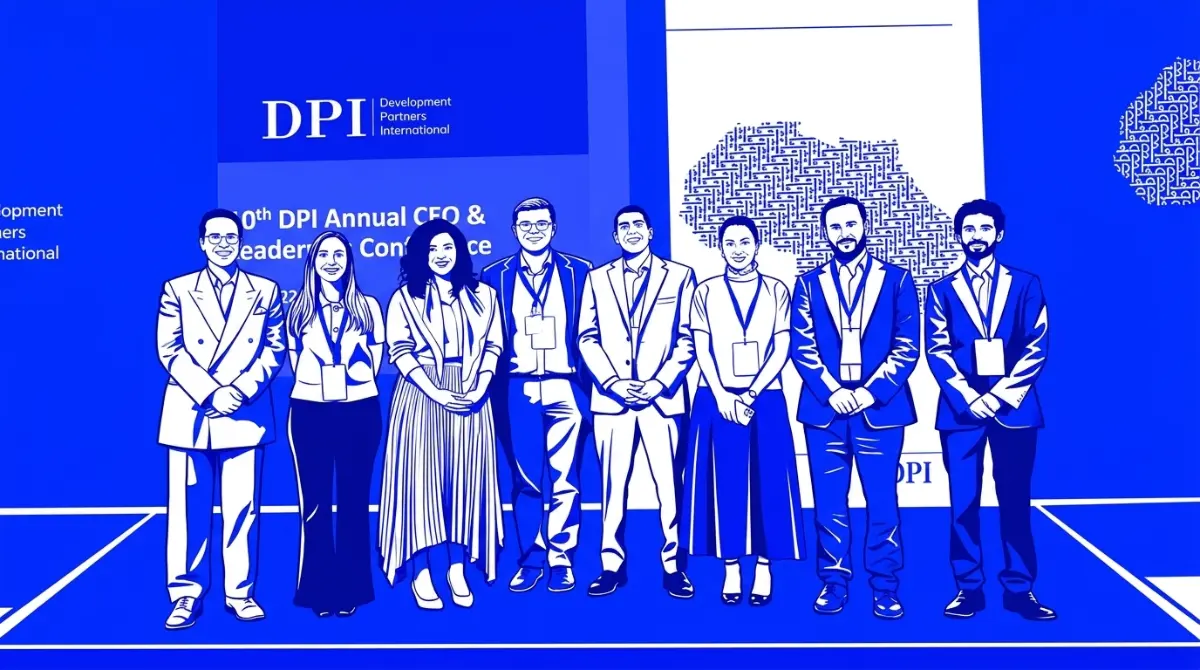


DPI Closes $112M Nclude Fund for African Startups
DPI Venture Capital completed the final close of its Nclude Fund at over $112M to finance financial technology and software founders across Egypt, the Middle East, and Francophone Africa, expanding investments from early seed rounds to Series C growth stages.
Inioluwa Ademidun | · 7 min read

Securing venture capital across North Africa has become an uphill battle as global funding pools pull back to domestic markets. Startup founders building payment tools in Cairo, supply chains in Alexandria, or medical software in Dakar frequently meet foreign investment committees that demand immediate dollar earnings while ignoring local inflation realities. Early-stage teams with functional code and paying users often spend months waiting for term sheets that never arrive. Private investment firm DPI Venture Capital altered that funding equation on Monday, November 2, 2026. The venture division of Development Partners International announced the final close of its Nclude Fund at over $112M. The vehicle is dedicated to backing financial technology, machine reasoning, and software platforms across Africa and the Middle East. The capital completion lands as institutional allocators reassess frontier markets, matching investment shifts we followed when African tech ventures reported quarterly funding figures.
The closing marks an important operational step for a fund that began under Egyptian domestic sponsorship. Set up in Cairo in 2022 with anchor support from state-owned banks, Nclude moved under DPI Venture Capital advisory direction in 2025 following a management overhaul. Managing Partner Ashley Lewis and General Partner Mohamed Aladdin have steered the capital pool toward high-volume commercial needs: expanding healthcare access, lowering business lending costs, and building digital savings tools for working households. The fund provides check sizes between $500,000 and $10M per company, spanning from early seed rounds up to Series C financings. While Egypt remains the primary geographic center, thirty percent of the capital is mandated for deployment outside Egyptian borders, targeting businesses that bridge North Africa with the Gulf Cooperation Council and sub-Saharan trade routes. The geographic focus aligns with expansion models we monitored when Ventures Platform closed an institutional venture fund.
The Fifteen-Company Portfolio and Regional Expansion
To evaluate what this final close means for regional founders, one must inspect where Nclude has already committed capital. The fund has deployed resources into fifteen portfolio ventures across Africa and the Middle East, focusing on software that solves practical distribution problems.
The portfolio includes established Egyptian technology names like digital payments provider Paymob, social savings platform Money Fellows, and real estate portal Nawy. Beyond Cairo, Nclude backed UAE business funding platform FlapKap, Senegalese healthcare network Kera, and financial automation developer Accord Partners. These selections prove that the fund targets businesses with real balance sheet utility: helping small merchants finance inventory purchases, digitizing community savings circles, and connecting clinics with pharmaceutical suppliers. By funding businesses that bridge Egypt and the Gulf, DPI Venture Capital helps local founders access hard-currency revenues in Dubai and Riyadh, protecting corporate balance sheets against domestic currency swings. The cross-border movement of business software was examined in our report on Egyptian proptech Nawy raising capital for regional expansion.
The North African Currency Shock and Equity Flight
The timing of the $112M final close arrives after two years of severe macroeconomic turbulence across the Nile Valley. The Egyptian pound underwent steep devaluations against the United States dollar, prompted by central bank reforms designed to clear foreign exchange backlogs and satisfy International Monetary Fund loan covenants.
Currency depreciation wiped out dollar-denominated returns for foreign venture funds that invested during earlier market runs. International investment partnerships that lacked local offices stopped writing checks in North Africa, retreating to mature Western hubs. Egyptian founders faced a harsh reset: local software revenues looked strong in domestic currency, but shrank when converted to foreign currency for overseas shareholders. DPI Venture Capital stepped into this capital void. By assembling a $112M pool backed by development finance institutions, global family offices, and regional banks, Nclude offers local founders multi-year runway in stable funds. The presence of institutional capital prevents viable businesses from collapsing during short-term currency adjustments. The financial discipline required to manage regional capital cycles reflects strategies we tracked when Grindstone Ventures debuted a dedicated fund for African startups.
Comparing Emerging Market Venture Capital Funds
| Investment Vehicle | Final Fund Size | Target Check Range | Stage Focus | Geographic Mandate |
|---|---|---|---|---|
| Nclude Fund (DPI VC) | $112M+ | $500,000 to $10M | Seed through Series C | Egypt (70%), Middle East & Africa (30%) |
| Sawari Ventures Fund II | $70M | $1M to $5M | Series A & Series B | Egypt, Tunisia, Morocco |
| Ventures Platform Fund II | $84M | $250,000 to $3M | Pre-seed to Series A | Pan-African (Nigeria, Kenya, Francophone) |
| Algebra Ventures Fund II | $100M | $500,000 to $4M | Early-stage tech | Egypt and East Africa |
| Endeavor Catalyst Fund V | $320M | Up to $10M co-investment | Series A through Series C | Global Emerging Markets |
The comparative data illustrates how Nclude occupies an open space in the market. While most regional venture vehicles stop writing checks past $4M, Nclude can lead or anchor larger $10M growth rounds, keeping promising companies from hitting the mid-stage funding wall. The ability to support companies up to Series C ensures that local businesses do not fail simply because foreign growth funds have paused overseas deployment. Startup financing mechanics were detailed in our analysis of Endeavor Catalyst closing capital for global founders.
Bridging the Seed-to-Growth Capital Desert
The primary structural obstacle facing African technology ecosystems is the missing middle in growth capital. Pre-seed accelerators and angel syndicates are active across Cairo, Lagos, and Nairobi, providing $50,000 to $200,000 to launch basic software prototypes.
Once a venture proves product demand and seeks $5M to expand distribution or build physical warehouses, capital becomes scarce. Foreign growth funds that once backed Series B rounds have pulled back, while commercial banks demand physical real estate collateral that software firms do not possess. Nclude structure addresses this exact deficit. By offering follow-on capital up to $10M, the fund helps proven companies scale distribution, recruit senior engineers, and build regional trade partnerships. Mohamed Aladdin noted that portfolio companies need patience and long-term balance sheet backing to turn early traction into enduring market share. The challenge of scaling mid-stage startups was analyzed in our review of African funding totals concealing the missing middle for startups.
The Strategic Value of the Cairo to Gulf Corridor
A central economic pillar of Nclude investment thesis is the commercial corridor connecting North Africa with the Gulf Cooperation Council. Egypt offers a massive internal market of over 110 million citizens, alongside a deep pool of skilled software engineers and product designers who work at competitive compensation rates.
The Gulf Cooperation Council, led by Saudi Arabia and the United Arab Emirates, possesses deep capital reserves, high consumer spending power, and government initiatives modernizing digital commerce. A software firm that tests its platform in Egypt, perfects its operational mechanics, and expands sales into Riyadh or Abu Dhabi builds a defensible business model. The company pays engineering expenses in Egyptian pounds while collecting software subscription fees in Saudi riyals or UAE dirhams. Nclude actively assists portfolio companies in navigating this corridor, helping founders secure business licenses in the Gulf and hire local sales directors. Corporate software expansion models were explored in our analysis of Egypt Bekia digitizing informal trade systems.
The Road Ahead for North African Technology Finance
The successful $112M final close of the Nclude Fund proves that serious institutional capital still recognizes the long-term potential of emerging markets. Short-term currency devaluations and global inflation have tested regional startups, but they have also cleared out weak business models, leaving behind disciplined operators who build sustainable services.
By providing flexible capital from seed to Series C, Ashley Lewis, Mohamed Aladdin, and the DPI team are supplying the financial backing needed to build enduring regional companies. The road ahead will require disciplined execution: managing currency risks, helping founders expand internationally, and ensuring that software tools deliver measurable value to everyday citizens. As Nclude begins deploying its final capital reserves, the fund stands as proof that the future of African commerce will be built by investors who remain committed through every phase of the economic cycle.
Read More on TechRobust:

Inioluwa Ademidun
 LinkedIn
Inioluwa Ademidun
Expertise:African Tech Ecosystem, Early-Stage Startups, Emerging Market Dynamics, Venture Capital & Tech Reporting, Product Management
Award:TechRobust Contributor of the Year 2025
Inioluwa is a Senior Product Manager by day and an investigative technology reporter by night, bridging the gap between scalable software architecture and high-impact journalism. She delivers deep-dive analysis on venture-backed founders, regulatory shifts, and grassroots tech ecosystems across Africa and global emerging markets.