
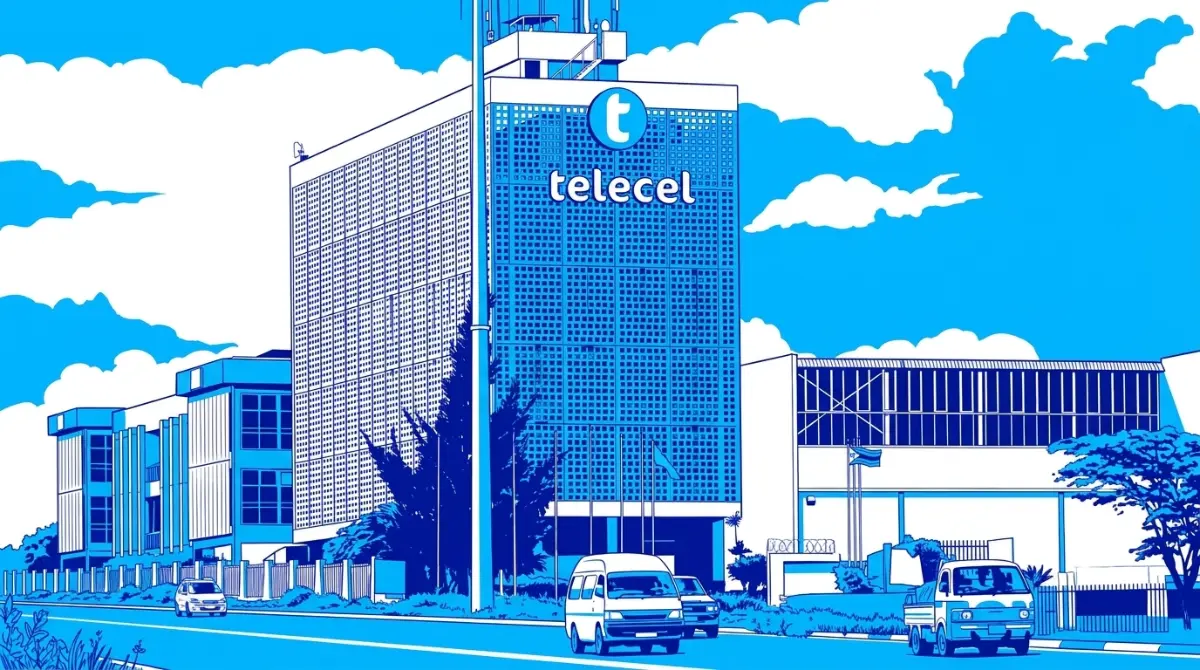


Orange Eyes Telecel Ghana Stake to Expand African Reach
French telecommunications group Orange opened discussions to acquire a controlling stake in Telecel Ghana, seeking an entry into the Ghanaian market to challenge MTN dominance across Anglophone West Africa.
Inioluwa Ademidun | 11 Oct. 2026, 10:27 AM · 8 min read

Telecommunications consolidation across West Africa is gathering speed as international carriers seek regional scale. Running cellular networks in emerging economies demands constant capital spending on fiber backbones, diesel generators, tower leases, and spectrum licenses. When mid-sized operators fail to achieve profitability against dominant incumbents, multinational conglomerates step in to consolidate market shares. French telecommunications giant Orange has initiated preliminary discussions to purchase a majority stake in Telecel Ghana. The target network, previously known as Vodafone Ghana before its acquisition by Africa-focused telecommunications firm Telecel Group in early 2023, represents the second-largest mobile operator in the country. The acquisition would grant Orange an immediate operational bridge into an Anglophone market where it has historically lacked a direct mobile footprint. We examined how regional telecommunications networks restructure their operations in our report on Airtel Africa directing $1.1B toward network expansion.
Challenging MTN Market Supremacy in Accra
The primary strategic motive behind the proposed deal centers on market concentration. In Ghana, South African cellular giant MTN commands an overwhelming lead in voice subscribers, data traffic, and mobile money transactions. Regulatory authorities in Accra officially designated MTN as a Significant Market Power years ago, implementing asymmetric interconnect rates and floor pricing rules to prevent the total collapse of smaller competitors. Despite those regulatory interventions, competing carriers struggled to keep pace with the massive infrastructure spending deployed by the market leader.
Telecel Group took over the business from Vodafone with promises to turn the network around through operational agility and localized management. While the brand rebranding refreshed consumer perception and stabilized customer defections, closing the network gap with MTN requires billions of dollars in fresh balance sheet capital. Telecel Ghana holds approximately twenty percent of the domestic market, serving millions of mobile connections across urban centers and secondary towns. For Orange, buying into Telecel offers an instant consumer base without the headache of applying for greenfield licenses or building thousands of base stations from scratch. The competitive battle across African cellular sectors matches trends we analyzed in our coverage of MTN planning massive mobile money expansion across West Africa.
Connecting Francophone Strongholds Across Regional Borders
To grasp why Ghana represents an attractive target for Orange, one must examine the regional geography of the operator. The Paris-headquartered group operates dominant telecommunications subsidiaries across neighboring Ivory Coast, Burkina Faso, Mali, and Senegal. Those operations form a contiguous Francophone territory where Orange controls international fiber routes, mobile financial rails, and terrestrial transport pipes.
Ghana sits directly in the center of that regional footprint as an English-speaking commercial hub. Transport trucks, merchant traders, and corporate supply lines move between Abidjan, Accra, Lomé, and Cotonou daily. Operating a cellular network inside Ghana would allow Orange to offer cross-border roaming agreements, corporate data packages, and seamless digital payments across both French and English speaking markets. Integrating Ghana into its broader West African transmission network would reduce transit fees paid to third-party subsea cable consortia while keeping internet traffic inside proprietary optical rings. How regional fiber connections alter cross-border trade was explored in our analysis of telecommunications providers expanding rural connectivity and edge computing.
Mobile Money Competition and Financial Software Pipes
Beyond voice calls and broadband megabytes, the true financial battleground in Ghana is mobile financial services. Mobile money platforms process billions of dollars in commercial trade annually, serving as the default payment rail for retail merchants, utility bills, and personal remittances. MTN Mobile Money dominates the national payment landscape, processing the vast majority of electronic peer-to-peer flows in the country.
Telecel Cash has struggled to match that scale, held back by a smaller retail agent network and limited cross-border remittance integrations. Orange operates Orange Money, one of the most successful mobile financial platforms on the African continent, serving tens of millions of active digital wallets across West and Central Africa. If Orange takes operational control of Telecel Ghana, it will likely merge the local mobile wallet into its broader international remittance pipeline. A Ghanaian trader buying textiles in Ivory Coast or agricultural goods in Burkina Faso could settle payments instantly through a shared Orange Money wallet, bypassing expensive commercial banking fees and volatile currency desks. The race to capture digital payments across the region was detailed when we covered PalmPay targeting $100M to expand digital banking services.
Navigating Ghanaian State Ownership and Regulatory Approvals
Closing a majority stake purchase in Telecel Ghana will require navigating delicate political dynamics in Accra. The government of Ghana retains a thirty percent minority equity holding in the operating company through the state-owned postal and telecommunications administration. Any ownership transfer requires explicit regulatory clearance from the National Communications Authority and formal sign-off from the Ministry of Communications and Digitalisation.
When Vodafone initially attempted to offload the asset to Telecel Group, regulatory authorities held up the transaction for months, questioning whether the incoming buyer possessed the technical capacity and financial reserves needed to support national broadband goals. Orange brings unquestioned corporate credit ratings, global procurement scale, and long-standing operating experience to the bargaining table. However, government officials will demand binding capital expenditure pledges to ensure the buyer does not extract dividends while neglecting network upgrades in underserved rural districts. How regulatory bodies manage ownership transfers was highlighted when we reported on financial regulators monitoring market concentration across regional economies.
The 5G Spectrum Race and Broadband Modernization
The timing of the discussions coincides with Ghana transition to high-speed broadband and fifth-generation cellular services. Rather than auctioning expensive private 5G spectrum licenses to individual operators, Ghanaian authorities backed a shared neutral national wholesale network, the Next-Gen InfraCo consortium. This shared infrastructure model was designed to lower capital costs by letting competing operators deliver 5G data over a unified physical radio access network.
While the shared wholesale model lowers upfront tower spending, mobile operators still need reliable fiber backhaul to link municipal towers to core data centers. If Orange enters the Ghanaian market, it will inject fresh foreign exchange liquidity to accelerate fiber deployments across major metropolitan areas like Kumasi, Takoradi, and Tamale. Upgrading the underlying transmission network is necessary to support cloud services, enterprise connections, and high-resolution video streaming for the country young, mobile-first population. The economic necessity of modernized telecommunications infrastructure matches patterns we documented when regional 5G networks expanded across African urban centers.
Macroeconomic Headwinds and Currency Devaluation
Investing in Ghana requires managing persistent macroeconomic friction. Over recent years, the Ghanaian cedi has experienced substantial volatility against the US dollar and the euro, complicating financial planning for international corporations. Telecommunications operators purchase radio antennas, software licenses, and fiber cables in hard currencies, while billing local consumers in local cedis.
When a domestic currency loses value, corporate profits shrink when translated back to parent-company financial statements. Orange executive leadership must structure the transaction to insulate the business from sudden foreign exchange shocks. This means renegotiating tower lease contracts with infrastructure providers like Helios Towers and American Tower Corporation to reduce dollar-denominated commitments. Operators that survive regional currency swings rely on local revenue diversification, a reality we analyzed in our review of Airtel Africa evaluating large domestic consumer markets.
The Broader Wave of African Telecom Mergers
The potential sale of Telecel Ghana reflects a continent-wide trend toward consolidation. Small and mid-tier telecommunications companies are finding it difficult to operate profitably without massive customer bases. The days when a country could comfortably support five or six competing mobile operators are over. Rising electricity expenses, expensive spectrum auctions, and escalating software costs have driven marginal operators out of business.
Across Kenya, Nigeria, South Africa, and Uganda, two or three dominant carriers now control over ninety percent of total telecommunications revenue. For international groups like Orange, entering a market requires securing a top-two position or accepting ongoing losses. If Orange completes the acquisition of Telecel Ghana, it will create a formidable counterweight to MTN, establishing a balanced two-horse race that could spark intense price competition for mobile data and consumer services. How sovereign telecommunications networks evolve was explored in our analysis of mobile subscription growth across East African markets.
The Long Term Outlook for Ghanaian Connectivity
The ongoing negotiations between Orange and Telecel indicate that global telecommunications capital still views West African digital infrastructure as a long-term growth opportunity. While macroeconomic shocks and regulatory hurdles present immediate operating risks, the underlying demand for high-speed internet, digital banking, and cloud connectivity continues expanding at double-digit rates.
If the transaction clears regulatory checkpoints in Accra, Ghanaian consumers could benefit from accelerated network upgrades, reliable 5G connectivity, and lower cross-border transfer fees. For Orange, the deal would close a long-standing hole in its West African network map, cementing its status as one of the premier telecommunications powers on the African continent. The corporate chess match for control of Africa digital future is moving quickly, and the outcome in Accra will shape the regional connectivity landscape for the next decade.
Read More on TechRobust:
Inioluwa Ademidun
 LinkedIn
Inioluwa Ademidun
Expertise:African Tech Ecosystem, Early-Stage Startups, Emerging Market Dynamics, Venture Capital & Tech Reporting, Product Management
Award:TechRobust Contributor of the Year 2025
Inioluwa is a Senior Product Manager by day and an investigative technology reporter by night, bridging the gap between scalable software architecture and high-impact journalism. She delivers deep-dive analysis on venture-backed founders, regulatory shifts, and grassroots tech ecosystems across Africa and global emerging markets.