
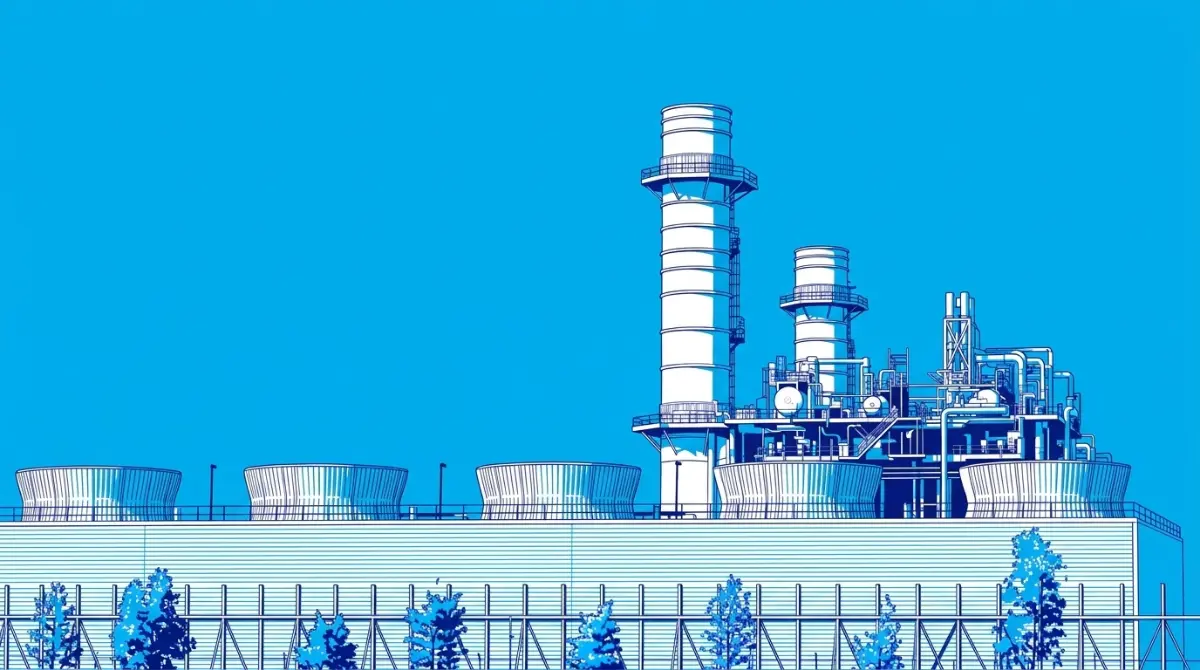


Crusoe Cancels $1.25B Boom Turbine Deal For AI Data Centers
Denver-based infrastructure operator Crusoe has abandoned its $1.25B contract to purchase stationary natural gas turbines from Boom Supersonic for its upcoming Texas data center campus.
Umar Abubakar | 26 Sept. 2026 · 7 min read

A $1.25B infrastructure contract just collapsed, completely altering how one of the largest server campuses in Texas will generate its electricity. Crusoe, a Denver-based computing provider, walked away from its agreement to purchase 29 natural gas turbines from Boom Supersonic. The canceled order was supposed to secure reliable off-grid power for Crusoe's upcoming Abilene facility, a massive installation built expressly to support OpenAI workloads. The abrupt cancellation exposes the unstable reality of sourcing electricity for massive server deployments, proving that developers are struggling to lock down viable energy generation.
The original arrangement looked like a clever industrial crossover. Boom Supersonic is known mostly for attempting to revive supersonic passenger travel with its Overture jet. Finding aircraft development incredibly expensive, the aerospace company decided to spin off its engine technology into a stationary power generation business. The engineering team adapted the Symphony aircraft engine into a land-based unit called the Superpower turbine, with each machine capable of generating 42 megawatts of electricity. Crusoe signed on as the launch partner, intending to use the modified jet engines to power its server racks independently of the strained Texas electrical grid. The first units were supposed to ship in 2027.
Boom chief executive Blake Scholl confirmed the partnership dissolved this week. He stated that the heavy natural gas turbines simply fell out of Crusoe's near-term construction timeline. Crusoe spokesperson Andrew Schmitt corroborated the cancellation, noting the data center builder wants total flexibility in selecting energy sources for individual locations. The builder is currently evaluating a mixed power approach combining regional wind generation, solar arrays, heavy battery storage systems, and standard municipal grid connections rather than relying entirely on localized natural gas combustion.
The Financial Math of Supersonic Power
This broken contract creates a severe financial headwind for Boom Supersonic. The aviation company launched its stationary power division to generate immediate cash flow. Developing a supersonic passenger jet requires billions in capital, and the corporate board planned to use profits from selling data center turbines to fund its aircraft engineering. Boom collected $300M in private funding last year explicitly to commercialize this power generation division. Losing a $1.25B anchor customer forces the aerospace firm to find replacement buyers quickly. Scholl maintained an optimistic stance, claiming his team still expects to deliver 250 megawatts of turbine capacity to alternate buyers next year and reach one gigawatt of deployed power by 2028.
Selling modified jet engines as stationary power plants is a historically proven concept. General Electric and Rolls-Royce have sold aeroderivative gas turbines to industrial clients for decades. These machines spin up quickly and provide excellent baseload power when municipal grids fail. Boom attempted to replicate this business model to generate cash while its engineers finish designing the Overture supersonic jet. A single Superpower unit costs tens of millions of dollars. By securing a $1.25B order, the company proved to its private investors that it had a viable alternative income stream. Losing that order completely changes the financial math for the aerospace manufacturer.
The aerospace firm must now convince other facility developers that modified jet engines are a practical way to run a server hall. This sales pitch is difficult because running gas turbines requires massive onsite fuel storage and intricate exhaust management. Operators usually prefer standard utility connections, turning to private generators only when municipal grids deny their connection requests. Boom is betting that regional grid delays will force more developers to buy private turbines just to get their facilities operational.
We have tracked the escalating desperation for data center electricity for months. Finding guaranteed power limits digital expansion more than buying the actual silicon processors. This physical limitation became perfectly clear when nuclear power faces the ultimate test for AI data centers. Facility developers are experimenting with everything from geothermal wells to modified jet engines to keep their servers running, but untested power setups often fail during the final planning stages.
Crusoe Shifts Its Energy Strategy
Crusoe's decision to drop the natural gas turbines reflects its evolving corporate identity. The company launched in 2018 with a highly distinct environmental pitch: it would build mobile bitcoin mining units next to remote oil fields to consume waste natural gas that producers would otherwise burn off into the atmosphere. Capturing flared gas made perfect sense for portable crypto mining containers. However, the company has since transitioned into a heavy infrastructure builder, managing multi-billion dollar campuses for artificial intelligence clients.
The Abilene campus represents a massive financial undertaking. Crusoe structured a multi-billion dollar joint venture with private equity firm Blue Owl Capital to finance the construction. The site is designed to pull roughly 200 megawatts of electricity to run tens of thousands of advanced graphics processors. Microsoft and OpenAI are the anchor tenants leasing the capacity. Providing uninterrupted electricity to these corporate clients is an absolute necessity. If a power failure knocks the servers offline during a massive model training run, the financial damages would be catastrophic. The cancellation of the Boom contract means Crusoe must rapidly secure replacement power agreements to keep the construction timeline intact.
A permanent facility in Abilene, Texas requires a completely different power architecture than a temporary oilfield container. Running 29 industrial gas turbines continuously next to a server farm creates intense environmental friction. The exhaust alone requires intricate filtration, and the noise generated by modified jet engines creates immediate zoning headaches with local municipalities. Relying heavily on fossil fuel combustion also conflicts with the public carbon reduction targets mandated by major software clients like OpenAI and Microsoft. The shift toward renewable sources backed by utility-scale batteries allows Crusoe to present a cleaner operational footprint.
This transition away from localized combustion matches wider regulatory scrutiny hitting the compute sector. We reported on this exact pressure recently when the White House cleared data centers pollute local air, highlighting federal warnings about diesel and gas generators clustered around server halls. Communities push back hard when developers attempt to build private fossil fuel power plants disguised as technology centers. Dropping the turbine deal helps Crusoe avoid a protracted fight with local environmental regulators in Texas.
The Wider Infrastructure Squeeze
The collapse of this distinct deal illustrates a wider bottleneck across the technology industry. Every major compute operator is racing to secure gigawatts of electricity. But buying generators is not enough; the equipment must pass local zoning boards, secure environmental permits, and integrate safely into existing liquid cooling systems. Crusoe likely realized that installing aviation-derived turbines required specialized maintenance and presented distinct regulatory hurdles that standard grid connections or established solar contracts avoid.
This power struggle is causing severe financial friction across the entire hardware supply chain. The sheer cost of securing electricity and cooling systems is delaying massive deployments, a reality exposed when Oracle delays $1.65B data center payments power fight. Companies sign massive contracts in a panic, only to realize later that the physical execution on the ground is too complicated or politically unpopular to complete.
For Boom Supersonic, the task is now proving its stationary power business can survive without its largest client. The aerospace firm must find buyers who are desperate enough for electricity that they are willing to overlook the logistical hurdles of operating massive gas turbines. For Crusoe, walking away from a $1.25B commitment proves that the company will not lock itself into a rigid power model if cleaner, more flexible options emerge.
The race to power the upcoming wave of computing continues, but this broken agreement serves as a strict warning to investors. Not every experimental energy pitch survives contact with reality. When a data center operator looks at the actual cost of installing, permitting, and fueling 29 modified jet engines, the standard electrical grid suddenly looks far more attractive. The infrastructure builders who succeed will be those who secure reliable, boring municipal power, rather than those who try to reinvent electrical generation from scratch.
Read More on TechRobust:

Umar Abubakar
 LinkedIn
Umar Abubakar
Expertise:Editorial Leadership, Product Design (UI/UX), Digital Media Strategy, Technology Systems, Product Architecture
Award:TechRobust Visionary Leader of the Year 2025
Umar serves as Editor-In-Chief and CEO of TechRobust, combining editorial vision with senior product design expertise to shape how modern technology stories are built, packaged, and told. Overseeing all editorial verticals, he directs coverage across global and regional tech landscapes while applying deep design thinking to publication strategy and reader experience.