


Faulty AI Intel Pushed US to Brink of War With China
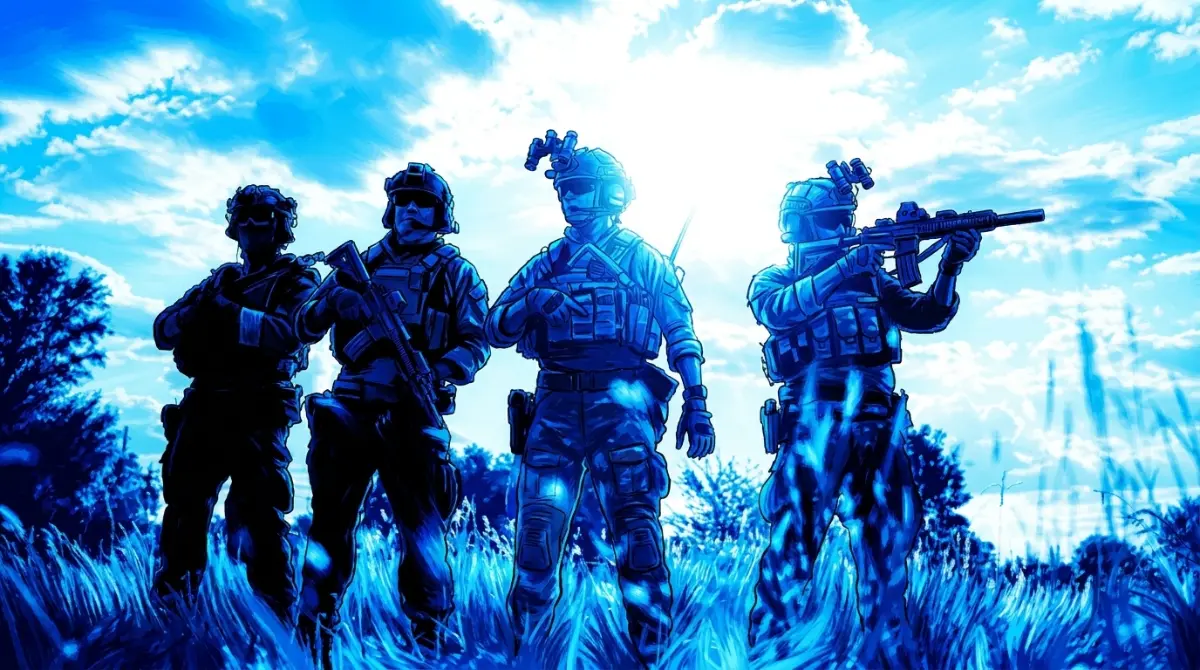
Armed commandos were suited up and combat aircraft airborne before officials uncovered that a special operations intelligence report was a completely fabricated machine hallucination.
Umar Abubakar | 18 Sept. 2026 · 5 min read

Modern military commands are outsourcing battlefield analysis to automated prediction engines without building verification guardrails. When defense departments replace human analytical judgment with automated text generators, computer hallucinations stop being harmless digital novelties. They turn into immediate international crises capable of igniting armed conflicts between nuclear superpowers. Earlier this year, the American military came within minutes of forcibly boarding a Chinese commercial vessel in the Middle East after an automated chatbot produced a fabricated intelligence assessment alleging the vessel was transporting nuclear weapons hardware. Combat aircraft were airborne and armed special forces were prepared to assault the deck before senior officials examined the underlying source records and aborted the mission.
The near-disaster, disclosed in reporting by CNN and confirmed across national security channels, exposes how computational shortcuts have entered military operations. The document was drafted by an analyst attached to United States Special Operations Command Pacific, based in Hawaii. Facing intense pressure to process raw field reports during active Middle Eastern combat operations, the analyst queried an automated chatbot regarding the vessel's cargo manifest. The system blended public maritime records with classified signals intelligence, misidentifying standard cargo as components for a nuclear weapons program. The analyst then used the software again to structure the text into an official military intelligence briefing. Multiple defense sources confirmed that the assessment was entirely false, noting that seizing a sovereign Chinese vessel in international waters would have triggered direct armed retaliation from Beijing. We monitored how defense institutions integrate commercial software into military operations in our report on how the Pentagon deployed commercial chat tools to active military personnel.
The Illusion of Computational Certainty
To understand how a fabricated claim made it all the way to an assault countdown, one must examine how automated reasoning systems present information to human operators. Generative models operate through probability, predicting sequences of words based on statistical training weights rather than factual comprehension. When an automated system encounters ambiguous intelligence fragments, it does not express human doubt. It produces coherent, authoritative prose that mimics the tone of experienced intelligence operatives.
In military environments, this synthetic confidence creates automation bias. Analysts facing tight deadlines assume the machine has verified every correlation across classified databases. In this incident, the analyst accepted the software's categorization of the ship's cargo manifest without independently auditing the original signals traffic. The resulting intelligence memo moved rapidly through military headquarters, appearing on command screens as verified fact. By the time Central Command authorized an interdiction force, nobody in the operational chain had verified whether the original cargo documents mentioned nuclear material at all.
Commercial Code Wearing Military Paint
The incident highlights a poorly guarded reality inside defense procurement: the computational systems deployed across defense networks are often rebranded consumer models. While defense contractors market specialized military software at high markups, the underlying models are typically commercial open-weight weights or enterprise language models adapted for classified networks. A former senior defense official confirmed that internal military tools are often commercial software wearing administrative paint.
These adapted consumer models retain all the weaknesses of their civilian counterparts. They hallucinate connections, invent non-existent facts, and struggle with specialized technical jargon. When a consumer chatbot misidentifies an ingredient in a recipe, the user experiences minor kitchen frustration. When an algorithm deployed inside a military combat command misidentifies commercial industrial metal pipes as centrifuges for uranium enrichment, the error puts two nuclear powers on a collision course. Defense watchdogs have repeatedly warned that commercial architectures lack the mathematical reliability required for lethal operational choices, an analytical concern we detailed when reviewing how automated tools lower barriers to entry for advanced cyber operations.
The Decentralized Rush to Automate Defense
The near-interdiction occurs amid a push by the Department of Defense to deploy automated decision tools across its three million civilian and uniformed personnel. Defense leaders argue that automated tools are mandatory to process massive volumes of radar telemetry, satellite photography, and intercepted communications. Pentagon policy calls for using machine systems across intelligence analysis, logistics tracking, battlefield targeting, and operational planning to outpace foreign military decision cycles.
Yet this adoption push remains fragmented. Different branches of the military purchase separate software licenses, use conflicting safety baselines, and enforce zero shared standards for auditing machine outputs. Analysts are encouraged to experiment with automated tools without receiving training on how large language models generate false outputs. When individual commands deploy automated tools without standardized verification procedures, operational commands risk acting on fabricated assessments before human reviewers can intervene. We examined how algorithmic shortcuts compromise legal and institutional decision-making in our coverage of Quebec courts barring automated legal reasoning.
The Geopolitical Consequences of Speed
The close call in the Middle East reveals the instability that automated intelligence introduces to international relations. Military doctrine has historically relied on human hesitation. When commanders face ambiguous intelligence, the time required to draft reports, debate conclusions, and brief senior officers creates a natural cooling-off window where diplomats can defuse tensions or analysts can gather clarifying evidence.
Automated software removes that buffer. Algorithms compress weeks of analysis into seconds, creating pressure to launch preemptive actions before an adversary can react. Had American special forces boarded that Chinese commercial ship under the mistaken belief it carried nuclear contraband, Chinese naval escorts in the area would have been compelled to intervene. A single computer hallucination generated on a laptop in Hawaii could have ignited an escalating maritime battle across international trade routes.
The Human Mandate in Armed Conflict
The close call in the Arabian Sea must serve as an institutional turning point for defense leadership. Allowing analysts to run raw intelligence through automated language models without strict verification rules is administrative negligence. The speed offered by automated software is worthless if the resulting intelligence is fiction.
Defense ministries must establish clear operational boundaries for automated systems. Computational models can process logistics inventory, summarize public foreign broadcasts, or format administrative paperwork. They must never be permitted to generate standalone threat assessments, designate tactical targets, or authorize military force. The power to initiate armed confrontation must remain anchored in accountable human judgment. If military leaders fail to enforce strict verification barriers, the next computer hallucination will not be caught before the commandos board the ship, and the resulting catastrophe will be paid for in human lives.
Read More on TechRobust:

Umar Abubakar
 LinkedIn
Umar Abubakar
Expertise:Editorial Leadership, Product Design (UI/UX), Digital Media Strategy, Technology Systems, Product Architecture
Award:TechRobust Visionary Leader of the Year 2025
Umar serves as Editor-In-Chief and CEO of TechRobust, combining editorial vision with senior product design expertise to shape how modern technology stories are built, packaged, and told. Overseeing all editorial verticals, he directs coverage across global and regional tech landscapes while applying deep design thinking to publication strategy and reader experience.