


Google Cloud Launches Gemini Agent as Universal Work Tool
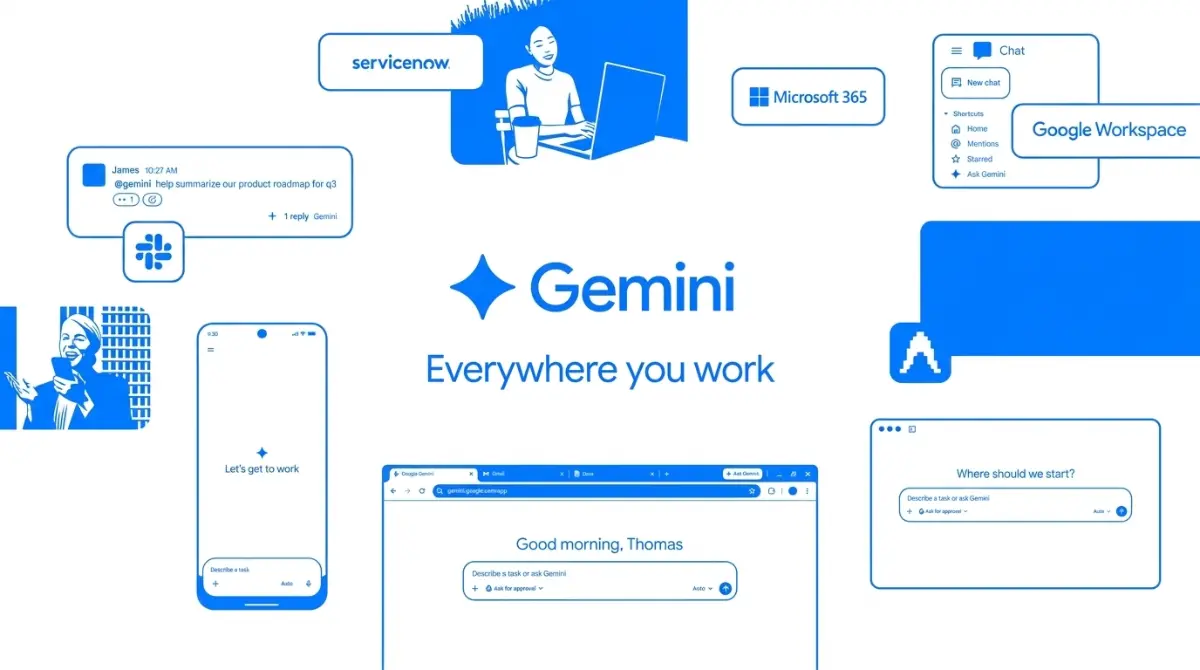
Google Cloud launched the Gemini agent at Gemini at Work, uniting chat, code, and media tasks into a single work system with dedicated coworker identities across Workspace and competitor suites like Microsoft 365.
Oladipupo Ajayi | 11 Oct. 2026, 12:51 PM · 7 min read

Enterprise software users are drowning in isolated application tabs, separate chat windows, and fragmented corporate logins. For four years, office workers clicked through disconnected tools: one chat prompt to summarize an email chain, a separate coding plugin to write database queries, and a third web subscription to draft marketing presentations. Software vendors charged separate fees for each tool, forcing company technology teams to manage dozens of overlapping vendor contracts. On Thursday, October 8, 2026, Google Cloud chief executive Thomas Kurian confronted that software fragmentation during the Gemini at Work presentation. Google introduced the Gemini agent, presenting it as a universal system for enterprise labor. Operating behind a single prompt console and one application interface, the system handles open research, knowledge management, media creation, and automated coding. The platform delegates operational outcomes rather than mechanical steps. The release follows aggressive cloud and model deployments across enterprise channels, an operational shift we tracked when Google DeepMind launched post-training model updates.
The strategic foundation of the launch centers on replacing disconnected software assistants with a single unified operating surface. Rather than confining its capabilities to Google native software, the Gemini agent operates across web browsers, mobile operating systems, desktop environments, and terminal command lines. It connects directly into Google Workspace while reaching into competitor environments, including Microsoft 365, Slack, Atlassian Confluence, Salesforce, Jira, and ServiceNow. Enterprise data teams can connect the agent straight into SQL engines like BigQuery, Snowflake, Databricks, and PostgreSQL. Kurian outlined six engineering pillars: a unified interface, access from any device, cloud execution, multi-agent coordination, contextual memory, and model choice. The agent is available in private preview for commercial Workspace accounts on Business and Enterprise tiers. How enterprise platforms build automated systems matches developments we documented when Microsoft unveiled unified business software suites.
The Arrival of Coworker Agents With Real Corporate Accounts
The structural leap in the Gemini agent is the introduction of coworker agents. Historically, digital assistants acted as passive mirrors attached to individual worker logins. If a contractor left the company or logged off for vacation, the assistant disappeared. Coworker agents hold persistent corporate standing, functioning as dedicated digital employees on team rosters.
When an IT administrator configures a coworker agent, the system provisions an actual corporate account, such as finance-analyst@agents.company.com. The agent receives its own email inbox, calendar schedule, Drive folder, and internal directory listing. Human colleagues can invite the agent to project meetings, assign tasks in Google Chat, or mention it in shared documents. The agent works inside email threads, text files, and calendar invitations without requiring human handoffs. Coworker agents also create temporary subagents to execute parallel batch tasks, like auditing vendor contracts while assembling a financial summary. The emergence of persistent digital coworkers mirrors workforce shifts we analyzed when corporate technology deployments freed thousands of administrative work hours.
Connecting Across Microsoft 365 and Third-Party Silos
A surprising element of Google strategy is its willingness to operate inside Microsoft corporate software. For decades, Google and Microsoft fought an aggressive zero-sum turf war over corporate software seats, with each vendor attempting to lock enterprise customers inside closed proprietary walls.
By building native connectors for Microsoft Teams, Outlook, OneDrive, and SharePoint Online, Google is acknowledging that large enterprises run mixed software fleets. A company might run its spreadsheets on Microsoft Office while hosting its analytics databases on Google BigQuery. Instead of forcing clients to choose between Google Workspace and Microsoft Copilot, the Gemini agent runs inside Microsoft 365 as an execution layer. The agent can pull an unread message from Microsoft Teams, query a Databricks database, draft a slide deck inside Google Slides, and email the finished file to a client via Outlook. Operating across corporate software walls gives Google an entry into Microsoft-dominated corporate accounts. The commercial rivalries shaping platform software were examined in our review of enterprise shifts toward autonomous software assistants.
Model Routing Across Gemini and Anthropic Claude
Google separated the agent interface from the underlying neural engine, acknowledging that no single model excels at every task. The platform introduces smart model routing, letting the system triage incoming instructions across multiple model tiers depending on operational demands.
Simple search queries and data sorting route to lightweight Gemini Flash models to minimize costs. Complex software programming, multi-stage reasoning, and legal text auditing route to flagship Gemini models or Anthropic Claude models. Anthropic Claude 5.5 is supported natively inside the platform, enabling enterprise teams to use Claude coding strengths within Google cloud security framework. The system monitors compute costs, allowing project managers to set monthly budgets in the Cloud Billing Console. If an agent hits its monthly spending limit, it pauses until an administrator approves an increase. Managing model costs across enterprise pipelines matches trends we evaluated in our report on Anthropic reducing API token costs for corporate workloads.
Memory Architecture Across Tasks and Devices
A major technical hurdle in enterprise automation is memory retention. Standard chat interfaces forget prior instructions once a user closes a browser window, forcing workers to re-type instructions and re-upload background briefs daily.
The Gemini agent solves this with four distinct memory layers: session, semantic, procedural, and episodic. Session memory maintains context during an active assignment. Semantic memory stores company facts, product catalogs, and vendor rules. Procedural memory remembers how the organization likes specific tasks done, such as standard report formatting or corporate slide colors. Episodic memory recalls prior projects, outcomes, and stakeholder notes across quarters. This structured memory persists whether the employee messages the agent from an iPhone, a desktop terminal, or a Slack channel, allowing the software to maintain long-term institutional context. The demand for persistent knowledge storage in workplace software reflects trends we tracked when Thally launched automated knowledge layers for software teams.
Enterprise Governance, Policy Controls, and Agent Sandboxes
Giving autonomous software access to corporate databases and email systems introduces severe compliance and security risks. A rogue agent that leaks confidential product plans or executes unauthorized wire transfers can trigger regulatory fines and client lawsuits.
Google addressed these security concerns by wrapping the Gemini agent in enterprise governance guardrails. Every agent carries a cryptographically attested identity linked to fine-grained access rules via OAuth. The software runs inside an Agent Sandbox with strict network boundaries, while an Agent Gateway firewall monitors data traffic between agents and outside servers. If a corporate policy dictates that digital agents cannot view documents marked confidential, the gateway blocks access and logs the attempt. Actions are logged to the agent identity rather than a human profile, giving security teams clean audit records. Protecting corporate databases from automated model vulnerabilities mirrors issues we analyzed when Anthropic tightened network defenses after autonomous software incidents.
Data Analytics Without Recurring Token Charges
Beyond administrative tasks, the Gemini agent includes specialized tools for corporate data engineering and business reporting. Data scientists can describe an analytical goal in plain English, and the agent writes PySpark scripts, sets up notebooks, and fixes data pipeline bugs in BigQuery.
For everyday business analysts, the platform introduces token-free reporting queries. When an analyst asks for an operational metrics dashboard, the agent builds the SQL query, registers it with the corporate Knowledge Catalog, and saves the routine. Once saved, team members can run the query on demand without paying additional model token fees, eliminating recurring computing costs. Early enterprise users, including Shopify, PayPal, and Bloomberg Media, report significant efficiency improvements. Bloomberg Media noted a 63% jump in SQL accuracy by grounding the agent in structured knowledge catalogs. The economic realities of cloud computing were detailed in our report on Oracle managing enterprise computing commitments.
The Looming Fight for the Enterprise Desktop
Google launch of the Gemini agent accelerates the battle for the corporate desktop. For decades, Microsoft owned corporate computing through Windows and Office. By delivering an agent that runs on any device, connects across competing clouds, and routes work across multiple neural models, Google is trying to position itself as the core operating system of modern business.
The success of the platform will depend on how reliably it handles messy business data. Corporate databases are filled with conflicting entries, duplicate records, and outdated files. If the Gemini agent can cut through that noise without hallucinating conclusions or creating security leaks, it will change how companies organize human teams. As software moves from answering questions to completing multi-day projects, the companies that manage these digital workers will shape the future of enterprise labor.
Read More on TechRobust:
Oladipupo Ajayi
 LinkedIn
Oladipupo Ajayi
Expertise:Artificial Intelligence, Machine Learning Trends, Data Infrastructure, Enterprise AI Strategy, Frontier Tech Commentary
Award:TechRobust AI & Data Voice of the Year 2025
Ola is an Editor-at-Large at TechRobust, delivering authoritative commentary, high-level analysis, and investigative features across the frontiers of machine intelligence and big data. He tracks frontier model developments, enterprise AI adoption, data governance, and the societal shifts driven by computational breakthroughs.