


Google Finland Data Center Halted Over Felled Forest
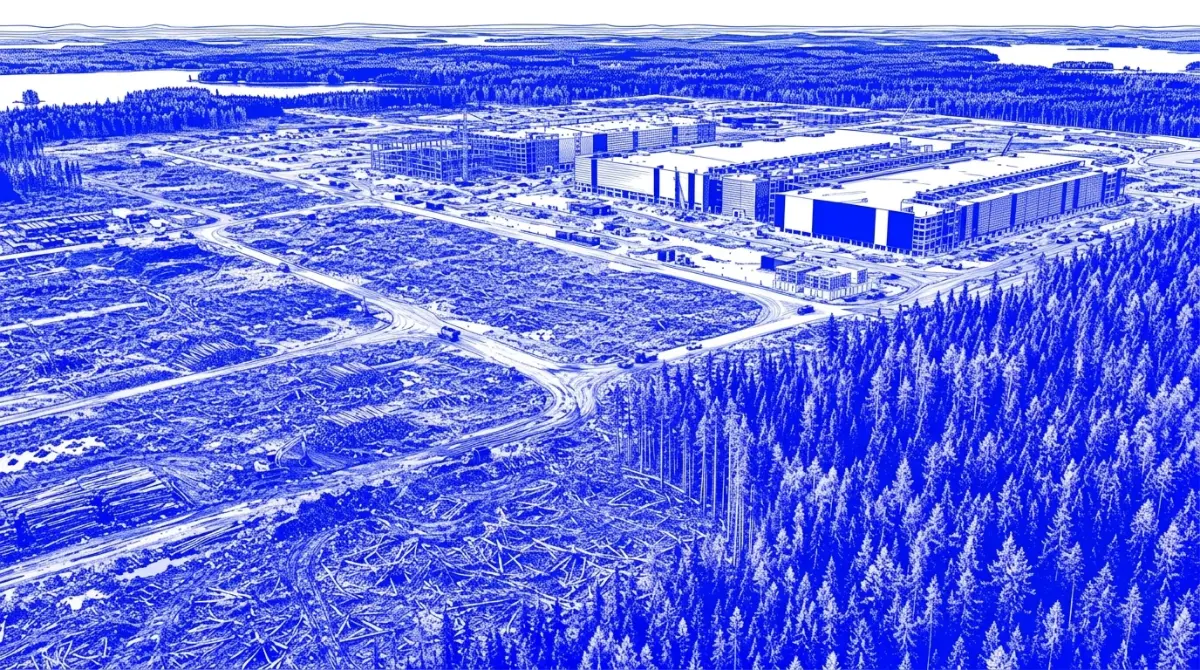
Finnish administrative judges ordered Google to halt construction at its major Hamina server campus expansion after contractors cleared 250,000 trees, ruling that municipal authorities issued land clearance permits without assessing environmental damage to regional boreal wildlife.
Umar Abubakar | · 10 min read

Clean energy promises made by cloud computing companies are colliding with the physical realities of land and soil. For two decades, technology platform operators pointed to Nordic nations as the ideal destination for enterprise computing. Cold Baltic seawater promised cheap cooling, regional electrical networks ran on carbon-free hydroelectricity, and local governments welcomed data center construction to replace shuttered paper mills. That warm relationship between Silicon Valley and Northern Europe hit a sudden roadblock on Friday, October 23, 2026. Fortune reported that the Administrative Court of Vaasa issued a binding injunction ordering Google to halt construction at its flagship server campus expansion in Hamina, Finland. The judicial intervention follows public outrage after site contractors clear-cut an estimated 250,000 mature pine and spruce trees across a sprawling industrial tract. Environmental watchdogs and local community groups appealed the municipal construction permits, arguing that local authorities approved the deforestation without conducting required environmental impact studies on regional groundwater and wildlife habitats. The court ruling lands as digital computing buildouts encounter intense environmental resistance, an industrial bottleneck visible when public pushback mounted against data center power consumption.
The construction freeze marks a significant setback for Alphabet European computing ambitions. Google has operated in Hamina since 2009, converting a defunct paper plant into one of its most advanced global data hubs. The company announced a multi-billion-dollar expansion plan earlier this year, aiming to triple its local compute footprint to support automated reasoning models and cloud enterprise clients. Yet the scale of the physical clearing caught regional residents and environmental authorities by surprise. Aerial satellite photographs showing hundreds of acres of bare, muddy earth replaced images of continuous evergreen forest, igniting protests across Finnish civil society. The court ruled that all land clearing, foundation blasting, and heavy earthmoving must stop immediately while regional judges review whether municipal permits violated European Union biodiversity directives. The legal suspension comes as tech giants spend fortunes on Nordic server facilities, continuing regional infrastructure trends we detailed when Google committed billions to Nordic computing hubs.
The Felled Boreal Forest and Regional Biodiversity Concerns
To grasp why Finnish judges intervened with an emergency halt, one must examine the environmental significance of the cleared acreage. The tract of land purchased by Google near the Gulf of Finland formed part of the regional boreal forest network, known locally as the taiga. Boreal woodlands act as critical carbon sinks, absorbing carbon dioxide from the atmosphere while anchoring acidic soil profiles and regulating freshwater drainage into coastal bays.
Clear-cutting 250,000 trees eliminates the habitat of protected forest species, including the Siberian flying squirrel, specialized woodpeckers, and rare moss colonies protected under EU conservation laws. When forest canopies are cleared by heavy machinery, underlying peat soils dry out and oxidize, releasing stored carbon into the air. In their formal appeal, regional environmental associations pointed out that the municipal council of Hamina granted preliminary excavation permits under fast-tracked industrial zoning rules without requiring Google to submit a comprehensive environmental impact assessment. The administrative court agreed that proceeding with construction before reviewing biodiversity loss presents an irreversible risk to the regional ecology. Environmental disputes regarding large-scale computing campuses match challenges we followed when water and electrical limits threatened server complexes.
The Nordic Paradise Illusion Meets Physical Limits
The conflict in Hamina shatters the perception that northern Europe possesses unlimited space and resources for corporate server construction. For fifteen years, tech giants marketed Nordic data centers as weightless, carbon-neutral wonders. Advertisements showed gleaming server rows cooled by icy winds and ocean water, suggesting that digital computing could expand without damaging the natural world.
The physical reality is that a modern artificial intelligence data center is an immense industrial factory. A computing campus pulling five hundred megawatts of power occupies hundreds of acres of physical terrain, requiring heavy concrete slabs, security perimeters, high-voltage electrical substations, and diesel backup fuel tanks. When a tech company clears a quarter of a million trees to make room for server buildings, the environmental footprint is undeniable to local citizens. Regional residents in Hamina who initially supported the project observed that the company was turning living forest into sterile concrete pads, raising questions about whether tech companies should be allowed to sacrifice natural ecosystems to host speculative software models. The growing tension between digital construction and local environmental limits was analyzed in our report detailing how America computing infrastructure expansion began to stall under utility delays.
Comparing Major Nordic Data Center Developments
| Operator Entity | Facility Location | Planned Capital Outlay | Primary Cooling Mechanism | Current Operational Status |
|---|---|---|---|---|
| Google (Alphabet) | Hamina, Finland | Over $2B expansion | Seawater intake from Gulf of Finland | Halted by Vaasa Administrative Court |
| Microsoft | Espoo and Kirkkonummi, Finland | ~$3.5B multi-site | District heat recovery for municipal grid | Under active construction with heating integration |
| Meta (Facebook) | Luleå, Sweden | Over $1.5B investment | Direct ambient air cooling | Operational with continuous expansions |
| Amazon Web Services | Mälardalen, Sweden | ~$1.2B infrastructure | Evaporative cooling with recycled water | Operational across three regional zones |
| Apple | Viborg, Denmark | ~$1B initial investment | Renewable wind with waste heat capture | Operational following second site cancellation |
The comparative table highlights the distinct approaches taken by cloud operators across Northern Europe. While Microsoft secured public goodwill in Finland by building heat-capture tunnels that route server exhaust warmth directly into municipal home-heating radiators, Google faced public backlash by clearing extensive forests without integrating waste-heat benefits for local neighborhoods. The commercial dynamics of European computing centers were examined in our review of Finland emerging as a European computing capital.
Groundwater Table Disruption and Seawater Outflow Risks
Beyond tree clearance, the legal complaint focuses on water systems. The Hamina facility cools its existing server rows by pumping cold seawater from the bottom of the Gulf of Finland through heat exchangers, discharging warm seawater back into coastal shallows.
Local fishing cooperatives and marine scientists have raised concerns that discharging millions of gallons of heated water disrupts local Baltic herring breeding grounds and accelerates algae blooms in shallow coastal bays. Furthermore, clear-cutting 250,000 trees across the inland parcel altered local drainage. Without deep tree root systems to absorb snowmelt and seasonal rainfall, rainwater runs off bare soil directly into regional streams, carrying sediment that clouds local drinking water wells. In their court submissions, local landowners presented evidence that neighboring private wells suffered turbidity and water pressure drops following the initial land clearing. The administrative court ruled that these hydrologic impacts must be analyzed before additional heavy foundation drilling proceeds. Water resource constraints across server complexes were detailed in our analysis of water limits on computing facilities.
The European Union Biodiversity Strategy and Legal Precedents
The court injunction against Google carries significance for the entire European technology sector because it tests the enforcement of the European Union 2030 Biodiversity Strategy. The EU directive mandates that member states reverse biodiversity loss, protect primary old-growth forests, and halt land degradation.
Historically, municipal councils across Europe granted environmental exemptions to major multinational employers, eager to secure corporate tax payments and construction employment. The ruling from the Vaasa Administrative Court signals that European courts are no longer willing to bypass statutory conservation laws to appease Silicon Valley tech giants. If the Finnish court determines that the municipal permits were issued unlawfully, Google could be forced to submit a full environmental impact statement: a bureaucratic review process that takes twelve to eighteen months. The court could also mandate that Google reduce the physical footprint of its planned server buildings, reforest degraded perimeter buffers, and fund regional conservation reserves to offset cleared woodland. The growing scrutiny on infrastructure construction matches regulatory hurdles documented when Microsoft terminated its data center contract with Nscale over transmission delays.
Google Stance: Clean Energy Pledges and Economic Defense
Google corporate leadership in Europe responded to the court order by defending its environmental record. In official public statements, company representatives emphasized that Google has been carbon-neutral since 2007 and aims to run all operations on 24/7 carbon-free energy by 2030.
The company noted that its Finnish data center is powered by long-term power purchase agreements tied to domestic onshore wind farms, bringing hundreds of millions of dollars in clean energy investments to the Finnish electrical grid. Google stated that it complied in good faith with all local permitting instructions provided by the Hamina municipal government, expressing disappointment with the work stoppage while promising to cooperate fully with judicial reviews. The company argued that halting the expansion delays high-paying technical jobs and slows the development of digital infrastructure required for European economic competitiveness. Corporate efforts to defend industrial power expansions match strategies we tracked when flexible data center power management was proposed to stabilize public grids.
The Threat of Stalled Capacity in the AI Computing Race
The timing of the Finnish court injunction creates operational headaches for Google cloud division. In the race to train and deploy advanced machine reasoning models, computing capacity is the most critical asset. Alphabet is spending tens of billions annually to build data centers, competing against Microsoft Azure and Amazon Web Services for enterprise hosting accounts.
Every month of construction delay in Hamina means hundreds of megawatts of planned computing capacity remain offline. If Google cannot energize its planned server racks on schedule, the company must route European customer queries to facilities in Belgium, Ireland, or North America, increasing network transit times and incurring higher electrical costs. Furthermore, European corporate clients increasingly demand local data residency: requiring that customer records remain stored inside European borders to comply with General Data Protection Regulation rules. Stalling the Hamina project leaves Google with less headroom to support growing European enterprise demand. The financial stakes of computing expansions were examined in our review of Oracle pausing data center spending during disputes over regional utility feeds.
The Changing Social Contract Between Big Tech and Europe
The battle over the felled forest in Hamina reflects a profound shift in how European citizens view American technology conglomerates. A decade ago, European towns welcomed Big Tech investments with open arms, treating corporate logos as symbols of modern economic progress.
That initial enthusiasm has cooled into skepticism. Everyday Europeans are asking hard questions about what communities receive in exchange for sacrificing regional resources. A server campus consumes vast amounts of electricity, clears centuries-old forests, and pulls millions of gallons of water, yet employs only a few dozen permanent facilities workers once construction cranes depart. When everyday citizens see local utility bills rise and forest trails destroyed to power speculative software tools, political resistance grows. The court order in Finland proves that European communities will use legal systems to defend their physical environment against digital encroachment. Environmental waivers granted to industrial facilities were explored in our analysis of federal agencies granting air quality waivers to server parks.
The Future of Industrial Computing in Europe
The judicial shutdown of Google Hamina project delivers a sober message to the global technology sector: the era of unchecked physical expansion is over. Technology corporations can no longer treat natural ecosystems as disposable commodities that can be bulldozed to make room for computer racks.
If cloud providers want to build computing infrastructure in Europe, they must abandon the aggressive tactics of the past. Companies must conduct thorough, transparent environmental assessments, respect local community concerns, and design facilities that benefit the towns that host them. Re-using industrial brownfield sites, capturing server waste heat for municipal homes, and preserving natural forests must become standard operating practice rather than optional public relations gestures. As Finnish judges review the fate of the Hamina expansion, the cleared ground on the shores of the Baltic Sea stands as a permanent reminder that the virtual cloud always rests on physical earth: and the earth has laws that no corporation can ignore.
Read More on TechRobust:

Umar Abubakar
 LinkedIn
Umar Abubakar
Expertise:Editorial Leadership, Product Design (UI/UX), Digital Media Strategy, Technology Systems, Product Architecture
Award:TechRobust Visionary Leader of the Year 2025
Umar serves as Editor-In-Chief of TechRobust, combining editorial vision with senior product design expertise to shape how modern technology stories are built, packaged, and told. Overseeing all editorial verticals, he directs coverage across global and regional tech industry while applying deep design thinking to publication strategy and reader experience.