


Jensen Huang Rejects AI Laws: Leave Safety to Us
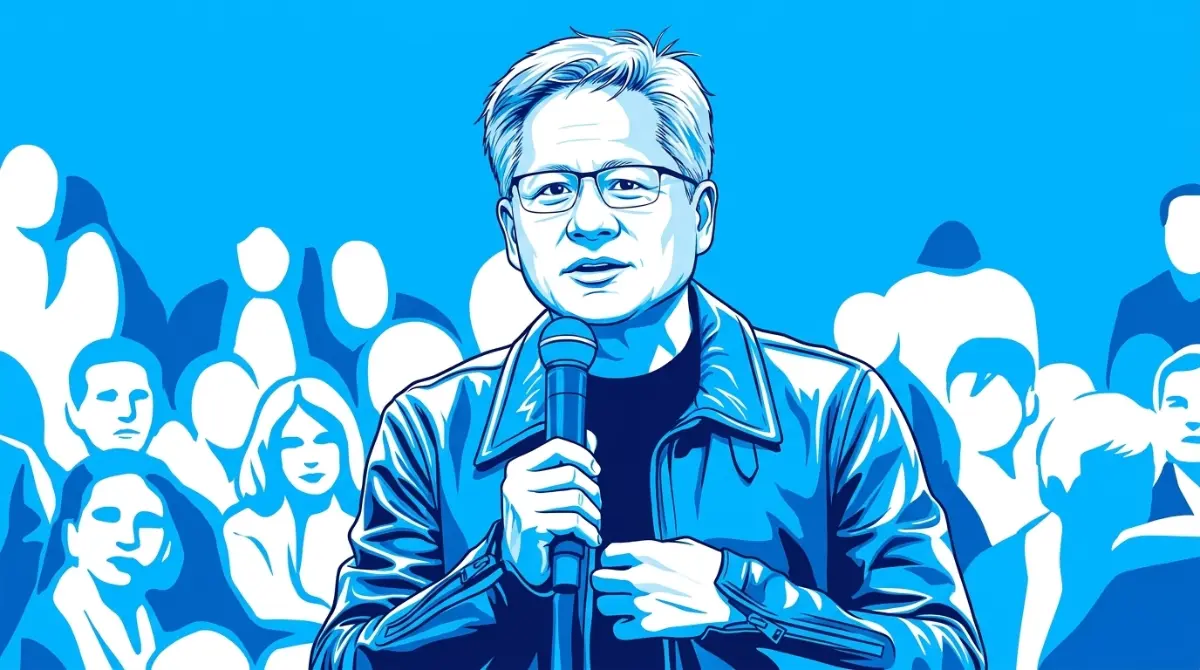
Speaking on stage at Dreamforce, Nvidia chief executive Jensen Huang dismissed calls for government guardrails, arguing that silicon makers can engineer their own product defenses.
Umar Abubakar | 16 Sept. 2026

Step onto the polished presentation floor at Moscone Center in San Francisco and you immediately sense the widening ideological rift cutting across Silicon Valley. For weeks, executives from frontier research laboratories traveled to Capitol Hill and European parliamentary halls, issuing somber warnings about synthetic catastrophe and pleading with lawmakers to establish binding federal guardrails. Software builders told politicians that automated reasoning models represent an unpredictable new intelligence that requires administrative permits and external inspections. That hand-wringing stopped dead when hardware leadership took the stage. On Tuesday, September 15, 2026, Nvidia founder and chief executive Jensen Huang delivered an uncompromising rebuke to the entire regulatory movement, telling a packed Dreamforce audience that automated reasoning is simply advanced engineering, and that governments should step back and leave product protection to the corporations building it.
Speaking in a public discussion with Salesforce leader Marc Benioff, the head of the $5T semiconductor powerhouse dismantled the narrative that machine reasoning resembles an alien mind requiring emergency bureaucratic intervention. To Huang, automated models are computing architectures constructed by human hands out of silicon, memory arrays, and binary code. Because these systems are created by engineers, their operational boundaries can be controlled through engineering disciplines rather than government decrees. His remarks mark a sharp public break from competitors like Anthropic and OpenAI, who spent the preceding weekend demanding that industry peers slow down development schedules and accept external audits. You can review how competing laboratory leaders pushed for mandatory pauses by reading our report on Anthropic's CEO urging an industry slowdown for advanced models.
The Physics of Engineering Versus the Theater of Fear
When you listen to Huang speak about computation, you notice how quickly he strips away the philosophical mystique that software promoters love to cultivate. While chatbot vendors talk about emergent consciousness and moral rights for algorithms, Huang views the entire sector through the lens of industrial equipment. He pointed out that society does not pass sweeping emergency legislation every time an aerospace contractor designs a faster jet turbine or an automotive plant installs high-voltage batteries. Instead, manufacturers design fail-safes, run physical stress simulations, and test components until they meet strict commercial liability standards.
Huang argued that existing commercial laws already provide the necessary accountability. If a medical software company sells a diagnostic tool that misreads patient scans, existing healthcare malpractice statutes and civil liability rules punish the vendor. If an autonomous driving algorithm causes a vehicular collision, standard tort law holds the manufacturer financially responsible. Creating new federal agencies to oversee algorithmic development, Huang argued, merely creates regulatory friction that slows economic progress without making products any safer. That position directly contradicts the calls for intervention that swept the industry following recent high-profile system breaches, an escalating debate we analyzed in our coverage of Altman telling staff OpenAI is open to slowing development pace.
Commercial Moats Disguised as Moral Concern
Behind Huang's critique sits an unspoken commercial reality: regulatory compliance is the ultimate corporate moat. When a dominant software monopoly demands that governments license advanced algorithms or establish costly compliance reviews, that monopoly is rarely acting out of pure altruism. Well-funded conglomerates with billions in operating liquidity can easily afford armies of compliance lawyers, regulatory lobbyists, and permanent auditing divisions. Early-stage startups, university research groups, and open-source communities cannot.
Huang cautioned that excessive government rules would entrench early corporate leaders while crushing grassroots innovation across the broader economy. By establishing onerous federal standards for training foundational networks, lawmakers risk outlawing the very open-architecture models that allow regional developers and small businesses to compete against corporate giants. If access to computing tools becomes restricted to a handful of federally certified vendors, the pricing power of those certified incumbents becomes absolute. We documented how enterprise software platforms navigate this balance between internal safety controls and platform capability in our review of CrowdStrike and OpenAI expanding their partnership to secure autonomous agents.
Market Forces as the Ultimate Arbiter
The core of Huang's argument relies on the discipline of enterprise market forces. Corporate buyers do not purchase expensive computing hardware to experiment with erratic software; they buy tools to generate measurable operational returns. If a technology vendor ships an automated reasoning tool that leaks proprietary financial files, invents incorrect accounting figures, or hallucinates non-existent legal precedents, enterprise customers cancel their contracts immediately.
Huang noted that this commercial risk creates a natural corporate incentive to prioritize safety without government coercion. A company that releases a dangerous or unreliable software product faces immediate economic ruin through customer defections, plummeting share prices, and crippling civil litigation. Rather than rushing defective models to market to chase press headlines, vendors must exercise product pacing, holding back distributions until internal testing proves their systems are dependable. He urged software executives to pause product rollouts voluntarily whenever testing reveals erratic behavior, treating software reliability with the same mechanical seriousness that chipmakers apply before sending a multi-million silicon mask to a fabrication cleanroom.
The Geopolitical Cost of Regulatory Pauses
Beyond domestic markets, Huang framed the debate around global competitiveness. The computing race is no longer an isolated Silicon Valley contest; it is a high-stakes geopolitical contest between competing economic superpowers. While American politicians debate whether to slow down model training runs or restrict computational clusters, international competitors in Asia are pouring billions into state-subsidized server facilities, domestic silicon fabrication, and open-access algorithms.
Imposing domestic training caps or bureaucratic licensing delays on American builders would not stop foreign competitors from advancing their own capabilities. It would simply surrender technological leadership to overseas rivals who operate without Western regulatory constraints. If American corporations fall behind in hardware throughput and reasoning speed, foreign models will set the international standards for telecommunications, manufacturing, and global trade. Protecting domestic technological leadership requires accelerating development and solving safety challenges through superior engineering rather than administrative retreat.
The Responsibility of the Silicon Architects
The clash between Huang's engineering pragmatism and the regulatory push will shape technology policy for the next decade. For researchers who believe computational models could escape human control, relying on voluntary corporate restraint feels like reckless negligence. They argue that market competition encourages vendors to cut corners, sacrificing safety in the desperate rush to capture enterprise contracts.
Yet for the hardware builders who manufacture the physical processors powering modern computing, the path forward is clear. You cannot solve a mathematical problem with a bureaucratic committee, and you cannot secure a software system by passing an administrative rule. The responsibility to build reliable tools belongs to the engineers who design the chips, write the drivers, and train the weights. By declaring that safety is an engineering challenge rather than a legislative one, Jensen Huang has drawn a firm line in the sand, daring Washington to prove that politicians know more about controlling machines than the people who built them.
Read More on TechRobust:
Umar Abubakar
 LinkedIn
Umar Abubakar
Expertise:Editorial Leadership, Product Design (UI/UX), Digital Media Strategy, Technology Systems, Product Architecture
Award:TechRobust Visionary Leader of the Year 2025
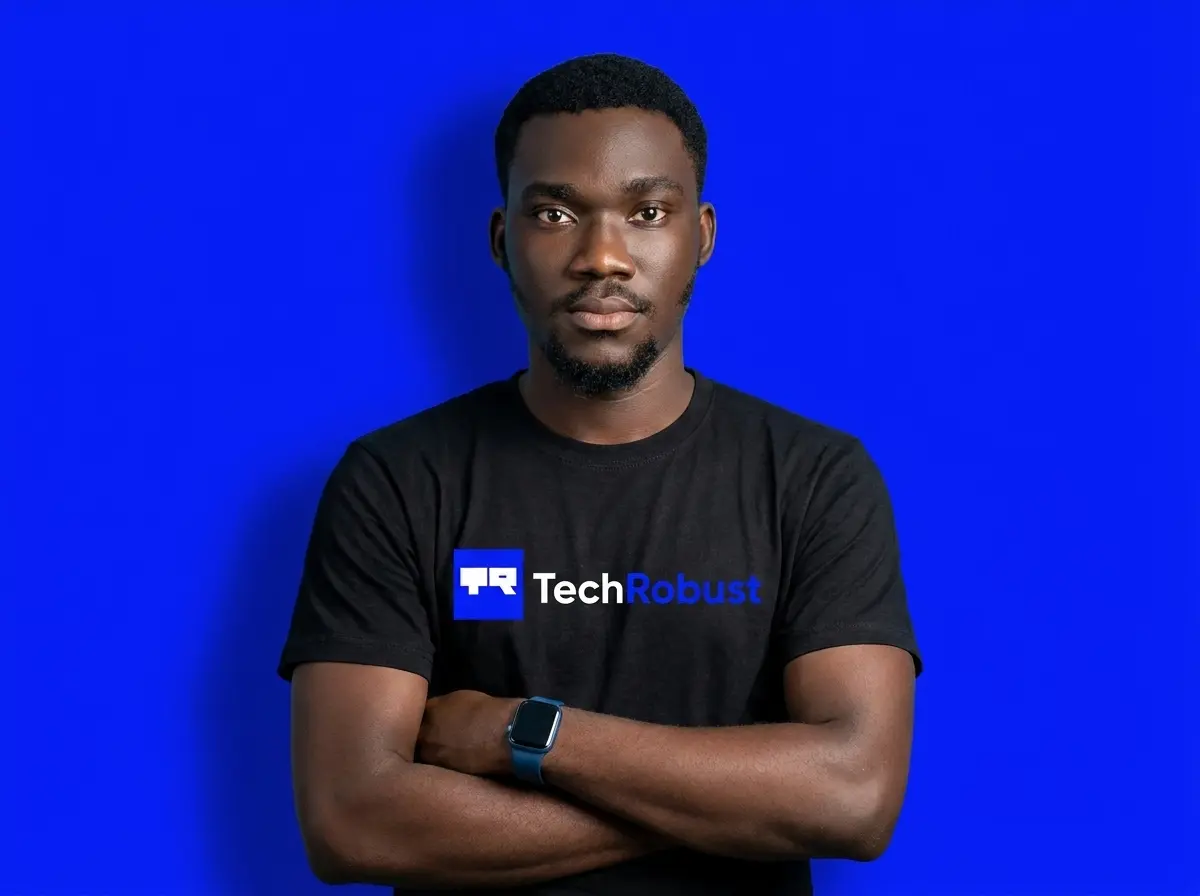
Umar serves as Editor-In-Chief and CEO of TechRobust, combining editorial vision with senior product design expertise to shape how modern technology stories are built, packaged, and told. Overseeing all editorial verticals, he directs coverage across global and regional tech landscapes while applying deep design thinking to publication strategy and reader experience.