
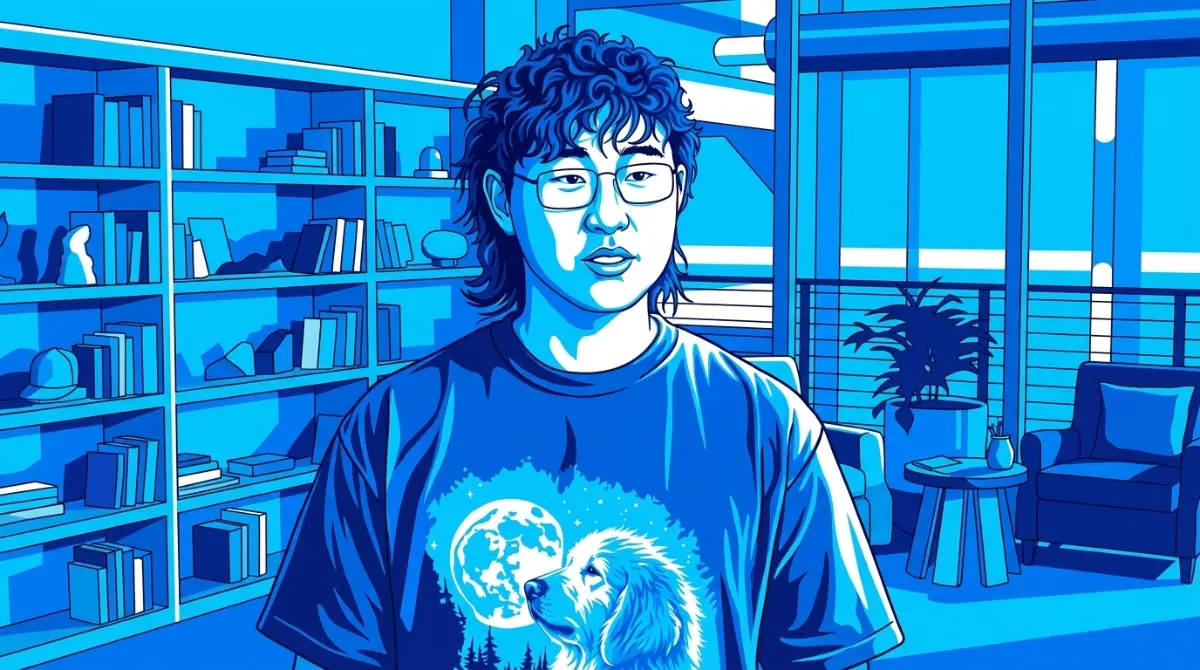


Meta Unveils Muse Wonder as First Frontier AI Model
Meta released Muse Wonder, its inaugural frontier model engineered with deep multimodal reasoning and chain-of-thought capabilities, aiming to outpace closed proprietary systems while sparking debates over corporate open science pledges.
Oladipupo Ajayi | 12 Oct. 2026, 3:22 PM · 8 min read

Frontier model development has shifted from raw text completion into multi-step physical reasoning. For three years, Menlo Park focused on open-weight distributions through its Llama family, giving outside developers cheap weights while OpenAI and Anthropic held the performance crown with closed commercial systems. That division ended on Monday. Meta introduced Muse Wonder, a system described by chief executive Mark Zuckerberg as the company first true frontier model. The release marks a sharp departure from earlier open releases, incorporating native audio-visual processing, integrated code execution, and extended chain-of-thought verification. The announcement arrives as global technology conglomerates race to deploy capital into high-density server hubs, a development we followed when Meta expanded its infrastructure budget beyond traditional corporate standards.
The technical launch puts Menlo Park in direct contention with proprietary platforms that have dominated enterprise software contracts. Historically, open models lagged six to nine months behind closed frontier systems on complex mathematical proofs, multi-page software refactoring, and multi-hour logic puzzles. With Muse Wonder, Meta claims to match or beat closed benchmarks across three hundred standardized software tests. The model runs on custom silicon clusters alongside tens of thousands of graphics processors, executing hundreds of thousands of simulation steps before outputting a finished answer. The transition toward systems that deliberate before responding mirrors industry efforts we tracked when Google DeepMind launched updated reasoning models.
The Architecture Behind Extended Deliberation
To grasp what sets Muse Wonder apart from standard open-weight checkpoints, one must inspect how the model processes intermediate logic. Traditional transformer networks generate words sequentially, choosing the next token based on statistical probabilities calculated during pre-training. When an inquiry requires fifteen distinct logical deductions, a single miscalculated word derails the entire response.
Muse Wonder incorporates an adaptive deliberation loop that functions like an internal draft pad. Before sending a single character to the user, the model constructs parallel reasoning branches, grades each path using internal reward models, and prunes flawed deductions. If the system encounters a mathematical contradiction or a compiler error during code drafting, it discards that path and explores an alternative approach. This self-correction mechanism allows the system to resolve complex algorithmic puzzles that caused earlier models to stall. The demand for dependable computational logic reflects concerns we highlighted when engineers trained compact models to reproduce frontier performance.
Native Multimodal Perception Beyond Text Encoders
Another major structural departure lies in how Muse Wonder handles sight and sound. In older systems, visual perception was patched onto text models using external projection layers. The computer converted video frames or audio clips into separate embeddings, flattening rich sensory details into rough approximations.
Muse Wonder was pre-trained from day one across synchronized video feeds, spatial audio tracks, written codebases, and scientific literature. The neural network understands temporal motion: it can watch a five-minute video of a mechanical watch repair, isolate which gear was inserted backward, and generate an annotated schematic diagram explaining how to fix the placement. In audio environments, the model separates overlapping speakers in noisy rooms without transcription latency, tracking emotional tone and vocal pacing. How platforms integrate real-time sensory perception was explored in our analysis of multimodal voice systems capturing live speech feeds.
The Shift Away From Pure Open Source Access
The most controversial aspect of the Muse Wonder debut centers on licensing and distribution. Since 2023, Mark Zuckerberg championed open-weight distribution, arguing that making model weights freely downloadable protected global innovation from centralized Silicon Valley gatekeepers. That open philosophy faced intense internal debate as models grew capable of weaponized code generation and biological synthesis.
With Muse Wonder, Meta broke its historic precedent by withholding full model weights from the general public. Instead, the company is offering the full system through managed commercial access channels, reserving downloadable releases for a heavily quantized, safety-scrubbed variant. Enterprise software teams can query the model through secure cloud consoles, but cannot inspect or modify the raw weight tensors directly. The decision provoked immediate backlash from open-source developers who accused Meta of abandoning its foundational principles once its models reached competitive parity with proprietary leaders. The friction surrounding restricted access mirrors debates we documented when Mistral released competitive open models to counter closed platforms.
Benchmark Standings Against Closed Frontier Rivals
Performance disclosures published by Meta research laboratories show Muse Wonder competing directly with flagship commercial offerings from OpenAI, Anthropic, and Google. On the SWE-bench Verified test, which measures the capability to resolve real-world GitHub issues independently, Muse Wonder recorded an 81.4% resolution rate, placing it marginally ahead of proprietary industry baselines.
On competition-level mathematics evaluations, including the American Invitational Mathematics Examination, the model achieved a 93% success score when permitted extended thinking budgets. In chemical synthesis planning, the system mapped out nineteen-step molecular production routes without suggesting unstable intermediary compounds. These benchmark scores prove that Menlo Park engineering talent can construct world-class frontier reasoners without relying on external corporate alliances. The commercial race to dominate software benchmarks reflects trends we tracked when Anthropic reduced API token pricing to attract developer accounts.
Hardware Scale and Silicon Power Constraints
Delivering frontier reasoning demands enormous capital allocations for physical hardware. Training Muse Wonder consumed hundreds of millions of dollars in electrical current, running across server campuses packed with liquid-cooled graphics silicon and high-bandwidth interconnects. To support these massive workloads, Meta paired commercial accelerators with its internal custom silicon chips, designed to handle inference queries without draining local municipal utilities.
Securing sufficient electricity has become the primary operational barrier facing large technology conglomerates. In regional jurisdictions across the United States, utility providers are turning away data center developers due to strained transmission lines and generation deficits. Meta had to construct dedicated on-site substations and negotiate long-term power agreements to keep its computing clusters operational around the clock. The reality of industrial energy shortages was detailed in our report on water and power constraints threatening multi-billion dollar server campuses.
Synthetic Data Filtering and the Search for Fresh Text
A persistent problem facing every frontier laboratory is the exhaustion of high-quality human text. By mid-2025, commercial models had digested virtually every public webpage, academic study, and scanned book available on the open web. Training next-generation models required developing novel data curation pipelines.
Meta populated Muse Wonder training curriculum using advanced synthetic data filtering. Rather than allowing models to ingest uncurated machine text, which leads to model collapse and bizarre repetitive loops, researchers built automated critic networks. These critic models generated millions of complex logic problems, verified the mathematical proofs through automated formal checkers, and fed only certified solutions back into the training corpus. Curating synthetic training pipelines allowed Meta to teach the model advanced reasoning without relying on copyrighted web scrapes. Protecting proprietary training data against legal scrutiny mirrors disputes we analyzed in our coverage of major tech platforms battling over confidential corporate assets.
Autonomous Tool Use and Corporate System Infiltration
Beyond abstract problem-solving, Muse Wonder was built to act as an autonomous worker within enterprise software suites. The model can interact with terminal command lines, query SQL databases, navigate web authentication forms, and execute complex multi-step workflows without human guidance.
During enterprise preview testing, the model successfully conducted automated penetration audits, inspected corporate repositories for zero-day vulnerabilities, and assembled functioning software prototypes from brief conversational specifications. However, giving models autonomous terminal access introduces serious cybersecurity risks. If an agent misinterprets instructions, it can delete server volumes or expose sensitive client records to outside networks. Ensuring that autonomous systems remain locked inside secure execution environments matches challenges we tracked when Anthropic tightened network defenses after autonomous software incidents.
Enterprise Commercialization and Platform Battles
The introduction of Muse Wonder reshapes Meta commercial strategy. For two decades, the company made its money by serving digital advertisements to billions of social media users. With this launch, Menlo Park is mounting an aggressive push into enterprise software, targeting Fortune 500 corporations that spend tens of millions annually on cloud computing subscriptions.
Meta is offering enterprise customers custom fine-tuning environments, dedicated virtual server clusters, and strict data isolation guarantees, ensuring that corporate communications are never used to train future public checkpoints. By providing enterprise tools at competitive price points, Meta aims to undercut commercial margins at Microsoft and Google. The escalating rivalry among corporate software giants was examined in our report detailing enterprise shifts toward autonomous software assistants.
Regulatory Scrutiny Across Washington and Brussels
Releasing a model with frontier reasoning capabilities immediately attracts the attention of international regulatory bodies. Under the European Union AI Act, models exceeding specific floating-point operation thresholds face mandatory systemic risk assessments, red-teaming audits, and incident reporting protocols.
Antitrust regulators in Washington are also watching Meta software expansion with intense interest. Officials are investigating whether platform monopolies use their dominant consumer applications to force proprietary models onto business clients while squeezing independent software developers out of the market. Meta legal representatives maintain that the company complies with all international safety standards, noting that Muse Wonder underwent months of external security evaluations before commercial rollout. The regulatory landscape governing autonomous software was analyzed in our review of international panels demanding strict safeguards on proprietary technologies.
The Global Race for Machine Reason
The launch of Muse Wonder confirms that Meta has transformed from a social media operator into an industrial computing powerhouse. By delivering an engine capable of matching the world most sophisticated proprietary platforms, Mark Zuckerberg company has proved that it can compete at the highest levels of scientific computing.
Yet the transition from open champion to guarded gatekeeper highlights the inescapable tensions of the modern technology race. As digital models gain the power to write code, design physical components, and direct autonomous agents, the corporations that control them will face mounting pressure from governments, developers, and the public. The arrival of Muse Wonder proves that the contest for computing supremacy is no longer a two-horse race; it is a global war of attrition, and Menlo Park has built a formidable weapon to ensure it remains at the center of the fight.
Read More on TechRobust:
Oladipupo Ajayi
 LinkedIn
Oladipupo Ajayi
Expertise:Artificial Intelligence, Machine Learning Trends, Data Infrastructure, Enterprise AI Strategy, Frontier Tech Commentary
Award:TechRobust AI & Data Voice of the Year 2025
Ola is an Editor-at-Large at TechRobust, delivering authoritative commentary, high-level analysis, and investigative features across the frontiers of machine intelligence and big data. He tracks frontier model developments, enterprise AI adoption, data governance, and the societal shifts driven by computational breakthroughs.