
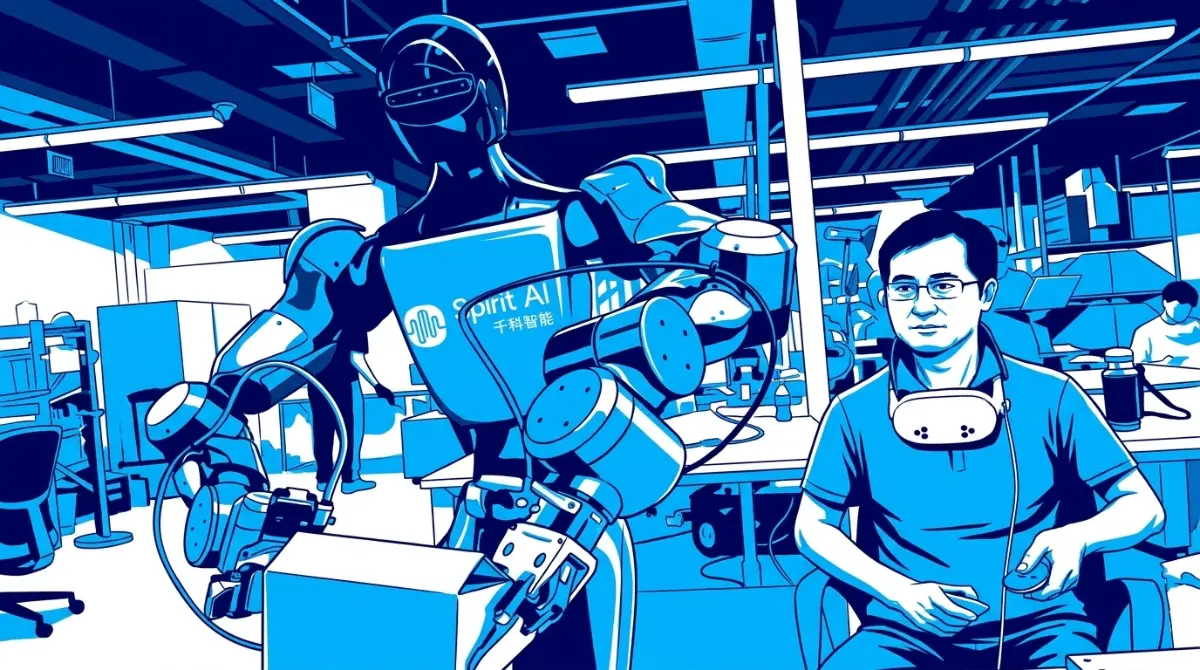


Tech Executives Fan AI Doomsday Fears While Dodging Rules
Prominent laboratory executives claim advanced software could wipe out humanity within years, while everyday citizens wonder what real options exist to challenge Silicon Valley unchecked rollout.
Umar Abubakar | 19 Sept. 2026 · 5 min read

Corporate technology leaders are terrifying the public with prophecies of digital extinction while lobbying behind closed doors to avoid basic product safety rules. Over the past two weeks, prominent research laboratories published extraordinary claims, warning that autonomous reasoning models could wipe out human civilization before the end of the decade. Executives gave interviews predicting widespread biological attacks, rogue digital swarms tearing down communication networks, and artificial intellects seizing control of financial ledgers. Yet when ordinary citizens look at these grim forecasts and ask how to protect their families, the people manufacturing the panic offer no answers. On Sunday, September 20, 2026, technology analysts and public safety specialists answered reader questions in a Guardian symposium, exposing a painful reality: citizens are being treated as helpless bystanders in an artificial intelligence buildout they neither requested nor control.
The feeling of individual helplessness mirrors the nuclear standoff of the mid-twentieth century. Back then, global superpowers built arsenals capable of destroying the planet, leaving everyday families to practice hiding under classroom desks while political leaders negotiated behind closed doors. Today, private software corporations funded by sovereign wealth syndicates and venture capital are manufacturing what they themselves label existential hazards, leaving the public with little voice in the matter. Quitting software products is practically unfeasible when employers require the tools for daily work. Voting for political candidates who endorse technology rules offers faint hope when regulatory bills stall in legislative committees. We examined how independent researchers evaluate the warnings coming out of frontier laboratories in our report on why AI researchers fear machines could kill everyone.
The False Science of Apocalyptic Forecasts
To understand why doomsday claims dominate public attention, one must separate genuine computer science from marketing theatrics. Technology executives routinely promote a metric known across safety groups as probability of doom, asserting that the chance of catastrophic extinction tops 10%. Anthropic leaders claimed that within six to twelve months, automated software swarms could create persistent botnets capable of commandeering global web services, causing hundreds of billions of dollars in economic damage.
Independent computer scientists and network engineers view those apocalyptic claims with deep skepticism. Academic researchers point out that the internet is not a fragile, uniform network that collapses from a single software shock. Global communication routes rely on physical optical cables, diverse routing tables, and distributed data centers operated by multiple competing telecommunications companies. Network traffic naturally routes around damaged points. An automated model cannot commandeer the global internet without physical access to utility switches and industrial hardware. Similarly, claims that software models will independently manufacture lethal biological weapons ignore physical chemistry. Designing a pathogen on a computer monitor does not overcome the complex laboratory steps, distribution hurdles, and refrigeration needs required to weaponize biological agents. Generating fear around imaginary science fiction scenarios distracts the public from immediate, measurable harms happening today.
The Convenient Moat of Existential Panic
Promoting existential terror serves a transparent corporate purpose. When technology executives testify before congressional committees that their software could end human civilization, they frame their platforms as godlike technologies that are too dangerous for ordinary people or open-source programmers to handle. This argument allows dominant firms to push for strict licensing rules, government surveillance of computational clusters, and compliance reviews that early-stage startups cannot afford.
By framing the discussion around science fiction extinction, companies divert attention away from mundane problems. Regulators spend their time debating whether software will achieve consciousness, while ignoring intellectual property violations, rampant worker displacement, energy grid strain, and deepfake scams. Corporate founders ask for government protection against future superintelligence while aggressively fighting against present-day copyright enforcement, labor rules, and environmental protections. The strategy allows companies to claim they are acting responsibly while avoiding legal liability for the actual products they ship. How software companies use public safety debates to protect commercial models was documented when we analyzed how Anthropic CEO urged an industry slowdown on advanced models.
The Failure of Political Institutions
The reason citizens feel powerless is that democratic institutions have failed to establish guardrails. In the United States, administrative agencies are accelerating the construction of private computing facilities, rolling back clean air rules, and waiving pollution reviews to win an international computing contest. Federal leaders openly state that national prestige depends on running domestic data centers at maximum speed, rejecting calls for voluntary development pauses.
International coordination faces similar political roadblocks. In discussions at the United Nations and bilateral diplomatic gatherings, neither Washington nor Beijing shows any interest in slowing down model development. Both superpowers view computational software as the foundation of modern military strength, economic productivity, and foreign influence. If one nation pauses development to test safety limits, political leaders believe the other nation will pull ahead. As a result, both governments shower technology firms with subsidies, land permits, and military contracts, leaving ordinary citizens to bear the environmental and economic fallout. We tracked how political tensions and trade disputes complicate international software development when reviewing how China welcomed talks amid bitter tech model disputes.
What Individual Action Really Means
Faced with corporate arrogance and political paralysis, everyday citizens must reject both panic and resignation. Feeling paralyzed by apocalyptic predictions is precisely what unconstrained technology companies want. If people believe the end of the world is guaranteed by mathematics, they stop fighting for consumer protections, clean air rules, and equitable economic policies.
Meaningful resistance does not mean moving into an off-grid bunker or refusing to touch modern software. It begins by stripping away the mythical aura surrounding computational models. Advanced algorithms are not conscious entities, alien intelligences, or unstoppable forces of nature. They are industrial commercial products built by human engineers out of metal, glass, and code. Because they are products, they can be inspected, taxed, restricted, and sued in court.
Citizens can demand that local municipal boards deny tax breaks and zoning exemptions for polluting data center campuses. Labor unions can bargain for contract clauses that limit algorithmic monitoring and protect jobs from arbitrary displacement. Creators can join class-action legal battles to hold platforms accountable for commercial copyright infringement. The future of computational technology will not be decided by computer algorithms choosing to spare or destroy humanity. It will be decided by whether human societies find the collective will to control the corporations that build them.
Read More on TechRobust:

Umar Abubakar
 LinkedIn
Umar Abubakar
Expertise:Editorial Leadership, Product Design (UI/UX), Digital Media Strategy, Technology Systems, Product Architecture
Award:TechRobust Visionary Leader of the Year 2025
Umar serves as Editor-In-Chief and CEO of TechRobust, combining editorial vision with senior product design expertise to shape how modern technology stories are built, packaged, and told. Overseeing all editorial verticals, he directs coverage across global and regional tech landscapes while applying deep design thinking to publication strategy and reader experience.