
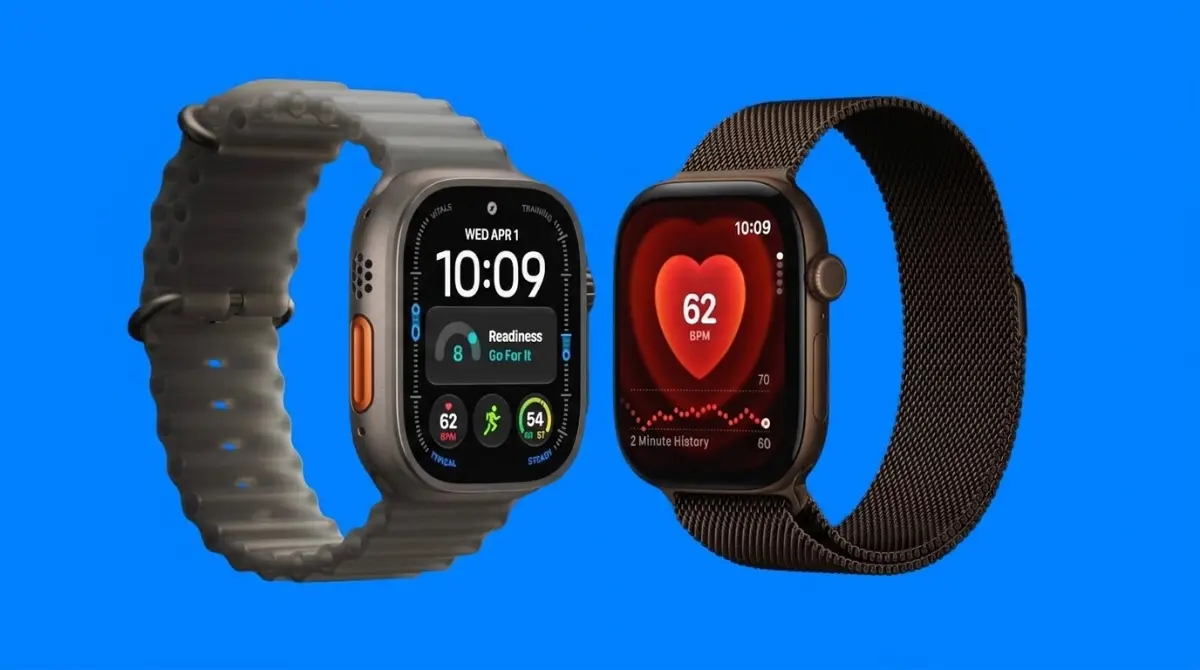


Apple Watch Series 12 and Ultra 4 Hit by Random Reboots
Fresh owners of Apple newest flagship smartwatches report unexpected restarts, with shared diagnostic crash files pointing to firmware timeouts inside the Apple Neural Engine.
Umar Abubakar | 21 Sept. 2026 · 5 min read

Fresh hardware introductions frequently encounter early software friction before firmware stabilizes. Over the weekend following their global retail debut, Apple newest flagship wearables began running into unexpected system crashes. Buyers who picked up the Apple Watch Series 12 and Apple Watch Ultra 4 took to customer discussion boards and social platforms to report spontaneous device restarts. In dozens of documented cases, wrist screens abruptly went dark and displayed the silver company logo in the middle of active workouts, voice commands, and phone conversations. What appeared to be isolated unit glitches quickly evolved into a broader technical discussion when owners started extracting crash logs, discovering that a shared computational component was timing out and bringing down the entire watch operating system.
The issue spans both regular daily operations and idle states. Community members on Reddit, Apple Community Support, and MacRumors noted that the crashes happen during routine interactions such as opening Maps, browsing the App Store, altering watch face complications, and summoning voice intelligence routines. Several runners reported that their Ultra 4 units rebooted halfway through long-distance exercise tracking sessions, losing biometric progress. Diagnostic reports labeled as panic-full shared across tech forums revealed that the Apple Neural Engine hangs for approximately two seconds during computational inference tasks. When the accelerator fails to return execution control within that window, internal firmware watchdog monitors trigger an immediate kernel panic to prevent thermal runaway, forcing the hardware to cycle power. We tracked how Cupertino balances software stability and system responsiveness across its ecosystem in our review of how Apple handled dual-screen multitasking features.
The Apple Neural Engine as the Suspected Culprit
To understand why a kernel panic occurs on a wrist device, one must inspect how on-device machine intelligence interacts with wearable hardware. With the release of watchOS 27, Apple shifted substantial computational workloads away from the paired smartphone, running localized language parsing and health analytics directly on the wearable custom silicon package. The Neural Engine handles incoming sensory signals, voice parsing, and predictive application preloading in real time.
The shared diagnostic files indicate that the crash happens when on-device machine tasks become unresponsive. If an application requests a contextual prediction or attempts to parse audio input through the Neural Engine, the hardware subsystem enters a lock state. Because wearable microprocessors have tight thermal ceilings and limited power envelopes, watchdog timers monitor silicon pipelines continuously. If a subsystem fails to respond within a predefined time boundary, the operating system kernel cannot wait indefinitely without draining the battery or overheating the chassis. The firmware watchdog intervenes by deliberately killing all running processes and executing a cold reboot. This safety mechanism shields physical circuitry from thermal damage, but it leaves consumers staring at an unexpected loading screen during ordinary daily use.
Software Updates and Device Swaps Fail to Clear the Flaw
Wearable owners initially attempted standard customer troubleshooting procedures, hoping that fresh factory resets would resolve the instability. Multiple users completely erased their watches, set up the devices as brand-new profiles without restoring cloud backups, and avoided third-party application installations. The random reboots persisted regardless of clean software configurations.
Even more concerning for early adopters, the crash behavior cuts across multiple software versions. Units running the original factory build of watchOS 27.0 as well as devices that installed the launch-day revision during initial unboxing exhibit identical crashes. In at least one documented instance, an owner swapped an unstable Series 12 unit at an Apple retail store for an entirely new replacement boxed model, only to experience the identical Neural Engine timeout on the replacement hardware within hours of leaving the store. The recurrence across replacement devices indicates that the bug is rooted in a widespread firmware interaction within the newest silicon platform rather than defective individual battery packs or cracked solder joints. We examined how consumer device makers handle early hardware and pricing adjustments in our report on Framework adjusting component pricing to protect customer trust.
The Price of Rushing Intelligence to the Wrist
The reboot controversy illustrates the growing tension between marketing deadlines and software refinement across the consumer technology industry. Hardware makers face immense corporate pressure to deliver annual hardware revisions packed with upgraded computational models and machine intelligence features, regardless of whether underlying operating system frameworks have completed extensive field testing.
When consumers pay premium prices exceeding $799 for outdoor-focused wearables like the Ultra series, they expect rock-solid operational dependability. Athletes relying on a wearable to monitor heart rates during mountain treks or marathon runs cannot afford a device that reboots mid-stride. A smartwatch is not an entertainment tablet where a brief crash is a mild annoyance; it is a personal utility worn against the skin to track health signals, deliver emergency communications, and authenticate contactless payments. Pushing complex machine intelligence algorithms onto constrained wearable hardware without adequate firmware safeguards risks undermining consumer trust in flagship hardware tiers. How mobile platforms manage system resources and background stability was examined when Google added hidden system pause points in Pixel hardware.
What Affected Watch Owners Can Do Now
As of late September 2026, Apple has not issued an official public statement or acknowledged the reboot reports through formal support channels. Customer service representatives continue to handle inquiries on an individual basis, advising callers to keep their devices updated and monitor forthcoming software releases. Because swapping units at retail locations has not reliably resolved the Neural Engine watchdog timeouts, rushing to an Apple Store for an immediate hardware exchange may not fix the underlying frustration.
The path forward rests entirely on Cupertino software engineering teams. Because the failure originates from a watchdog timeout inside the Neural Engine driver pipeline, Apple can resolve the problem through a rapid software update by extending watchdog timer limits, optimizing memory allocation for on-device machine tasks, or issuing updated microcode for the Neural Engine. Owners experiencing severe daily reboots should document each crash event, submit automated diagnostic reports through the paired Watch application on iOS, and wait for the release of an upcoming maintenance build. Early adopters expect cutting-edge performance from modern hardware, but they also expect the devices they purchase to stay powered on while sitting on their wrists.
Read More on TechRobust:
Umar Abubakar
 LinkedIn
Umar Abubakar
Expertise:Editorial Leadership, Product Design (UI/UX), Digital Media Strategy, Technology Systems, Product Architecture
Award:TechRobust Visionary Leader of the Year 2025
Umar serves as Editor-In-Chief and CEO of TechRobust, combining editorial vision with senior product design expertise to shape how modern technology stories are built, packaged, and told. Overseeing all editorial verticals, he directs coverage across global and regional tech landscapes while applying deep design thinking to publication strategy and reader experience.