


Chinese Phone Brands Bet on AI Agents to Revive Upgrades
Chinese handset makers are rebuilding mobile operating systems around autonomous machine agents, hoping cross-app task execution will spark consumer hardware replacements across sluggish retail markets.
Umar Abubakar | 21 Sept. 2026 · 6 min read

The consumer smartphone market has reached an innovation wall where minor camera upgrades and slightly brighter displays no longer convince shoppers to open their wallets. Across major retail hubs, replacement cycles continue to stretch past four years as buyers realize that last season handset handles daily messaging and video playback without breaking a sweat. Desperate to break this consumer inertia, Chinese hardware manufacturers are shifting focus away from megapixel counts and screen glass durability. Instead, domestic device builders are staking their financial recovery on autonomous software agents capable of navigating mobile apps and completing real-world chores with a single spoken phrase. Rather than treating machine models as auxiliary chatbots pinned inside notification trays, engineers are restructuring system software from the ground up.
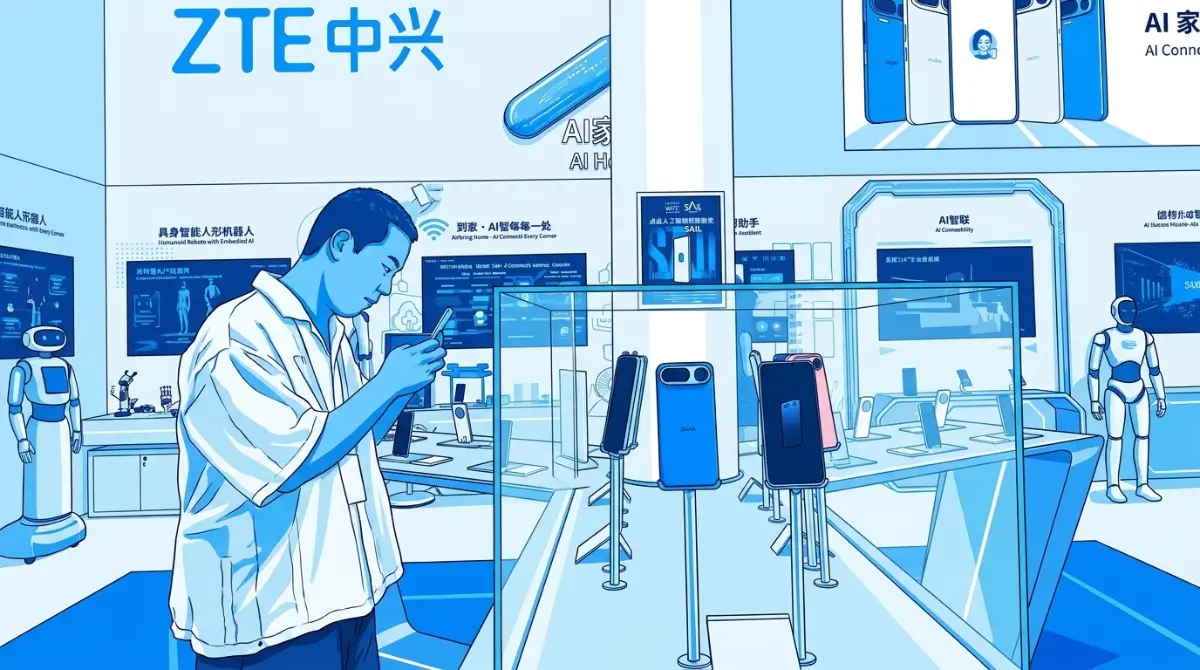
The strategic shift was on full display at the World Artificial Intelligence Conference in Shanghai, where brands including ZTE subsidiary Nubia, Honor, and artificial intelligence unicorn StepFun demonstrated handsets engineered around autonomous software agents. Nubia took the lead by rolling out the NaviX Ultra, billing the model as the first commercial handset with an integrated agent architecture powered by ByteDance popular Doubao platform. A prototype batch priced at roughly $516 sold out its initial thirty thousand units in hours, with secondary resale listings quickly doubling in price. Market research group IDC projects that machine-capable handsets could claim over 50% of the Chinese smartphone sector before the end of the year. Yet convincing everyday buyers to trade cash for automated phone navigation involves clearing deep technical and commercial barriers, an industry challenge we tracked when examining how Google added hidden system pause points in Pixel hardware.
Replacing Chatbot Widgets With Operating System Agents
To grasp why manufacturers believe this approach will ignite customer demand, one must look at how early software assistants failed. For several years, device makers merely bundled text summarizers, image erasers, and conversational windows into existing software skins. Ni Fei, who heads consumer devices at Nubia, pointed out that simply stacking automated features onto old operating systems makes handsets clunkier for the end user. Consumers quickly ignored the tools because switching between apps to copy text into an isolated conversational window felt slower than performing the task manually.
The newest wave of agentic software attempts to eliminate that friction by giving the machine model administrative control over application programming interfaces. During live demonstrations in Shanghai, StepFun demonstrated its Amoo assistant running on an Android-compatible system dubbed Step AOS. A presenter gave a single voice instruction to find an electric vehicle charging station and order coffee to their apartment once the charging session finished. The software parsed the car battery state, selected an available charger, and staged a coffee delivery order with an estimated arrival time. By breaking broad human intentions into executable technical steps across separate applications, the system handles the manual tapping, searching, and scheduling that typically bogs down mobile users. We examined how software interfaces attempt to manage complex task flows across screens in our review of how Apple handled dual-screen multitasking features.
Walled Gardens and Platform Defenses Threaten Execution
Despite impressive stage demos, the greatest threat to autonomous mobile assistants is not neural network accuracy, but corporate protectionism. In modern internet economies, consumer internet giants guard their digital walled gardens fiercely. Delivery networks, ride-hailing aggregators, and digital retail storefronts view direct customer contact as their most valuable asset. If an operating system agent executes purchases, bookings, and messaging on behalf of a user, the consumer never sees the merchant storefront, sponsored search placement, or banner promotion.
That commercial threat has already provoked corporate retaliation. When early prototype devices tested autonomous shopping commands late last year, dominant domestic platforms including Alibaba, Tencent, and JD.com swiftly blocked the agent scripts from accessing their backends. The restrictions forced developers to disable automated payment and order completion features to avoid service bans. Kiranjeet Kaur, associate research director at IDC, emphasized that consumer apps resist yielding user touchpoints to third-party operating systems. If an agent cannot book a flight on Trip.com, call a car on Didi, or settle a payment through Alipay without triggering security lockouts, the consumer utility evaporates. Unless hardware manufacturers negotiate shared revenue agreements with platform operators, autonomous assistants will remain restricted to basic system settings and calendar entries.
Hardware Innovation Follows the Software Shift
The push toward autonomous software is also changing physical handset construction. While some brands focus on internal software pipes, others are redesigning physical chassis to make devices feel more responsive. Handset maker Honor showcased its experimental RobotPhone at the Shanghai conference, pairing an agentic operating system with a physical motorized camera gimbal. The mechanical lens tracks user movements across a room, adjusts angles during video calls, and responds physically to audio cues.
Luxury manufacturers are targeting high-net-worth business buyers with similar agentic pitches. UK-based Vertu introduced its Alphafold foldable handset priced at $6,880, marketing an integrated Hermes Agent designed to review legal contracts, extract tabular data from spreadsheets, and organize corporate itineraries. The software handles daily executive paperwork autonomously and transfers unresolved edge cases to human concierge teams when requested. Handset companies are betting that positioning devices as proactive personal employees will unlock premium price points that ordinary hardware specifications could never command. How hardware manufacturers balance component expenses and device pricing was detailed when Apple paid Samsung $250 per foldable display panel.
Privacy Hazards on the Local Silicon Layer
Granting an automated machine model persistent access to an individual entire digital life introduces unprecedented security and privacy exposures. To anticipate user needs, an agent must continuously read incoming emails, scan personal photos, track real-time locations, and store banking credentials. If that behavioral data routes through remote cloud data centers, users face immense surveillance risks and regulatory tracking.
To address those anxieties, device engineers are attempting to run smaller reasoning models directly on local silicon. On-device processing keeps sensitive biometrics and financial tokens trapped inside secure enclaves on the phone motherboard. However, running complex reasoning models on mobile chipsets drains battery cells rapidly and generates excessive chassis heat. Hardware engineers must balance local processing security against thermal performance and battery endurance. If an agent causes a handset to overheat or drains half the battery before noon, consumers will disable the feature entirely, regardless of how smart the software claims to be.
The Test of Real-World Utility
The aggressive bet on autonomous phone assistants marks a critical juncture for the worldwide consumer electronics trade. Handset makers have exhausted the marketing appeal of glass curvature, megapixel counts, and synthetic benchmarks. Modern consumers will no longer replace working handsets for incremental visual polish.
If manufacturers can solve the thorny challenges of cross-platform cooperation, privacy protection, and battery consumption, agentic smartphones could redefine personal computing. A device that reliably takes over digital administrative work offers genuine, measurable value to busy people. But if the technology remains trapped behind platform feuds, unexpected crashes, and half-baked voice interfaces, the agentic smartphone will join 3D displays and modular cases in the museum of forgotten mobile gimmicks. The race to build the proactive pocket assistant has officially started, and only the brands that deliver effortless, dependable execution will survive the transition.
Read More on TechRobust:
Umar Abubakar
 LinkedIn
Umar Abubakar
Expertise:Editorial Leadership, Product Design (UI/UX), Digital Media Strategy, Technology Systems, Product Architecture
Award:TechRobust Visionary Leader of the Year 2025
Umar serves as Editor-In-Chief and CEO of TechRobust, combining editorial vision with senior product design expertise to shape how modern technology stories are built, packaged, and told. Overseeing all editorial verticals, he directs coverage across global and regional tech landscapes while applying deep design thinking to publication strategy and reader experience.