
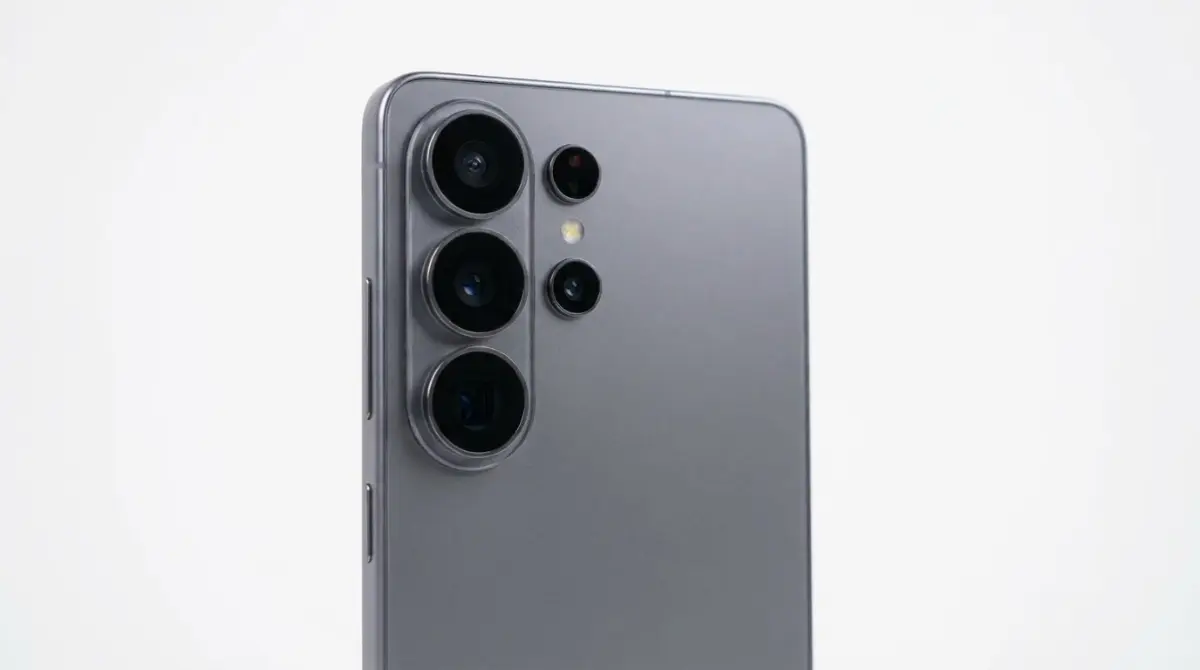


Samsung Adds Galaxy S26 Trio to Certified Re-Newed Program
Samsung added its Galaxy S26 lineup to its Certified Re-Newed store, cutting prices up to two hundred dollars with fresh batteries and factory warranties.
Umar Abubakar | 15 Sept. 2026

Walk past the gleaming glass storefronts along Michigan Avenue or Oxford Street, and you immediately spot how cautious shoppers have become around four-figure price tags. For a decade, smartphone manufacturers operated on an aggressive yearly treadmill, assuming consumers would obediently swipe credit cards every autumn for whatever incremental glass slab rolled off assembly lines. That automatic consumer loyalty has evaporated. Between persistent inflation and sluggish wage increases, modern buyers look at a $1,300 smartphone and see an exorbitant luxury rather than an essential upgrade. Yet when users turn toward secondary resale marketplaces to save money, they enter an unverified wild west filled with scratched camera lenses, degraded batteries, and questionable third-party repair jobs. On Tuesday, September 15, 2026, Samsung stepped in to bridge that trust deficit, formally expanding its official Certified Re-Newed catalog to include the Galaxy S26, Galaxy S26 Plus, and Galaxy S26 Ultra.
The retail move, reported by Android Authority, brings the Seoul electronics giant's current flagship generation into its direct refurbishment pipeline earlier than in previous hardware cycles. By packaging factory-reconditioned units with brand-new power cells, genuine replacement chassis parts, and standard one-year corporate warranties, Samsung is carving out a middle ground for consumers who demand top-tier silicon performance without paying launch-day premiums. Pricing starts at $759 for the base Galaxy S26, $929 for the Galaxy S26 Plus, and $1,099 for the camera-heavy Galaxy S26 Ultra, representing direct price drops of roughly $150 to $200 compared to brand-new inventory. You can observe how hardware makers adjust pricing and hardware strategies across flagship lines by reading our review of how Framework cut laptop memory costs to protect consumer trust.
The Industrial Rigor of Factory Refurbishment
To understand why manufacturer-backed renewals carry weight, you have to separate authorized refurbishment from street-corner pawn shops. When an uncertified third-party vendor restores a water-damaged or cracked phone, technicians often cut corners. They solder in unauthorized display panels with poor color calibration, bypass water-resistance gaskets, and install low-grade generic batteries that degrade within months. The user saves money at checkout, only to end up with a malfunctioning device that overheats under heavy loads.
Samsung treats its Certified Re-Newed pipeline like an extension of its original manufacturing floor. Every returned or traded-in handset undergoes a multi-point engineering audit conducted directly by company technicians. If an internal component fails diagnostic scans, engineers swap it with 100% genuine Samsung replacement hardware. Crucially, every single device receives a brand-new factory-certified battery pack, eliminating the battery degradation that typically plagues used electronics. The phones are wiped clean of prior user records, flashed with the latest operating software, and repackaged with authentic charging cables. This factory precision transforms discarded hardware into reliable machines, answering the consumer demand for circular electronics we examined when Apple paid Samsung $250 per foldable iPhone Duo screen.
Defending Market Share Against Used Gateways
The strategic motivation driving this refurbishment push is not corporate charity; it is an aggressive defense of high-end Android market share. For years, independent resale platforms like Back Market, Swappa, and eBay captured millions of dollars in secondary device transactions. Samsung watched prospective buyers hand cash to third-party resellers who contributed zero margin to corporate earnings. By operating its own certified storefront, the company recaptures that transaction volume while building direct relationships with value-conscious consumers.
Furthermore, offering official refurbished units allows the manufacturer to maintain high prices on brand-new inventory without losing budget-conscious shoppers to competitors. If an affluent shopper wants an untouched box on launch morning, they pay full retail price. If a university student or working professional wants the exact same Snapdragon 8 Elite Gen 5 processor and camera capabilities six months later, they buy certified reconditioned hardware directly from the maker. Buyers can also trade in older handsets for up to $720 in instant promotional credits, lowering the cash barrier for a modern 200MP camera phone to pocket change. We tracked how hardware manufacturers balance premium pricing and device demand in our coverage of the hands-on iPhone 18 Pro and $2,000 iPhone Duo.
The Extended Software Lifespan Dividend
Buying a refurbished phone previously felt like purchasing a device already on its deathbed. Software developers traditionally abandoned older models after two or three years, leaving second-hand owners stranded without modern security patches or operating system upgrades. That artificial obsolescence forced consumers to treat refurbished hardware as temporary, disposable stopgaps.
The Galaxy S26 family breaks that pattern entirely thanks to long-term software commitments. Samsung guarantees seven full generations of Android operating system upgrades and seven years of continuous security patches for the lineup. A shopper purchasing a Certified Re-Newed Galaxy S26 Ultra in late 2026 is guaranteed full software support into 2033. When combined with optional Samsung Care Plus coverage that provides unlimited battery servicing and zero-dollar screen repairs, the calculus around device ownership changes. A certified refurbished phone is no longer a compromised runner-up; it is a durable computing workstation built to last for the remainder of the decade. You can inspect how software interfaces and windowing environments evolve across devices in our analysis of how Apple handled split screen multitasking across phone and tablet designs.
The Broader Push Toward Circular Hardware
The expansion of certified refurbishment programs signals a broader reckoning across consumer electronics. The days of consumers mindlessly discarding intact glass-and-aluminum devices every twenty-four months are coming to an end. Between tightening environmental regulations in Europe, rising domestic right-to-repair mandates, and growing economic pragmatism among everyday shoppers, technology manufacturers must prove that their physical products can circulate through multiple owners without ending up in landfills.
By making the Galaxy S26 series accessible through trusted, factory-inspected channels, Samsung is demonstrating that hardware longevity and corporate profits can coexist. The company gives consumers access to cutting-edge camera sensors and fast silicon without forcing them into debt, while keeping millions of high-end components in active service. As other hardware giants watch consumer behavior closely, the success of this renewed rollout proves that the future of mobile gadgets belongs not just to the shiny new items on display tables, but to the machines that are built well enough to live a second life.
To inspect the detailed catalog additions, trade-in terms, and pricing tiers for this refurbished rollout, you can review the coverage on Android Authority.
Read More on TechRobust:

Umar Abubakar
 LinkedIn
Umar Abubakar
Expertise:Editorial Leadership, Product Design (UI/UX), Digital Media Strategy, Technology Systems, Product Architecture
Award:TechRobust Visionary Leader of the Year 2025
Umar serves as Editor-In-Chief and CEO of TechRobust, combining editorial vision with senior product design expertise to shape how modern technology stories are built, packaged, and told. Overseeing all editorial verticals, he directs coverage across global and regional tech landscapes while applying deep design thinking to publication strategy and reader experience.