
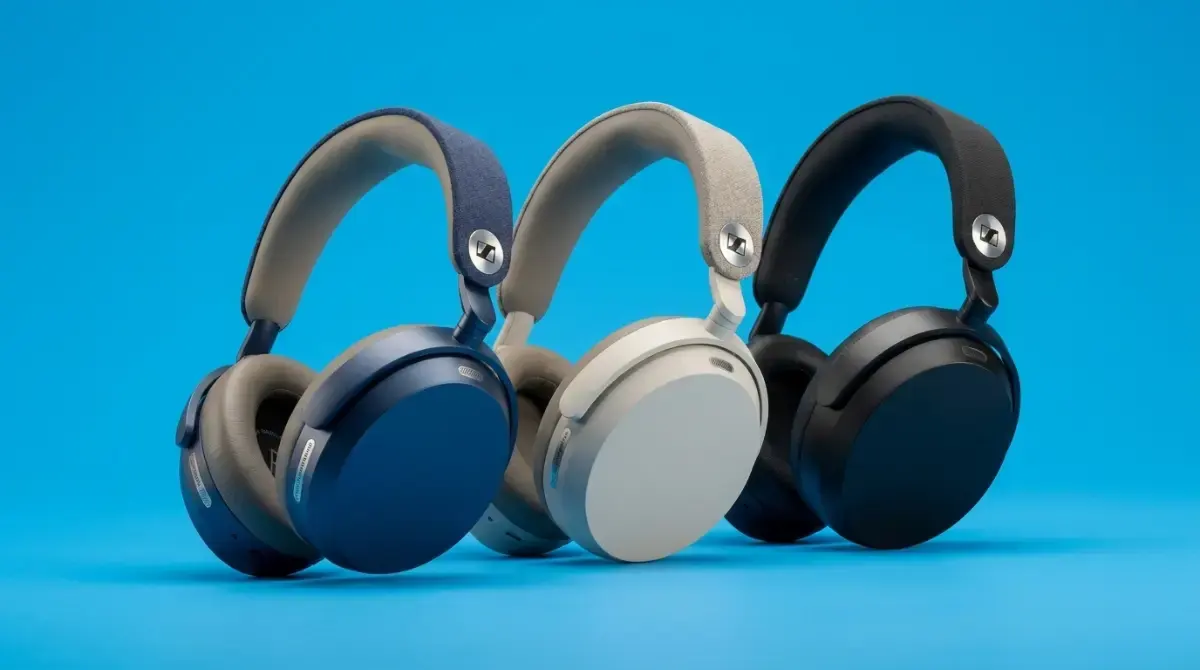


Sennheiser Momentum 5 Review: Lighter Build and Rich Sound
Sennheiser redesigned its flagship wireless over-ear headphones with a lighter chassis, user-replaceable batteries, and refined acoustics, challenging Sony and Apple in the premium consumer audio market.
Umar Abubakar | 8 Oct. 2026, 3:43 PM · 7 min read

Wireless audio hardware has spent years trapped in a predictable cycle of minor cosmetic tweaks and marketing promises. Premium personal audio buyers frequently pay steep retail prices only to discover that their four-hundred-dollar headphones become plastic electronic waste the second the sealed internal lithium pouch degrades. Sennheiser decided to confront that hardware dead end directly. With the arrival of the Sennheiser Momentum 5 Wireless, the German acoustic manufacturer took deliberate steps to balance audiophile acoustic engineering with practical consumer repairability. Priced at Rs 39,990 in India and approximately $400 internationally, the new model replaces its predecessor with a trimmed chassis, user-replaceable power cells, and an eight-microphone noise reduction array. The release arrives as consumer audio brands rethink device longevity, a trend we tracked when reviewing Samsung adjusting pricing on premium audio hardware.
Chassis Architecture and Daily Comfort
The first noticeable shift in the Momentum 5 Wireless is physical geometry. Sennheiser departed from the clinical, bare industrial aesthetic of earlier generations by wrapping the outer headband in textured woven fabric. On the Denim colorway, the material softens the visual silhouette, giving the headset a mature appearance that looks natural in corporate boardrooms and airport lounges alike. Weighing in at 290g, the unit feels balanced on the crown. It sits slightly heavier than Sony 254g WH-1000XM6, yet remains significantly lighter than Apple all-aluminum AirPods Max. That weight distribution matters during multi-hour international transit flights where heavy earcups exert excessive downward pressure on neck muscles.
Clamping force is measured and secure without producing the temple headaches common to aggressive studio monitors. The plush memory foam cushions distribute pressure evenly around the jawline, creating a dependable passive acoustic seal without crushing eyeglass frames. The earcups swivel flat for neck carry or storage, though the arms do not fold upward into the headband arch. Consequently, the included zippered carrying case remains somewhat wide inside travel backpacks. The outer earcups utilize a matte composite plastic that repels fingerprint oils, though purists who remember the exposed metal sliders and sheepskin leather of the Momentum 3 may find the plastic switchboards less opulent. We evaluated similar industrial design trade-offs in our hands-on review of Nothing mid-range mobile hardware.
Replaceable Batteries and Hardware Longevity
The standout mechanical victory in the Momentum 5 is the inclusion of a user-replaceable 700 mAh battery pack. In standard wireless headphones, replacing a dead battery requires heating glued seams, prying delicate plastic clips, and handling soldering irons. Most consumers simply discard functioning dynamic drivers into municipal landfills when cell capacity decays after three years. Sennheiser engineered the Momentum 5 battery chamber so that owners can open the enclosure and replace the cell using simple household tools.
This design choice elevates the product into a rare tier of sustainable consumer electronics. The hardware supports up to 57 hours of continuous playback with active noise cancellation engaged, easily covering two weeks of daily train commutes without visiting a wall outlet. When the battery eventually drops below eighty percent capacity after years of daily recharge cycles, owners can buy an official replacement pack instead of buying an entirely new headset. The ear cushions are likewise detachable and replaceable, extending device usability for a decade. The pivot toward serviceable consumer hardware mirrors broader engineering shifts we followed when Framework restructured modular computing components and issued refunds.
Acoustic Tuning and Driver Performance
Acoustic performance remains the primary reason buyers choose Sennheiser over generalist consumer electronics brands. Under the outer grilles sit custom 42mm dynamic transducers manufactured inside the company specialized audio facility in Tullamore, Ireland. The acoustic drivers draw heritage directly from the legendary HD 600 series, aiming for transparent instrumental separation and natural vocal warmth rather than muddy electronic exaggeration.
Out of the box, the low-end frequency curve is full, rich, and commanding. The sub-bass registers carry physical impact without bleeding upward into the lower registers of male vocals or acoustic guitars. Kick drums hit with authoritative punch, avoiding the loose boom that frequently mars mainstream consumer headphones. In orchestral passages and jazz quartets, the midrange emerges as the star component. Vocal harmonies retain organic texture, string instruments exhibit breath, and brass arrangements cut through without harsh digital sibilance. For casual listeners who prefer neutral clinical monitoring, the companion software suite provides an eight-band parametric equalizer to pull back low-frequency weight and open the upper treble registers.
Noise Cancellation and Real-World Isolation
Active noise reduction is where Sennheiser historically lagged behind Bose and Sony. To close that competitive gap, the Momentum 5 doubles its external sensing hardware, incorporating eight micro-electro-mechanical microphones split evenly across both earcups. The updated hybrid adaptive system samples ambient sound pressure continuously, deploying inverse waveforms to cancel ambient disruptions in real time.
The improvements show immediate results in urban settings. Low-frequency engine rumble inside subway cars and jet cabins disappears cleanly behind the acoustic wall. More importantly, the system demonstrates greater speed when muting unpredictable midrange voices in open-plan offices, reducing distracting desk chatter without introducing acoustic hiss or ear-drum suction. While Bose QuietComfort Ultra still holds a slight edge in erasing sudden high-frequency shrieks and metallic clatter, the Momentum 5 provides more than enough isolation for peaceful focused work. The built-in transparency mode functions naturally, blending environmental audio smoothly when owners need to place coffee orders or hear gate changes.
Wireless Codecs and Lossless Wired Audio
Connectivity options are exhaustive, covering modern wireless standards and physical analog cables. The internal radio operates on Bluetooth 5.4, with software patches scheduled to enable Bluetooth 6.0 and LE Audio modes. Codec support includes standard SBC and AAC alongside Qualcomm Snapdragon Sound, aptX HD, aptX Adaptive, and uncompressed aptX Lossless. For owners using modern Android handsets powered by top-tier silicon, the connection streams studio-grade bitrates without wireless dropouts. However, the headset omits Sony LDAC standard, meaning non-Snapdragon Android devices must fall back to basic AAC or standard aptX profiles.
Audio purists will appreciate the physical audio options. Sennheiser includes a standard 3.5mm analog input cable for airplane entertainment systems or dedicated headphone amplifiers. Even better, the USB-C charging port functions as a direct digital audio converter, accepting uncompressed digital audio streams up to 24-bit/96kHz straight from computers, tablets, and smartphones. Connecting via digital USB-C expands the soundstage considerably, sharpening instrument locations and delivering reference audio performance that wireless Bluetooth compression cannot match. Hardware audio versatility reflects changing consumer computing habits, similar to connectivity shifts we detailed when covering desktop docking hardware supporting multi-device setups.
Touch Navigation and Software Controls
Day-to-day operation relies on capacitive touch sensors mounted flush against the right earcup outer plate. Swiping upward or downward changes audio volume in predictable increments, horizontal swipes skip musical tracks, and single taps toggle playback or transparency modes. Because the touch surface is wide and responsive, navigation commands execute reliably without false triggers when adjusting the headband fit.
Software settings run through the Sennheiser Smart Control Plus mobile application on Android and iOS. The app is clean, fast, and free of unnecessary marketing bloat. Beyond the eight-band custom equalizer, the utility houses a spatial audio toggle powered by Dolby Atmos with dynamic head tracking. When watching blockbuster films on supported tablets, the software fixes sound sources in three-dimensional virtual space, adding cinematic scale to private viewing sessions. Multipoint connectivity pairs two source devices simultaneously, switching audio streams automatically when an incoming phone call interrupts a laptop video call. Microphones capture speech cleanly, suppressing ambient wind gusts during outdoor walks.
The Verdict on Premium Wireless Sound
The Sennheiser Momentum 5 Wireless succeeds because it refuses to treat high-end consumer headphones as disposable electronic toys. By uniting rich Irish-built transducers with an exceptional 57-hour battery reserve and a modular, user-serviceable battery door, Sennheiser delivered a piece of personal audio hardware that respects the user investment.
At Rs 39,990 or $400, it faces aggressive competition from the Sony WH-1000XM6 and Apple AirPods Max. Listeners who prioritize maximum noise cancellation above all else may still prefer the isolation of Bose, while dedicated iPhone users may favor the seamless ecosystem pairing of Apple. But for music lovers who demand genuine acoustic depth, flexible wired digital playback, and hardware built to survive past a three-year battery lifespan, the Momentum 5 stands as one of the most complete wireless headphones on the market.
Read More on TechRobust:

Umar Abubakar
 LinkedIn
Umar Abubakar
Expertise:Editorial Leadership, Product Design (UI/UX), Digital Media Strategy, Technology Systems, Product Architecture
Award:TechRobust Visionary Leader of the Year 2025
Umar serves as Editor-In-Chief and CEO of TechRobust, combining editorial vision with senior product design expertise to shape how modern technology stories are built, packaged, and told. Overseeing all editorial verticals, he directs coverage across global and regional tech landscapes while applying deep design thinking to publication strategy and reader experience.