
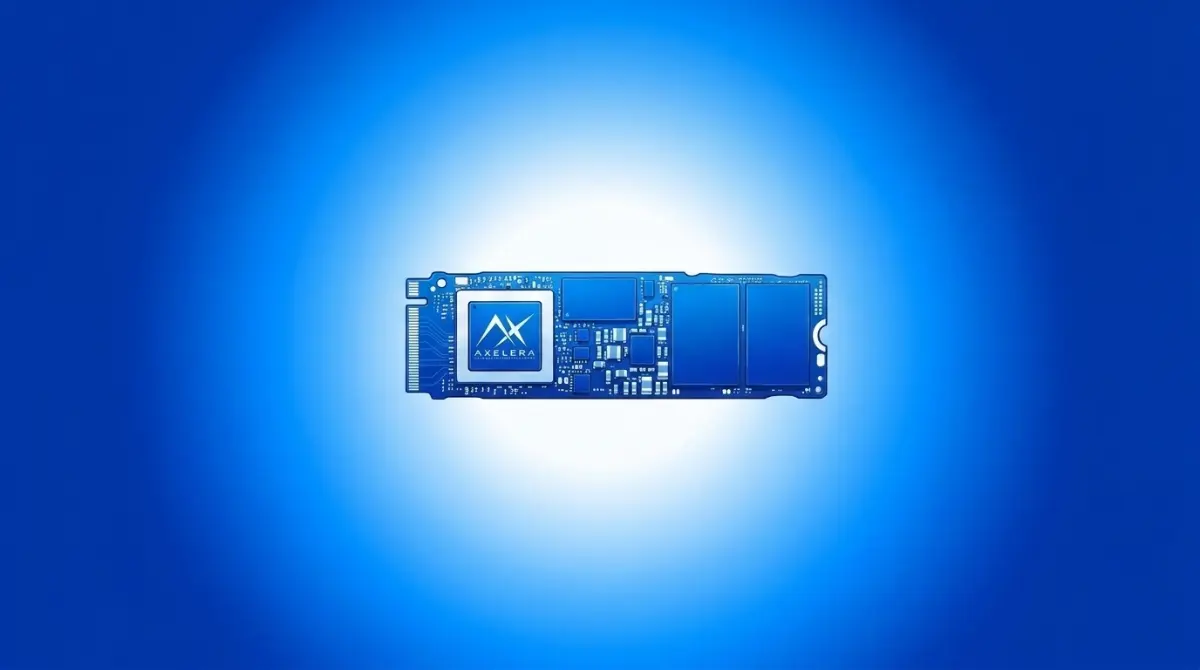


Axelera Wins AI Factory Deals and Unveils Europa Chip
Dutch semiconductor designer Axelera secured multi-million hardware supply pacts for European computing facilities on Tuesday while rolling out its second-generation Europa inference processor.
Inioluwa Ademidun | 15 Sept. 2026

For a decade, European policymakers delivered impassioned speeches inside Brussels assembly rooms, lamenting that their continent had surrendered semiconductor manufacturing to Asian foundries and American intellectual property giants. Every server rack installed across the European Union seemed stamped with intellectual property drafted in California. That subservient supply relationship is meeting stubborn resistance from a cohort of local hardware designers. On Tuesday, September 15, 2026, Dutch chip startup Axelera announced multiple commercial supply agreements to equip continental computing installations with specialized hardware, timed alongside the formal rollout of Europa, its second-generation machine learning processor.
The supply wins mark a commercial turning point for the Eindhoven designer, which spun out of the Belgian research center imec in 2021. Backed by more than $250M in private equity funding from Innovation Industries, BlackRock, Samsung Catalyst Fund, and sovereign regional investment vehicles, the enterprise is proving that non-American ventures can secure enterprise purchase commitments. Chief executive officer Fabrizio Del Maffeo confirmed that early manufacturing allocations will flow directly into industrial computing nodes built to host sovereign software models. You can examine how institutional funding accelerates physical hardware and industrial infrastructure by reading our report on Crusoe securing a $3B funding round at a $30B valuation for data centers.
The Physics of In-Memory Digital Processing
To grasp why enterprise server operators are signing purchasing contracts with an independent Dutch designer, you have to look at the energy wall stopping modern server facilities. Traditional graphics processors move information back and forth between distinct computing cores and separate external memory chips billions of times per second. That constant shuffling of electrical charges creates intense heat, consumes enormous wattage, and bottlenecks computing speeds. In dense computing centers running thousands of customer queries, electricity bills often eclipse the original purchase price of the hardware.
Axelera circumvents that bottleneck through an engineering approach called digital in-memory computing. Rather than separating calculations from data storage, the architecture embeds processing units directly within high-speed static random-access memory arrays. Doing mathematical calculations directly where numbers reside eliminates the energy-draining transit over circuit board traces. The startup proved that concept with its first-generation Metis processor, which delivered 214 trillion operations per second while drawing a modest ten watts. That energy efficiency allowed industrial clients to embed vision models inside automated robotics, warehouse tracking systems, and medical diagnostics without installing bulky liquid cooling loops. We analyzed how specialized processors optimize server pipelines when reporting on how d-Matrix tied up with Nvidia on server technology.
Scaling Performance with the Europa Platform
The newly deployed Europa silicon represents an aggressive scaling of that underlying in-memory architecture, shifting the venture from low-power factory edges directly into enterprise computing racks. Packing eight dedicated machine learning cores, sixteen open-standard central processing cores, and 128 megabytes of integrated cache, the processor achieves 629 trillion operations per second. That computational output delivers nearly triple the performance of its first-generation hardware while maintaining strict electrical efficiency.
Del Maffeo pointed out that customer economics are shifting as the broader software industry pivots from training massive foundational networks toward serving daily inference queries. Training a model happens once over several months, but executing user requests continues endlessly. Industry estimates indicate that inference workloads will represent a $250B market before the decade ends, consuming up to fifteen times more lifetime capital than initial training runs. Designing silicon specifically to run pre-trained neural networks at low wattage gives hardware operators a viable financial path to scale enterprise workloads without overloading municipal utility substations. The corporate race to balance energy draw and compute density reflects operational hurdles we explored when Seed Capital closed a $143M fund to back Nordic software platforms.
Equipping Continental AI Factories
The contracts announced on Tuesday position Axelera inside a strategic push to construct sovereign computational hubs, dubbed AI factories, across the European Union. These purpose-built campuses combine high-density server nodes, liquid-cooled infrastructure, and domestic fiber routes to guarantee that regional enterprises, financial institutions, and hospitals can process proprietary datasets without sending sensitive records across the Atlantic Ocean.
Securing multi-million hardware supply agreements gives the Dutch designer steady revenue visibility at a moment when venture capital firms are demanding real commercial sales rather than research white papers. By designing its accelerator cards to slide into standard peripheral component interconnect slots across off-the-shelf servers, the company allows facility operators to upgrade existing server racks without redesigning their physical floor plans. Software developers program the hardware through the company's Voyager software development kit, which converts open-source algorithms into optimized instructions. You can examine how early-stage ventures navigate competitive software categories in our feature on Norwest partners evaluating founder commercial execution before backing.
The Geopolitical Push for Sovereign Silicon
The business momentum behind European hardware startups is inseparable from broader geopolitical tensions. Supply chain shocks, international export restrictions, and regulatory barriers have exposed the fragility of depending exclusively on foreign suppliers. Sovereign investment funds, including Belgium's SFPIM and Italy's CDP Venture Capital, backed the startup specifically to preserve regional semiconductor capabilities that can withstand trade disputes.
The company is already preparing its next architectural jump, utilizing a $65M grant awarded by the European High Performance Computing Joint Undertaking to develop a high-performance computing chip codenamed Titania. Designed around open RISC-V processor instruction sets, that future platform seeks to deliver sovereign supercomputing capacity for massive generative models. European institutions understand that true digital independence cannot be achieved through privacy legislation alone. It requires owning the physical circuits that process the world's information.
As the commercial deployments of Europa ramp up over coming quarters, the semiconductor space will watch closely to see if Axelera can convert initial supply agreements into sustained market share against entrenched incumbents. If the Dutch hardware builder proves that digital in-memory computing can handle multi-tenant cloud workloads at a fraction of standard power consumption, it will establish a blueprint for European deep-tech independence, proving that groundbreaking silicon can still emerge from the continent that birthed the modern industrial world.
Read More on TechRobust:

Inioluwa Ademidun
 LinkedIn
Inioluwa Ademidun
Expertise:African Tech Ecosystem, Early-Stage Startups, Emerging Market Dynamics, Venture Capital & Tech Reporting, Product Management
Award:TechRobust Contributor of the Year 2025
Inioluwa is a Senior Product Manager by day and an investigative technology reporter by night, bridging the gap between scalable software architecture and high-impact journalism. She delivers deep-dive analysis on venture-backed founders, regulatory shifts, and grassroots tech ecosystems across Africa and global emerging markets.