


It’s Electric Wins NYC Deal to Install 700 Curbside Plugs
Brooklyn startup It's Electric secured New York City's landmark curbside charging hardware deal, closing fresh venture financing to deploy 700 plugs across all five boroughs.
Inioluwa Ademidun | 15 Sept. 2026

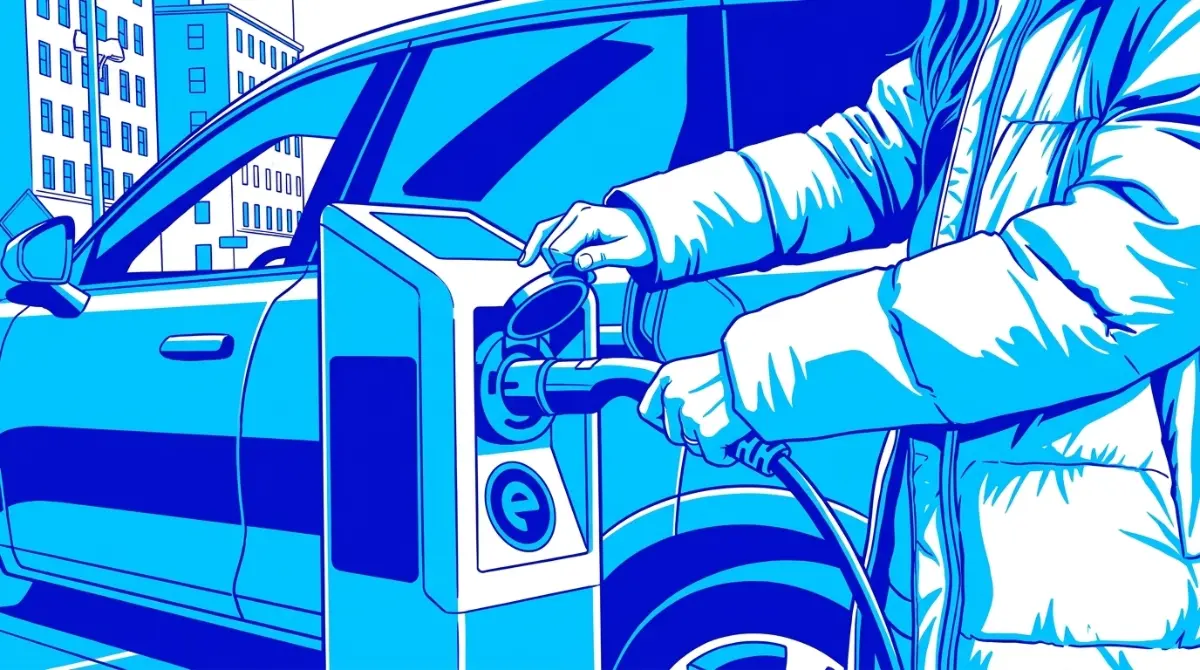
Thousands of cars sit bumper-to-bumper along the asphalt curbs, their owners living three flights up in pre-war apartment buildings without driveways, garages, or private wall outlets. For a decade, Silicon Valley treated vehicle electrification like a clean suburban luxury, assuming every EV driver pulls into a two-car private garage each evening to top off their battery pack overnight. That detached design assumption works well in Scottsdale or Palo Alto, but it fails completely in dense vertical cities. In New York City, where more than half of all vehicle owners rely exclusively on on-street parking, buying an electric car has felt like an impossible logistical headache. On Tuesday, September 15, 2026, Brooklyn-based charging startup It's Electric took a massive step toward breaking that urban barrier, securing the prime hardware contract from City Hall and the New York Power Authority to roll out nearly 700 curbside Level 2 plugs across all five boroughs.
The municipal award transforms the company from an agile regional pilot team into the primary hardware supplier for New York's permanent street-side charging grid. Under the three-year municipal deployment plan, the startup will replace the transport department's legacy pilot hardware while expanding the city's PlugNYC street footprint from a modest 88 points up to 700 active plugs. Alongside the landmark civic contract, the Brooklyn Navy Yard-based venture announced it closed an oversubscribed bridge funding round led by Halogen Ventures, with participation from Wisdom Ventures, Future Communities, E8 Angels, DiPalo Ventures, Alumni Ventures, Gaingels, and returning corporate backer Uber. The fresh equity injection brings total funding raised by the young enterprise to $15M. You can examine how physical logistics platforms attract private capital to overcome urban transport bottlenecks by reading our report on how Arc Ride secured $33.3M to scale EV battery swapping.
The Soft Power of Sidewalk Architecture
To grasp why an early-stage startup beat out legacy highway charging conglomerates for New York's curbs, you have to examine how traditional charging projects fail on city streets. Conventional charging operators employ teams of automotive electrical engineers who build massive high-voltage cabinets, heavy pedestals, and thick cables designed for highway rest stops and suburban retail parking lots. Dropping those bulky cabinets onto a crowded New York sidewalk requires digging deep utility trenches into municipal streets, tearing up public asphalt, and navigating an administrative maze of utility hookups with Consolidated Edison that can take eighteen months per plug.
Co-founders Nathan King and Tiya Gordon bypassed that bureaucratic quicksand by approaching the sidewalk through the lens of urban planning and civic architecture rather than raw electrical muscle. Gordon calls this organizational edge soft power. Rather than running expensive trenches out to high-voltage street transformers, the startup's compact chargers connect directly to the spare electrical capacity of adjacent private buildings, brownstones, and commercial properties. By pulling building power across the sidewalk via narrow conduits, installation timelines shrink from months to days, while property owners receive a shared cut of charging revenues. That thoughtful physical footprint allows charging posts to blend cleanly into historic neighborhoods without cluttering walking paths. We explored how early hardware founders navigate operational execution and investor due diligence in our feature on Norwest partners evaluating founder commercial execution before backing.
Targeting the Forgotten Rideshare Working Class
The geographic deployment strategy behind the 700-plug expansion targets an acute socio-economic pressure point: the city's sprawling rideshare workforce. New York City is home to more than 80,000 drivers licensed by the Taxi and Limousine Commission, a workforce that currently completes roughly 3 million electric trips every month. Under the municipal Green Rides mandate, every Uber and Lyft trip completed within the five boroughs must transition to zero-emission or wheelchair-accessible vehicles by 2030. Yet the vast majority of these professional drivers rent apartments in outer-borough working-class neighborhoods where private garage stalls do not exist.
Because commercial fast-charging plazas charge steep kilowatt premiums and generate long waiting lines during peak hours, forcing gig drivers into commercial lots eats directly into their weekly earnings. The initial deployments are heading straight into high-density neighborhoods where rideshare operators live and park on the street, including Soundview and Unionport in the Bronx; Rego Park, Forest Hills, and Far Rockaway in Queens; Red Hook, Carroll Gardens, and Bedford-Stuyvesant in Brooklyn; Washington Heights in Manhattan; and Stapleton on Staten Island. Siting plugs where drivers sleep allows them to charge at lower Level 2 overnight rates without burning unpaid work hours waiting at crowded charging lots. You can observe how everyday workers adapt consumer tech tools to protect their daily livelihoods in our analysis of localized networks solving workforce deficits.
Manufacturing in Queens to Keep Capital Local
Beyond street-level logistics, the startup anchored its civic bid in a commitment to domestic industrial manufacturing. Every charging post deployed across New York City—alongside units supplied to expanding operations in Detroit, Los Angeles, San Francisco, Boston, and Washington, D.C.—will be manufactured directly inside a production facility in Queens. In an era when clean-tech hardware supply chains remain heavily exposed to overseas fabrication risks and international trade tariffs, building an urban assembly line within city borders provided City Hall with deep political and economic validation.
The contract structure also protects municipal balance sheets. While the startup provides proprietary hardware, engineering services will be executed by Maverick Corporation, with cloud payment software delivered by SWTCH Energy. Crucially, the New York Power Authority procures the physical equipment, shifting capital financing burdens off the startup while allowing the municipal transport department to retain direct control over consumer pricing. Drivers will be billed directly by the kilowatt-hour via credit card tap or mobile applications, with pricing structured to prevent gas-car parking abuses while keeping overnight charging affordable. Where sidewalk dimensions permit, stations will also integrate connections for electric micromobility docks, e-bike battery cabinets, and cargo delivery bike corrals. How industrial hardware startups balance capital reserves against heavy manufacturing demands was examined when we covered how Crusoe secured a $3B funding round at a $30B valuation for data centers.
Proving the Urban Infrastructure Formula
The three-year deployment represents a vital test case for municipal climate policy nationwide. For years, skeptics argued that dense American metropolises could never support electric vehicle transitions because retrofitting century-old streets was simply too expensive and politically contentious. If a five-year-old Brooklyn venture can prove that curbside charging can become as normal and reliable as neighborhood fire hydrants, municipal transport directors across Chicago, Philadelphia, and Boston will quickly adopt the blueprint.
Nathan King noted that modern city children should grow up viewing sidewalk charging posts as mundane street furniture rather than futuristic novelties. Reaching that goal requires moving past high-minded policy speeches and solving the difficult, gritty problems of municipal permits, building wiring, and outer-borough parking politics. By transforming ordinary curbs into accessible electrical hubs, It's Electric is proving that the transition to clean mobility will not be won on private suburban driveways, but on the public sidewalks that belong to everyone.
Read More on TechRobust:

Inioluwa Ademidun
 LinkedIn
Inioluwa Ademidun
Expertise:African Tech Ecosystem, Early-Stage Startups, Emerging Market Dynamics, Venture Capital & Tech Reporting, Product Management
Award:TechRobust Contributor of the Year 2025
Inioluwa is a Senior Product Manager by day and an investigative technology reporter by night, bridging the gap between scalable software architecture and high-impact journalism. She delivers deep-dive analysis on venture-backed founders, regulatory shifts, and grassroots tech ecosystems across Africa and global emerging markets.