


Apple Takes on Nvidia and Microsoft to Cut Enterprise AI Costs
Apple is aggressively pushing its upgraded desktop computers to corporate buyers as a cheaper, local alternative to expensive cloud data centers for artificial intelligence.
Umar Thariwat | 22 Sept. 2026 · 6 min read

The corporate technology sector is currently experiencing an expensive bottleneck. Running complex artificial intelligence models requires massive amounts of computing power, forcing companies to rent capacity from remote data centers. Those cloud computing bills accumulate rapidly. Apple is stepping into this exact financial tension by offering a hardware solution. The California giant began shipping new versions of its Mac Mini and Mac Studio desktop computers on Tuesday. The main sales pitch to corporate buyers focuses entirely on math and budgeting. Executives argue that buying a powerful local machine is vastly cheaper than constantly paying monthly fees to run algorithms in the cloud.
The financial model for remote computing relies on tokens. When an employee asks a chatbot a question or runs a software coding script, the cloud provider charges a tiny fraction of a cent for every unit of data processed. Those fractions quickly turn into millions of dollars for large corporations using tools from providers like OpenAI. Apple wants to eliminate that recurring expense completely. By packing heavy processing power directly onto the desk of the employee, the company promises zero additional computing costs after the initial hardware purchase. Johny Srouji, the chief hardware officer at Apple, stated clearly that customers buy the machine once and use it endlessly without paying token fees.
The Architectural Advantage of Apple Silicon
To pull off this strategy, the engineering team had to rethink how computers handle memory. Traditional desktop computers separate the central processing units from the memory chips. This separation creates a slight delay when moving data back and forth. When Apple designed its own silicon back in 2020, they merged everything into a unified architecture to save battery life on portable devices. That specific design choice accidentally created the perfect environment for artificial intelligence workloads. The close connection between the processors and the memory allows the new Macs to chew through heavy data sets at speeds that usually require a dedicated server rack.
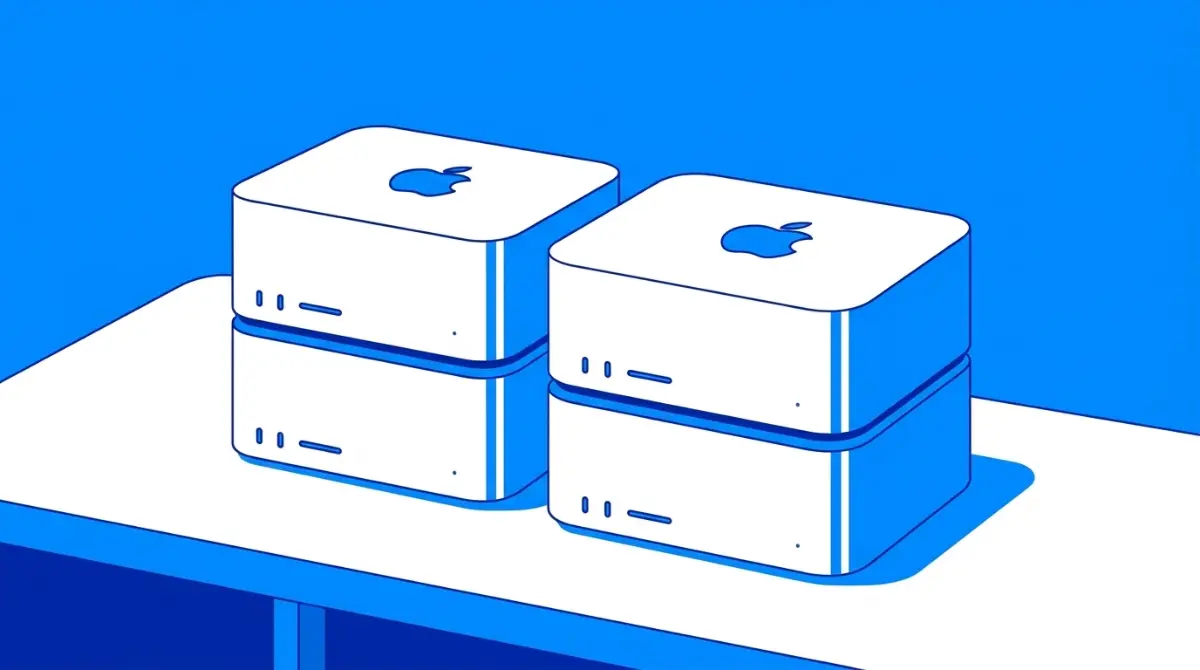
The current hardware lineup reflects this capability. Fully configured Mac Studio systems can cost nearly $20,000, placing them far above standard office computers but far below commercial server installations. During a recent presentation, Apple demonstrated four Mac Studio units linked together using specialized networking technology. That small cluster successfully processed a complex coding model featuring one trillion parameters, drawing power from a standard wall outlet. Achieving that exact same result previously required leasing space inside a massive, energy-hungry data center. By removing the need for massive air conditioning units and industrial power supplies, Apple is changing the physical requirements for advanced software development.
We recently saw another attempt to move processing power away from the cloud when Perplexity and Nvidia launched a portable computer featuring a local AI agent. The entire technology industry realizes that relying entirely on remote servers is financially unsustainable for daily office tasks. Moving the processing load back to the local device is becoming a major priority.
Challenging the Microsoft Desktop Monopoly
While the hardware looks impressive, the corporate sales challenge is incredibly steep. Microsoft holds a massive grip on the business computing market. Recent industry data shows Windows commanding roughly 91.3 percent of the enterprise desktop sector. Apple controls a meager 4.6 percent. Entire IT departments are built around maintaining Windows machines, securing Microsoft networks, and managing software licenses. Convincing a chief information officer to scrap their existing infrastructure and purchase expensive Apple hardware requires more than just a clever sales pitch.
Microsoft is not ignoring the threat. Chief Executive Officer Satya Nadella is actively pursuing the same local computing strategy. He refers to it as unmetered intelligence. Microsoft is working closely with outside chip manufacturers to optimize Windows software for local processing. However, Microsoft faces a structural disadvantage. They must ensure their operating system works perfectly across thousands of different computer models built by dozens of different manufacturers. Apple builds the hardware and the software in total isolation, allowing them to optimize performance perfectly for their specific chips.
This tight integration is the same reason Apple commands premium pricing across its entire product lineup. We noted this exact pricing confidence when reviewing the latest iPhone 18 Pro and the $2,000 iPhone Duo. The company knows that buyers will pay higher upfront costs if the software experience is flawless and the device outlasts cheaper alternatives.
The Nvidia Factor
Nvidia remains the undisputed king of artificial intelligence hardware. Their graphics processing units power almost every major data center on the planet. When asked about the new Apple desktops, Nvidia Chief Executive Officer Jensen Huang dismissed any idea of a direct rivalry. He stated that his company is focused on expanding the capabilities of Windows machines. For now, the Nvidia empire remains safely inside the massive server farms.
However, the competition is becoming complicated. Apple is not trying to replace the massive training clusters that companies use to build new language models from scratch. They are targeting the inference stage. Inference happens when an employee actually uses the trained model to get an answer. Running inference in the cloud is incredibly expensive. By providing hardware that handles inference locally on the desk, Apple directly undercuts the cloud providers who buy hardware from Nvidia.
Scaling from Mobile to Desktop
The unified architecture gives Apple another distinct sales tool. Srouji pointed out that corporate developers can write a software program on an expensive Mac Studio and easily scale it down to run on an iPad or an iPhone. Because all Apple devices share the exact same underlying chip design principles, the software translates perfectly. This allows a business to deploy artificial intelligence tools directly into the hands of their field workers without rewriting the code for different processors.
This ecosystem lock-in is highly attractive to companies managing thousands of employees. Instead of buying software from a third party vendor and paying monthly subscription fees, a corporation can build an internal tool, run it on local Mac hardware, and deploy it to employee mobile devices securely. The data never leaves the corporate network, satisfying strict privacy regulations and removing the risk of a third party cloud breach.
The demand for these machines is already visible. Earlier versions of the Mac Mini sold out quickly in certain Asian markets when open source developers realized they could use the cheap desktop computers to run automated software agents locally. Apple watched that consumer behavior and decided to build highly expensive, professional versions of the same hardware specifically for corporate buyers.
A Shifting Corporate Budget
The next twelve months will reveal exactly how much financial pain corporate technology departments are willing to endure. Monthly cloud billing statements are causing massive budget overruns globally. Executives are desperately searching for ways to cap their expenses without falling behind their competitors. Buying a $20,000 desktop computer sounds incredibly expensive until you compare it to a $50,000 monthly cloud hosting bill.
If Apple can convince a handful of major Fortune 500 companies to make the switch, it could trigger a broader industry shift. The promise of unmetered computing is highly seductive to any chief financial officer trying to forecast yearly expenses. The battle for the enterprise desk is no longer just about word processors and spreadsheets. It is a battle over where the heavy mathematical processing physically takes place, and who gets to collect the check.
Read More on TechRobust:

Umar Thariwat
 LinkedIn
Umar Thariwat
Expertise:Tech News Reporting, Tech Business Analysis, Economic Foundations, Market Trends, Digital Economy
Award:Rising Voice of the Year 2025
Thariwat is a Staff Writer and Reporter covering tech news and enterprise trends at TechRobust. Blending daily reporting with her ongoing academic background in economics, she analyzes earnings, digital market, and the commercial strategies powering the global tech sector.