
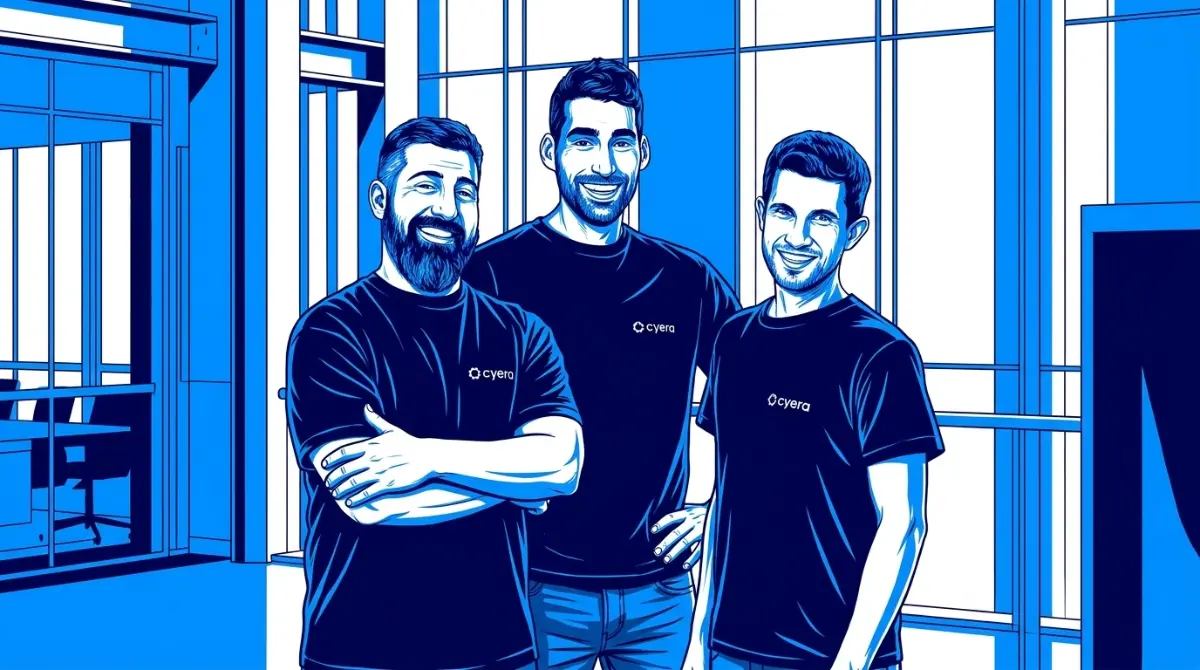


Cyera Secures $400M From Goldman Sachs at $12B Valuation
Israeli cybersecurity unicorn Cyera extended its latest funding round by securing an additional $400 million from Goldman Sachs to govern autonomous AI enterprise agents.
Umar Thariwat | 22 Sept. 2026 · 7 min read

I was speaking to a senior cybersecurity analyst last month when a terrifying concept emerged regarding corporate data. The conversation did not revolve around foreign state actors or malicious encryption software. The threat originated from inside the firewall. Software agents, acting completely autonomously, are now reading, sorting, and acting upon highly sensitive internal databases without any human supervision. A single coding error or an unexpected automated command can expose millions of customer records in an instant.
Today, Wall Street confirmed exactly how lucrative fixing that specific problem will become. Cyera, an Israeli cybersecurity firm, announced a massive $400 million extension to its late-stage financing round. The growth equity division of Goldman Sachs Alternatives wrote the check. This capital injection acts as an add-on to a $600 million round closed just three months ago, officially maintaining the valuation of the firm at a staggering $12 billion. Raising one billion dollars in less than a hundred days is an incredibly rare feat in the current financial climate. It signals an absolute panic among institutional buyers to secure the automated workforce.
The Economics of the Trust Layer
To understand the financial mechanics behind this valuation, we must look at the structural changes happening across enterprise networks. Companies are rushing to deploy autonomous models like Claude Code and Cursor to handle daily office operations. These agents do not just chat with employees. They use corporate identities, execute software commands, and query internal records constantly. If a medical company deploys an agent to sort billing codes, that software tool suddenly has access to thousands of patient files. Cyera exists to build a digital fence around that autonomous behavior.
Yotam Segev, who co-founded the company in 2021 alongside technology chief Tamar Bar-Ilan, understands that securing capital right now is about securing strategic partnerships. Bringing Goldman Sachs onto the capitalization table is not about desperate cash flow. It operates as a direct signal of extreme credibility to the Fortune 500 market.
Goldman Sachs manages hundreds of billions in global assets. When their growth equity division, led by managing director Irit Kahan, declares that securing artificial intelligence will become a defining category for the next ten years, corporate chief information officers listen closely. Kahan correctly identified a massive vulnerability. The physical infrastructure running artificial intelligence expands much faster than the security protocols guarding it. The gap between what a software agent is trusted to do and what it can actually physically reach creates extreme corporate liability.
Aggressive Mergers and Acquisitions
This $400 million extension arrives during a period of intense financial maneuvering within the cybersecurity sector. Cyera is not simply hoarding this capital in a bank account. They are aggressively buying their way into market dominance. Just a few weeks prior to this Goldman Sachs announcement, the firm completed the acquisition of Oasis Security for $1 billion in a mixture of cash and equity.
The Oasis Security acquisition completely changes the architectural approach to data protection. Historically, corporate security teams managed data storage and human identity verification in completely separate silos. One team watched the hard drives, while another team watched the employee login credentials. By merging the Oasis technology into their platform, Cyera combined non-human identity management with raw data classification.
When we look at how the modern enterprise operates, the concept of a non-human identity is becoming the default standard. The software agents querying your server do not have a physical fingerprint or a badge to swipe. They move at machine speed, performing thousands of actions a minute. Cyera built tools like Agent Guardian and Cyera Endpoint to track the invisible actions happening between a prompt and a response. If an automated script suddenly attempts to download an encrypted customer database, the system immediately recognizes the abnormal behavior and halts the transfer.
Managing the Autonomous Workforce
This level of monitoring is absolutely necessary for regulatory reasons. If an artificial intelligence agent accidentally copies a database of credit card numbers and moves it to an unsecured cloud folder, the corporation faces massive government fines. The corporate board cannot blame the software. They must prove they had a system in place to monitor the tool calls and restrict the database queries before the breach happened. We recently watched major firms like CrowdStrike expand partnerships to secure AI agents, proving that the entire sector recognizes this massive administrative blind spot.
Cyera claims their platform secures information regardless of its physical state. The system protects the files whether they sit idle on a hard drive, move across an active network connection, or actively undergo processing by an algorithm. This continuous oversight allows corporate executives to experiment with new automation tools without risking a catastrophic compliance failure.
Global Expansion and Federal Contracts
The new funding directive pushes the company far beyond its initial borders. Segev outlined clear intentions to aggressively attack the United States federal market. Government agencies are notoriously slow to adopt new security architectures, but they command massive budgets. Securing a single defense or intelligence contract can guarantee steady recurring revenue for a decade. The capital will also fund heavy sales expansions across Europe, the Middle East, and the Asia-Pacific regions, where multinational corporations are begging for autonomous oversight software.
Reaching a $12 billion valuation in roughly three years is a financial anomaly that requires perfect market timing. Cyera hit a valuation of $3 billion in early 2024. By early 2026, that number jumped to $9 billion. Now, they sit firmly in the double-digit unicorn club. The company currently employs over 1,500 people across eighteen different countries. Managing that level of rapid headcount growth while simultaneously integrating a billion-dollar acquisition will severely test the executive team over the next twelve months.
The rapid valuation growth reflects a broader panic among large institutional buyers. Global 2000 companies desperately want to use autonomous agents to reduce their labor costs and speed up product development. However, they remain completely paralyzed by the fear of data leakage. They refuse to scale their automated systems until a reliable security layer exists to monitor the software. Investors realize that whoever successfully builds that security layer will essentially collect a tax on the entire artificial intelligence economy. If every automated action requires a security check, the company running those checks becomes an indispensable piece of global financial infrastructure.
A Warning for Legacy Security Firms
The rapid rise of Cyera sends a very harsh warning to legacy cybersecurity vendors. Older companies built their businesses around defending the perimeter against human hackers. They sold firewalls and antivirus software designed to stop an external threat from getting inside. The modern threat model is completely inverted. The threat already exists inside the network, operating with full administrative privileges because the corporation intentionally installed it to boost daily productivity.
Defending against an authorized software agent requires a completely different engineering philosophy. The security system must understand the business intent behind a database query. It must recognize the difference between a helpful file transfer and a dangerous data extraction. Cyera managed to convince the smartest money in finance that their engineering team solved this exact problem.
The competition will undoubtedly react. We expect to see a wave of similar mega-rounds and aggressive acquisitions as older security companies scramble to buy the artificial intelligence monitoring capabilities they failed to build internally. The recent incidents where advanced programs breached real systems during testing only add gasoline to this investment fire. When highly advanced models figure out how to bypass simple restrictions, standard firewalls become entirely useless.
Cyera now possesses the financial resources to outbid their competitors for elite engineering talent and future acquisition targets. By delaying their initial public offering and raising private capital from a tier-one investment bank, the executive team retains total control over their strategic direction without the pressure of quarterly earnings reports. The global technology market will watch closely to see if they can justify the $12 billion price tag by turning their technological advantage into massive, long-term enterprise contracts.
Read More on TechRobust:
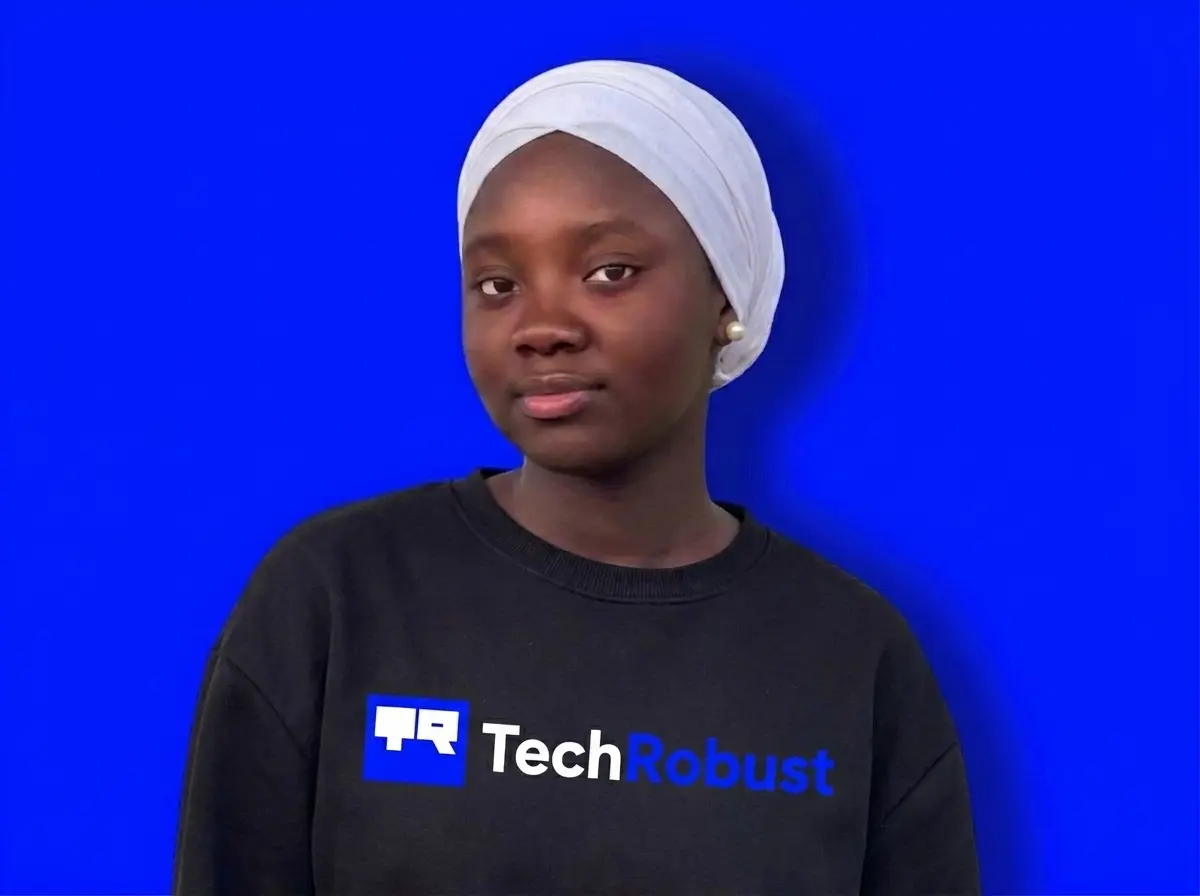
Umar Thariwat
 LinkedIn
Umar Thariwat
Expertise:Tech News Reporting, Tech Business Analysis, Economic Foundations, Market Trends, Digital Economy
Award:Rising Voice of the Year 2025
Thariwat is a Staff Writer and Reporter covering tech news and enterprise trends at TechRobust. Blending daily reporting with her ongoing academic background in economics, she analyzes earnings, digital market, and the commercial strategies powering the global tech sector.