
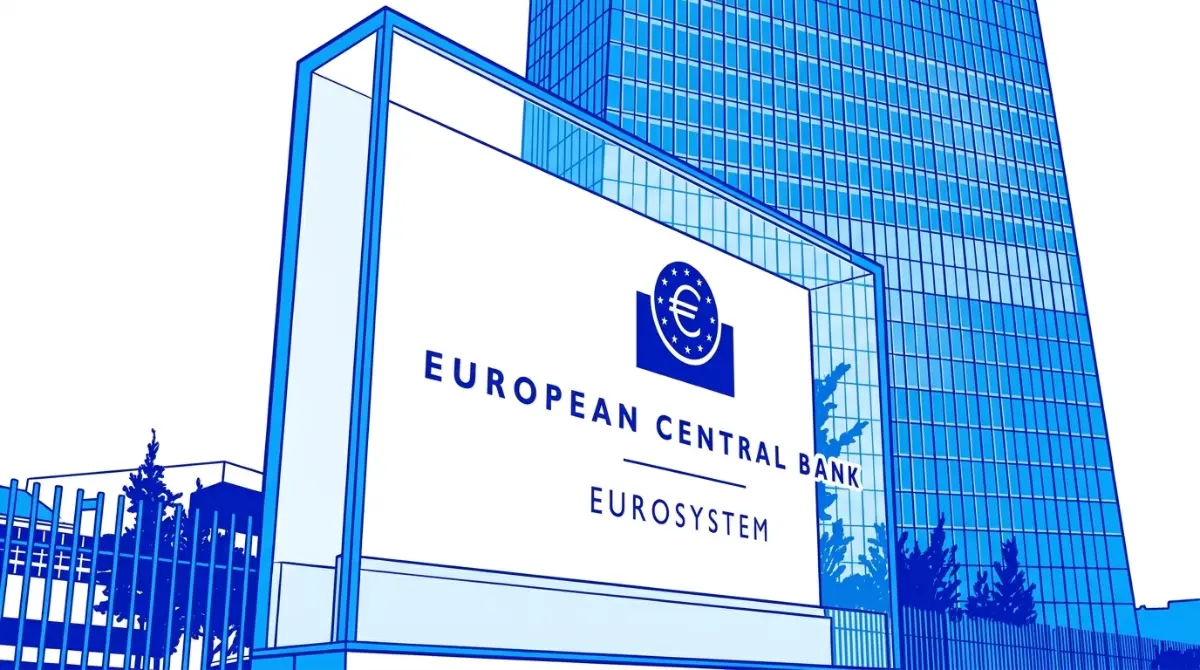


ECB Connects Wholesale Financial Markets to Distributed Ledgers
European Central Bank officials launched Pontes to settle tokenized market transactions in central bank euros, curbing reliance on private stablecoins.
Umar Thariwat | 21 Sept. 2026 · 6 min read

European monetary authorities have opened public settlement channels to shared digital ledgers, seeking to counter private currency instruments across institutional capital markets. Central banks across the continent observed private credit card processors and dollar-pegged stablecoin issuers capture growing shares of international transaction clearing. Financial watchdogs recognized that if commercial lenders moved security trading onto independent blockchain ledgers without public payment channels, private digital assets would displace sovereign currencies during high-value trade settlements. On Monday, September 21, 2026, the European Central Bank addressed that structural challenge by going live with Pontes, an operational bridge linking commercial distributed ledger networks directly with Eurosystem payment services. The deployment allows institutional banks to settle wholesale tokenized bond and equity trades using official central bank money rather than unregulated private tokens.
The operational debut permits participating credit institutions to execute trades in digital securities while exchanging central bank euros on underlying balance sheets. Named after the Latin word for bridges, Pontes connects distributed ledger software to TARGET settlement services, offering institutional lenders a risk-free cash settlement leg. Initial market participants cleared to use the interface immediately include Germany largest lender Deutsche Bank and Spanish multinational banking group Banco Santander, with additional European institutions scheduling integration over coming quarters. Operating between 8 a.m. and 4 p.m. Central European Time on business days, the platform unifies three interoperability mechanisms tested during earlier Eurosystem trials. We monitored how macroeconomic pressures and debt markets impact institutional technology financing in our report on Sam Altman calling OpenAI 2026 IPO plan ill-advised.
Defending Currency Sovereignty Against Dollar Stablecoins
To evaluate why Frankfurt prioritized wholesale distributed settlement, one must look at geopolitical currency competition. Over the past four years, dollar-denominated private stablecoins expanded across global trade rails, supported by American political figures who view private dollar tokens as tools to extend foreign monetary reach. European financial policymakers grew alarmed that multinational corporations might settle digital bonds and commodities in dollar tokens, reducing the global utility of the euro.
ECB President Christine Lagarde noted that the Eurosystem must construct an integrated, resilient financial market adapted to digital settlement. Executive board official Isabel Schnabel previously cautioned that public monetary institutions must provide on-chain liquidity to stop private alternatives from dominating trade execution. By providing commercial banks with an authorized mechanism to settle digital bond issuances directly in euros backed by the central bank, Pontes stops sovereign currency erosion. Financial clearinghouses can automate coupon distributions and security redemptions through programmable code without holding speculative tokens issued by private technology firms. The push to defend regional payment autonomy matches structural shifts we examined when reviewing regulators demanding verified ownership records for private startup shares.
Replacing Segmented Settlement With Real-Time Execution
Beyond geopolitical currency defense, Pontes addresses structural friction embedded within legacy security settlement. Traditional capital market operations require multiple separate intermediaries, including central securities depositories, clearinghouses, and custodian banks. These participants trade messages through regional communication networks, meaning equity and debt transactions take two business days to settle fully. During that multi-day clearing window, counterparty credit exposure introduces ongoing market risks.
Pontes bypasses those delays by pairing distributed ledger transactions with atomic settlement. When a sovereign debt note or corporate bond gets issued as a cryptographic token, ownership transfer and cash payment occur simultaneously. The transaction records through cash tokens on the Eurosystem ledger or routes directly through T2, the existing real-time gross settlement system. By bundling order matching, compliance verification, and cash settlement into automated smart contracts, banks eliminate counterparty risk and reduce balance sheet collateral requirements. To demonstrate institutional commitment to the technology, the ECB confirmed it will invest a fraction of its €23B own-funds portfolio directly into blockchain-based public debt instruments issued by European governments. How advanced software platforms restructure legacy corporate workflows was explored when Wipro freed capacity equivalent to 20,000 workers through automated systems.
The Road Toward Permanent Settlement Architecture
While Pontes provides immediate connectivity for European lenders, the central bank treats the interface as a transitional bridge rather than a permanent solution. The platform operates as the short-term leg of a dual-track strategy approved by the Governing Council in mid-2025. Technical teams designed Pontes to meet immediate commercial appetite following 2024 trials where 64 financial market participants tested more than 50 pilot transactions totaling over €1.5B.
The broader strategy centers on Appia, an architectural framework slated for full blueprint delivery in 2028. While Pontes links external distributed ledgers to legacy payment pipes, Appia aims to establish a unified European financial infrastructure where central bank money, tokenized commercial bank deposits, and digital securities live on a shared technical rail. Furthermore, the wholesale launch complements the retail digital euro project, which remains scheduled for consumer debut around 2029 to reduce continental dependence on American payment card networks. By constructing wholesale rails ahead of consumer wallets, monetary authorities ensure institutional liquidity settles safely before consumer payment apps arrive.
Commercial Adoption Faces Institutional Realities
The ultimate utility of Pontes will depend on whether commercial debt issuers choose to migrate standard debt sales onto tokenized ledgers. Connecting banking software to Eurosystem servers is only the first step. For tokenized securities to challenge conventional financial pipelines, corporate treasuries and national governments must regularly issue debt using digital tokens rather than traditional paper registers.
European lenders must also navigate varying national securities laws across the European Union. While the European Union DLT Pilot Regime provides regulatory exemptions for digital trading venues, cross-border legal definitions regarding token custody, bankruptcy segregation, and tax withholding remain fragmented across member states. Furthermore, commercial banks must overhaul internal risk accounting systems, replace legacy back-office software, and retrain trade desks to manage programmable contracts. If institutional trading desks find dual-track settlement too complex during volatile trading days, transaction activity will remain concentrated on legacy clearing platforms.
A Strategic Turning Point for Institutional Money
The introduction of the Pontes settlement bridge marks an important shift in central banking philosophy. For years, sovereign monetary institutions dismissed distributed ledgers as speculative toys suited primarily for volatile cryptocurrency exchanges. By integrating shared ledgers directly into TARGET services, the European Central Bank is admitting that programmable tokenization represents a permanent evolution in capital market mechanics.
Connecting sovereign central bank money to distributed networks protects public currencies from technological obsolescence. If central banks failed to build modern settlement bridges, private financial firms and foreign technology cartels would have built them instead, extracting fees and establishing private rules for institutional commerce. By asserting regulatory authority over wholesale digital clearing, Europe is ensuring that the euro remains the foundational settlement asset across tomorrow digital capital markets. The technical pipes are open, the initial lenders are connected, and the modernization of global institutional finance has taken a permanent step onto the blockchain.
Read More on TechRobust:

Umar Thariwat
 LinkedIn
Umar Thariwat
Expertise:Tech News Reporting, Tech Business Analysis, Economic Foundations, Market Trends, Digital Economy
Award:Rising Voice of the Year 2025
Thariwat is a Staff Writer and Reporter covering tech news and enterprise trends at TechRobust. Blending daily reporting with her ongoing academic background in economics, she analyzes earnings, digital market, and the commercial strategies powering the global tech sector.