
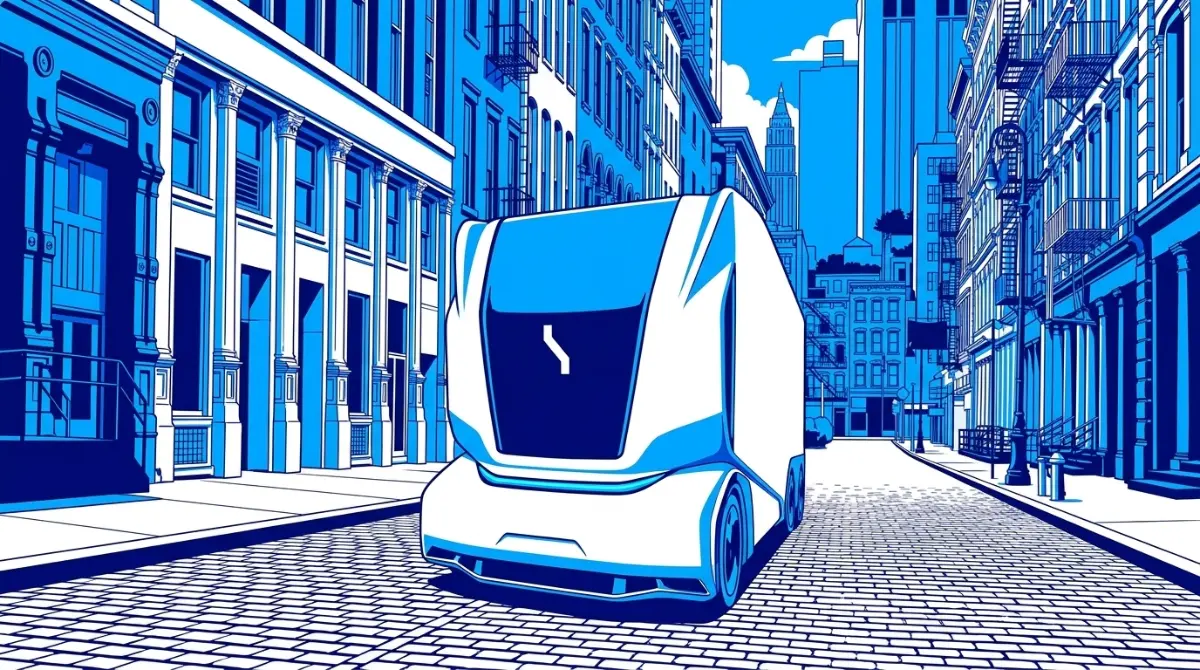


Einride and Lidl Launch Cab-Less Truck in Germany
Freight operator Einride and grocery titan Lidl introduced the first driverless cab-less transport vehicle onto public German thoroughfares under federal regulatory clearance.
Umar Thariwat | 15 Sept. 2026

Stand beside a highway interchange near Frankfurt or Munich at dusk and you witness the exhausting rhythm of European commerce. Thousands of diesel freight haulers queue in steady lines, their human operators managing mandatory rest periods while supermarket shelves hundreds of kilometers away wait for fresh replenishment. For fifteen years tracking automated transport, I have listened to vehicle executives showcase driver-assist dashboards that still require an attentive human sitting behind a steering wheel. That cautious approach kept transport companies trapped in intermediate steps. True industrial transformation does not happen when you assist a human driver; it happens when you delete the driver seat entirely. On Tuesday, September 15, 2026, Swedish autonomous freight designer Einride and supermarket titan Lidl took that exact step, deploying the first cab-less freight hauler onto public thoroughfares in Germany under full federal approval.
The operational milestone, confirmed through an official permit from Germany's Federal Motor Transport Authority, or KBA, marks the first time a completely cab-less Level 4 autonomous commercial hauler has entered daily logistics service across the country. Operating without a human operator or safety monitor on board, the specialized electric machine carries cargo between a regional Lidl distribution warehouse and a retail grocery branch. Transport authorities granted the permit following extensive road validation protocols designed to verify that optical sensors, radar systems, and machine intelligence models can navigate mixed traffic safely. You can examine how autonomous commercial fleets navigate regulatory scrutiny and public trials by reading our report on Tesla rolling out commercial Cybercab rides for public testing.
Engineering Freight Without a Human Shell
To appreciate what separates Einride's machine from standard freight trucks, you have to examine vehicle architecture. Traditional automotive companies take existing diesel cabs, bolt sensor pods onto side mirrors, and install mechanical actuators over pedals. That retrofitted setup preserves hundreds of kilograms of unnecessary metal, glass windshields, climate controls, and cabin suspension designed solely to protect a human body.
The Swedish designer discarded that legacy blueprint from its inception. By eliminating the driver cabin entirely, the vehicle becomes a streamlined, aerodynamic freight carrier on wheels. Its forward structure replaces windshields with high-resolution optical cameras, long-range lidar arrays, and radar antennas that feed telemetry into centralized driving algorithms. Removing the cabin cuts production costs, reduces aerodynamic drag, and maximizes interior freight volume. Furthermore, the hauler operates under remote human supervision, allowing off-site technicians stationed in control centers to monitor multiple autonomous vehicles simultaneously and provide navigational advice only when unusual road conditions appear. We monitored how federal safety watchdogs inspect unexpected autonomous maneuvers when reviewing federal regulators probing autonomous vehicle deployment safety rules.
Confronting Europe's Labor Shortage
The corporate motivation pushing Lidl into automated freight is rooted in deep demographic math. Across Europe, freight logistics is facing an acute staffing crisis. The International Road Transport Union projects that hundreds of thousands of commercial driving positions remain vacant across the continent, with an aging workforce retiring far faster than young apprentices enter the field. Supermarket networks operating on tight grocery margins cannot afford to have supply lines stall because delivery trucks lack drivers.
Thomas Dangelmayer, head of operational logistics for Lidl in Germany, noted that testing autonomous hauling in daily operations allows the company to evaluate how forward-looking technology integrates into existing warehouse docks. The retailer plans to expand the initial point-to-point transit into a multi-stop delivery network, connecting regional fulfillment hubs with multiple city stores. Furthermore, internal discussions are underway to scale autonomous hauling across sibling divisions within the broader Schwarz Group, which operates extensive retail and manufacturing networks across Europe. Addressing labor bottlenecks through automation mirrors enterprise adaptations we analyzed when Wipro generated capacity matching 20,000 workers using automated software.
Germany as the Proving Ground for Machine Mobility
Securing regulatory clearance in Germany represents an exceptional technical achievement. The nation operates the largest road transport economy in Europe and maintains some of the most stringent vehicular safety standards in the world. While American states like Arizona and Texas adopted permissive testing policies for autonomous developers, European regulators insisted on verified safety redundance before allowing driverless trucks near passenger traffic.
German transport officials established legal frameworks for Level 4 automated operations on public roads, creating an authenticated path for commercial deployment rather than temporary testing waivers. Christian Hirte, Parliamentary State Secretary at the Federal Ministry of Transport, stated that the joint deployment demonstrates modern logistics capability, helping align climate objectives with industrial competitiveness. Proving that cab-less electric trucks can navigate German industrial zones establishes an international benchmark that transport regulators across France, the Netherlands, and Scandinavia will use to draft their own domestic rules. You can review how early-stage ventures navigate competitive platform moats by reading our feature on Norwest partners evaluating founder commercial execution before backing.
The Battle for Long-Haul Autonomy
The successful deployment in Germany accelerates a commercial race between electric short-haul pods and long-range highway trucking. American developers have focused on heavy Class 8 trucks designed to traverse thousands of interstate miles between desert logistics hubs. Yet long-haul trucking requires mastering unpredictable highway speeds, sudden weather shifts, and intricate trailer switching yards.
By focusing on predictable short-range routes between distribution hubs and retail stores, Einride and Lidl are capturing immediate commercial value. Local deliveries operate along fixed routes at moderate speeds, making sensor mapping easier and risk management simpler. Because these routes are repetitive, fleet operators can install dedicated high-power electric charging points at warehouse loading docks, ensuring vehicles recharge while forklifts swap pallets. This pragmatic strategy turns automated freight into an operational reality today rather than a distant research project. We tracked how physical logistics platforms attract major institutional capital when reporting on Crusoe securing a $3B funding round at a $30B valuation for data centers.
As the initial deployment expands toward multi-stop supply loops, the transport sector will watch performance data closely. Eliminating human drivers from retail supply routes will not solve every logistics hurdle overnight, but it proves that autonomous freight has moved past closed test tracks into commercial commerce. By placing a cab-less electric vehicle on public roads, Einride and Lidl have shown that the future of freight belongs to machines built from scratch for the automated age.
To review the original wire reporting on this European deployment, you can visit Reuters.
Read More on TechRobust:

Umar Thariwat
 LinkedIn
Umar Thariwat
Expertise:Tech News Reporting, Tech Business Analysis, Economic Foundations, Market Trends, Digital Economy
Award:Rising Voice of the Year 2025
Thariwat is a Staff Writer and Reporter covering tech news and enterprise trends at TechRobust. Blending daily reporting with her ongoing academic background in economics, she analyzes earnings, digital market, and the commercial strategies powering the global tech sector.