


 LinkedIn
 Elon Musk Signs Petition to Reinstate Nvidia CEO Huang
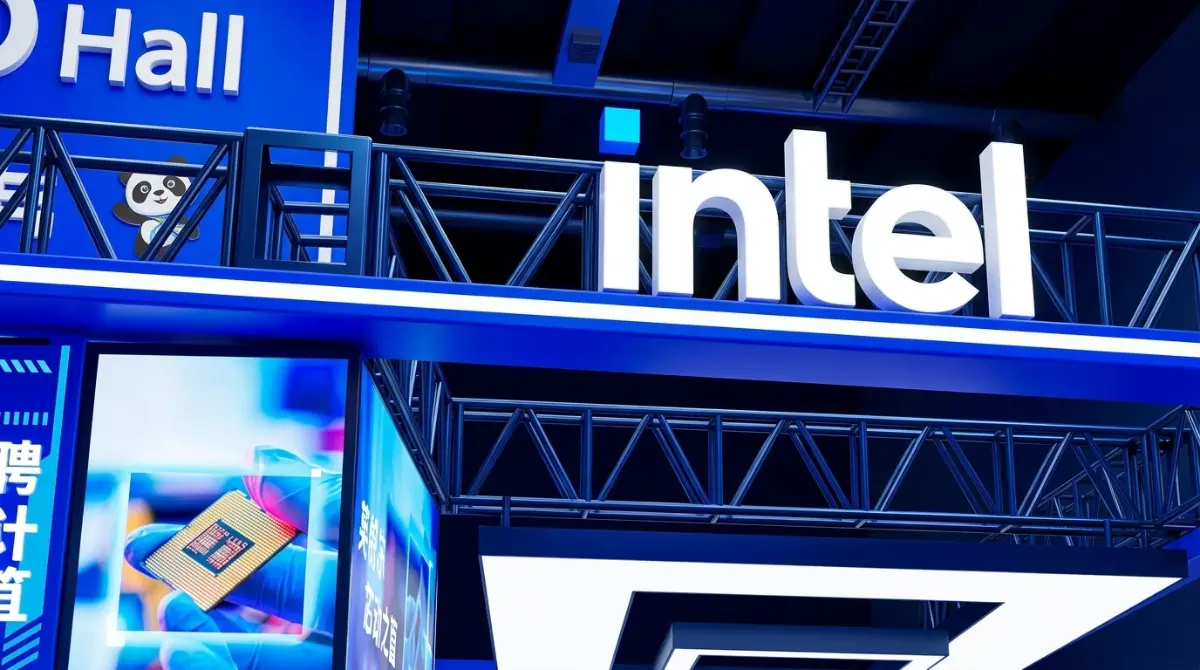
Intel Sued by Shareholders After 29% Stock Plunge
Institutional investors led by a Michigan pension fund filed a federal securities fraud class action against Intel, alleging Chief Executive Lip-Bu Tan concealed severe personal computer inventory gluts and memory bottlenecks before raising $23B in August stock sales.
Inioluwa Ademidun | · 9 min read

Raising $23B from public equity investors two months before admitting your largest business unit is shrinking invites immediate courtroom scrutiny. Intel executives learned that lesson on Friday, November 13, 2026, when institutional shareholders filed a proposed federal class-action lawsuit accusing the Santa Clara chipmaker of hiding severe personal computer demand deterioration and bloated partner inventories during a high-stakes summer rally. Led by the City of Southfield Fire and Police Retirement System, the complaint names Intel Corporation, Chief Executive Officer Lip-Bu Tan, and Chief Financial Officer David Zinsner as defendants in the United States District Court for the Northern District of California. The legal action follows the October 30 trading session in which Intel shares plunged 28.6%, wiping out roughly $140B in market capitalization in a single day after management issued bleak fourth-quarter revenue guidance and warned that personal computer weakness would persist well into 2027. By closing at $59.66 on Friday, November 13, the stock sat nearly sixty percent below its June 30 peak of $142.35, leaving thousands of summer buyers nursing steep paper losses. The courtroom battle exposes a widening structural fault line inside American semiconductor manufacturing: strong server processor demand from artificial intelligence data centers cannot rescue a balance sheet weighed down by shrinking consumer computer sales and multibillion-dollar factory construction bills. The legal clash unfolds as chipmakers confront heightened investor scrutiny across global markets, continuing corporate governance turbulence we tracked when Nvidia navigated sudden executive leadership upheaval.
The proposed class period spans July 23, 2026 through October 29, 2026, capturing the exact window during which Intel shares rode optimism around artificial intelligence server deployments and domestic foundry subsidies. According to filings recorded on the federal court docket in San Jose, plaintiffs allege that Tan and Zinsner repeatedly reassured Wall Street that client computing demand was stabilizing even as original equipment manufacturers and retail distributors struggled to clear mountains of unsold laptops and desktops. When Intel finally published its third-quarter financial results after the market closed on October 29, the gap between summer rhetoric and factory reality shocked institutional trading desks. Management projected fourth-quarter revenue between $15B and $16B, missing consensus analyst forecasts by more than a billion dollars, while guiding non-GAAP earnings down to $0.25 per share. The lawsuit contends that Intel leadership possessed internal channel telemetry showing that surging memory chip prices were pricing everyday consumers out of new personal computers, yet delayed disclosing the severity of the slump until after completing a massive mid-August stock sale.
The August Equity Offering: Motive and Opportunity in Court
To understand why securities litigators moved quickly after the October selloff, one must examine the timing of Intel mid-August capital raise. Under federal securities rules enforced under Section 10(b) of the Securities Exchange Act, plaintiffs must establish not only that corporate statements were misleading, but that executives had concrete motive and opportunity to withhold adverse facts from public buyers.
Plaintiffs point directly to Intel August 2026 public stock offering. Taking advantage of a massive year-to-date rally that had pushed Intel shares near multi-year highs, management sold $23B worth of common stock at $95 per share during the middle of the third quarter. Tan framed the equity raise as a prudent move to fortify the balance sheet, preserve investment-grade credit ratings, and finance expensive manufacturing expansions across Oregon, Arizona, and Ireland. Investors who purchased shares at $95 during that offering watched their holdings lose more than thirty-seven percent of their value inside eleven weeks. The complaint argues that if Intel had disclosed in July or August that its Client Computing and Physical AI Group was experiencing rapid sequential revenue contraction and acute partner inventory buildup, institutional buyers would never have paid $95 per share. Raising $23B at elevated valuations handed Intel roughly $54B in cash and short-term investments by quarter-end, insulating the company against future credit market tightening at the direct expense of incoming shareholders. Corporate disclosure disputes and private equity oversight across technology markets match regulatory themes we examined when federal regulators demanded proof of share ownership records.
Inside the Q3 Numbers: Server Gains Crushed by Client Contraction
Inspecting the financial breakdown published in Intel third-quarter 2026 SEC earnings filing reveals why Wall Street reacted with panic despite seemingly healthy headline growth. Total third-quarter net revenue rose twenty-one percent year over year to $16.5B, beating consensus estimates of $16.44B, while non-GAAP earnings per share reached $0.52 against expectations of $0.39.
Beneath those headline numbers sat a sharp divergence between Intel two main product engines:
- Data Center and AI (DCAI) Surge: Revenue jumped seventy-eight percent year over year to $7.3B, driven by hyperscale cloud operators and enterprise buyers deploying Xeon server processors alongside autonomous software agents.
- Client Computing and Physical AI Group (CCPG) Slide: Revenue fell five percent year over year to $8.1B, with Zinsner warning analysts that client revenue would drop more than twenty percent sequentially in the fourth quarter.
- Intel Foundry Losses: While foundry revenue climbed fifty-eight percent to $6.7B on internal wafer transfers, the manufacturing division posted a $1.9B operating loss for the quarter.
- Israeli Facility Disruption: Management disclosed an operational incident at its Israeli manufacturing plant expected to trim fourth-quarter revenue by roughly $300M and compress gross margins by 200 basis points, with a similar $300M drag carrying into the first quarter of 2027.
The arithmetic behind the fourth-quarter forecast startled equity analysts at Bank of America, Goldman Sachs, and Morgan Stanley, prompting immediate downgrades and price-target cuts. Even as DCAI revenue was projected to grow at a mid-teens sequential pace in the fourth quarter, a twenty-percent sequential drop in the $8.1B client group wipes out roughly $1.6B in quarterly sales. Because client processors still generate the bulk of Intel cash flow and absorb fixed factory overhead, a sudden contraction in laptop and desktop orders drags consolidated gross margins down from 43% in the third quarter to an estimated 38% in the fourth quarter. Balancing server processor demand against broader semiconductor manufacturing hurdles mirrors financial pressures we analyzed when rival chipmakers balanced record data center orders against supply constraints.
Comparing Intel Business Segments and Q4 2026 Trajectory
| Intel Business Division | Q3 2026 Revenue | Year-over-Year Change | Q4 2026 Trajectory | Main Operational Driver |
|---|---|---|---|---|
| Client Computing & Physical AI | $8.1B | Down 5% | Down over 20% sequentially | Memory price inflation & OEM inventory glut |
| Data Center & AI (DCAI) | $7.3B | Up 78% | Up mid-teens sequentially | Hyperscale Xeon demand & agentic workloads |
| Intel Foundry | $6.7B | Up 58% | Continued operating losses | Intel 18A ramp & $1.9B Q3 segment loss |
| All Other & Eliminations | ($5.6B) net | Intersegment offset | $300M Israel plant drag | Internal foundry wafer accounting & fab repair |
| Consolidated Total Net Revenue | $16.5B | Up 21% | $15.0B to $16.0B guidance | PC slump outweighs AI server expansion |
The table illustrates the structural trap facing Lip-Bu Tan. Intel actually gained ground in traditional desktop processor market share during the third quarter, lifting its desktop share back above seventy percent as rival AMD prioritized high-margin data center accelerators. Winning unit share in a shrinking personal computer market offers cold comfort when overall industry PC shipments are projected to fall twelve percent in 2026 and another ten percent in 2027.
The Memory Crunch: How AI Data Centers Are Starving PC Makers
A central pillar of the shareholder lawsuit focuses on what Tan described on the October earnings call as an unprecedented memory crunch. To understand how artificial intelligence server construction ended up hurting Intel laptop chip sales, one must examine global memory wafer allocation.
Memory fabricators including SK Hynix, Samsung Electronics, and Micron Technology spent 2026 dedicating cleanroom capacity to High-Bandwidth Memory (HBM3E and HBM4) stacks required for cloud server accelerators. Because HBM stacks consume roughly three times the silicon wafer area of standard consumer DRAM per gigabyte, diverting production lines toward data centers created an acute shortage of standard DDR5 memory and NAND flash storage used in everyday laptops. Contract prices for personal computer memory modules surged across Asian assembly hubs throughout the summer. Original equipment manufacturers such as Dell, HP, and Lenovo faced steep component inflation, forcing them to raise retail laptop prices or cut unit orders. Consumers already strained by higher living costs delayed computer upgrades, leaving distribution warehouses clogged with unsold inventory. Plaintiffs argue that Intel executives watched this supply chain squeeze unfold across partner order books months before admitting that excess partner inventory would depress client chip orders through at least the second quarter of 2027. Memory supply bottlenecks and domestic fabrication talks were detailed in our report on SK Hynix exploring American memory chip plant agreements with Intel.
The Foundry Cash Burn: Negative Free Cash Flow in 2027
Beyond near-term personal computer weakness, institutional investors are punishing Intel stock because the company capital spending cycle shows no sign of slowing down. During the third-quarter analyst question-and-answer session, Zinsner acknowledged that 2027 will be another heavy investment year and confirmed that Intel does not expect to generate positive free cash flow next year.
Management plans to push capital expenditures substantially above the roughly $20B budgeted for 2026 as it builds out three overlapping manufacturing process nodes simultaneously: Intel 3, Intel 18A, and the newly released Intel 14A process design kit. While Tan noted that Intel 18A production costs fell roughly forty percent since the first quarter and highlighted customer interest in Intel 18A-P and advanced packaging, external foundry revenue remains small compared to internal product wafers. Without large, binding wafer commitments from outside fabless chip designers like Apple, Qualcomm, or Nvidia, Intel must shoulder tens of billions of dollars in factory depreciation alone. Credit default swap spreads on Intel corporate debt widened sharply following the October 30 crash, signaling that bondholders are growing nervous about prolonged cash burn alongside roughly $46.3B in total balance sheet debt. Corporate capital allocation pressures across large semiconductor developers match financial debates we covered in our analysis of the 2026 enterprise AI valuation and payoff reckoning.
What Happens Next in Federal Court and Santa Clara
Securities class-action lawsuits filed under the Private Securities Litigation Reform Act follow a structured multi-year procedural path. Under federal court rules, aggrieved shareholders have sixty days from the initial class-action notice to petition the court for appointment as lead plaintiff, a role typically awarded to the institutional pension fund or asset manager with the largest verified financial loss during the July 23 to October 29 class period.
Once a lead plaintiff and lead counsel are confirmed in San Jose, plaintiffs will file an amended consolidated complaint, prompting Intel defense attorneys to file a motion to dismiss. To survive dismissal, shareholders must present specific internal records, former employee accounts, or channel distributor data proving that Tan and Zinsner knew before the August $23B stock sale that fourth-quarter client orders were collapsing. Intel declined immediate comment on the Friday filing, and company attorneys will argue that management issued standard forward-looking risk warnings regarding macroeconomic demand and component supply fluctuations. Regardless of how the courtroom battle unfolds over the next two years, the immediate verdict from Wall Street is unmistakable: until Intel proves it can stabilize personal computer margins and turn its foundry factories cash-flow positive, investor patience will remain scarce.
Read More on TechRobust:

Inioluwa Ademidun
Inioluwa Ademidun
Expertise:African Tech Ecosystem, Early-Stage Startups, Emerging Market Dynamics, Venture Capital & Tech Reporting, Product Management
Award:TechRobust Contributor of the Year 2025
Inioluwa is a Senior Product Manager by day and an investigative technology reporter by night, bridging the gap between scalable software architecture and high-impact journalism. She delivers deep-dive analysis on venture-backed founders, regulatory shifts, and grassroots tech ecosystems across Africa and global emerging markets.
Related Stories
Elon Musk Signs Petition to Reinstate Nvidia CEO Huang Jensen Huang Doubted Interim Nvidia CEO Colette Kress
 SoftBank Cancels $3.7B Turbine Orders in AI Reset