
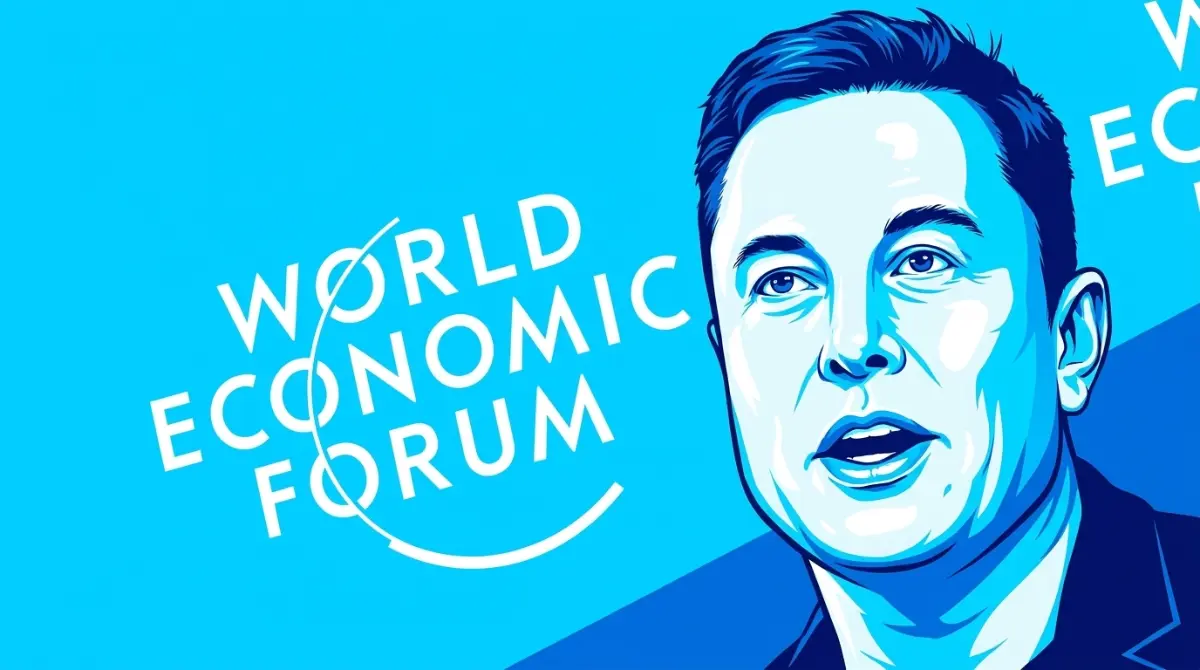


Musk Confirms TSMC Talks for $119B Texas Terafab Project
Tesla and SpaceX chief Elon Musk acknowledged ongoing discussions with Taiwan Semiconductor Manufacturing regarding his ambitious Terafab chip production facility in Texas, signaling potential outside help for the massive domestic hardware project.
Umar Abubakar | 3 Oct. 2026 · 5 min read

The manufacturing of computer processors remains the hardest physical challenge in the modern technology sector. Building software happens quickly, but printing microscopic circuits on silicon wafers requires billions of dollars and years of mechanical engineering. Elon Musk intends to bypass traditional supply chains by constructing his own massive manufacturing center in Texas, known as Terafab. The initial plans suggested complete independence from foreign manufacturers. But reality often forces ambitious founders to seek experienced partners. Over the weekend, Musk confirmed that his companies are holding active discussions with Taiwan Semiconductor Manufacturing Company regarding potential cooperation at the Texas site.
The confirmation surfaced after financial reporters indicated that TSMC was evaluating a partnership to either operate the facility or act as a primary technical advisor. Musk replied publicly on social media, stating the talks are happening though nothing is finalized. The admission highlights a major shift in strategy for the hardware project backed jointly by Tesla, SpaceX, and xAI. When management first outlined the Grimes County facility earlier this year, they framed it as a domestic alternative to overseas reliance. Bringing the most dominant Taiwanese chipmaker into the fold suggests the internal engineering teams understand the extreme difficulty of achieving their production goals alone. We previously covered the massive financial commitments required for modern hardware operations when reporting on Crusoe securing a $3B funding round at a $30B valuation for data centers.
The Massive Scale of the Texas Operation
To see why outside help might be necessary, one must look at the sheer size of the planned factory. The Texas site involves an initial capital injection of $16.8B for its first phase of construction. Total spending could eventually reach $119B across all future expansions. The stated goal is to generate one terawatt of artificial intelligence computing power annually. This volume of production would support millions of Tesla autonomous vehicles, humanoid robots, and the space-based server networks planned by SpaceX.
Hitting those targets requires flawless execution at the two-nanometer production node. Producing chips at this microscopic level involves extreme precision, managing chemical impurities, and controlling heavy ultraviolet lithography machines. Companies like TSMC spent decades perfecting these procedures, losing billions of dollars along the way to low production yields. A brand new organization cannot simply hire talented engineers and expect to match that efficiency overnight. The scrap rates for new foundries are famously high, meaning millions of dollars worth of silicon can be ruined by a tiny calibration error. By opening the door to TSMC, Musk secures a possible shortcut to stable manufacturing, ensuring his other businesses get the physical chips they desperately need.
Intel Current Role and Market Position
The involvement of the Taiwanese giant raises immediate questions about Intel. Back in April 2026, Intel formally announced it was joining the Terafab project as the lead foundry partner. That agreement gave the American manufacturer a massive public relations boost and promised shared technical development. If a second, highly capable partner enters the arrangement, Intel might find its influence diluted.
Using multiple suppliers is a standard tactic in the hardware business. Relying entirely on a single partner for a $119B factory introduces severe risk. If Intel experiences delays with its own manufacturing nodes, the entire Texas project would stall. Adding another firm to the mix forces both partners to compete for the best production lines and equipment. It also gives Musk heavy negotiating power. If one partner demands unfavorable terms, the corporate board can simply award more floor space to the other. You can see how hardware providers aggressively defend their market positions in our analysis of Oracle delaying massive data center payments over power disputes.
Differing Operating Models
For TSMC, entering an agreement of this nature represents a departure from its standard operating style. The Taiwanese firm typically builds and owns its factories outright, strictly controlling every aspect of the cleanroom environment. Partnering on a facility owned by an eccentric billionaire introduces unpredictable variables. The arrangement would tie their financial outcome to Tesla vehicle sales and xAI software deployment schedules.
Despite these unusual conditions, the upside remains highly attractive. The Taiwanese manufacturer already committed over $60B to its own Arizona campuses. Becoming the anchor operator for an even larger complex in Texas would cement its dominance over American domestic production. It would also lock in a massive, guaranteed buyer for its services. Since xAI and Tesla consume thousands of advanced graphics processors, capturing that demand internally prevents competitors from gaining market ground. We tracked how massive buyers influence hardware suppliers when covering Apple paying Samsung $250 per foldable display panel.
Geopolitical Pressures on Supply Chains
The push to build chips on American soil reflects a broader anxiety regarding international security. For years, automotive executives and defense contractors worried about relying so heavily on factories located on a single island off the coast of mainland China. If any political conflict disrupted shipping lanes in the Pacific Ocean, the global supply of advanced processors would halt immediately. Musk explicitly cited these fears when he first proposed the Terafab concept.
However, importing the top supplier from that exact region to run the American facility creates a complex compromise. The physical hardware will sit safely inside Texas borders, but the institutional knowledge and operational control will still trace back to Taipei headquarters. Lawmakers in Washington frequently debate whether subsidized domestic factories actually protect national interests if foreign entities run them. For Musk, the priority is clearly obtaining working chips as fast as possible, regardless of who manages the cleanrooms.
The Long Road to Mass Production
Even with experienced partners onboard, the timeline remains long. Groundbreaking for the first phase occurred recently, but bringing a semiconductor factory online takes several years. The building must be constructed, specialized tools must be ordered and calibrated, and test wafers must run for months before commercial production begins. The current schedule targets small batch runs by late 2026 and volume manufacturing in 2027.
During this waiting period, the demand for artificial intelligence hardware will only increase. By confirming these discussions, Musk is sending a clear signal to his investors. He is willing to compromise on total manufacturing independence if it means getting working chips faster. Building the largest factory on the planet requires pride, but making it function properly requires pragmatism. The entire hardware industry is now watching to see if the two parties can reach a final, binding agreement.
Read More on TechRobust:
Umar Abubakar
 LinkedIn
Umar Abubakar
Expertise:Editorial Leadership, Product Design (UI/UX), Digital Media Strategy, Technology Systems, Product Architecture
Award:TechRobust Visionary Leader of the Year 2025
Umar serves as Editor-In-Chief and CEO of TechRobust, combining editorial vision with senior product design expertise to shape how modern technology stories are built, packaged, and told. Overseeing all editorial verticals, he directs coverage across global and regional tech landscapes while applying deep design thinking to publication strategy and reader experience.