
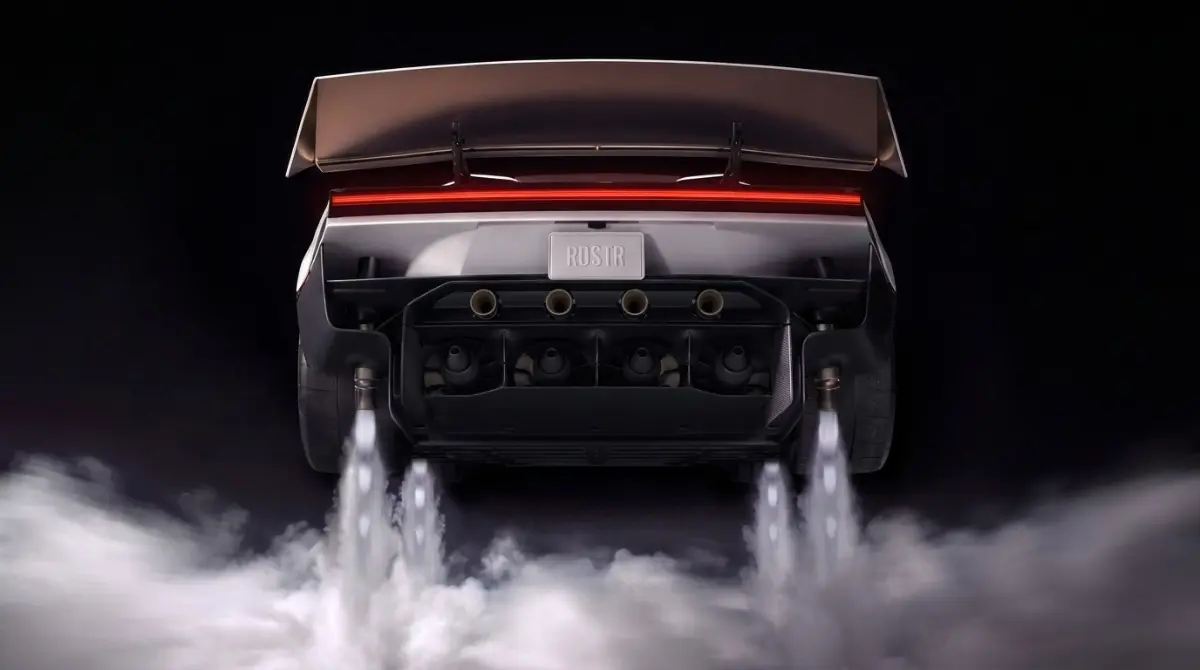


Tesla Reveals SpaceX-Powered Roadster With Rocket Thrusters
Tesla revealed the production-ready next-generation Roadster in Texas, featuring cold gas thrusters engineered alongside SpaceX that claim sub-second acceleration, short levitation hops, and a package pushing physical automotive boundaries into uncharted regulatory territory for consumer roads.
Umar Thariwat | 16 Oct. 2026, 2:01 AM · 8 min read

Standing on stage in Texas, Elon Musk pulled back the curtain on a project that spent nearly a decade trapped in development limbo. The second-generation Tesla Roadster has ceased being a collection of digital renderings and speculative tweets. Tesla presented a working vehicle equipped with cold gas rocket thrusters developed in direct partnership with SpaceX. The machine promises acceleration figures that challenge conventional tire friction, accompanied by claims of short aerial hops that sound closer to science fiction than consumer transport.
Automotive engineering has spent decades fighting the limits of mechanical grip. When rubber tires contact asphalt, chemical adhesion and normal force dictate how quickly a car moves forward. Tesla claims the standard version reaches sixty miles per hour in roughly 1.9 seconds, which already matches the fastest production hypercars on the planet. The optional SpaceX equipment package changes the physics equation entirely. By replacing the rear passenger seats with high-pressure composite tanks, the vehicle gains ten miniature rocket thrusters capable of firing cold propellant gas in multiple directions.
These thrusters do not burn kerosene or rocket fuel. Instead, they rely on compressed air or cold nitrogen stored in composite overwrapped pressure vessels at roughly 10,000 pounds per square inch. When the driver activates launch control, pneumatic valves dump mass out of rear nozzles at supersonic speeds. This reaction mass pushes the chassis downward to multiply tire traction or fires straight backward to generate pure thrust independent of wheel rotation. Musk claimed during the demonstration that this setup drops zero-to-sixty times below one second, a number never recorded on a road-legal passenger vehicle.
The announcement immediately reignited scrutiny surrounding corporate promises from Tesla leadership. This vehicle was initially showcased to the public back in 2017, with an original arrival window pegged for 2020. Customers wired deposits ranging from $50K for standard reservations up to $250K for limited Founders Series editions. As battery supply constraints, factory expansions, and the Cybertruck soak up capital, the sports car took a backseat. You can review our earlier analysis on how Tesla set dates for the second-generation Roadster to understand how many times this schedule slipped.
Watching the demonstration, the sheer mechanical violence of the cold gas discharge stood out. Compressed gas release produces deafening acoustic shockwaves and extreme pressure differentials. Installing miniature thrusters around the perimeter of a carbon-fiber body requires reinforcement that adds substantial mass. High-pressure tanks need rigid structural cages to shield occupants during a crash. Storing ten thousand pounds of pneumatic pressure inches behind passenger heads introduces severe structural hurdles that passenger car manufacturers never face.
Federal regulators will look closely at this hardware before clearing it for highway use. The National Highway Traffic Safety Administration maintains strict rules governing exterior protrusions, noise limits, and pedestrian impact zones. Discharging cold gas near a crosswalk poses risks to pedestrians, cyclists, and nearby windshields. If a nozzle fires pressurized gas near loose road gravel, that debris becomes dangerous shrapnel. Tesla engineers insist the thrusters activate only on private tracks or during geofenced closed-course modes, but enforcing software locks on customer hardware remains contentious.
Beyond highway rules, the Federal Aviation Administration enters the conversation the moment a ground vehicle claims the ability to jump. Musk joked during the Texas event that the sports car can hover a meter above the tarmac for short durations. While physics confirms that sufficient thrust can overcome earth gravity for brief bursts, calling it flight stretches mechanical terminology. A car floating on compressed gas lacks aerodynamic control surfaces, rudders, or counter-torque stabilization. A sudden crosswind during a jump could send a two-ton vehicle spinning unpredictably onto civilian sidewalks.
The manufacturing complexity behind this machine explains why production lines took years to organize. Traditional automotive stamping plants deal with aluminum panels, spot welding, and electric motor windings. The SpaceX edition requires certified aerospace technicians to plumb high-pressure stainless steel tubing, install cryogenic-grade solenoid valves, and balance composite tanks. Tesla is essentially asking its automotive assembly staff to operate like rocket technicians. Sourcing parts that survive automotive road salt alongside aerospace pressures represents an enormous operational headache.
From a battery perspective, the vehicle demands unmatched discharge rates. Pushing four electric motors to maximum output pulls thousands of amperes out of the pack in seconds, generating intense internal heat. Tesla appears to use a revised structural battery pack that integrates liquid cooling channels directly against the cell cans. If the pack cannot dump thermal energy quickly, the power management software throttles output, turning a sub-second sprint into ordinary performance. Managing thermal spikes during aggressive track driving has plagued electric sports cars for years.
Looking at the broader electric vehicle market, this launch arrives at a strange cultural moment. Global demand for six-figure luxury electric cars has cooled, with consumers looking for affordable daily drivers rather than quarter-million-dollar toys. Yet halo cars serve a clear psychological purpose for automotive brands. When Ferrari or Porsche builds a limited hypercar, the technology and prestige trickle down into entry-level models. Tesla needs this sports car to remind buyers that electric powertrains can outperform combustion engines across every conceivable metric.
The financial side of this rollout requires careful study. Tesla has collected interest-free loans from reservation holders for nearly a decade. Delivering these cars honors long-standing customer loyalty while converting deferred revenue into recognized accounting gains. However, building low-volume vehicles with bespoke aerospace components rarely yields healthy profit margins. Unless Tesla prices the SpaceX edition well north of $300K, the company risks losing cash on every unit shipped out of Texas.
Competitors are not sitting still while Tesla experiments with pneumatic nozzles. Rimac has pushed electric hypercar performance into ridiculous territory with the Nevera, setting production speed records through advanced torque vectoring and custom tire compounds. Porsche continues to refine battery cooling and dual-speed gearboxes in the Taycan GT, proving that consistent lap times matter more to wealthy track drivers than party tricks. Tesla must prove that its rocket-assisted platform can handle twenty laps around the Nurburgring without melting its brakes or running out of air.
Tire manufacturers face an impossible task with this vehicle. Standard street tires cannot channel the combined output of quad electric motors and rear rocket nozzles without tearing tread blocks off the carcass. Special sticky compounds wear out in hundreds of miles and perform terribly in cold rain. If owners must swap tires every weekend just to use launch control, the practical ownership experience collapses. Tesla will have to supply custom rubber developed alongside industrial tire partners willing to certify tires for sub-second acceleration stresses.
Public reaction to the live unveiling split sharply down the middle. Enthusiasts cheered the audacity of mounting rocket thrusters on an electric car, praising the audacious engineering mindset that Musk champions. Skeptics pointed out that Tesla has repeatedly announced sensational features that vanished before commercial rollout, such as full autonomy promises and pickup truck range targets. Regulatory filings documented by Reuters automotive industry coverage show that getting unproven hardware through government crash tests often forces manufacturers to water down experimental features.
Legal teams representing Tesla will spend months rewriting user agreements before handing keys to buyers. Who carries liability when a thruster system activates unexpectedly in a commercial parking garage? If an owner damages a municipal road surface with high-pressure air bursts, will local governments send repair invoices to Tesla? Insuring a vehicle with onboard rocket hardware will give underwriters pause. Many mainstream insurance carriers may outright refuse coverage, forcing buyers into specialized high-risk marine and aviation policies.
Inside the cabin, Tesla stripped away almost every traditional control. The yoke steering mechanism returns, paired with a central touchscreen that handles everything from air conditioning to nozzle pressure checks. A dedicated switchgear panel mounted on the roof console lets the driver prime the air compressor system, resembling an aircraft cockpit. The absence of rear seats changes interior acoustic resonance, meaning road noise and compressor hum will fill the cabin unless active noise cancellation software works overtime.
The vehicle also serves as a testing ground for next-generation power electronics. Silicon carbide inverters capable of handling massive voltage swings without breakdown are mandatory here. The lessons learned while building inverters for the Roadster could help Tesla improve commercial heavy-duty trucks and industrial storage products. Automotive programs that push component stress to the absolute ceiling often yield manufacturing techniques that cut costs across everyday consumer vehicles.
We should also consider how this project affects company focus. Tesla is currently pouring billions into autonomous taxi networks, neural networks, and humanoid robotics. Diverting top mechanical talent to build a tiny production run of rocket cars might seem counterproductive to institutional investors. You can read our coverage on how Tesla rolls out commercial robotaxi rides to see where the company directs its primary corporate energy. Building a halo car keeps the brand exciting, but robotaxis and battery scaling pay the bills.
Musk stated that customer deliveries will commence in the coming year, though veteran observers know to treat Tesla delivery dates with cautious skepticism. Tooling up a low-volume assembly line, validating safety compliance with transport agencies, and establishing reliable compressor maintenance protocols will take time. If Tesla manages to deliver even a small batch of SpaceX-equipped Roadsters that perform half of what was demonstrated in Texas, the company will have rewritten the rules of modern automotive performance.
The next-generation Roadster proves that Tesla has not lost its desire to shock the automotive world. Whether rocket thrusters belong on public streets remains an open legal and moral debate. As prototype units begin public track testing, every engineer, regulator, and hypercar builder will be watching the telemetry closely.
Read More on TechRobust:
Umar Thariwat
 LinkedIn
Umar Thariwat
Expertise:Tech News Reporting, Tech Business Analysis, Economic Foundations, Market Trends, Digital Economy
Award:Rising Voice of the Year 2025
Thariwat is a Staff Writer and Reporter covering tech news and enterprise trends at TechRobust. Blending daily reporting with her ongoing academic background in economics, she analyzes earnings, digital market, and the commercial strategies powering the global tech sector.