
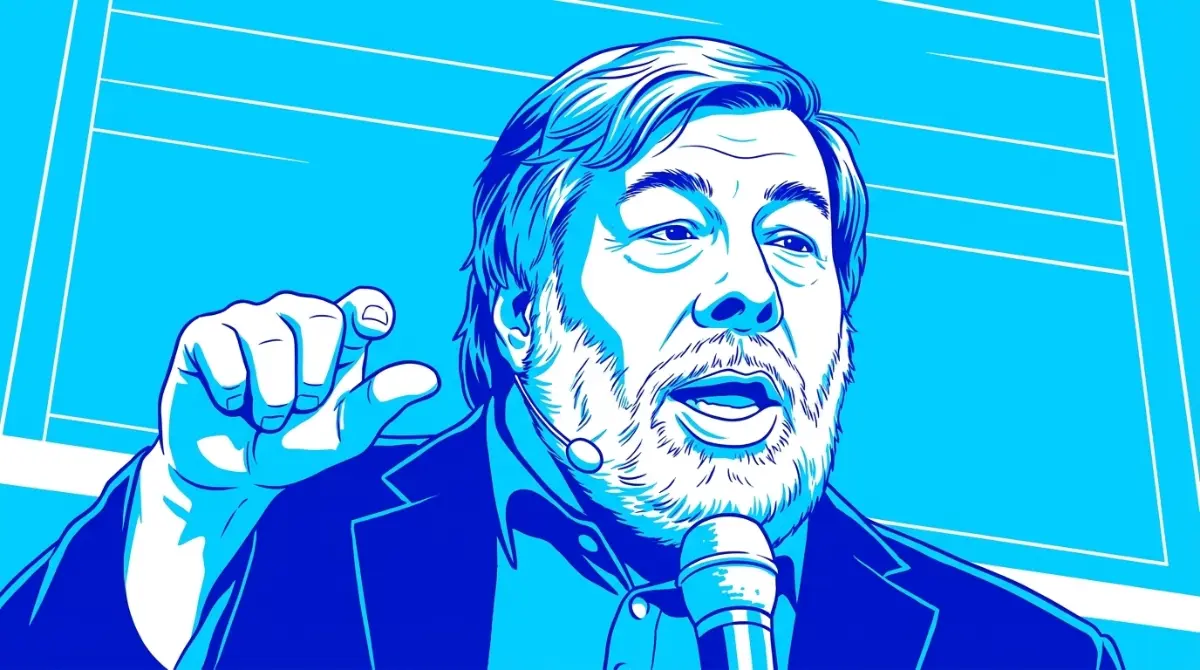


Wozniak Cofounded Apple After 5 Rejections From HP
Apple co-founder Steve Wozniak revealed that he launched the personal computer hardware firm after getting rejected by HP five times, choosing to collect a modest fifty-dollar weekly paycheck for decades to avoid the negative influence of massive wealth.
Umar Thariwat | 3 Oct. 2026 · 5 min read

Modern technology founders typically build their businesses with a clear intention to amass wealth, taking their companies public and fighting aggressively over equity distribution. The origin story of the most valuable consumer electronics manufacturer in the world paints a completely different picture. Steve Wozniak, the hardware engineer who built the initial circuit boards that eventually became Apple, recently discussed his early career choices and his unique relationship with money. According to a recent public appearance, Wozniak never actually intended to start his own computer firm. He wanted to work as an engineer at Hewlett-Packard for his entire life. He only turned to building his own operation after HP management rejected his personal computer designs five separate times.
The revelation highlights how corporate bureaucracy often misses massive hardware shifts. During the 1970s, Hewlett-Packard dominated the technical hardware space, manufacturing high-end calculators and scientific instruments. Wozniak worked there during the day while tinkering with computer components at night. When he finally assembled a working prototype that could display text on a television screen, he took the design straight to his managers. He begged them to manufacture the machine, assuming the company would see the obvious consumer appeal of a personal computer. The executives passed on the idea every single time, telling him that ordinary people had no use for computers in their homes. We often see similar corporate hesitation today when evaluating modern hardware shifts, such as Apple paying Samsung $250 per foldable iPhone Duo screen to catch up in the flexible display market.
The Reluctant Entrepreneur
Following the string of rejections from his employer, Wozniak felt discouraged but continued refining his hardware designs for his own amusement. Steve Jobs, his aggressive and business-minded friend, saw the commercial potential of the homemade computer boards. Jobs convinced the reluctant engineer that they should manufacture and sell the printed circuit boards to local hobbyists. To gather the initial funding needed to buy physical components, Wozniak sold his prized HP scientific calculator, while Jobs sold his Volkswagen van. The combined cash allowed them to build the first batch of Apple-1 computers.
Even as the newly formed partnership began generating revenue, Wozniak remained hesitant about the business side of the operation. He cared exclusively about the engineering challenges and writing efficient software code. While Jobs focused on marketing, raising venture capital, and designing the exterior cases, Wozniak concentrated on making the internal components smaller, faster, and cheaper to produce. This distinct division of labor established the foundation of the modern consumer technology sector, proving that brilliant engineering requires equally brilliant salesmanship to reach mass production. We tracked how corporate leadership continues balancing engineering and sales when covering Apple appointing John Ternus as chief executive officer.
Walking Away From Billions
As the company grew from a garage operation into a massive corporate entity, the differing priorities of the two founders created heavy friction. When the organization prepared for its initial public offering, the massive influx of cash turned early investors into multimillionaires overnight. Wozniak felt uneasy about the sudden wealth. He openly stated that he did not want to be near large sums of money because he believed extreme wealth corrupted personal values and ruined relationships.
Before the public offering took place, Wozniak learned that several early employees who had worked long hours building the first machines were not going to receive any stock options. Jobs refused to distribute his own shares to these workers. In response, Wozniak quietly sold or gave away $10M of his own equity directly to the rank-and-file employees, ensuring they would benefit from the public listing. This generous act diluted his own ownership stake significantly. While he remained wealthy, his decision to distribute his shares meant he missed out on billions of dollars in future appreciation as the corporation eventually reached a three-trillion-dollar market capitalization.
The Fifty-Dollar Paycheck
Rather than managing investment portfolios or launching new venture capital funds, Wozniak chose a much quieter path. Following a severe airplane crash in 1981, he stepped away from his full-time engineering duties. Despite leaving daily operations, he remained officially listed as an employee on the corporate payroll. For decades, he collected a weekly paycheck of just $50 after taxes. He kept the nominal salary active because it represented his enduring loyalty to the organization he helped create, not because he needed the cash.
The tiny weekly deposit stood in stark contrast to the massive compensation packages handed out to modern technology executives. By intentionally removing himself from the high-stakes financial battles of Silicon Valley, he protected his own mental health and maintained his passion for teaching and electronics. He spent much of his later life teaching computer classes to elementary school students and funding local educational initiatives in California. We examined how modern technology leaders handle their public perception and corporate legacies in our review of Tim Cook and his CEO legacy of hits and misses.
Advising the Next Generation of Builders
During recent speaking engagements, Wozniak offered blunt advice to young engineers and software developers. He warned recent college graduates against following the standard path of chasing venture capital funding just to get rich. Instead, he urged them to build things they genuinely care about, even if those projects do not look profitable at first glance. He recalled his own college days when he would type term papers for other students for pennies, simply because he enjoyed the physical act of typing and working with keyboards.
This philosophy feels increasingly rare in an industry currently obsessed with artificial intelligence valuations and rapid financial returns. Many modern startups focus on pleasing investment firms rather than creating reliable tools for everyday consumers. Wozniak proved that the best consumer hardware often comes from individuals who simply want to solve their own technical problems. The rejection by Hewlett-Packard forced a reluctant hardware genius to build his own machines, accidentally launching a corporate empire that reshaped human communication forever.
Read More on TechRobust:
Umar Thariwat
 LinkedIn
Umar Thariwat
Expertise:Tech News Reporting, Tech Business Analysis, Economic Foundations, Market Trends, Digital Economy
Award:Rising Voice of the Year 2025
Thariwat is a Staff Writer and Reporter covering tech news and enterprise trends at TechRobust. Blending daily reporting with her ongoing academic background in economics, she analyzes earnings, digital market, and the commercial strategies powering the global tech sector.