
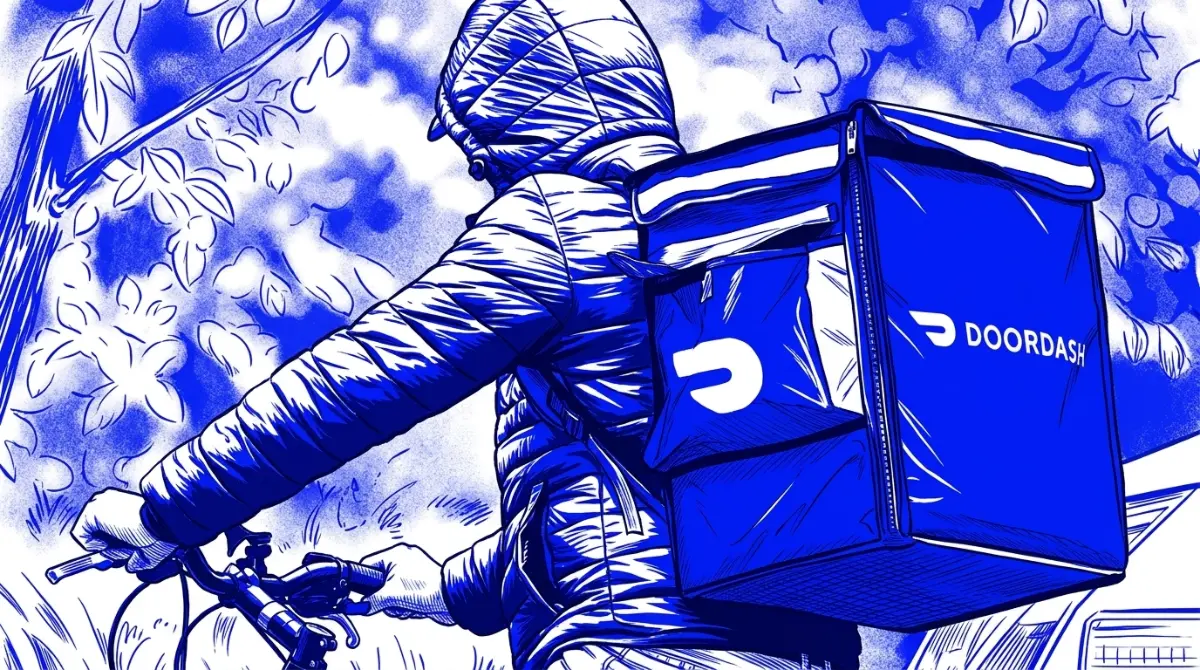


DoorDash Records Only Several Hundred AI Agent Orders
DoorDash confirmed it has processed only several hundred food deliveries ordered through automated machine agents, puncturing Silicon Valley hype around autonomous shopping while executive leadership focuses on a proposed fifty-billion-dollar merger with Instacart.
Caleb Ogunkanbi | · 8 min read

Silicon Valley promotional demonstrations promised that human consumers would soon stop using retail shopping apps entirely. In keynote presentations and venture capital pitch decks, technology evangelists declared that conversational machine agents would take over everyday commerce: monitoring refrigerator milk levels, planning weekly dinners, comparing grocery prices, and placing restaurant orders through mobile apps without human intervention. Consumers, we were told, would never again tap through food delivery menus. That automated vision met cold consumer reality on Friday, October 30, 2026. Speaking to Wall Street analysts during third-quarter earnings disclosures, DoorDash executive leadership revealed that despite extensive industry hype, the platform has received only several hundred orders placed by automated artificial intelligence agents. Out of more than six hundred million food and grocery deliveries completed by DoorDash during the quarter, automated machine transactions represented a statistically negligible fraction of business volume. The disclosure provides a sobering reality check for agentic commerce, proving that when dinnertime arrives, human beings still want to look at food photographs, customize burrito toppings, and control their own purchasing decisions. The consumer hesitation lands as tech platforms explore autonomous shopping, continuing consumer adoption trends we followed when consumers resisted automated shopping assistants.
The disclosure from DoorDash arrived alongside record-setting financial results that demonstrate the enduring strength of human-driven commerce. The San Francisco delivery giant reported strong gross order volume growth, expanding market share across suburban restaurants and grocery delivery chains. Concurrently, DoorDash confirmed a landmark corporate move: proposing a blockbuster merger agreement with grocery delivery pioneer Maplebear, operating as Instacart, dated October 28, 2026. The proposed business combination aims to unlock $500M in annual operational synergies by year three, creating an integrated digital commerce network that connects restaurant dining with supermarket aisles. While financial analysts pressed Chief Executive Officer Tony Xu on whether automated software agents could disrupt delivery platforms, company leadership made clear that artificial intelligence in food delivery remains an internal operational tool rather than a consumer ordering interface. Machine models optimize driver dispatch routes, predict kitchen cooking delays, and manage customer service refunds, but human consumers continue placing their own orders through smartphone touchscreens. Autonomous agent commerce hurdles match themes we analyzed when PayPal rebuilt checkout tools for autonomous purchasing.
The Psychology of Dinnertime: Why Food Resists Automation
To grasp why agentic food delivery stalled at several hundred orders, one must examine the emotional psychology governing human dining decisions. Ordering a meal from a local restaurant is not an analytical corporate procurement task; it is a sensory, emotional, and social experience.
When an individual opens a food delivery app at seven in the evening, they rarely know exactly what they want to eat. They browse neighborhood Thai menus, inspect high-resolution photographs of crispy chicken sandwiches, check customer reviews, and weigh competing personal cravings. Food preferences fluctuate based on daily stress levels, personal health goals, and social context. Furthermore, restaurant orders involve intricate personal customizations: requesting extra spicy salsa on the side, substituting oat milk in a latte, asking for salad dressing without garlic, or leaving delivery instructions to knock softly so a sleeping infant does not wake up. Trusting an automated conversational assistant to guess those nuanced personal cravings is an unappealing proposition for most consumers. If an automated agent orders a thirty-dollar sushi platter with the wrong tuna preparation, the consumer is left hungry and frustrated. Human shoppers enjoy the visual experience of browsing menus, making autonomous ordering an answer to a problem that everyday consumers never asked to solve. Consumer behavior surrounding automated software was examined in our report on whether consumers trust automated software agents to manage their lives.
The Technical Barrier: Anti-Bot Firewalls vs. Authorized Agents
Beyond consumer psychology, agentic commerce confronts severe technical and security hurdles on platform backends. For a decade, digital commerce platforms like DoorDash spent millions of dollars building advanced anti-bot firewalls to block automated web scrapers and unauthorized checkout bots.
When a third-party software agent attempts to browse restaurant menus and submit payments on behalf of a user, platform security engines cannot distinguish between a legitimate customer assistant and a malicious botnet attempting credential stuffing or gift-card fraud. Submitting automated orders requires bypassing CAPTCHA challenges, managing fluctuating delivery fees, handling dynamic merchant tipping options, and verifying one-time payment tokens. If an automated model attempts to complete an order while delivery surge pricing is active, who authorizes the extra eight-dollar fee? If the delivery address defaults to an old office location rather than the user home, who absorbs the loss? Until unified, secure application programming interfaces exist that allow verified agents to negotiate transactions within strict budget constraints, consumer platforms will treat automated bots as security threats rather than paying customers. Web security perimeters and bot defense tools were detailed in our review of Cloudflare deploying software agents to protect web firewalls.
Comparing Consumer E-Commerce Platforms Under Agent Adoption
| Consumer Platform | Reported Agent Order Volume | Primary Commercial Barrier | Underlying AI Utilization | Consumer Interaction Style |
|---|---|---|---|---|
| DoorDash | Several hundred orders total | Menu customization & visual browsing | Dispatch routing & kitchen timing | Direct mobile app visual menus |
| Instacart (Maplebear) | Limited pilot recipe orders | Out-of-stock grocery substitutions | Smart list building & store inventory | Conversational recipe planning |
| Amazon Retail | Moderate utility re-orders (Rufus) | Counterfeit review verification | Search summaries & product Q&A | Hybrid search and conversational text |
| Uber Eats | Negligible direct agent volume | Delivery fee volatility & tips | Driver-rider matching algorithms | Mobile touchscreen checkout |
| PayPal Fastlane | Emerging agentic checkout rails | Merchant checkout authentication | Tokenized identity verification | One-click biometric passkeys |
The comparison matrix reveals that while automated agents succeed in processing repetitive utility purchases: such as reordering printer paper or laundry detergent on Amazon: they fail in personal consumer categories like restaurant dining. Food is perishable, personal, and immediately evaluated upon delivery. When an individual orders dinner, they want personal certainty that the meal arriving at their door matches their exact physical appetite. The gig economy labor dynamics supporting delivery fleets were explored in our analysis of regulatory settlements over platform worker classifications.
The Instacart Mega-Merger: Building the Real Commerce Moat
While venture capitalists debated the future of autonomous ordering agents, DoorDash focused on real-world market consolidation. The proposed acquisition of Instacart under a definitive merger agreement represents one of the largest corporate transactions in digital commerce history.
DoorDash management outlined a multi-year roadmap targeting $500M or more in annual operating synergies by year three. Chief Financial Officer Ravi Inukonda explained that year one will focus on foundational investments, year two will demonstrate operational progress, and year three will deliver the full $500M in incremental bottom-line cash flow. The strategic logic behind uniting DoorDash with Instacart is density: combining restaurant couriers with supermarket grocery pickers to maximize driver efficiency throughout the day. Drivers deliver restaurant lunches from eleven in the morning until two in the afternoon, pick up grocery orders during slow mid-afternoon hours, and return to hot dinner delivery in the evening. Combining merchant catalogs, cross-listing local supermarket inventory, and unifying advertising software creates a physical commerce network that no conversational software bot could ever duplicate. Corporate restructuring and international market exits were detailed in our review of Uber closing ride-hailing operations across African markets.
Where Automation Actually Works: Kitchens, Traffic, and Dispatch
While consumer-facing ordering agents remain an unproven gimmick, machine learning serves as the indispensable computational engine behind DoorDash daily logistics. Operating a logistics network connecting hundreds of thousands of independent merchants, millions of couriers, and tens of millions of hungry consumers requires real-time predictive mathematics.
DoorDash models analyze real-time variables every second: measuring current kitchen cooking times, calculating street traffic delays, estimating parking search times, and predicting weather impacts on scooter couriers. When an order is placed, automated dispatch algorithms calculate which driver can reach the restaurant at the exact second food exits the kitchen fryer, minimizing the time hot meals sit under heat lamps. The company uses computer vision to audit grocery store shelves: scanning retail inventory data to notify shoppers when specific cereal boxes or dairy products are out of stock before customers submit carts. Automation delivers immense value when deployed as a quiet backend logistics tool; it fails when forced into consumer-facing conversational roles where human intuition and visual desire dominate. Automated web traffic trends were analyzed in our report on automated web traffic overtaking manual human browsing.
The Long-Term Outlook for Autonomous Consumer Commerce
DoorDash admission that automated software agents have generated only several hundred orders delivers a healthy reality check to the technology sector. The assumption that human beings want to automate every aspect of daily life is a recurring fallacy of the Silicon Valley bubble.
While autonomous software will continue revolutionizing back-office corporate accounting, code debugging, and factory logistics, human beings remain biological creatures who value personal agency in their daily pleasures. Deciding what to eat, picking out fresh fruit, and enjoying a restaurant meal are human experiences that resist delegation to synthetic algorithms. As DoorDash and Instacart join forces to build a $50B physical delivery titan, the message to investors is clear: lasting enterprise value is created not by chasing conversational software fads, but by building durable physical networks that deliver real goods to real human beings in the real world.
Read More on TechRobust:
Caleb Ogunkanbi
 LinkedIn
Caleb Ogunkanbi
Expertise:Practical AI Implementation, Head-to-Head Product Testing, Technical How-To Guides, Data Tools & Automation, Consumer Software Benchmarking
Award:TechRobust Guides & Insights Writer of the Year 2025
Caleb is a Staff Writer and Reporter breaking down the frontiers of artificial intelligence and actionable tech education. He produces rigorous head-to-head comparisons, demystifies data tools, and crafts step-by-step technical guides that help readers navigate complex software and AI workflows with ease.