
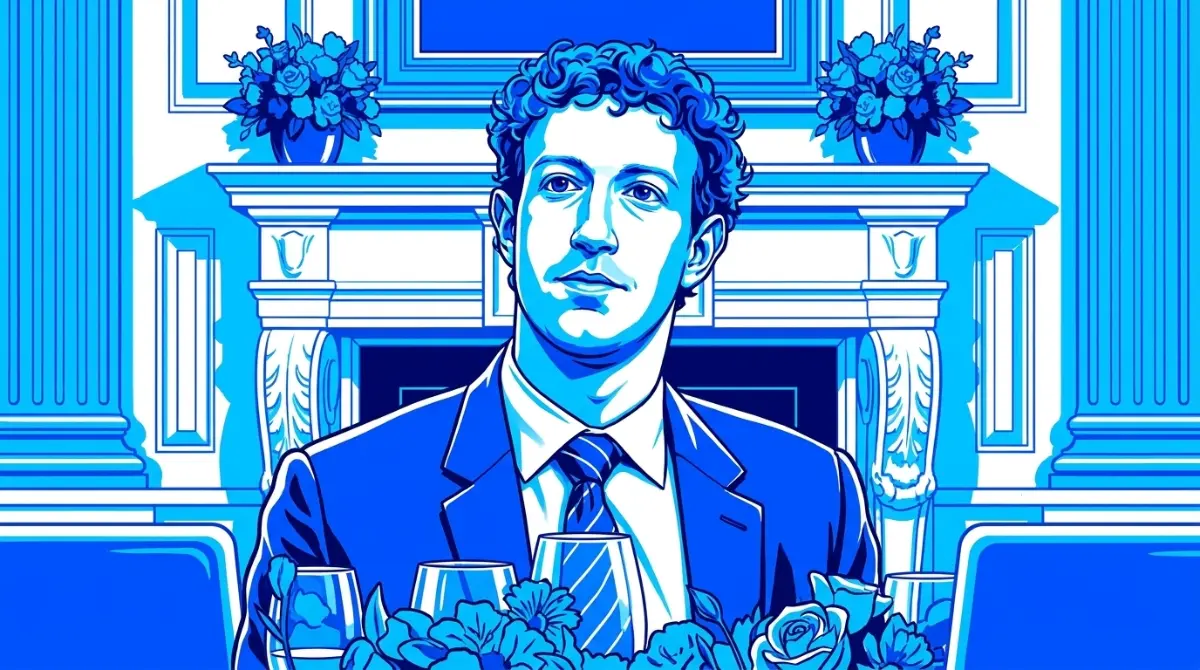


Meta Copyright Systems Weaponized Against Albanian Crowds
Coordinated networks abused Instagram automated intellectual property reporting systems to silence independent journalists, opposition leaders, and civic activists documenting civil demonstrations across Albanian city centers.
Umar Thariwat | 18 Sept. 2026 · 6 min read

Automated intellectual property filters have transformed into convenient tools for political suppression. When authoritarian governments or well-funded political groups want to silence dissent on social platforms, they no longer need to deploy physical police units to seize broadcast antennas. They simply flood platform enforcement pipelines with fraudulent intellectual property claims. Over the past three months, hundreds of thousands of Albanian citizens organized daily street demonstrations known as the Flamingo Revolution, demanding administrative accountability and protesting a $1.5B luxury Adriatic coastline resort development. Independent journalists, opposition parliamentarians, and ordinary demonstrators relied on Instagram to broadcast real-time video of police clashes and civic rallies. Then, in late August, those digital channels abruptly went dark as coordinated rings weaponized platform copyright enforcement rules to take down accounts without human review.
The systematic takedowns affected more than one hundred verified public interest accounts, including drone videographers documenting crowd sizes, student leaders, and Agron Shehaj, a member of the Albanian parliament who heads the opposition party Opportunity. Research conducted by non-governmental watchdog Repro Uncensored discovered evidence pointing to organized manipulation. Hostile operators submitted bursts of five to ten bogus copyright infringement notices against individual accounts within minutes, exploiting automated safety triggers to force instant suspensions, livestreaming bans, and shadow bans. In at least one documented instance, an attacker offered to halt the harassment in exchange for cryptocurrency payments. Meta subsequently restored several profiles, claiming the removals occurred in error. But the incident exposed a structural vulnerability in global content moderation: automated systems designed to shield corporate media assets can easily be turned into political censorship weapons. We monitored how automated tools and digital systems lower technical barriers to coordinated attacks in our analysis of AI tools lowering barriers to advanced cyber operations.
The Mechanics of Coordinated Copyright Brigading
To understand why this censorship method succeeds, one must examine the legal incentives governing intellectual property enforcement. Under the Digital Millennium Copyright Act and similar international statutes, technology platforms maintain safe harbor protection from costly copyright infringement lawsuits only if they expeditiously remove accused material upon receiving a formal notice. To handle millions of daily copyright complaints without exploding operational payrolls, social media corporations automated the entire pipeline. Software algorithms receive digital takedown notices, verify that basic paperwork fields contain text, and immediately remove the targeted video without evaluating whether the complaint is fraudulent.
Malicious operators exploited this procedural shortcut through a tactic known as brigading. Attackers targeted original video recorded by protesters on public streets, falsely filing claims that asserted ownership over the ambient music, background audio, or visual scenes. When an account accumulates multiple intellectual property penalties in rapid succession, automated integrity protocols automatically disable the account to shield the platform from statutory liability. The creator loses their digital audience overnight, while human review teams take weeks to review appeal tickets. By the time a corporate reviewer admits that the original video was authentic civic journalism, the political demonstration has ended and the news cycle has passed.
The Balkan Real Estate Flashpoint
The digital censorship campaign did not happen in a vacuum; it directly tracked intense political opposition surrounding a controversial $1.5B luxury tourism project planned for Albania's protected coastal wetlands. The high-profile development, backed by American private investment group Affinity Partners alongside Jared Kushner, sparked intense public outrage over environmental damage and administrative land concessions. Demonstrators gathered daily in Skanderbeg Square in Tirana, calling for the resignation of Prime Minister Edi Rama and demanding changes to laws permitting commercial construction in protected marine sanctuaries.
Because domestic television networks in Albania remain heavily influenced by state advertising contracts and political alliances, social platforms served as the sole uncensored news source for the public. Independent videographers used aerial drones to film massive crowd turnouts, attracting millions of views across digital feeds. When those drone feeds and activist broadcasts began disappearing simultaneously, public outrage shifted from physical streets to Silicon Valley boardrooms. Prime Minister Rama publicly denied government involvement, dismissing accusations of state-directed censorship. Yet the concentration of takedowns targeting a single political movement revealed an organized effort to scrub real-world dissent from international public view. We examined how corporate platforms handle speech policies and external political pressures when reviewing Bluesky rolling out algorithmic controls for viral content.
Regulatory Scrutiny and the European Media Freedom Act
The silencing of Albanian civic accounts quickly caught the attention of European authorities. Members of the European Parliament condemned the automated takedowns, pointing out that arbitrary account removals violate fundamental democratic protections. Alexandra Geese, an influential member of the European Parliament, warned that allowing automated intellectual property filters to crush political speech subverts digital freedom of expression across candidate member states.
The European Commission confirmed an official investigation into the incident under the Digital Services Act and the European Media Freedom Act. European rules require dominant digital platforms to establish rapid, human-monitored escalation channels for accredited journalists and public interest figures facing coordinated digital attacks. Regulators want to determine whether the company failed to deploy adequate safeguards against obvious bad-faith reporting loops. If investigators find that corporate automated enforcement systems amplified political censorship through willful negligence, the platform faces substantial regulatory penalties. You can inspect how regulatory bodies enforce systemic technology rules and digital rights in our coverage of Quebec courts barring automated legal reasoning.
The Dangerous Myth of the Innocent Technical Error
Whenever high-profile censorship incidents occur, technology platforms issue identical public apologies, blaming automated errors and promising that internal review procedures have restored access. That corporate response ignores the asymmetrical reality of modern political warfare. An error that silences an investigative journalist during a contentious election or a civic protest produces permanent political consequences that cannot be fixed by restoring an account two weeks later.
Furthermore, restoring accounts does not remove the chilling effect. Activists who experienced sudden suspensions report that their profiles remain burdened by algorithmic restrictions, reduced recommendation reach, and disabled collaboration features. When digital creators know that posting footage of police crackdowns invites coordinated reporting rings that could destroy their online livelihoods, many choose self-censorship instead. Delegating free expression decisions to automated legal complaint filters creates an environment where anyone with a web browser and a script can extinguish public speech.
Reclaiming Human Judgment in Digital Moderation
The events in Albania demonstrate that intellectual property enforcement can no longer exist as a separate, unmonitored silo within platform engineering. When automated copyright reporting systems are weaponized against political activists, copyright law ceases to be an economic protection for creators; it becomes an instrument of statecraft and suppression.
Protecting the integrity of online discourse requires social media companies to eliminate automated account punishments for intellectual property claims filed against public interest content. Complaints directed at verified news reporting, civic demonstrations, and elected officials must require human review, verified claimant identities, and meaningful penalties for bad-faith submissions. The future of democratic accountability depends on whether technology platforms choose to protect real human voices, or continue hiding behind automated code that rewards bad actors at the expense of public truth.
Read More on TechRobust:
Umar Thariwat
 LinkedIn
Umar Thariwat
Expertise:Tech News Reporting, Tech Business Analysis, Economic Foundations, Market Trends, Digital Economy
Award:Rising Voice of the Year 2025
Thariwat is a Staff Writer and Reporter covering tech news and enterprise trends at TechRobust. Blending daily reporting with her ongoing academic background in economics, she analyzes earnings, digital market, and the commercial strategies powering the global tech sector.