


Remita Expands Into Retail Market With Consumer Mobile App
Financial technology provider Remita launched a new mobile application to connect consumer bank accounts, process international transfers, and manage daily retail financial services.
Inioluwa Ademidun | 26 Sept. 2026 · 7 min read

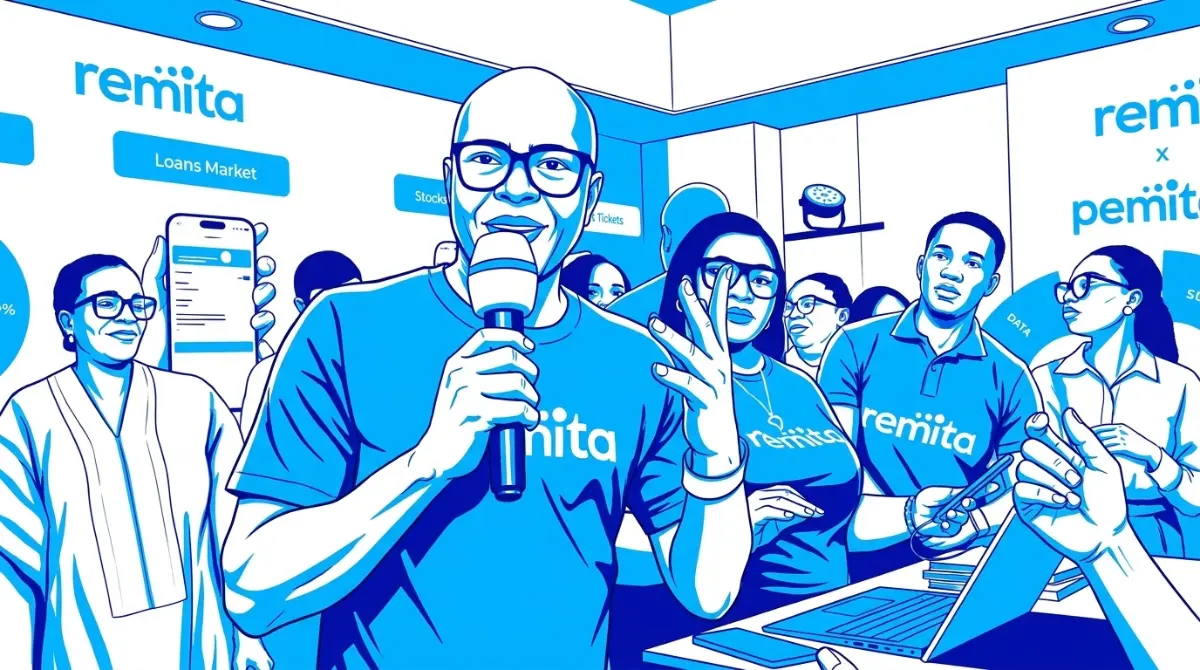
Remita operates as a financial technology company in Nigeria. For twenty years, the firm focused almost entirely on corporate and institutional payments. Now, the organization is pivoting directly toward everyday consumers. During the Nigeria Fintech Week 2026 event held in Lagos, Remita officially unveiled a new mobile application. This software aggregates different retail financial services onto a single platform. The release marks a deliberate expansion into the consumer sector for a company that already processes massive volumes of corporate money.
Users who download the application gain the ability to link multiple bank accounts into one interface. This removes the need to switch between different banking applications to check balances or send money. The software relies heavily on open banking architecture, which permits a third party to securely read financial data from outside institutions. Once connected, consumers can manage their daily spending, set up recurring payments, and transfer cash.
Fixing Financial Fragmentation
Adedayo Adewale, who leads the consumer and retail business division at Remita, explained the rationale behind the product design. He noted that average banking customers currently suffer from operational fragmentation. A typical consumer relies on several different applications to manage their money. They use one application to pay electricity bills, another to transfer funds to family members, and a third to invest in stocks. The new Remita application combines all these functions into a single dashboard.
The application offers a wide variety of financial tools. Users can buy airtime, pay utility bills, and purchase flight tickets. The software also connects consumers to a retail lending marketplace where they can request loans and receive approval within minutes. For long term financial planning, the platform includes tools for buying stocks and contributing to micro pension funds.
The software also features budgeting and expense tracking systems mapped out using artificial intelligence. These algorithms monitor transaction histories to help users understand their spending habits and manage their monthly budgets effectively.
Cross Border Payment Integration
A major selling point of the new software involves international transactions. Sending money across African borders usually requires navigating expensive currency conversions and slow correspondent banking networks. Remita bypassed this friction by partnering with the Pan African Payment and Settlement System. This integration allows users to send money directly from their local Nigerian bank account to recipients in other African countries like Ghana and Rwanda. The cross border transfers happen directly within the mobile application. This functionality matches a broader trend where companies are aggressively building pan African payment rails. We recently observed a similar strategy when Verto and Visa launched multi currency corporate cards across Africa to simplify regional trade.
The partnership with the Pan African Payment and Settlement System represents a heavy technical achievement. Historically, a Nigerian resident attempting to send money to a business partner in Kenya faced terrible exchange rates. The local currency had to convert into United States dollars first, pass through an international clearing bank, and then convert into Kenyan shillings. This slow chain extracted high fees from the sender. The PAPSS network eliminates the dollar from the equation completely. It settles the transaction using local currencies. By plugging this network directly into the new Remita consumer application, regular citizens gain access to institutional grade currency settlement. A user simply opens the application on their phone, selects the foreign recipient, and the money moves instantly.
Leveraging Institutional Pedigree
The shift into the consumer market represents a massive new chapter for the company. Remita currently processes over N100T in transactions annually. Corporate clients and government agencies generate the vast majority of that volume. Managing Director DeRemi Atanda confirmed that the company wants to bring its two decades of institutional payment experience directly to the retail market. He stated that the organization is building infrastructure designed to support the entire financial life of the customer.
Remita holds a highly unique position within the Nigerian financial sector. The company built the original software infrastructure that powers the Treasury Single Account for the federal government. This system consolidated thousands of scattered government bank accounts into a single pool at the central bank, processing trillions of naira safely. Building and maintaining that specific national architecture required passing the strictest possible security audits. The engineering team is now applying that exact same security framework to the new consumer application. When a user links their personal savings account to the Remita dashboard, they are trusting a system designed to protect national treasury funds. This institutional pedigree provides a strong marketing advantage against newer financial startups that lack a proven track record.
Retail Lending and Wealth Management
The inclusion of retail lending and stock investing indicates a much broader business strategy. Remita does not want to act solely as a payment processor. Earning tiny fees on bill payments or airtime purchases generates limited revenue. The real financial returns come from credit and wealth management. By operating a lending marketplace within the application, the company connects users directly with third party loan providers. When a user requests a loan, the artificial intelligence algorithms quickly analyze their linked bank accounts and transaction history to determine creditworthiness. This data analysis allows lending partners to approve and disburse funds within minutes.
Similarly, giving users the ability to purchase stocks and contribute to micro pension plans attempts to capture the growing middle class. Many young professionals in Nigeria want to build long term wealth but find traditional stockbroker accounts confusing and expensive to maintain. By placing investment tools directly next to the button used for paying electricity bills, the application normalizes the investing process. It encourages users to allocate small amounts of leftover cash toward their retirement or stock portfolios immediately after they finish their daily spending tasks.
Navigating a Crowded Market
Atanda delivered a keynote address during the fintech conference regarding the future of Nigerian payment architecture. He predicted that the next ten years of financial technology development will rely heavily on integrated digital systems and cross border alignment. He expects the underlying financial infrastructure to become completely invisible to the end user. Consumers will simply expect their money to move instantly across borders and between different banks without friction.
The competition in the Nigerian consumer financial space is incredibly fierce. Several well funded startups and established telecommunications companies are aggressively fighting for market share. Remita must convince users to abandon their current payment habits and trust a new application. We are seeing massive capital deployed in this exact sector. PalmPay recently targeted heavy funding to expand its digital banking operations, while major cellular network providers also push aggressive financial products. We recently covered how MTN plans a massive expansion to reach thirty million mobile money users in Nigeria.
Regulatory alignment remains a central factor in this expansion. Operating a multi bank application requires strict compliance with federal data protection and open banking rules. The Central Bank of Nigeria tightly monitors how financial data moves between institutions. Remita must ensure its application maintains perfect compliance while managing the complex connections between different commercial banks and the Pan African Payment and Settlement System. Regulators are actively watching how large companies expand their services. We previously documented how CBN payment rules target fintech market concentration, proving that federal authorities want to maintain a balanced competitive environment.
The coming months will determine if Remita can successfully transition its massive corporate success into widespread consumer adoption. The application is now live and available for download. If consumers embrace the single platform approach, the company could rapidly capture a large segment of the retail banking sector. They are betting that the convenience of managing multiple bank accounts, international transfers, and stock investments from one screen will outweigh the reluctance to switch applications.
Read More on TechRobust:

Inioluwa Ademidun
 LinkedIn
Inioluwa Ademidun
Expertise:African Tech Ecosystem, Early-Stage Startups, Emerging Market Dynamics, Venture Capital & Tech Reporting, Product Management
Award:TechRobust Contributor of the Year 2025
Inioluwa is a Senior Product Manager by day and an investigative technology reporter by night, bridging the gap between scalable software architecture and high-impact journalism. She delivers deep-dive analysis on venture-backed founders, regulatory shifts, and grassroots tech ecosystems across Africa and global emerging markets.