
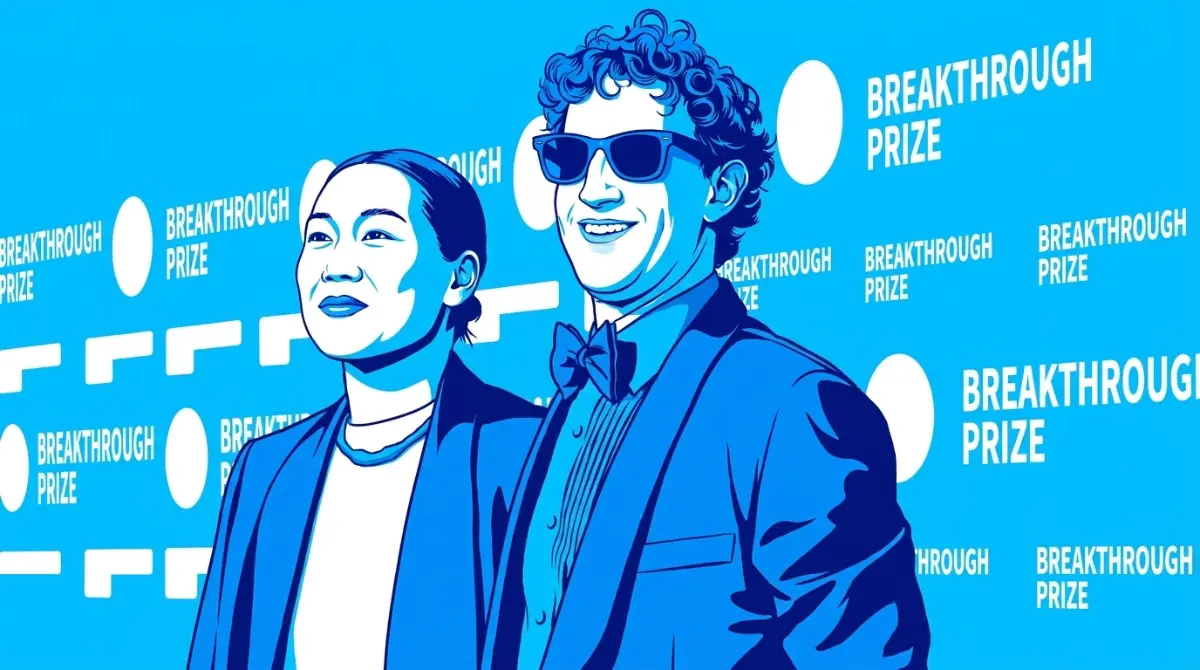


Biohub, US, and Tech Giants Back $1.8B Virtual Cell Drive
Biohub partnered with Google DeepMind, Meta, and United States federal agencies in a $1.8B push to construct universal digital cell models, generating standardized biological datasets to simulate human cellular reactions on computers before wet-lab testing.
Umar Abubakar | 8 Oct. 2026, 5:50 PM · 7 min read

Modern medical discoveries are held back by wet-lab biology speeds. For centuries, observing how a medicine changes human tissue required growing live cell cultures inside glass dishes, injecting compounds, and waiting days or weeks for physical outcomes. That slow laboratory cadence makes testing new therapies expensive and narrow in scope. Scientific research teams cannot easily test millions of chemical variants against thousands of distinct human cell types inside physical facilities. On Wednesday, October 7, 2026, the Chan Zuckerberg Biohub joined forces with Google DeepMind, Meta, and United States government departments in an expanded $1.8B project known as the Virtual Biology Initiative. The multi-organization consortium seeks to build digital simulations of human cells, creating computational systems capable of predicting biological behavior on computers before scientists pick up pipettes. The initiative follows expanding commercial interest in computational life sciences, a trend we tracked when reporting on Anthropic opening dedicated wet laboratories for physical experiments.
The financial scale of the project represents an unprecedented pooling of public and commercial science funding. The Chan Zuckerberg Biohub, established by Priscilla Chan and Mark Zuckerberg, initially seeded the five-year Virtual Biology Initiative with a $500M commitment in April. The new coalition brings the total capital, computational resources, and historical dataset commitments to $1.8B. Under the updated agreement, the United States Department of Energy commits over $500M in biological measurement, modeling, and supercomputing capacity across five years. The National Institutes of Health contributes historical datasets valued at over $500M in prior taxpayer funding, which Biohub will clean and format for machine learning training runs. Meanwhile, commercial technology firms Google DeepMind, Alphabet drug discovery subsidiary Isomorphic Labs, and Meta are collectively injecting $300M in direct capital. The convergence of computational scale and medical research mirrors earlier public sector computing partnerships we evaluated when Brookhaven National Laboratory funded machine learning energy projects.
The Scientific Ambition Behind a Universal Virtual Cell
The scientific objective driving this coalition is the creation of a universal virtual cell. Rather than treating biology as a set of static textbook diagrams, the model attempts to map the microscopic interactions occurring inside living organisms. A single human cell contains billions of interacting proteins, genetic transcripts, lipid membranes, and metabolic pathways operating in non-equilibrium conditions. Predicting how a tiny chemical change alters that system has long exceeded the limits of human intuition.
The consortium intends to build foundational models trained across billions of standardized single-cell measurements. Once fully trained, the digital simulator would allow biologists to ask experimental questions digitally. A geneticist could simulate what happens when a specific chromosome is edited, while an oncologist could test thousands of synthetic drug combinations against tumor simulations in minutes. By identifying unsuccessful molecular candidates digitally, researchers can focus laboratory testing on the most viable chemical compounds. The shift toward computational science mirrors efforts across other physical domains, similar to methodologies we analyzed when MIT researchers deployed machine learning models to forecast complex weather events.
The Data Standard Problem in Computational Biology
To grasp why $1.8B is required, one must look at the messy state of biological data. While computer vision and language models advanced rapidly because they learned from billions of text pages and video clips available on the open web, biology possesses no equivalent public corpus. Most academic biological datasets are small, fragmented, and gathered under inconsistent laboratory conditions. A blood panel run at a clinic in Boston often uses different reagents, temperatures, and measurement instruments than an identical study conducted in London, introducing noise that prevents machine learning models from finding meaningful patterns.
Biohub is using a large share of this capital to build automated biological factories in San Francisco, Chicago, and New York. These laboratories run robotic pipetting arms, automated gene sequencers, and high-content imaging systems to expose diverse human cell lines to systematic chemical and genetic modifications. Every test runs under strict calibration protocols to ensure measurements are uniform. Producing billions of standardized biological data points provides the clean input required to train predictive models without noisy artifacts. Standardizing scientific data pipelines is an ongoing challenge across research fields, a dynamic we followed when Senticell raised seed funding to build standardized liquid biopsy tests.
The Commercial Head Start and Open Science Tensions
The structure of the agreement highlights tensions between public open science and commercial technology interests. Biohub established the initiative as an open-science project, pledging that generated biological data and model weights will be released to public academic researchers worldwide to accelerate global disease treatments.
However, the commercial backers providing the $300M private tranche: Google DeepMind, Isomorphic Labs, and Meta, receive a twelve-month exclusive access window to the raw data streams before public distribution. That twelve-month head start gives commercial pharmaceutical ventures an advantage in patenting novel drug candidates and fine-tuning proprietary commercial algorithms. While private capital helps pay for expensive robotic laboratory equipment, public health advocates question whether taxpayer-funded datasets from the NIH should be paired with corporate data windows. Managing commercial licensing against public health goals matches debates we documented in our report on international panels demanding strict safeguards on proprietary technologies.
National Security and Biological Safety Controls
Deploying advanced predictive models in cellular biology raises serious biosecurity concerns. A neural network capable of predicting how a benign molecule interacts with human immune cells could theoretically be inverted to design dangerous toxins or immune-evading pathogens. If an algorithm accurately simulates cellular vulnerability, bad actors could exploit that software to construct biological agents tailored against specific human populations.
The inclusion of the United States Department of Energy brings national biosecurity oversight into the core architecture of the initiative. The Department of Energy operates America national laboratory network, including advanced supercomputing facilities and classified biological defense divisions. The consortium confirmed that all data generation and model training runs will undergo biosecurity audits to prevent the accidental creation of offensive pathogen blueprints. Safety protocols will flag high-risk molecular designs before output weights are released to outside researchers. Safety scrutiny across biological modeling reflects concerns we detailed when research teams warned of bioweapon risks in advanced machine learning systems.
Supercomputing Demand Across Federal Laboratories
Training a foundational model on billions of cellular measurements demands computing capacity that rivals large language models. Simulating three-dimensional molecular folding, enzymatic binding kinetics, and gene regulatory networks requires trillions of floating-point calculations per training epoch.
The Department of Energy contribution includes direct access to exascale supercomputers, such as Frontier at Oak Ridge National Laboratory and Aurora at Argonne National Laboratory. These federal machines will crunch complex cellular simulations, while Google and Meta supply private cloud clusters to run fine-tuning loops. Coupling national exascale supercomputers with private corporate server farms demonstrates the scale required to simulate human biology. The growing compute appetite across research organizations matches patterns we explored when covering how infrastructure analysts projected trillions in spending for computing capacity.
The Shift From Serendipity to Engineering in Medicine
If the Virtual Biology Initiative succeeds, it will mark a philosophical shift in how humanity discovers medicines. Historically, pharmacology relied on serendipity and broad screening. Scientists discovered penicillin by observing accidental mold contamination, and many modern cancer drugs were identified by testing thousands of random soil bacteria against petri dishes.
A functioning virtual cell turns medicine into a predictable engineering discipline. Biologists will design therapeutic molecules on digital screens, watch the software simulate how the compound travels through cell membranes, and calculate potential side effects before entering a clinic. This precision could shave years off drug discovery timelines while reducing the failure rate of human clinical trials, where more than eighty percent of experimental therapies currently fail due to unforeseen toxicities. How advanced computational tools transform clinical medical care was examined in our report detailing state regulators approving automated diagnostic systems.
The Road to Digital Biology
The $1.8B push by Biohub, the United States government, Google DeepMind, and Meta signals that the boundaries of computational science have expanded far beyond consumer web applications. Having conquered language and image synthesis, machine learning is tackling the physical machinery of living matter.
Recreating the subtle complexities of human cells inside silicon chips remains an enormous scientific challenge. Biological systems possess billions of years of evolved feedback loops that resist simple mathematical modeling. Yet by combining public supercomputers, robotic laboratory factories, and private venture capital, this alliance is establishing the foundation for digital biology. If they succeed, the next generation of life-saving medical discoveries will not originate in a test tube, but inside a computer simulation that decodes the secrets of the human cell.
Read More on TechRobust:
Umar Abubakar
 LinkedIn
Umar Abubakar
Expertise:Editorial Leadership, Product Design (UI/UX), Digital Media Strategy, Technology Systems, Product Architecture
Award:TechRobust Visionary Leader of the Year 2025
Umar serves as Editor-In-Chief and CEO of TechRobust, combining editorial vision with senior product design expertise to shape how modern technology stories are built, packaged, and told. Overseeing all editorial verticals, he directs coverage across global and regional tech landscapes while applying deep design thinking to publication strategy and reader experience.