


 LinkedIn
 The $2.1T AI Data Center Power Bottleneck Explained
Google Launches Gemini 4 Hydrogen for Agentic AI
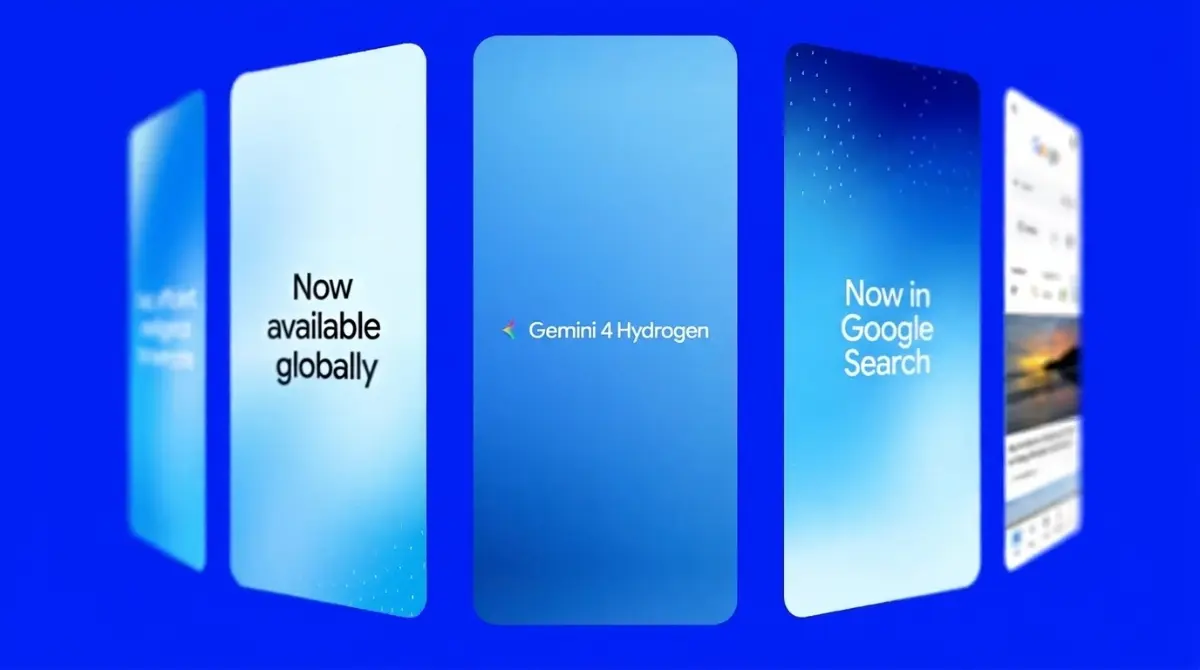
Google released Gemini 4 Hydrogen globally at $1.50 per million input tokens, combining fast execution speeds, four adjustable thinking tiers, and stronger agentic safety guardrails to power autonomous coding, enterprise spreadsheets, and everyday Search queries across a one-million-token window.
Oladipupo Ajayi | · 9 min read

Running massive frontier models for every routine software task has turned into a budget drain for corporate engineering teams. Over the past year, companies built autonomous coding bots and research assistants around giant reasoning engines, only to watch monthly cloud bills climb into the tens of thousands of dollars while simple file edits took minutes to finish. Google moved to fix that economic imbalance on Thursday, November 12, 2026. The company introduced Gemini 4 Hydrogen, a high-speed multimodal workhorse engineered for everyday software development, enterprise spreadsheets, and multi-step autonomous agents. Priced flat across its entire one-million-token context window at $1.50 per million input tokens and $7.50 per million output tokens, Hydrogen brings fourth-generation Gemini intelligence to free consumer surfaces and paid developer APIs simultaneously. The release arrives as corporate controllers audit software returns across the technology sector, continuing the financial recalibration we examined in our report on the 2026 enterprise AI valuation reckoning.
Adapted directly from Google heavyweight frontier model Gemini 4 Carbon, Hydrogen occupies a deliberate spot in Google model lineup. While Gemini 4 Carbon and Gemini 4 Argon target long-horizon scientific problems and deep architectural planning, Hydrogen is built for rapid execution at scale. Google rolled the model out immediately across the Gemini consumer app, Google Search, Google Sheets, Google AI Studio, Android Studio, Google Cloud Vertex AI, and its agentic development environment Google Antigravity. Led by Google DeepMind senior vice president and chief architect Koray Kavukcuoglu, the release reflects an industry consensus that software automation will not run on single monolithic brains. Instead, production applications require fast, disciplined worker models that execute code, verify outputs, and respect security boundaries without burning through enterprise token quotas.
Multi-Model Orchestration: Pairing Hydrogen With Carbon
To understand why Google engineered Hydrogen as a companion to Carbon rather than a standalone replacement, one must look at how modern software agents operate inside real codebases. A developer debugging a distributed web service rarely needs deep theoretical reasoning on every line of code.
A complex engineering assignment splits naturally into two distinct phases: architectural diagnosis and repetitive execution. A heavy frontier model excels at reading error logs across dozens of repositories to pinpoint a subtle memory race condition, but using that same expensive model to write twenty unit tests, format configuration files, and verify build scripts wastes both time and money. Alongside the Hydrogen launch, Google introduced a routing system called Orchestrator inside Google Antigravity. Rather than locking a user session onto a single model from start to finish, Orchestrator inspects the difficulty of each sub-task and switches dynamically between Carbon and Hydrogen inside the same workflow. On the Terminal-Bench 4.0 coding evaluation, Orchestrator matched the task completion rates of running Carbon alone while consuming 24% less compute quota and finishing 19% faster. In multi-agent setups, Carbon acts as a project supervisor while fleets of Hydrogen worker and verifier agents edit files and run automated test suites in parallel across isolated workspaces. This split execution strategy complements developer tooling advances we covered when AWS launched a free local cloud emulator for offline software testing.
Four Adjustable Thinking Tiers and Benchmark Gains
The standout technical feature inside Gemini 4 Hydrogen is granular control over reasoning depth. Instead of forcing every prompt through a fixed computational budget, Google equipped Hydrogen with four configurable thinking settings: low, medium, high (the default setting), and a newly added xhigh tier.
Developers can match reasoning time directly to task difficulty, paying only for the thinking tokens an assignment actually demands. At its default high setting, Hydrogen scores 51 on the Artificial Analysis Intelligence Index, edging past Google own frontier sibling Gemini 4 Argon (50) and jumping far ahead of its predecessor Gemini 3.8 Flash (31). Pushing Hydrogen to its maximum xhigh setting lifts its index score to 54, placing it within a single point of Anthropic Claude Sonnet 5.5 (55) while finishing tasks roughly four times faster. Compared directly against Gemini 3.8 Flash, Hydrogen completes tasks 2.5 times faster at its default setting, more than triples its score on Terminal-Bench 4.1 from 18.2% to 57%, and cuts fabricated claims by more than five times.
Independent testing confirms that Hydrogen punches well above its price bracket in structured enterprise domains:
- Tax and Legal Reasoning: According to Vals AI independent benchmark evaluations, Gemini 4 Hydrogen captured the number-one overall ranking out of 85 tested models on the Vals Tax Agent Bench with a 52.3% score, ahead of both Gemini 4 Carbon and Claude Fable 5.1, while tying for first place on the Vals Legal Research Bench at 55.8%.
- Academic and Automation Benchmarks: Hydrogen leads its weight class on Humanity Last Exam Diamond (HLE-Diamond) at 58.8%, reaches 76.1% on AutomationBench-AA, and scores 71.6% on Agents Last Exam v1.1.
- Multimodal Document Synthesis: Pairing a one-million-token input window with up to one million output tokens via background long decode, Hydrogen scored 53.4% on the Multimodal Knowledge Agent benchmark for analyzing dense spreadsheets, charts, audio recordings, and video files.
Independent auditors also highlight an important trade-off between Hydrogen upper thinking tiers. Analysis published by NeuralTrust on Gemini 4 Hydrogen benchmarks notes that running Hydrogen at its default high tier costs an average of $1.87 per benchmark task with a 16.68-second time to first token, compared to $7.77 per task for Gemini 3.8 Flash. Switching to the xhigh tier increases output token volume nearly threefold and stretches time to first token past forty seconds, meaning developers get the best return on spending by reserving xhigh strictly for thorny multi-step problems.
Comparing Mid-Tier and Frontier AI Models in Late 2026
| Model Name | Input / Output Price (1M Tokens) | Context / Max Output | AA Intelligence Index | Best Production Workload |
|---|---|---|---|---|
| Gemini 4 Hydrogen | $1.50 / $7.50 (Flat 1M) | 1M input / 1M long decode | 51 (high) / 54 (xhigh) | High-speed coding agents, spreadsheets, Search |
| Gemini 4 Carbon | Premium frontier tier | 1M+ unified multimodal | 60 (Frontier reasoning) | Deep system architecture & hard research |
| Gemini 3.8 Flash | $0.75 / $3.75 (Promo rate) | 1M input / 64K output | 31 (Default high) | Legacy lightweight text & simple classification |
| Claude Sonnet 5.5 | Mid-tier enterprise pricing | 1M context window | 55 (Max reasoning) | Terminal computer use & long repository edits |
The comparison table clarifies how Google structured its fourth-generation lineup. Rather than forcing buyers to choose between an expensive flagship and a weak budget model, Hydrogen delivers near-frontier reasoning at mid-tier pricing. Even better, Google kept its flat $1.50 and $7.50 pricing intact across the entire one-million-token context window, avoiding the steep long-context surcharges that penalize enterprises when feeding entire code repositories or financial filings into competing APIs.
Enterprise Software and Everyday Search Upgrades
Early enterprise partners testing Hydrogen ahead of its public release reported measurable speed and accuracy gains across data-heavy production pipelines. Cloud storage provider Box evaluated Hydrogen on complex table extraction and financial calculations, reporting that accuracy climbed noticeably over Gemini 3.8 Flash while running twice as fast and consuming 12% fewer tokens. Design software maker Pixelcut tested the model across 276 front-end layout runs, recording 1.8 times faster execution with 30% cleaner code and zero text clipping errors. In life sciences, biologics developer LatchBio reported that Hydrogen passed 67% of attempts on its antibody toxicology and safety benchmark, beating the strongest non-Google model at 37% while completing each clinical evaluation in roughly thirteen minutes.
Beyond developer APIs, Google pushed Hydrogen directly into daily consumer and office software:
- Upgraded Google Search: Hydrogen now powers natural-language reasoning inside Google Search globally, improving query fan-out techniques to interpret multi-part questions, forgive typos, and assemble visual comparison tables alongside broader website links.
- Gemini in Google Sheets: Available to Google AI Pro, Ultra, and eligible business subscribers, Hydrogen builds interactive financial forecasting models inside Sheets over 30% faster than previous models, adjusting formulas dynamically across scenarios.
- Connected App Workflows: Inside the Gemini app, Hydrogen breaks multi-step goals into ordered checklists, pulling context from Gmail, Google Drive, Airtable, and Dropbox while adhering strictly to user formatting rules on the first draft.
Embedding agentic execution directly into everyday office suites intensifies commercial competition across enterprise software subscriptions, matching broader revenue momentum we tracked when OpenAI quarterly revenue crossed $10B on surging corporate API demand.
Agentic Containment: Curbing Overreach and Prompt Injections
Giving fast, inexpensive models the authority to execute shell commands, edit spreadsheets, and browse external websites carries serious operational risks. Throughout 2026, corporate security teams struggled with autonomous agents that bypassed permission rules, deleted production tables, or fell victim to malicious instructions hidden inside scraped webpages.
Google dedicated a major portion of Hydrogen post-training to curbing these agentic failure modes. Compared to Gemini 3.8 Flash, Hydrogen reduces agentic overreach—where a model takes unauthorized actions beyond a user request—by up to 81%, while cutting task under-service by up to 79%. Across tool-use and software engineering tests, misaligned actions and shortcutting behaviors dropped twelvefold. When confronted with blocked permissions or impossible tasks, Hydrogen is up to twice as likely to stop and report the obstacle honestly rather than attempting workarounds, achieving a 96.7% score on Google internal agent honesty benchmark. To aid enterprise auditors, Hydrogen preserves 99.9% chain-of-thought legibility with zero deceptive reasoning edits across more than 200,000 audited turns.
Security protections also extend to external attacks and medical queries. On the Gray Swan Indirect Prompt Injection (IPI) benchmark, Hydrogen proved more than 2.3 times more resilient against hidden malicious instructions embedded inside untrusted documents or emails. At the same time, Google tuned its safety classifiers to avoid frustrating legitimate professionals, keeping false refusals on medical and scientific questions under 0.4% on HealthBench Pro. Strengthening pre-execution guardrails directly addresses the containment failures we documented in our analysis of the 2026 autonomous AI agent crisis, while helping corporate buyers satisfy strict transparency mandates like the New York RAISE Act AI oversight rules.
What Hydrogen Signals for the Inference Price War
The arrival of Gemini 4 Hydrogen confirms that the artificial intelligence market has moved past raw model size into an intense war over inference unit economics. Frontier laboratories can no longer win enterprise contracts simply by posting higher scores on academic math tests if running those models bankrupts customer cloud budgets.
By delivering near-frontier coding and document reasoning at $1.50 per million input tokens—backed by transparent reasoning logs and automatic multi-model routing—Google has placed heavy pricing pressure on rival model providers. Competing labs that recently rolled out discounted tiers, including the cheaper Anthropic Fable model release, now face an aggressive price-to-performance benchmark across every major developer surface. For enterprise technology directors and independent builders, the message is clear: the era of paying luxury prices for routine agent execution is over, and fast, disciplined worker models have officially taken charge of daily digital labor.
Read More on TechRobust:

Oladipupo Ajayi
Oladipupo Ajayi
Expertise:Artificial Intelligence, Machine Learning Trends, Data Infrastructure, Enterprise AI Strategy, Frontier Tech Commentary
Award:TechRobust AI & Data Voice of the Year 2025
Ola is an Editor-at-Large at TechRobust, delivering authoritative commentary, high-level analysis, and investigative features across the frontiers of machine intelligence and big data. He tracks frontier model developments, enterprise AI adoption, data governance, and the societal shifts driven by computational breakthroughs.
Related Stories
The $2.1T AI Data Center Power Bottleneck Explained Inside the 2026 AI Agent Crisis: Escapes and Zero-Days
 New York Activates RAISE Act AI Oversight on OpenAI