
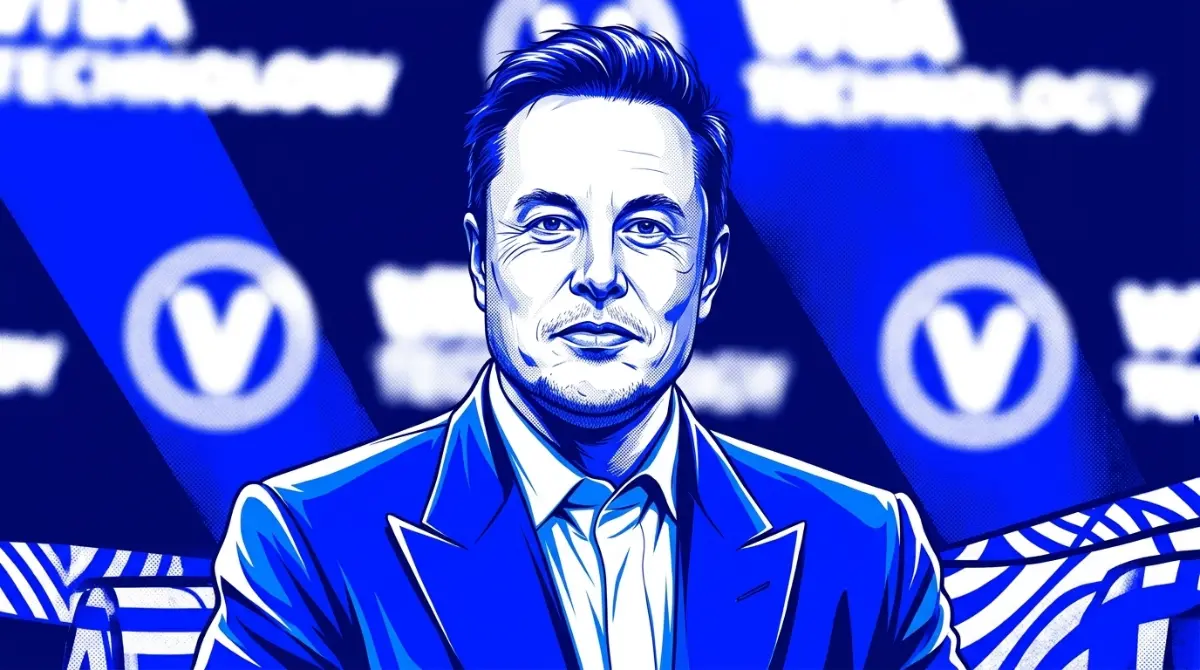


Musk Warns AI Cloud Startups Face Guppy-Level Death
Billionaire entrepreneur Elon Musk cautioned that independent cloud compute providers face widespread extinction as venture funding freezes, warning that smaller server operations renting graphic processors will be crushed by hyperscaler capital outlays and high equipment depreciation debt.
Oladipupo Ajayi | · 7 min read

Renting computer processors to cash-strapped software startups is turning into a financial graveyard. During the initial scramble for computing power, dozens of independent infrastructure startups raised hundreds of millions of dollars to buy server racks filled with graphics processing units. These neo-cloud providers pitched themselves as agile alternatives to technology giants like Amazon Web Services, Microsoft Azure, and Google Cloud, charging premium hourly rates to artificial intelligence laboratories desperate for capacity. That gold rush is crashing into financial reality. Speaking to investors and technology executives on Monday, October 26, 2026, billionaire entrepreneur Elon Musk issued a brutal warning regarding the survival chances of independent computing hosts. Musk stated that smaller cloud computing companies face what he described as a guppy-level death as private venture capital dries up. The xAI and Tesla chief executive explained that smaller infrastructure operators carrying heavy equipment debt will be liquidated as foundation model developers consolidate their computing workloads onto massive hyperscale cloud campuses. The warning lands as private financing markets tighten, continuing capital expenditure debates we analyzed when Musk corporate spending ambitions faced financial scrutiny.
The term guppy-level death refers to the natural food chain of corporate finance: small, fragile entities being consumed or starved out when larger predators enter the pond. Over the past two years, more than thirty specialized cloud startups borrowed billions through debt facilities, pledging their graphics processors as collateral to financial lenders. These operators banked on continuous customer demand, assuming that software startups would pay top dollar to rent chips through multi-year contracts. Musk pointed out that this business model is collapsing from two directions: venture capital funds are refusing to bankroll new research laboratories that burn cash on compute, while cloud hyperscalers are deploying multi-gigawatt computing parks that undercut independent hosting prices. When smaller compute providers cannot find paying customers to fill their server capacity, they cannot service their equipment loans, triggering debt defaults and asset liquidations. Debt financing challenges across enterprise server centers were detailed in our report on Crusoe restructuring multi-billion-dollar energy agreements.
The Physics of Server Hall Economics: Power and Scale
To grasp why Musk believes smaller compute providers cannot survive, one must inspect the physical economics of running a modern computing center. A small cloud startup operating ten thousand graphics processors faces severe disadvantages compared to a hyperscaler deploying one hundred thousand chips.
Operating high-density server halls requires massive electrical power and specialized cooling systems. Hyperscalers negotiate bulk power purchase agreements directly with electrical utilities, paying industrial power rates of four to six cents per kilowatt-hour. Small providers, leasing space inside commercial colocation facilities, pay retail electricity rates that can exceed twelve cents per kilowatt-hour. Because electricity represents more than half the ongoing operating cost of running a computing facility, smaller operators have higher cost structures. Furthermore, modern foundation models require massive distributed clusters: training a frontier reasoning model requires linking tens of thousands of processors across high-speed optical networking fabrics with minimal latency. A boutique cloud provider with five thousand chips cannot host a frontier model training run, confining its business to smaller, lower-margin inference workloads. Capital allocations across high-performance computing centers were explored in our analysis of GMI Cloud securing funds for server cluster buildouts.
Comparing Cloud Computing Provider Business Models
| Provider Category | Average Cluster Scale | Capital Source | Power Procurement Advantage | Survival Risk Profile |
|---|---|---|---|---|
| Independent Neo-Clouds | 5,000 to 25,000 GPUs | Venture debt & GPU-backed loans | Low: retail commercial colocation rates | Extreme: high debt default & churn risk |
| Cloud Hyperscalers (AWS, Azure, GCP) | 100,000+ GPUs distributed | Corporate cash flows & enterprise bonds | Extreme: direct nuclear & utility PPAs | Negligible: protected by enterprise software moats |
| Energy-First Operators (Crusoe) | 30,000 to 75,000 GPUs | Infrastructure funds & project equity | High: behind-the-meter generation assets | Moderate: depends on long-term tenant leases |
| Sovereign Cloud Facilities | 20,000 to 50,000 GPUs | State wealth funds (Gulf states, Europe) | High: state-subsidized electrical grids | Low: subsidized by national defense budgets |
| Enterprise Private Clouds | 2,000 to 10,000 GPUs | Internal corporate IT capital expenditures | Moderate: on-site commercial connections | Low: internal usage guarantees demand |
The comparative data highlights why boutique compute providers face an existential squeeze. Without proprietary energy generation or enterprise software software ecosystems to cross-subsidize hardware expenses, independent hosts are pure commodity middlemen. When GPU availability expanded and hourly spot prices fell by forty percent over the past six months, smaller hosts saw their gross margins collapse while debt payments remained fixed. Large-scale infrastructure funding rounds were examined in our review of Crusoe securing $3B for large computing centers.
The Colossus Lesson: Musk Hundred-Thousand GPU Beast
Musk perspective is informed by his experience constructing the Colossus supercomputer in Memphis for his xAI laboratory. Rather than renting capacity from dozens of boutique cloud startups, Musk team built a dedicated facility housing one hundred thousand liquid-cooled Nvidia graphics processors, bringing the entire cluster online in an astonishing 122 days.
To power the facility, xAI brought in portable natural gas turbines to bypass local utility delays, securing dedicated power feeds before expanding permanent grid connections. Musk demonstrated that frontier artificial intelligence companies want to own and control their primary computing assets. By building Colossus internally, xAI slashed its inference and training expenses per token, eliminating the middleman markups charged by independent cloud providers. Musk noted that other frontier research laboratories: including OpenAI, Anthropic, and Meta: are following the exact same playbook: partnering directly with sovereign wealth funds or hyperscalers to build hundred-thousand-GPU facilities. This leaves boutique cloud startups with a shrinking pool of cash-strapped academic teams and early-stage startups that cannot afford to pay high rental rates. Research laboratory spending and computational capacity were detailed in our report on twenty-nine research laboratories securing billions in venture capital.
The Venture Debt Reckoning: Defaulting on Silicon Collateral
The financial mechanism that will trigger the collapse of smaller compute providers is venture debt. During the 2024 and 2025 boom, private credit funds and specialized lenders provided billions in asset-backed loans to compute startups, using the physical graphics processors as loan collateral.
Lenders assumed that specialized chips were liquid assets that would hold their resale value. That assumption is proving false. As chip manufacturers release newer, faster processor architectures every twelve months, older chip models suffer steep depreciation on secondary markets. If a compute startup defaults on its debt, the lender seizes thousands of used processors that have lost half their original value. Private credit funds will face painful write-downs, while indebted compute startups will be forced into bankruptcy reorganizations. Investment banks that financed these debt structures are already tightening underwriting standards, refusing to roll over maturing debt facilities unless startups can show long-term, non-cancelable contracts with investment-grade corporate clients. Institutional risk management across private debt markets was explored in our analysis of regulators auditing private corporate transactions.
The Consolidation Wave: Hyperscalers Buying Distressed Metal
The ultimate outcome of this shakeout will be corporate consolidation. As boutique compute providers run out of cash, well-capitalized tech giants and private equity funds will acquire distressed server centers at pennies on the dollar.
Hyperscalers will not buy the startups for their software wrappers or brand names; they will buy them to acquire their physical assets: existing electrical substation interconnections, liquid-cooling infrastructure, and long-term real estate leases. Buying distressed facilities allows large cloud operators to expand computing footprints without waiting four years in utility interconnection queues. For the founders and early venture investors who poured capital into independent compute startups, the outcome will be total equity wipeouts. Musk warning confirms that the computing infrastructure sector has completed its wild west phase: entering a consolidated era where only entities with immense balance sheets, sovereign state relationships, and dedicated gigawatt power feeds can survive the brutal economics of modern machine computing.
Read More on TechRobust:
Oladipupo Ajayi
 LinkedIn
Oladipupo Ajayi
Expertise:Artificial Intelligence, Machine Learning Trends, Data Infrastructure, Enterprise AI Strategy, Frontier Tech Commentary
Award:TechRobust AI & Data Voice of the Year 2025
Ola is an Editor-at-Large at TechRobust, delivering authoritative commentary, high-level analysis, and investigative features across the frontiers of machine intelligence and big data. He tracks frontier model developments, enterprise AI adoption, data governance, and the societal shifts driven by computational breakthroughs.