
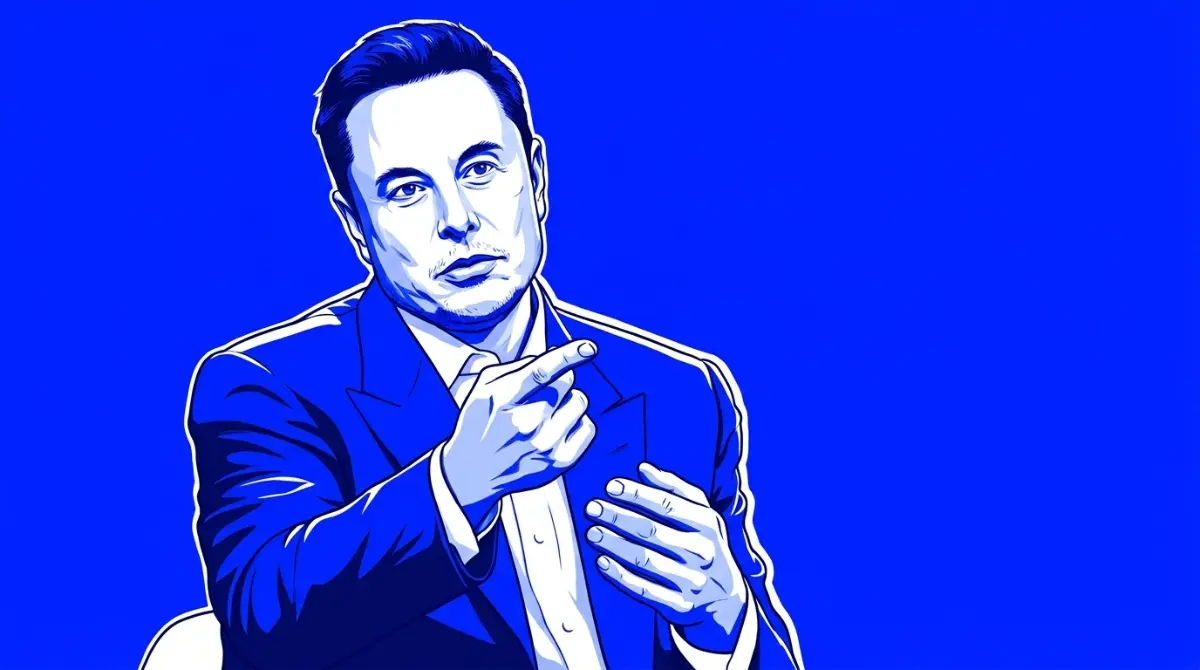


Tesla, SpaceX Earnings Test Musk Growing AI Ambitions
Upcoming financial disclosures from Tesla and SpaceX will measure the steep financial toll of Elon Musk computing expansion, testing shareholder patience as rising capital expenditures, supplier cross-deals, and growing merger chatter test corporate governance across his industrial empire.
Umar Thariwat | · 10 min read

Corporate financial statements across Elon Musk business empire are preparing to face an unprecedented test of shareholder faith. For two years, the billionaire entrepreneur asked public stockholders and private credit funds to view his sprawling industrial ventures not as independent companies, but as coordinated components of a unified computational machine. Automaker Tesla is pitched as a robotics and autonomous driving pioneer, aerospace contractor SpaceX is presented as an orbital logistics and satellite compute platform, and research venture xAI is positioned as the sovereign intelligence engine connecting them together. That grand narrative faces its day of financial reckoning this week. With Tesla scheduled to report third-quarter financial results on Wednesday, October 21, and private debt holders receiving audited updates on SpaceX operational cash balances, Wall Street analysts are preparing to inspect the balance sheet reality behind the rhetoric. Investors want hard receipts showing that tens of billions spent on graphics silicon, server warehouses, and electrical substations are generating actual commercial returns rather than merely draining corporate cash reserves. The financial tension arrives as macroeconomic monitors evaluate the industrial fallout of hardware spending, a trend aligned with findings when the IMF reported that hardware spending supports global economic growth.
The core challenge confronting Musk is financial gravity. At Tesla, automotive operating profit margins: once the envy of the global automotive manufacturing sector: dropped from historical peaks above twenty-five percent down toward fourteen percent under relentless electric vehicle price cuts and sluggish consumer demand. At the same time, capital expenditures are accelerating, driven by the construction of the massive Cortex computing cluster in Austin, Texas, and multi-billion-dollar processor purchases from merchant semiconductor vendors. Concurrently, private venture xAI is burning billions to build and power the Colossus data center in Memphis, Tennessee, relying on capital injections, equipment leases, and equipment shipments that repeatedly cross corporate boundaries. As financial market analysts question whether full self-driving software and humanoid robots can offset automotive margin compression, rumors of an eventual corporate merger uniting Tesla, SpaceX, and xAI have swept through Wall Street trading desks. The mounting capital costs tied to hardware expansion match issues we analyzed when Wall Street AI earnings targets faced intense scrutiny.
Automotive Margin Compression Meets Capital Expenditure Acceleration
To grasp why Tesla earnings are viewed with anxiety by institutional asset managers, one must look at the brutal math of automobile assembly lines. Tesla built its multi-hundred-billion-dollar valuation on the premise that it could sell mass-market electric vehicles at high gross margins while software upgrades generated pure profit.
That automotive premium has largely vanished. Established legacy automakers in North America and aggressive electric vehicle competitors in China engaged in prolonged price wars, forcing Tesla to discount vehicle prices, subsidize financing interest rates, and increase advertising outlays to protect delivery volumes. While automotive revenues have flattened, corporate capital expenditures climbed past $11B this calendar year. Tesla is spending fortunes purchasing thousands of specialized graphics processors, building specialized liquid-cooling server rooms, and hiring hundreds of machine learning specialists. For public stock investors who purchased Tesla as an automobile manufacturer, watching operating cash flows get redirected into speculative computing projects that may not generate revenue for years is difficult to swallow. The macroeconomic strains influencing corporate capital spending were explored in our review of economists warning of systemic risks from capital spending.
The Controversial Allocation of Graphics Silicon to xAI
The sharpest governance friction facing Musk centers on the movement of computing resources between his public and private entities. Earlier this year, investigative reports revealed that Musk directed semiconductor suppliers to divert thousands of high-performance graphics processors originally ordered by Tesla to his private machine learning venture, xAI. While Musk defended the maneuver by claiming that Tesla Austin server facility was not yet physically ready to power the chips, institutional asset managers viewed the redirect as a breach of fiduciary duty.
Tesla shareholders filed lawsuits in Delaware Chancery Court, alleging that the chief executive used public corporate capital and supplier allocations to enrich a private startup in which he holds a dominant personal equity stake. In subsequent public polls on social media, Musk floated the idea of Tesla investing $5B directly into xAI, asking retail followers whether the public automaker should take a formal equity position in his private research lab. Wednesday conference call will force management to answer uncomfortable questions from Wall Street analysts regarding these cross-company arrangements. Corporate directors must clarify how software licenses, patent rights, and hardware assets are divided between Tesla, xAI, and SpaceX without compromising public shareholder interests. Managing corporate transactions across private and public entities matches issues we tracked when regulators demanded verified ownership records for private tech transactions.
Robotaxi Promises Versus Regulatory Realities
The valuation multiple supporting Tesla stock rests almost entirely on the commercial promise of autonomous transportation. At the recent Cybercab unveiling in Southern California, Musk promised that Tesla vehicles will operate as unsupervised autonomous taxis by 2026, generating hundreds of billions in software revenue while allowing vehicle owners to earn passive income while sleeping.
Yet between promotional stage presentations and commercial reality sits an unforgiving wall of federal and municipal safety regulations. The National Highway Traffic Safety Administration opened a formal safety defect investigation into 2.4 million Tesla vehicles equipped with Full Self-Driving software following multiple collisions, including fatal crashes in low-visibility conditions. Unlike competing robotaxi operators that use expensive sensor suites combining lidar, radar, and thermal cameras, Tesla relies purely on optical cameras and neural networks. Federal regulators are scrutinizing whether cameras alone can safely navigate blinding sun glare, dense fog, and torrential rainstorms. If regulators delay commercial approvals, Tesla robotaxi business will remain an expensive prototype while capital expenses continue compounding. The regulatory hurdles facing autonomous driving were examined in our report detailing regulators investigating autonomous vehicle deployment rules, alongside consumer fleet milestones tracked when Tesla rolled out commercial testing of autonomous taxi fleets.
The Memphis Colossus Facility and the Hundred Megawatt Power Wall
While Tesla manages its Texas computing clusters, xAI executed a rapid physical deployment by erecting the Colossus computing facility in Memphis, Tennessee. The installation packs 100,000 liquid-cooled accelerators into a former industrial manufacturing warehouse, pulling massive electrical loads from regional power utilities.
The speed of this construction came with physical and environmental compromises. Local environmental groups and community advocates filed formal complaints with municipal authorities, revealing that xAI deployed at least eighteen unpermitted industrial natural gas combustion turbines to power the server hall while waiting for the Tennessee Valley Authority to reinforce regional electrical substations. The facility consumes millions of gallons of cooling water daily, sparking local protests over residential utility rates and municipal air quality. The physical challenge of supplying electricity and cooling to mega-scale server campuses reflects industrial constraints we analyzed when water and power limits threatened multi-billion dollar server campuses. Furthermore, managing cabinet power without triggering utility disputes was detailed in our report on SpaceX Cash Generation and the Starlink Foundation
While Tesla faces automotive margin compression, private aerospace venture SpaceX has emerged as the financial bedrock of the Musk empire. The company completed a tender offer that valued the enterprise at $210B, propelled by the commercial dominance of its Starlink satellite internet constellation. Starlink surpassed four million active subscribers globally, generating billions in predictable, high-margin subscription cash flow. With the reusable Falcon 9 rocket flying every three days and commercial launch competitors struggling to reach orbit, SpaceX holds a near-monopoly on Western access to space. This reliable cash generation allows SpaceX to fund the capital-intensive development of Starship, the colossal stainless steel launch vehicle designed to carry hundreds of metric tons to orbit. However, financial insiders report that Musk is exploring ways to use SpaceX balance sheet to support his wider computing ambitions. SpaceX engineers have collaborated with xAI to explore orbital computing concepts, using satellite links to route model queries across global orbits. The convergence of aerospace infrastructure and computing networks mirrors themes we tracked when satellite infrastructure operators planned orbital computing networks. Private equity expansions across industrial computing were also detailed when Crusoe secured $3B for large data center expansions. The friction between Tesla public shareholders and private investments has revived Wall Street speculation regarding an ultimate corporate consolidation: merging Tesla, SpaceX, xAI, The Boring Company, and Neuralink into a single corporate holding entity, tentatively referred to by bankers as The Musk Conglomerate. An all-in-one corporate structure would solve persistent corporate governance headaches. Cross-company resource sharing, employee transfers, and processor allocations would become internal corporate transfers rather than potential breaches of fiduciary duty. Cash generated by Starlink could directly fund Tesla robotics research, while Tesla vehicle cameras could feed training data to xAI without complex licensing contracts. However, executing such a mega-merger would face steep legal barriers. Public shareholders in Tesla might balk at absorbing the massive capital burn of early-stage ventures, while antitrust regulators in Washington and Brussels would subject the deal to prolonged investigations. Private capital moves across related businesses match funding patterns we followed when The Boring Company secured growth capital, alongside manufacturing negotiations tracked when negotiations for large-scale domestic semiconductor manufacturing took shape in Texas. On every quarterly conference call, Musk reminds investors that Tesla long-term valuation will not be determined by automobiles, but by Optimus: the humanoid robot currently being developed inside company laboratories. Musk claimed that Optimus will eventually account for the majority of Tesla enterprise value, projecting that billions of robotic workers will perform factory tasks, run household chores, and care for the elderly. Financial analysts are skeptical of this compressed timeline. Developing an autonomous bipedal robot that can navigate unstructured human environments, manipulate delicate physical objects, and operate safely around children requires solving mechanical engineering, battery density, and visual world modeling challenges that remain unresolved. Tesla has deployed a few dozen prototype robots inside its own factories to perform basic material handling tasks, but widespread commercial availability remains years away. With automobile profits falling today, banking on humanoid robots to save the corporate balance sheet tomorrow is an enormous gamble. The technical challenges of physical robotics were examined in our analysis of physical automation tools learning from video feeds. The upcoming earnings reports from Tesla and SpaceX represent a pivotal checkpoint for the modern technology sector. For half a decade, Elon Musk operated with an extraordinary degree of freedom, using his personal vision and cultural influence to command billions in capital with minimal board oversight. That era of blind trust is meeting institutional accountability. As interest rates stay elevated and investors scrutinize return on investment across every corner of the computing industry, corporate leaders must prove that their ventures are financially self-sustaining. If Tesla can demonstrate that automotive margins have stabilized, that Full Self-Driving subscriptions are generating meaningful cash, and that capital spending is yielding measurable progress, Musk will once again confound his critics. If the numbers show that automotive cash is being drained by unproven software experiments, shareholder pressure will build to separate his business empire once and for all. The commercial stakes across computing and industrial manufacturing match corporate realities we evaluated when Marvell raised its revenue outlook on custom silicon demand, while cloud compute spending was documented when Microsoft deployed custom silicon to cut cloud costs. Read More on TechRobust:The Growing Speculation Over an All-Musk Holding Company
Humanoid Robots and the Optimus Long-Term Wager
The Moment of Corporate Accountability
Umar Thariwat
 LinkedIn
Umar Thariwat
Expertise:Tech News Reporting, Tech Business Analysis, Economic Foundations, Market Trends, Digital Economy
Award:Rising Voice of the Year 2025
Thariwat is a Staff Writer and Reporter covering tech news and enterprise trends at TechRobust. Blending daily reporting with her ongoing academic background in economics, she analyzes earnings, digital market, and the commercial strategies powering the global tech sector.