


Apple Tests Screenless Fitness Tracker to Rival Whoop
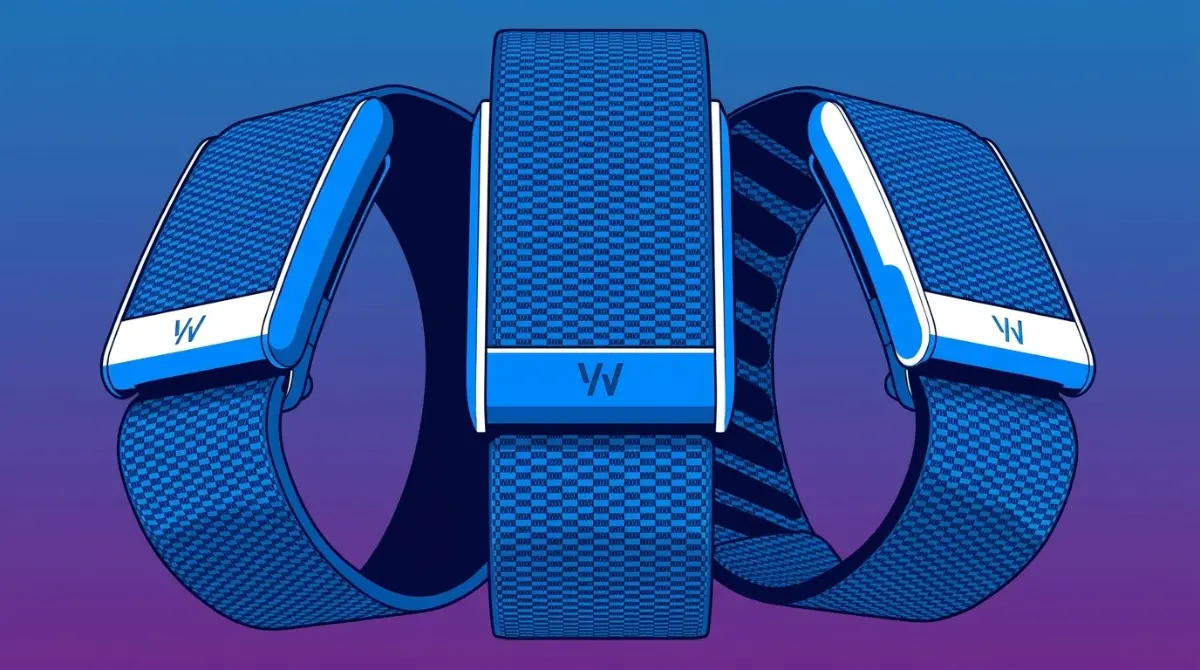
Apple engineers are prototyping a screenless fabric fitness band to challenge specialist competitors like Whoop, focusing strictly on extended battery life and bodily recovery.
Umar Abubakar | 22 Sept. 2026 · 8 min read

Apple engineers are currently testing a completely different category of wearable hardware. The California technology giant is building prototypes of a screenless fitness band designed to challenge specialist companies like Whoop. This project abandons the traditional smartwatch display entirely. The development team wants to create a thin fabric strap that sits quietly on the wrist and records physical metrics without distracting the user with constant visual notifications.
Physical Design and Prototypes
The physical architecture of the proposed device looks nothing like the Apple Watch. Internal leaks describe a computing module attached directly to a comfortable fabric band. Removing the heavy glass screen and the internal display components serves two massive purposes. First, it reduces the physical weight of the product, making it much easier to wear during intense athletic training or while sleeping. Second, it completely removes visual distractions. Users buy these specialist bands specifically because they do not want to look at another glowing screen. They want the hardware to collect their physical data in the background and send the results quietly to their mobile phones.
Leadership Restructuring
The internal push for this specific form factor comes directly from the highest levels of corporate leadership. Executive Chairman Tim Cook and services chief Eddy Cue are actively backing the prototype phase. Cue recently assumed complete control over the health hardware division following a series of executive departures. You can read more about how Apple appoints John Ternus Chief Executive Officer to understand the massive internal restructuring currently happening in Cupertino. Cue believes the company needs a simpler physical interface for health tracking. He watched rivals gain massive popularity by selling specialized sensors that ignore mobile applications and focus strictly on resting heart rates and sleep recovery.
The Battery Drain Problem
The Apple Watch dominates global sales, but it suffers from a massive mechanical limitation. The bright OLED screen consumes an enormous amount of electricity. Even the newest Series 12 requires a daily charge. If a user forgets to place the watch on a magnetic charger before bed, the device dies overnight and fails to record their sleep patterns. A screenless device solves this exact mechanical flaw. Competing products like the Whoop 5.0 operate for more than fourteen days on a single charge. Users can even charge the Whoop band while wearing it by sliding a small battery pack over the sensor. Apple realizes that continuous health tracking only works if the user never has to take the device off their wrist.
Competing Against Specialists
The wearable market moved dramatically over the past twelve months. Consumers are moving away from general-purpose smartwatches and buying highly specialized tracking equipment. Google recently launched the Fitbit Air, a cheap screenless tracker, while Garmin released the CIRQA Smart Band. The competition extends beyond wristbands. Smart rings are capturing a massive segment of the consumer base. We recently examined how the Oura smart ring IPO faces fierce rival competition, proving that investors see massive financial upside in screenless biometric sensors. Whoop remains the top target for Apple because their subscription model forces users to pay a monthly fee to access their own health data. Apple wants to capture that recurring revenue stream by integrating a similar product directly into their existing Fitness Plus subscription service.
The Economics of Hardware Subscriptions
The financial structure behind Whoop explains exactly why Apple wants to enter this specific product category. The Boston based fitness company recently achieved a valuation exceeding $10B, relying entirely on a recurring subscription model. They do not generate their massive profits by selling physical hardware. They provide the sensor band to the user and charge an annual membership fee to access the accompanying software application. This recurring revenue model produces highly predictable cash flow. Apple spent the last five years aggressively pushing its own subscription services, attempting to transition its massive user base away from one-time hardware purchases and toward monthly payments.
If Apple successfully launches a screenless band, they can bundle the hardware directly into their Apple One subscription package. An iPhone user might pay a slightly higher monthly fee to receive the fitness band, access to cloud storage, and premium workout videos. This bundling strategy makes it incredibly difficult for smaller competitors to survive. A consumer is far less likely to pay an independent company $200 a year for a fitness application when their existing phone manufacturer includes a similar service for a fraction of the cost. The financial threat to independent hardware makers is severe, causing shares of competing companies like Garmin to drop immediately after reports of this prototype leaked to the press.
Health Software Updates
Apple is already preparing the software foundation for this upcoming hardware. The latest iOS 27.2 testing environment includes a completely redesigned Health application. The software now generates a daily readiness score, a metric heavily popularized by Whoop and Oura. This score analyzes overnight heart rate variability, body temperature, and respiratory rates to tell the user if they should exercise aggressively or rest for the day. The current Apple Watch Series 12 already records continuous heart rate data, but analyzing that data correctly requires sophisticated software. By building these analytical tools into the iPhone operating system now, the engineering team guarantees the software will function perfectly when the screenless band eventually hits retail shelves.
Engineering the Fabric Enclosure
Creating a comfortable wearable device that lacks a screen presents unique mechanical challenges. The engineering team must solve complicated problems regarding sweat resistance and skin irritation. An Apple Watch sits on the wrist using a solid metal or ceramic backplate. A fabric band that hugs the skin tightly around the clock absorbs moisture and dirt constantly. The designers must select materials that can survive daily showers, heavy rain, and intense gym sessions without degrading or causing allergic reactions.
The internal computing module also requires intense miniaturization. The engineers must pack the battery cell, the Bluetooth radio, and the biometric sensors into a tiny waterproof enclosure. Because the device lacks a screen to display battery percentages, it must communicate its charging status using simple light indicators or subtle haptic vibrations. The lack of physical buttons means all software pairing and reset functions must happen wirelessly through the iPhone companion application. These tiny design details require years of testing to perfect, explaining the delayed target launch date.
Medical Grade Capabilities
There is another massive financial incentive motivating this prototyping phase. The medical industry is rapidly adopting wearable technology for remote patient monitoring. Whoop already sells medical-grade variants of its hardware that feature built-in electrocardiogram sensors. Doctors prescribe these bands to patients recovering from heart surgery. If Apple can secure federal approval for a screenless medical band, they can sell millions of units directly to hospital networks and insurance companies. A simple fabric band is much cheaper to manufacture than an Apple Watch, meaning the profit margins on bulk medical contracts would easily satisfy Wall Street expectations.
The Geopolitics of Data Collection
We must also acknowledge the massive data collection apparatus this hardware creates. A device that never leaves your body records highly intimate details about your daily routine. It knows exactly when you fall asleep, when your heart rate spikes, and how your body handles physical stress. Storing this biometric data securely is a massive legal requirement. Different nations impose strict regulations on where and how medical information travels across borders.
Apple must ensure that the biometric data collected by this screenless band processes locally on the companion iPhone whenever possible, rather than traveling to remote cloud servers. This local processing requirement forces the company to install highly capable chips inside the phone to handle the heavy mathematical lifting. If a hacker breaches a central database containing the continuous heart rate logs of millions of citizens, the resulting legal penalties would be catastrophic. By keeping the processing restricted to the local device, Apple protects itself from massive international privacy lawsuits.
The Long Development Timeline
Despite the active prototype testing, consumers will have to wait a long time to purchase this device. Internal sources indicate the hardware will not reach commercial production until at least 2028. The company is currently prioritizing the release of its upcoming smart glasses and updated wireless earbuds equipped with infrared cameras. The wearable division is stretched thin, forcing the screenless band into an extended experimental phase. The industrial design team must figure out how to make the fabric bands easily washable and durable enough to survive years of sweat and physical abuse.
A Change in Consumer Psychology
The development of this product highlights a fascinating change in consumer behavior. Ten years ago, technology companies convinced the public that strapping a tiny computer screen to their wrist would improve their daily lives. Today, a growing segment of the population feels completely overwhelmed by constant digital notifications. When your wrist vibrates every time an email arrives, anxiety increases. A screenless fitness tracker offers a quiet compromise. It allows the user to monitor their physical well-being accurately without constantly staring at a digital interface. Apple built a massive empire by putting screens everywhere. Building a product specifically designed to remain invisible proves that the hardware market is finally accepting the value of digital silence.
Read More on TechRobust:
Umar Abubakar
 LinkedIn
Umar Abubakar
Expertise:Editorial Leadership, Product Design (UI/UX), Digital Media Strategy, Technology Systems, Product Architecture
Award:TechRobust Visionary Leader of the Year 2025
Umar serves as Editor-In-Chief and CEO of TechRobust, combining editorial vision with senior product design expertise to shape how modern technology stories are built, packaged, and told. Overseeing all editorial verticals, he directs coverage across global and regional tech landscapes while applying deep design thinking to publication strategy and reader experience.