


iPhone Duo Survives 10,000 Folds as Crease Deepens
Independent laboratory stress testing of the iPhone Duo demonstrated mechanical hinge endurance after 10,000 automated cycles, but revealing measurements show display crease lines deepened noticeably under continuous folding, raising fresh concerns regarding long-term panel aesthetics on Apple $2,000 foldable smartphone.
Caleb Ogunkanbi | · 9 min read

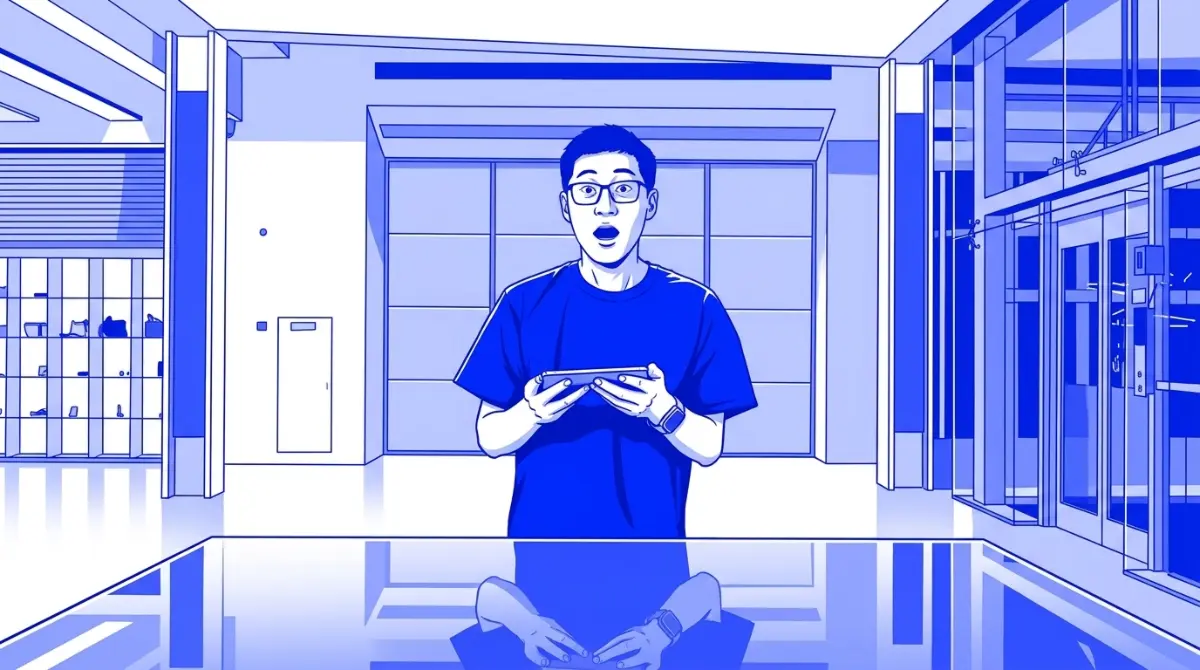
Flexible glass panels cannot escape the laws of mechanical fatigue. When an ultra-thin glass layer bends thousands of times along a fixed axis, the molecular structure shifts under tension and compression. Phone manufacturers have spent seven years attempting to convince shoppers that display wrinkles would vanish with better polymers and teardrop hinges. Independent mechanical evaluations continue to reveal the physical reality behind marketing claims. Tech reviewer Tim Pan completed an extensive folding stress evaluation on Apple initial foldable handset, the iPhone Duo, sharing laboratory findings through his MediaStorm testing channel. Subjecting the device to 10,000 mechanized fold cycles at room temperature followed by 1,000 folds in freezing environments confirmed strong hinge performance. The dual-axis hinge mechanism continued to open smoothly without mechanical grinding. The flexible OLED panel told a different story: the center fold groove became wider and more visible under direct lighting. The evaluation lands as buyers evaluate foldable hardware durability, continuing questions we tracked during our hands-on testing of the $2,000 iPhone Duo.
The test results highlight a clear design trade-off confronting premium phone buyers. While the internal mechanical gears and synchronized support plates survived thousands of machine cycles, the flexible panel developed permanent cosmetic depressions along the fold line. Pan documented measurable indentation increases after just 500 initial folds, demonstrating that cosmetic wear begins early in the device lifecycle. Adding 1,000 cycles at minus 20 degrees Celsius tested cold-weather resilience, revealing how polymer adhesives stiffen when temperatures plunge. Testers also noticed microscopic gaps where pocket dust could enter the hinge housing during partial folds. Apple positioned the phone as an engineering benchmark, charging premium prices for foldable glass screens supplied by Asian partners. The physical reality of screen wear matches supply chain trade-offs we analyzed when Apple paid Samsung top rates for foldable screens.
The 11,000-Fold Mechanical Test Protocol
Laboratory evaluations of foldable devices require rigorous mechanical controls to isolate material stress from human handling error. Pan evaluation used an automated pneumatic test rig that opened and closed the iPhone Duo through calibrated 180-degree arcs at controlled speeds. The machine applied uniform torque to outer metal frames, replicating daily thumb openings without twisting the chassis.
The testing protocol followed three distinct evaluation stages:
- Initial Baseline Inspection: Comparing an unopened, brand-new retail unit against a secondary unit cycled through 500 manual hand folds.
- Automated Room Temperature Stress: Running 10,000 consecutive mechanical folds inside a controlled laboratory space maintained at 22 degrees Celsius.
- Sub-Zero Thermal Stress: Placing the device inside an industrial thermal chamber at minus 20 degrees Celsius for 1,000 automated cycles to test frozen polymer elasticity.
Across the combined 11,000 machine cycles, the internal gears showed zero operational failures. The internal spring cams continued to hold the screen steady at intermediate viewing angles between 45 degrees and 135 degrees. When closing the handset, the perimeter magnets snapped shut with original factory alignment. Mechanical resilience proves Apple multi-link titanium hinge design handles physical movement successfully. The mechanical longevity contrasts with earlier production delays documented when hinge durability hurdles slowed initial foldable manufacturing.
Crease Depth Analysis and Light Reflection Measurements
While the internal gears held up, surface optical profilometry showed measurable deterioration across the folding zone. On a new iPhone Duo, the center depression measures less than 0.11 millimeters in vertical depth, making the seam almost invisible when looking directly at brightly lit content. Finger glides across the screen feel smooth, with only a minor dip detected near the central axis.
Following 500 folds, the groove depth expanded to 0.16 millimeters. By the completion of 10,000 machine cycles, groove depth passed 0.24 millimeters, while the width of the depressed zone spread outward by nearly two millimeters. This structural widening alters how ambient room light bounces off the display surface. Under office fluorescent bulbs or direct sunlight, the crease casts a dual shadow that distracts when reading black text on white browser backgrounds. Dark mode disguises the optical reflection, but touching the screen during typing or web navigation reveals a distinct valley running between left and right thumb zones. Consumer hesitation over visible display seams matches public sentiment tracked in our report on consumer attitudes toward foldable smartphone designs.
Comparing Foldable Display Durability and Crease Profiles
| Smartphone Model | Hinge Architecture | Fresh Crease Depth | Depth After 10k Cycles | Cold Weather Rating | Retail Starting Price |
|---|---|---|---|---|---|
| Apple iPhone Duo | Dual-axis multi-link titanium | 0.11 mm | 0.24 mm | Pass (1,000 folds at -20C) | $1,999 |
| Samsung Galaxy Z Fold 8 | Flex Hinge waterdrop gear | 0.14 mm | 0.21 mm | Pass (Certified to -20C) | $1,899 |
| Huawei Mate XT 2 | Dual-directional Tiangong hinge | 0.09 mm | 0.19 mm | Moderate stiffening at -10C | $2,800 |
| Honor Magic V4 | Super-light titanium gearless | 0.08 mm | 0.17 mm | Pass (Tested to -15C) | $1,599 |
The comparison matrix reveals that while Apple matched rivals on hinge longevity, its display panel suffers greater relative crease deepening over time. Chinese manufacturers like Honor and Huawei achieve flatter initial surfaces by adopting wide radius teardrop hinge chambers that give folding glass more room to rest when closed. Apple compact hinge geometry bends the screen at a tighter radius, increasing stress along the central glass crease line. Industrial design choices across competing form factors were evaluated in our analysis of Huawei tri-fold phone engineering.
The Physics of Ultra-Thin Glass and Optical Clear Adhesives
Understanding why display creases deepen requires inspecting the layers inside flexible screens. A folding display is not a single sheet of glass; it is a multi-layer sandwich composed of an ultra-thin glass substrate, an organic light-emitting diode emission layer, polarizing filters, and optical clear adhesive films.
The ultra-thin glass layer measures thirty micrometers thick, about one-third the diameter of a human hair. Glass possesses elasticity at microscopic thicknesses, but the adhesive films that bond glass to metal backplates are viscoelastic polymers. Every time the screen folds, the adhesive layer stretches along the outer bend and compresses along the inner face. Over thousands of cycles, polymer chains undergo plastic deformation, losing their ability to snap back to flat dimensions. The adhesive stays slightly compressed along the hinge line, pulling the thin glass down into a permanent groove. When cold temperatures freeze the adhesive, polymer flexibility drops, increasing localized stress on glass layers. Display component trade-offs mirror hardware findings detailed in our review of advanced folding screen technologies.
Hinge Particle Ingress and Pocket Debris Vulnerabilities
Beyond cosmetic creasing, Pan evaluation highlighted a secondary physical concern: environmental debris ingress. While Apple engineered micro-bristle sweeps inside hinge barrels to brush away loose lint, microscopic particles can still enter internal gear tracks at specific angles.
During testing, microscopic dust and fine grit accumulated near outer hinge seams when the device rested half-open. When the phone closed, foreign particles migrated into internal tracks, creating faint crunching noises during subsequent opening movements. Unlike standard glass slabs that earn complete IP68 submersible ratings, foldable devices feature moving exterior openings that make total dust sealing impossible. If a piece of hard mineral sand gets trapped behind the flexible OLED panel, closing the device presses that sand grain directly into the back of the screen, creating permanent bright dead pixels or puncturing display circuits. Structural vulnerabilities inside premium Apple hardware were also examined in our iPhone display teardown and hardware evaluation.
Real-World Usage Versus Accelerated Machine Cycles
Interpreting laboratory folding tests requires placing mechanical numbers into real-world consumer context. Phone analytics data show that an average smartphone owner unlocks their handset approximately eighty to one hundred times per day. For a foldable device owner who checks notifications on an external cover display, full unfoldings average forty to sixty times daily.
At fifty unfolds per day, 10,000 cycles equals roughly two hundred days, or seven months of continuous ownership. In a laboratory test, 10,000 cycles are completed over thirty hours of continuous machine action. That rapid speed does not allow polymer adhesives time to rest and recover between bends, potentially exaggerating deformation. Conversely, laboratory tests take place in clean environments without pocket heat, skin oils, sunscreen lotions, or humidity swings that weaken chemical adhesives over years of use. While Pan experiment proves the hinge will not snap after six months of heavy folding, it confirms that owners will notice a deeper, more visible screen crease before their first year of ownership ends. Software multitasking tailored for folding screens was detailed in our report on Apple split-screen software features for foldable hardware.
The Repair Economics of a Two Thousand Dollar Screen
The presence of a visible crease becomes an economic question when considering out-of-warranty repair fees. On a standard flagship handset, replacing a cracked front glass pane costs between $250 and $380 at authorized service centers. On the iPhone Duo, replacing the internal folding display costs over $800.
Because the flexible OLED panel, ultra-thin glass, hinge chassis, and internal battery halves are glued together as a unified module, technicians cannot replace the glass layer independently. If an owner wants to eliminate a deep, worn crease after two years of ownership, Apple service policies require replacing the entire display assembly. For consumers paying $1,999 upfront, facing multi-hundred-dollar repair invoices to fix cosmetic screen wear creates buyer hesitation. AppleCare subscription coverage becomes almost mandatory for foldable owners, adding hundreds in ongoing fees over typical ownership windows. Industry competition across premium folding hardware was explored in our analysis of the foldable smartphone design rivalry.
The Engineering Trade-off Between Thinness and Crease Depth
The root cause of Apple crease challenge is its corporate insistence on chassis thinness. When competitors like Samsung built thicker folding handsets, their hinges had room for larger teardrop bends that preserved display smoothness. Apple prioritized a slim profile that feels like an ordinary iPhone when closed in a pocket.
Achieving a closed profile under nine millimeters forced Apple engineers to design a compact hinge with a tight bend radius. A tighter bend radius exerts higher mechanical shear stress on display layers, accelerating polymer deformation and deepening the crease line over repeated cycles. Apple chose pocket thinness over long-term screen flatness. For users who value a slim device that slides into pants pockets easily, that trade-off makes sense. For buyers expecting a flat, unblemished screen that looks like an iPad mini when unfolded, the deepening crease will serve as a visible reminder of physical compromises. The broader value calculation for flagship smartphones was detailed in our iPhone flagship review and upgrade guide.
The Verdict on First-Generation Foldable Longevity
Tim Pan 10,000-fold stress test demonstrates that Apple solved half of the foldable engineering equation. The mechanical hinge is durable, capable of surviving thousands of cycles across extreme temperature swings without physical failure. Apple built a folding hinge that will outlast the device internal battery.
Yet the material science of flexible glass remains incomplete. No amount of software tuning or precision machining can prevent polymer adhesives from stretching under continuous mechanical stress. The iPhone Duo crease deepens, catches light reflections, and leaves a noticeable indentation under the finger after months of use. For early technology adopters, that cosmetic imperfection is an acceptable price to pay for carrying an eight-inch tablet inside a pocketable phone. For mainstream consumers expecting the perfection of rigid glass screens, the test confirms that foldable phones remain compromise devices where convenience and longevity live in uneasy tension.
Read More on TechRobust:

Caleb Ogunkanbi
 LinkedIn
Caleb Ogunkanbi
Expertise:Practical AI Implementation, Head-to-Head Product Testing, Technical How-To Guides, Data Tools & Automation, Consumer Software Benchmarking
Award:TechRobust Guides & Insights Writer of the Year 2025
Caleb is a Staff Writer and Reporter breaking down the frontiers of artificial intelligence and actionable tech education. He produces rigorous head-to-head comparisons, demystifies data tools, and crafts step-by-step technical guides that help readers navigate complex software and AI workflows with ease.