


 LinkedIn
 Google Launches $30 Pixel Tag to Rival Apple AirTag
Nvidia RTX Spark Desktops Take On Apple Mac Studio
Nvidia and seven PC partners launched compact Windows 11 desktops built on the N1X superchip starting at $4,399, pitching always-on local models as a cheaper alternative to cloud tokens while testing whether steep prices can rival Apple Mac Studio.
Goriola Ayankoya | · 9 min read

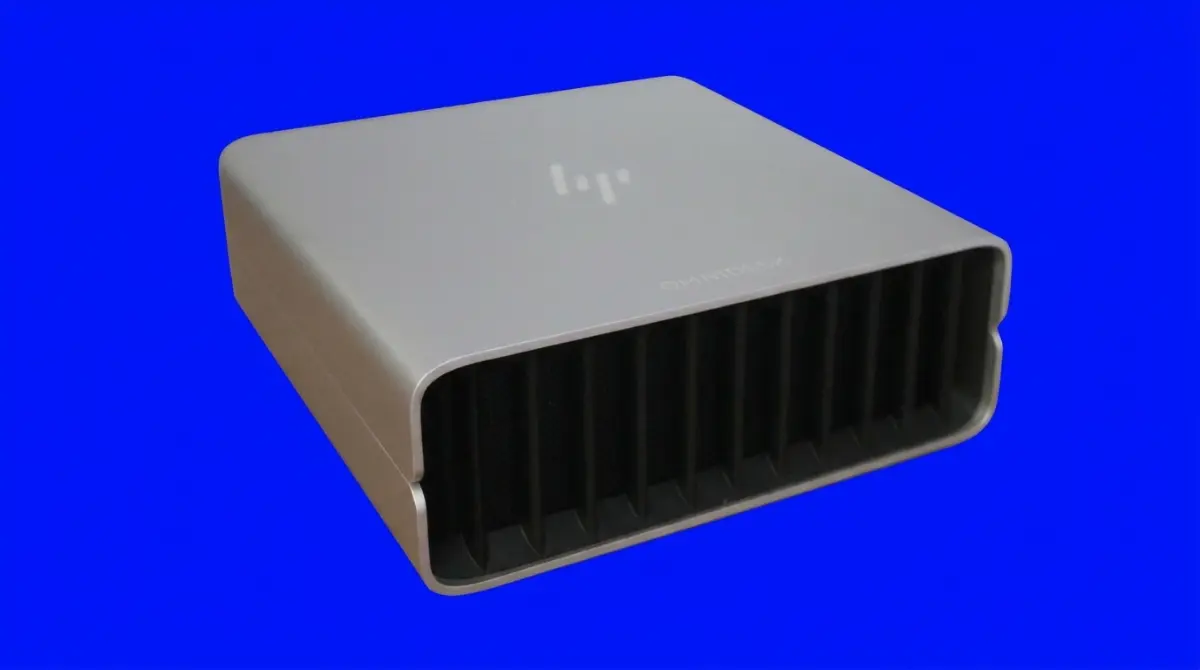
Asking desktop buyers to hand over $4,400 for a compact Windows PC so they can escape monthly cloud token bills takes bold nerve, especially when the company making the sales pitch builds the multi-million-dollar server clusters powering those cloud subscriptions. On Wednesday, November 18, 2026, Nvidia expanded its RTX Spark Windows platform from laptops into small-form-factor desktops, unveiling pint-sized workstations built with seven major PC makers: Asus, Acer, Dell, Gigabyte, HP, Lenovo, and MSI. Starting at $4,399 with 64GB of unified memory and climbing past $7,499 for 128GB configurations, the new mini PCs aim squarely at Apple Mac Studio and AMD Ryzen AI Max+ 495 workstations. Systems from Asus, Dell, MSI, and HP went on sale immediately on Wednesday, while models from Acer, Gigabyte, Lenovo, and a Microsoft Surface RTX Spark Dev Box are slated to arrive over the coming weeks and into early 2027. Yet between Apple lower starting prices, tougher raw processor benchmarks, and sudden executive upheaval inside Nvidia Santa Clara headquarters, these expensive desktop boxes face a hard fight to convince everyday buyers they belong on home desks.
The desktop rollout completes the consumer silicon wave Nvidia started on October 16 when the first RTX Spark laptops reached stores. Where portable laptops throttle electrical draw to preserve battery life, a plugged-in desktop box can run twenty-four hours a day without thermal compromise. Nvidia is marketing that permanence as always-on local intelligence, pitching buyers on running background software agents at home while paying roughly $20 a month on an electric bill instead of $1,200 in recurring cloud API charges. Whether individual creators and developers buy that math depends on what sits inside the aluminum shell, how well Windows on Arm handles creative tools, and whether CUDA access justifies paying nearly double the starting price of an entry-level Mac Studio. Hardware launches on the same N1X silicon first caught our attention during early previews when Asus previewed RTX Spark hardware at IFA 2026.
Inside the N1X Superchip and Always-On Agent Pitch
Every compact RTX Spark desktop ships with the full top-tier version of Nvidia N1X superchip, skipping the cut-down 18-core CPU and 5,120-core GPU silicon found in cheaper RTX Spark laptops. Inside each small desktop sits a 20-core Arm-based Grace processor co-designed alongside MediaTek, paired directly on the same package with a 6,144-core Blackwell RTX graphics processor rated at a 140W thermal design power envelope. That unified silicon pairing follows Nvidia closer commercial bond with its Taiwanese silicon partner, a tie we covered when Nvidia struck a major semiconductor deal with MediaTek.
According to official Nvidia launch notes, the N1X chip delivers up to 1 petaflop of FP4 math with unified LPDDR5X memory configurations of 64GB or 128GB shared cleanly between CPU and GPU cores. That large unified pool lets a single quiet desktop load open-weight language models up to 120 billion parameters with a one-million-token context window, render 90GB 3D scenes in real time, and edit 4:2:2 color video streams without stuttering. Ten-gigabit Ethernet comes standard on flagship builds to move giant model checkpoints and raw cinema files across office networks quickly.
Buyers should not confuse these new Windows 11 machines with Nvidia earlier DGX Spark developer boxes. Those Linux-only DGX units ran Ubuntu-derived DGX OS and targeted server researchers who rarely touched desktop apps or PC games. By contrast, RTX Spark desktops run full Windows 11 Pro alongside native CUDA and Linux developer utilities inside Windows Subsystem for Linux. As detailed in PCMag desktop hardware coverage, Nvidia pairs the boxes with Nvidia Pair software to share local model processing across phones and laptops on a home network, plus Switchyard routing inside Hermes Agent so routine tasks execute locally for free while harder reasoning jobs escalate automatically to remote cloud models.
Price War on Day One: MSI Undercuts Asus Against Mac Studio
Even before buyers could compare benchmarks, partner brands started slicing prices to win early orders. MSI initially released its 1.18-liter aluminum EdgeMesa N AI+ mini PC on November 11 at $4,699 for a 64GB memory and 1TB storage configuration. The moment Asus officially priced its rival ProArt GR1X at $4,499 on November 18, as announced in the Asus ProArt GR1X release, MSI responded immediately. According to MSI price drop reporting, MSI permanently cut $300 off the base EdgeMesa N AI+ to hit $4,399, undercutting Asus by $100. MSI also shaved $500 off its top 128GB memory and 4TB PCIe Gen5 SSD model, bringing it down to $7,499, whereas Asus ProArt GR1X tops out at a 2TB drive.
Even after those price cuts, RTX Spark desktops walk straight into a brutal comparison against Apple Mac Studio and AMD Ryzen AI Max+ 495 workstations such as the top-end Framework Desktop. Apple Mac Studio opens at $2,500 with an M5 Max chip and 36GB of unified memory, while stepping up to the higher-bin M5 Max with a 40-core GPU starts around $3,099. At the upper ceiling, Apple M5 Ultra Mac Studio starts at $5,499 and climbs fast with extra memory upgrades.
| Desktop System | Silicon & Graphics | Unified Memory | Operating System | Starting US Price |
|---|---|---|---|---|
| MSI EdgeMesa N AI+ (Base) | Nvidia N1X (20-core CPU / 6,144-core GPU) | 64GB LPDDR5X | Windows 11 Pro | $4,399 (1TB SSD) |
| Asus ProArt GR1X | Nvidia N1X (20-core CPU / 6,144-core GPU) | 64GB / 128GB LPDDR5X | Windows 11 Pro | $4,499 (up to 2TB) |
| MSI EdgeMesa N AI+ (Max) | Nvidia N1X (20-core CPU / 6,144-core GPU) | 128GB LPDDR5X | Windows 11 Pro | $7,499 (4TB Gen5 SSD) |
| Apple Mac Studio (M5 Max) | Apple M5 Max (up to 40-core GPU) | 36GB base (configurable) | macOS 27 Golden Gate | $2,500 to $3,099+ |
| Apple Mac Studio (M5 Ultra) | Apple M5 Ultra workstation silicon | High-bandwidth unified pool | macOS 27 Golden Gate | $5,499+ |
| Framework Desktop (Top Tier) | AMD Ryzen AI Max+ 495 | Up to 128GB / 192GB configs | Windows 11 / Linux | Varies by RAM spec |
That price table exposes Nvidia toughest hurdle. A creative studio or software engineer shopping with a $3,500 budget can walk into an Apple store today and pick up a fast M5 Max Mac Studio with money left over for a sharp monitor. Stepping into Nvidia entry-level 64GB desktop costs nearly $1,900 more than Apple base Mac Studio, while MSI 128GB model lands squarely in $7,499 territory where buyers expect uncompromising workstation muscle across every single metric.
Raw Speed vs. Software Reality on Windows on Arm
Paying $4,399 to $7,499 raises an obvious question: does Nvidia N1X superchip beat Apple M5 Max in everyday speed? Early performance testing across the exact same N1X silicon inside flagship laptops like the Microsoft Surface Laptop Ultra tells a sobering story. Even in its full 20-core and 6,144-core configuration, RTX Spark trails Apple latest top-tier M-series processors in raw CPU and general GPU horsepower, and it sits far behind Apple $5,499 M5 Ultra Mac Studio in sustained memory transfer speeds. Putting the N1X inside a desktop chassis with a 240W power adapter prevents mobile battery throttling, as measured in StorageReview EdgeMesa lab testing, yet desktop cooling cannot rewrite the underlying silicon ceiling.
Nvidia counterargument rests completely on software tools, gaming compatibility, and CUDA. If your daily workflow depends on PyTorch pipelines tuned for CUDA, TensorRT inference engines, or native Windows 3D applications, macOS remains a walled garden regardless of how fast Apple chips score in synthetic benchmarks. To strengthen the Windows on Arm creative story at launch, Nvidia rolled out coordinated software updates with major creative publishers:
- Adobe Native Arm Support: Adobe released native Windows on Arm versions of Illustrator and InDesign tuned for RTX Spark, with Nvidia reporting up to 30% faster performance in Illustrator compared to older emulated builds, alongside a native public beta of Substance 3D Painter 12.2.
- Blender and Local Video Pipelines: Blender 5.3 adds DLSS 4.5 Ray Reconstruction inside its Cycles viewport for smoother live ray-traced lighting previews, while ComfyUI integrates RTX Video Frame Generation and RTX Video HDR to upscale local generated clips to 60 frames per second.
- Native PC Gaming: Unlike a Mac Studio, an RTX Spark desktop doubles as a genuine 1440p Windows gaming machine supporting DirectX 12 titles, G-SYNC monitors, and DLSS frame generation after work hours.
Choosing between Windows 11 and Apple desktop software remains one of the sharpest dividing lines for pro buyers in 2026, a trade-off we tested across everyday workflows in our macOS 27 versus Windows 11 comparison.
Hardware Variety and the Post-Huang Question Over N2X
The one clear advantage Nvidia holds over Apple is physical variety. Apple sells the Mac Studio in one silver aluminum brick with fixed port choices and zero internal customization. Nvidia seven-partner roster guarantees distinct industrial designs, corporate IT warranties, and port arrays from Asus, Dell, HP, Lenovo, Gigabyte, MSI, and Acer. Most first-wave boxes look like familiar dark metal mini PCs from the past decade, though Acer vertical SFF RTX Spark tower, scheduled for early 2027, stands out with a tall boxy silhouette built to sit upright beside a monitor.
Still, hanging over every $4,400 purchase sits a glaring corporate question mark in Santa Clara. Less than one week before these desktops hit shelves, Nvidia co-founder Jensen Huang resigned abruptly on November 12 amid workplace affair disclosures and federal scrutiny over Chinese chip conduits, handing interim control to Chief Financial Officer Colette Kress. Consumer desktop silicon has always been a tiny fraction of Nvidia $4T data center empire. With Kress promising Wall Street tighter financial discipline after a rocky transition we examined when Nvidia placed Colette Kress in interim control, buyers spending $7,499 today have every right to ask whether Nvidia will keep pouring engineering dollars into a second-generation N2X Windows chip if these pricey mini PCs sell in modest numbers.
There is also dark humor baked into Nvidia marketing pitch. For three years, Nvidia built its historic profits by selling data center accelerators to cloud providers that bill developers per token. Now, Nvidia consumer team wants home users to spend $4,400 upfront so they can dodge those exact cloud token bills and pay $20 a month to their local electric utility instead. For power users who genuinely spend hundreds of dollars every month running private coding agents, confidential local documents, or CUDA-accelerated 3D scenes, an MSI EdgeMesa N AI+ or Asus ProArt GR1X can pay for itself inside a year while keeping sensitive files off remote servers. Everyone else—especially video editors, photographers, and general creative pros who do not rely on CUDA—will still find far better raw value sitting inside Apple $2,500 to $3,099 Mac Studio or AMD high-memory desktop workstations.
Read More on TechRobust:

Goriola Ayankoya
Goriola Ayankoya
Expertise:Consumer Hardware, Smartphone Trends, Gadget Reviews, Breaking Tech News, Mobile Ecosystems
Award:TechRobust Hardware Reporter of the Year 2025
Goriola is a Staff Writer and Reporter specializing in consumer technology, breaking tech news, and hands-on hardware analysis. He tracks fast-paced mobile developments, reviews modern gadgets, and unpacks product launches to give readers clear, practical insights into everyday consumer tech.
Related Stories
Google Launches $30 Pixel Tag to Rival Apple AirTag Samsung to Embed Battery Security Chips in Galaxy A Phones
 Qualcomm Unleashes 5GHz Snapdragon 8 Elite Gen 6 Chips