
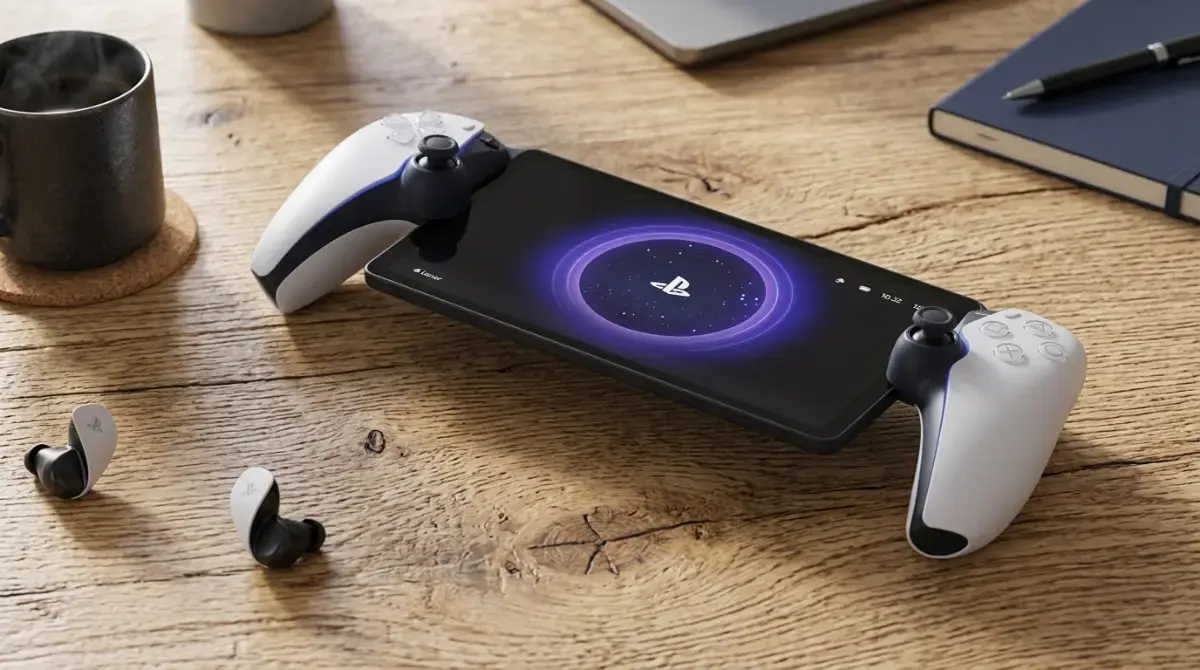


Sony Prepares PlayStation Portal OLED as Filings Surface
Regulatory certifications from the Wi-Fi Alliance reveal two unannounced Sony gaming devices running Android 15, adding weight to reports of an incoming OLED display refresh and potential native handheld hardware.
Goriola Ayankoya | 7 Oct. 2026, 6:05 PM · 8 min read

Dedicated handheld gaming accessories often struggle to find clear market validation, yet Sony remote streaming player defied early skepticism. When the Japanese entertainment giant first unveiled the PlayStation Portal in late 2023, critics dismissed the $200 unit as an unnecessary luxury that required an active home console to function. Despite those initial doubts, the device sold out across multiple global regions, establishing a profitable hardware category for the corporation. Now, official regulatory activity indicates an updated generation is nearing production lines. Two unannounced Sony portable devices received certification from the Wi-Fi Alliance under model designations CFI-Y2000 and CFI-Y2105. Both entries point toward an imminent refresh for the remote streaming hardware, reviving credible industry reports of a premium panel upgrade and broader handheld ambitions.
The regulatory documents reveal key clues about how Sony plans to update its mobile gaming footprint. The original PlayStation Portal shipped under the CFI-Y1001 product code, meaning the new CFI-2000 sequence represents a structural hardware revision rather than a simple regional packaging tweak. Both certified devices run on Android 15, a noticeable upgrade over the older custom software build running on current units. Beyond routine operating system maintenance, the timing aligns with supply chain disclosures that pointed to an updated OLED display variant scheduled for late 2026. As portable gaming machines continue commanding consumer attention, electronics manufacturers are racing to deliver higher contrast ratios and improved panel efficiency. We evaluated how rival hardware brands refine their portable devices in our review of Nothing mid-range hardware and design strategies.
The Long Anticipated Move to Organic Light Emitting Diodes
The headline upgrade center stage in these hardware leaks is the switch from liquid crystal displays to an organic light-emitting diode panel. The original PlayStation Portal included an 8-inch LCD screen running at 1080p resolution and sixty frames per second. While that panel delivered solid color reproduction and respectable brightness, LCD backlights naturally wash out black levels in dark environments. For atmospheric action titles and horror adventures, poor contrast limits visual immersion.
Adopting an OLED panel solves that problem by giving every individual pixel the ability to turn completely off. Black levels become absolute, color saturation deepens, and overall panel power efficiency improves noticeably when rendering darker scenes. This exact strategy paid massive dividends for Nintendo when it refreshed the Switch lineup, extending product relevance without altering internal processing chips. Enthusiasts are also hoping the new panel supports higher refresh rates, though streaming limitations on the base console could keep playback pinned to standard frame rates. We examined how display panel pricing dictates manufacturing decisions across consumer hardware in our report detailing Apple paying Samsung $250 per display panel for foldable smartphones.
Wireless Constraints and Network Headwinds
While the screen upgrade will please visual purists, the regulatory filings present a surprising technical limitation regarding wireless connectivity. The Wi-Fi Alliance paperwork confirms that both certified Sony units operate exclusively across dual-band 2.4GHz and 5GHz wireless spectrums, completely omitting support for 6GHz channels found on modern routers. For a dedicated remote streaming player that relies entirely on wireless data stability, skipping updated wireless standards is a conspicuous engineering compromise.
Streaming modern high-definition video from a home console requires ultra-low latency and zero packet loss. In congested apartment buildings where dozens of neighboring routers battle for 5GHz radio space, network interference routinely introduces stutter, image compression artifacts, and controller input delay. Omitting 6GHz connectivity means the new hardware cannot tap into clean, uncrowded wireless bands to guarantee pristine stream quality. Sony engineers likely chose to bypass the newer wireless chipsets to protect retail price points and preserve battery life, though power users with upgraded home networking setups will view the omission as a missed opportunity. We tracked how network reliability shapes consumer hardware adoption in our analysis of Two Model Codes and the Handheld Console Question
The existence of two distinct certification codes has reignited speculation regarding a broader hardware strategy. In standard consumer electronics manufacturing, companies often register multiple model numbers to account for different international regulatory zones, such as North American, European, and Asian frequency rules. Yet industry insiders note that Sony could also be testing two separate hardware configurations for different consumer tiers. Rumors have circulated across Asian supply chains that Sony is exploring a dockable, native gaming handheld designed to accompany the future PlayStation 6 platform. While a remote streaming unit relies entirely on home network links or cloud servers, a native portable machine would run software directly from onboard silicon, similar to a Steam Deck. The current regulatory filings do not confirm native silicon, but they prove that management sees strong commercial viability in portable form factors. If Sony launches both an affordable OLED streaming client and a costlier standalone handheld, the company could cover every budget tier in the portable market. We followed similar platform diversification moves in our coverage of Huawei expanding innovative mobile form factors. The hardware refresh arrives as Sony systematically alters the software capabilities of the Portal platform. At launch, the device operated solely as a local mirror for a powered-on home console. If someone else in the household wanted to use the television, the Portal allowed gaming from another room. If the home internet went down or the home console froze, the portable accessory became entirely useless. That rigid operational limit softened considerably following recent software updates that introduced direct cloud streaming for premium subscription members. Subscribers can stream select digital titles directly from cloud servers without turning on their home consoles, converting the accessory into an independent cloud terminal. Upgrading the underlying operating system to Android 15 in the newly certified models will provide a cleaner software foundation for dedicated cloud streaming applications. By decoupling the hardware from physical home consoles, Sony transforms the unit into an accessible entry point for gamers who may not want to spend $500 on a heavy living room machine. The shifting definitions of digital game access were explored when consumer rights groups challenged digital gaming ownership rules. The physical ergonomics of the PlayStation Portal remain its strongest asset. Rather than using cramped, flat mobile controls, the original model split a genuine DualSense controller in half, mounting the handles to either side of the screen. Players gained full-sized thumbsticks, precise adaptive triggers, and authentic haptic feedback motors that rumble in response to in-game environments. Any hardware successor will almost certainly preserve that chassis shape, ensuring that muscle memory and ergonomic comfort remain identical to home console play. However, consumer complaints regarding peripheral support will test Sony hardware designers. The original device lacked standard Bluetooth audio support, preventing owners from pairing everyday wireless earbuds without buying expensive proprietary PlayStation Link accessories or using a wired 3.5mm headphone jack. The new certification filings explicitly mention a 3.5mm earphone jack alongside a USB charging port, leaving open the question of whether standard Bluetooth audio pairing will finally be permitted. Locking wireless audio behind expensive proprietary hardware helped accessory sales, but consumer resistance to artificial peripheral limits remains high. We evaluated similar hardware restrictions when reporting on consumer accessories and proprietary hardware boundaries. Launching an upgraded portable device in the current economic environment requires careful financial balancing. Over the past twenty-four months, soaring demand for high-performance memory chips and advanced displays has driven up bill-of-materials costs across all consumer electronics. If Sony equips the refreshed Portal with an expensive OLED panel and larger internal battery cells, maintaining the original $200 retail price tag will be extremely difficult. An entry price climbing toward $250 or $300 would push the device into direct competition with dedicated handheld computers that offer native offline play. Sony must balance the appeal of deep black levels against the financial reality of household entertainment budgets. If the price climbs too high, casual console owners will simply prop an iPad on a table and pair a regular wireless controller instead. Managing physical component pricing against consumer demand matches manufacturing trends we detailed when hardware builders adjusted component prices and issued refunds. The appearance of model numbers CFI-Y2000 and CFI-Y2105 inside international certification databases makes one thing clear: Sony considers portable hardware an essential pillar of its long-term gaming strategy. The original Portal proved that console owners genuinely desire the flexibility to play high-budget titles away from the living room television, even if the processing happens on a distant server. By pairing that proven ergonomic chassis with the rich contrast of an OLED display and the modern backend of Android 15, Sony is preparing to solidify its hold on the handheld streaming space. Whether this certification signals a simple mid-cycle screen upgrade or the opening move in a broader return to dedicated portable gaming consoles, PlayStation fans will not have to wait long for official confirmation. With regulatory approvals clearing international desks, an official announcement from Tokyo is likely just around the corner. Read More on TechRobust:Software Evolution From Remote Mirror to Cloud Terminal
Physical Controls and Proprietary Audio Ties
Manufacturing Costs and Retail Price Pressures
The Future of Mobile PlayStation Gaming

Goriola Ayankoya
 LinkedIn
Goriola Ayankoya
Expertise:Consumer Hardware, Smartphone Trends, Gadget Reviews, Breaking Tech News, Mobile Ecosystems
Award:TechRobust Hardware Reporter of the Year 2025
Goriola is a Staff Writer and Reporter specializing in consumer technology, breaking tech news, and hands-on hardware analysis. He tracks fast-paced mobile developments, reviews modern gadgets, and unpacks product launches to give readers clear, practical insights into everyday consumer tech.