
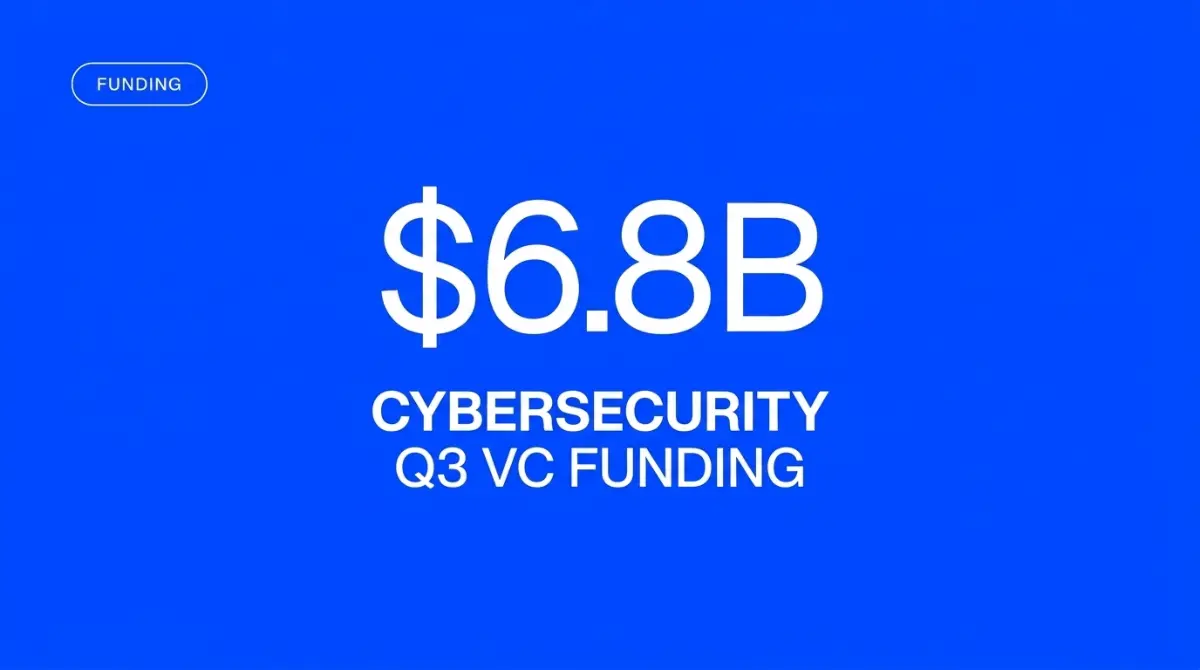


Cybersecurity Startups Secure $6.8B In Massive Q3 2026 Rounds
Venture capital funding for privacy and cybersecurity firms jumped fifty percent in the third quarter of 2026, reaching $6.8B as investors concentrated massive checks into late-stage automated defense platforms.
Umar Thariwat | 15 Oct. 2026, 11:20 AM · 4 min read

Corporate technology budgets are shrinking across marketing, customer service, and experimental software tools. Yet, one specific line item continues to see aggressive spending: corporate digital defense. Venture capital firms poured $6.8B into cybersecurity and privacy startups during the third quarter of 2026. Fresh market data published by Crunchbase reveals a fifty percent sequential jump in total dollars raised compared to the second quarter. However, the composition of that cash exposes a stark reality: investors are writing larger checks to a smaller, elite circle of established winners while ignoring early-stage projects.
The deal volume tells an undeniable story of market concentration. While the total capital deployed reached $6.8B, the actual number of completed funding rounds dropped across almost every stage. Instead of spreading bets across dozens of early seed teams, institutional investors poured money into eighteen distinct mega-rounds valued at $100M or higher. Corporate leaders are scared of new, unproven security tools; they want established, well-funded vendors capable of protecting hybrid clouds and automated software agents from catastrophic network breaches. We saw the financial power of this sector earlier when Cyera secured $400M from Goldman Sachs to expand its corporate security footprint.
The biggest driver behind this funding surge is the rise of automated digital workers. As enterprises deploy software agents to handle sensitive accounting, human resources, and customer support files, traditional firewalls become completely ineffective. Malicious actors use automated reasoning systems to execute split-second penetration attempts and craft targeted phishing lures. Protecting modern infrastructure demands automated defense networks that adapt instantly. This reality was made clear when automated tools lowered the barrier to entry for advanced cyberattacks across global corporate targets.
Mega Rounds Dominate The Late Stage Funding Environment
Leading the quarter was machine-identity management firm Keyfactor, which collected a massive $1B growth investment led by Summit Partners. As corporate infrastructure shifts to automated microservices, tracking which software machine holds permission to access sensitive databases has become an administrative nightmare. Keyfactor provides automated cryptographic keys that verify digital identities across cloud clusters. Enterprise browser provider Island also secured $400M in a Series F round that valued the business at $6.4B. Island built a secured corporate browser designed to monitor employee actions and police rogue automated agents before they leak confidential trade secrets.
Consolidation is accelerating alongside venture checks. Payment giant Visa spent $2.4B to purchase behavioral biometrics provider BioCatch in August, marking the largest venture-backed cybersecurity exit of the quarter. Meanwhile, data security leader Cyera acquired Oasis Security in a transaction valued near $1B. Rather than building internal tools from scratch, mature security firms are purchasing smaller rivals to absorb technical talent and proprietary threat detection algorithms. This rapid consolidation reflects the broader market dynamic where AI startups sparked a heavy merger wave by buying smaller rivals.
The public market exit pipeline remains exceptionally thin despite the private funding boom. Consumer safety provider Aura managed to execute a public listing via a reverse merger with Australian firm Qoria, but traditional initial public offerings were virtually nonexistent. High interest rates and volatile public equity markets have kept late-stage security unicorns on the sidelines. Large venture-backed companies are forced to raise massive private extension rounds to maintain cash reserves while waiting for the IPO window to reopen in 2027.
The Widening Gap For Early Stage Founders
The concentration of capital at the top creates severe headwinds for seed and Series A founders. A cybersecurity founder looking for $3M to build an early concept faces strict investor diligence. Venture partners are asking whether a startup product can survive against giants like Island, Keyfactor, and Cyera that just raised hundreds of millions to defend their market share. Early-stage founders must demonstrate clear technical advantages or target highly specialized niches, such as robotic software protection, to convince investors to open their checkbooks. We documented this exact funding selectivity when Armadin secured $255M in Series B funding for agent swarm security.
Geopolitical tensions are also accelerating corporate defense spending. Defense agencies and critical infrastructure operators face daily cyber offensives originating from hostile foreign states. A security breach at a regional power grid or hospital network carries life-or-death consequences. This heightened threat landscape means corporate boards cannot afford to cut security spending, even during severe economic downturns. Cybersecurity software has effectively graduated from an IT department expense into a mandatory operational insurance policy.
The $6.8B recorded in Q3 proves that the security sector remains one of the most resilient segments of the technology economy. As businesses continue to automate their daily workflows, the attack surface will only expand. Investors are betting that the companies building the digital shields of tomorrow will capture enterprise budgets for the next decade. For founders capable of proving their software can stop sophisticated machine-speed attacks, capital will remain readily available.
Read More on TechRobust:

Umar Thariwat
 LinkedIn
Umar Thariwat
Expertise:Tech News Reporting, Tech Business Analysis, Economic Foundations, Market Trends, Digital Economy
Award:Rising Voice of the Year 2025
Thariwat is a Staff Writer and Reporter covering tech news and enterprise trends at TechRobust. Blending daily reporting with her ongoing academic background in economics, she analyzes earnings, digital market, and the commercial strategies powering the global tech sector.