
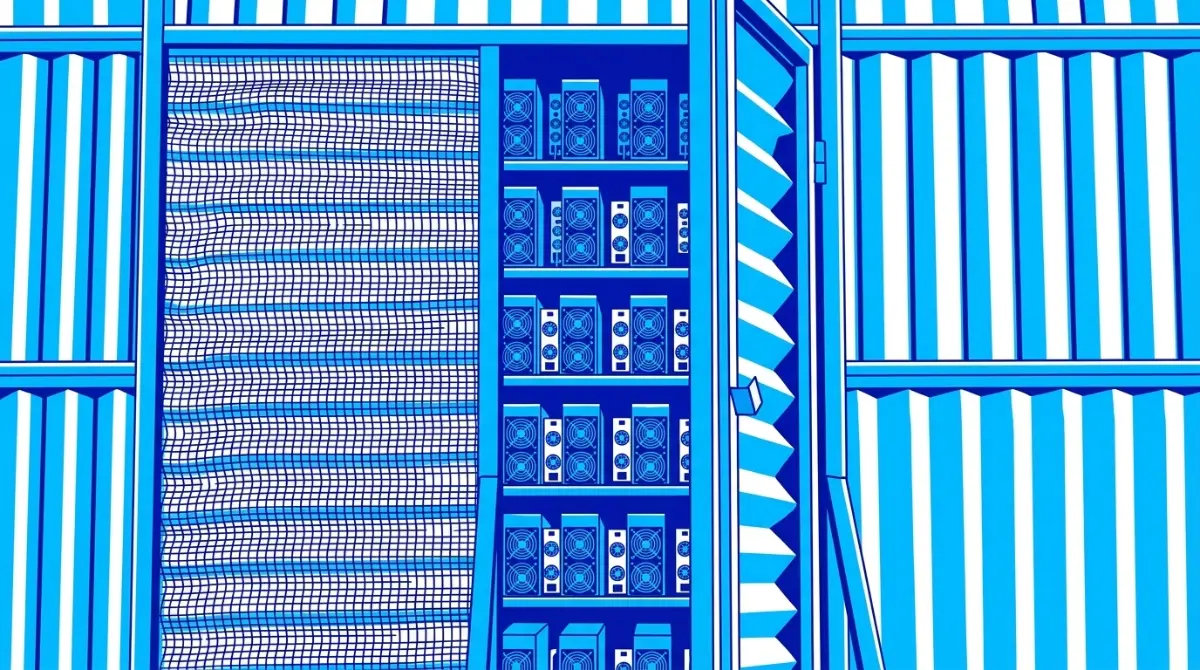


FTX Bitcoin Mining Assets Join AI Data Center Boom
Once reviled by bankruptcy liquidators as reckless spending by Alameda Research, physical cryptocurrency mining sites tied to the fallen exchange are transforming into contested assets as server developers hunt for energized grid connections across power starved regions of North America.
Umar Thariwat | 12 Oct. 2026, 5:33 AM · 13 min read

Physical electrical substations have replaced digital software algorithms as the most coveted property in modern finance. When cryptocurrency exchange FTX imploded into Chapter 11 bankruptcy in November 2022, corporate liquidators began untangling a chaotic trail of speculative investments executed by trading affiliate Alameda Research. Among the most criticized outlays was an eye-watering $1.15B cash transfer directed into Bitcoin mining operator Genesis Digital Assets between 2021 and 2022. Bankruptcy attorneys and court-appointed restructuring managers labeled the transaction reckless, arguing that customer deposits were wasted on remote warehouses filled with noisy cooling fans and depreciating calculation rigs. Liquidators filed clawback lawsuits in the Delaware bankruptcy court, attempting to recover funds from company founders who had purchased secondary shares during the peak of the cryptocurrency market.
Four years later, the economics of global computing have undergone an extraordinary realignment. Machine learning laboratories and cloud operators are scouring the continent for energized land parcels capable of delivering hundreds of megawatts of continuous electrical current. Building a new computing hub from scratch now takes up to seven years, stalled by bureaucratic grid queues, environmental reviews, and transformer equipment backlogs. Consequently, the concrete pads, high-voltage transformers, and utility contracts acquired with Alameda funds have turned into prime industrial real estate. Instead of liquidation fire sales at penny valuations, those disputed mining facilities are emerging as assets at the center of the computational server buildout. The shift reflects a wider movement across technical markets, which we followed when analysts projected multitrillion dollar investments into compute capacity.
The changing fortunes of these mining locations illustrate how physical constraints dictate technological progress. For years, Silicon Valley treated electricity and cooling water as cheap commodities that would always appear on demand. Software developers built larger models with little thought given to the physical power plants running behind the wall socket. Now that regional utilities are warning of generation deficits, the firms controlling active grid interconnections hold immense bargaining power. The very assets once dismissed as evidence of corporate fraud are helping bankroll creditor payouts in unexpected ways.
The Scramble for Energized Substations and Grid Queues
The primary bottleneck restricting modern computing expansion is no longer the production of silicon microchips. Foundries in Asia continue fabricating processors at historic volumes, yet thousands of those expensive accelerators sit inside warehouse shipping crates because developers cannot secure enough electricity to turn them on. Across regional transmission organizations like ERCOT in Texas, PJM in the Mid-Atlantic, and MISO in the Midwest, applications for new commercial utility interconnections are backlogged for years. A technology company seeking 200 megawatts for an industrial cluster must wait until utility engineers evaluate whether existing high-voltage transmission wires can handle the electrical load without causing localized brownouts.
Bitcoin mining installations bypass that administrative roadblock entirely. When Genesis Digital Assets and rival operators built their facilities during the crypto market peak, they negotiated long-term power purchase agreements, secured direct connections to high-capacity transmission wires, and erected on-site electrical substations. Those utility arrangements remain legally binding and active today. To an enterprise cloud operator looking to deploy clusters of graphics cards, an operational mining site represents years of saved permitting delays. Acquiring or leasing an existing substation allows a developer to install computing hardware immediately, avoiding years of public hearings and environmental filings. How utility allocations govern technological expansion was examined in our report detailing water and power limits threatening multi-billion dollar server campuses.
The sheer speed advantage provided by ready-to-use power has triggered a land rush across rural counties in Texas, South Carolina, and the Pacific Northwest. Real estate brokers specializing in digital infrastructure report that developers are willing to pay massive valuation premiums for sites that possess verified grid connections. In this environment, an unbuilt plot of farmland with a signed 100-megawatt interconnection agreement can command a higher market valuation than an operational warehouse without utility approval. Facilities originally erected to validate proof-of-work transactions have become the fastest route to bringing machine learning clusters online.
The Alameda Bet on Genesis Digital Assets
The financial history behind these properties represents one of the stranger chapters of the digital asset era. Between August 2021 and April 2022, Sam Bankman-Fried directed Alameda Research to inject $1.15B into Genesis Digital Assets across four funding tranches. The investment was extraordinary in its size, ranking as the largest venture capital deployment in the entire FTX corporate empire. Internal records revealed that more than half of that money did not even go toward buying mining computers; over $550M was paid out directly to company founders and executives through secondary share redemptions.
When the exchange collapsed amid allegations of fraud and missing client balances, the newly installed restructuring team led by John J. Ray III singled out the investment for intense legal scrutiny. In late 2025, the FTX Recovery Trust filed a formal complaint in federal bankruptcy court, characterizing the funding rounds as fraudulent transfers made while the trading firm was insolvent. The lawsuit alleged that the mining company was overvalued, possessed inadequate financial controls, and had enriched insiders at the expense of FTX depositors. Court filings sought the return of the full $1.15B, arguing that the estate should reclaim the capital to distribute cash to harmed retail account holders. Legal challenges over corporate ownership records reflect wider regulatory scrutiny, similar to moves we documented when regulators demanding verified ownership records for private tech transactions.
Yet while the lawsuit worked its way through bankruptcy court, the market value of the underlying business began to diverge sharply from the claims in legal briefs. Genesis Digital Assets continued operating its mining fleet, using its cash reserves to acquire additional land and power rights across North America. As the market for computational power accelerated, the company enterprise valuation climbed toward $3.5B. What had been portrayed as a total loss during the dark days of late 2022 evolved into an asset pool that attracted inquiries from institutional infrastructure funds and cloud platforms. The litigation that began as a straightforward clawback turned into a complex negotiation over who would capture the financial upside of a booming computing industry.
Retrofitting Mining Sheds for Modern Accelerator Clusters
Transforming an industrial Bitcoin mine into a modern computing center is far more complicated than simply unplugging crypto miners and plugging in graphics processors. The physical architecture required for validating blockchain transactions differs drastically from the environment needed to train neural networks. Bitcoin mining machines are designed as expendable computational tools; they operate inside open-air steel barns where large industrial fans pull ambient air across aluminum heat sinks to cool basic circuit boards.
Modern machine learning servers demand pristine operating conditions. High-performance processors generate intense thermal heat within tiny areas, requiring closed-loop liquid cooling manifolds, chilled water distribution units, and specialized air filtration systems to prevent airborne dust from coating microscopic motherboard connections. If ambient humidity swings too high or airborne dust enters the server racks, expensive accelerator cards will experience component failures. Furthermore, while a Bitcoin miner can pause operations instantly when local electricity prices spike, a distributed machine learning cluster cannot tolerate sudden power cuts without corrupting weeks of numerical model training progress. Server facility retrofits match hardware challenges we tracked when Crusoe canceling a $1.25B turbine procurement contract.
Consequently, infrastructure developers must spend hundreds of millions of dollars to upgrade these properties. They must pour thick concrete foundations, erect sealed climate-controlled rooms, install dual fiber-optic communication conduits, and assemble emergency diesel generators paired with battery reserves. Yet even with those construction expenses, converting an existing mining site remains far cheaper and faster than building a greenfield campus from nothing. The expensive, slow part of the equation: building the high-voltage substation and running heavy transmission lines to the public utility, is already complete. Developers view the retrofitting work as a manageable engineering step that delivers operational servers years ahead of traditional construction schedules.
The Shift From Token Mining to Stable Cloud Leases
The broader cryptocurrency mining sector is executing a massive corporate pivot that mirrors the trajectory of the FTX-linked sites. For a decade, public mining firms lived at the mercy of unpredictable market cycles. When Bitcoin prices rose, companies generated record revenues; when prices plunged or the network completed scheduled reward halvings, mining profits vanished, forcing operators to sell coin inventories or issue dilutive shares to cover basic electricity bills.
Leasing energized facilities to machine learning tenants offers mining operators an escape from that commodity volatility. Cloud platforms and artificial intelligence startups sign multi-year contracts that guarantee fixed payments per megawatt of capacity, providing predictable cash flows that public equity markets reward with higher valuation multiples. Companies like TeraWulf, Applied Digital, Hut 8, and Cipher Mining have signed agreements worth billions of dollars with hyperscale tenants, dedicating growing shares of their power portfolios to enterprise compute. How large corporate agreements stabilize digital infrastructure finances was examined in our report detailing Citi partnered with Coinbase for merchant payments.
For Genesis Digital Assets and the managers overseeing FTX recovery efforts, this commercial shift opens lucrative exit options. Rather than trying to sell used mining computers on second-hand markets for pennies, the company can position its portfolio of land and power assets as hosting locations for enterprise computing clients. A single 100-megawatt campus can generate tens of millions of dollars in annual lease revenue when rented to a tier-one technology tenant. That reliable earning potential transforms what was once a distressed, volatile investment into an asset that can be sold to private equity infrastructure funds or taken public through an institutional listing.
Creditor Payout Realities and the Bankruptcy Ledger
The unexpected appreciation of these physical assets highlights an ongoing tension inside the FTX bankruptcy proceedings. Under the reorganization plan approved by the court, customer claims were dollarized based on the market prices of cryptocurrencies on November 11, 2022, the exact date the exchange filed for Chapter 11 protection. At that time, Bitcoin traded near $16,871, while the broader digital asset market was mired in a severe downturn.
Because the bankruptcy estate recovered assets that subsequently exploded in value, including its substantial equity stake in artificial intelligence lab Anthropic and its cryptocurrency token reserves, the estate achieved cash collections that allowed it to propose repaying creditors 100% of their allowed petition-date claims, plus interest. Yet many former account holders remain frustrated, arguing that being repaid in 2022 dollar values while the broader market quadrupled deprives them of their rightful financial recovery. The rising valuation of Genesis Digital Assets adds another wrinkle to that dispute. If the recovery trust successfully monetizes the mining venture for billions of dollars, that surplus capital will flow into post-confirmation trust reserves, potentially generating windfalls for preferred equity holders after baseline claims are settled. The financial mechanics of sovereign tech spending were detailed when we covered Oracle delaying massive data center payments over power supply fights.
This dynamic demonstrates how bankruptcy outcomes can be distorted by technological waves. When the restructuring team took control of FTX, few industry observers imagined that an obscure portfolio of Bitcoin mining properties in rural counties would become an important driver of institutional value. The capital recovered from these sites, alongside the $1.3B gained from selling Anthropic shares, underscores how closely the resolution of the crypto collapse has become intertwined with the artificial intelligence boom. The profits from the new computing era are directly funding the resolution of the prior speculative bubble.
Grid Friction and Community Clashes in Rural Counties
The repurposing of these industrial sites is not proceeding without local friction. Across rural communities where these mining facilities operate, residents and local government officials are expressing growing concern over the rapid growth of large server centers. When a facility transitions from mining cryptocurrency to hosting enterprise machine learning clusters, its overall resource consumption changes dramatically.
While Bitcoin mining operations often agreed to curtail their electricity usage during regional grid emergencies to lower overall power costs, modern cloud computing clusters operate on unbroken schedules. Enterprise customers running critical business applications cannot tolerate power shutdowns. This means that a retrofitted facility draws continuous electrical current every hour of the year, putting steady pressure on local substations and distribution lines. Furthermore, the installation of water-intensive evaporative cooling towers has sparked intense community protests in arid western states, where farmers and homeowners worry that industrial computing parks will deplete local aquifers. The escalating public debate over digital infrastructure was documented in our report on growing public pushback against server facility electrical consumption.
In states like Texas, where the ERCOT grid has repeatedly faced stress during severe winter freezes and summer heatwaves, lawmakers are taking a closer look at the tax incentives offered to large computing operators. Municipal councils that once welcomed crypto mining companies with property tax abatements are now asking whether massive data centers provide sufficient local employment to justify their huge electrical consumption. A converted computing campus may cost hundreds of millions of dollars to build, yet it employs only a few dozen permanent technicians once operational. As computing facilities expand, reconciling industrial electricity demand with residential community needs will remain a contentious political challenge across the country.
Energy Storage and the Evolution of Modern Facilities
To ease the strain on regional utilities and ensure uninterrupted operations, operators of retrofitted computing facilities are investing heavily in on-site power management systems. The integration of massive lithium-iron-phosphate battery banks and microgrid controls allows these facilities to manage their consumption patterns without disrupting local neighborhoods. When electricity demand peaks on hot afternoons, the facility can draw power from its internal battery reserves rather than taking current from the public grid.
This technical evolution represents a maturation point for the digital infrastructure sector. By combining high-density computing clusters with on-site generation and energy storage, converted mining sites are turning into advanced energy hubs. The facilities that succeed over the coming decade will be those that interact intelligently with the electrical grid, providing stabilization services during emergencies while keeping their internal server racks powered. The technical integration of energy assets beside server campuses matches trends we followed when developers deployed large energy storage systems for data centers.
For Genesis Digital Assets and the firms acquiring its infrastructure, adding battery storage and advanced cooling systems is essential to attracting enterprise software tenants. High-value clients require strict service guarantees before signing long-term hosting deals. By transforming raw mining warehouses into sophisticated, energy-resilient computing campuses, operators can command premium rental rates that maximize returns for stakeholders. The physical transformation of these sites proves that digital innovation is fundamentally anchored in physical electrical engineering.
The Unintended Irony of Speculative Capital
The story of FTX old Bitcoin mining assets highlights the unpredictable ways that speculative capital shapes industrial reality. When Sam Bankman-Fried and Alameda Research poured over $1B of questionable funds into Genesis Digital Assets, the investment was widely viewed as a monument to financial hubris and reckless management. The venture appeared destined to end up as an abandoned collection of steel sheds and obsolete circuit boards rusting in remote fields.
Yet that speculative capital accomplished something that conventional corporate planning struggled to achieve: it secured hundreds of megawatts of energized grid capacity before the rest of the technology industry realized how scarce electricity would become. Today, as the world largest technology corporations scramble to power their machine learning models, those dusty mining substations have emerged as valuable pieces of the digital backbone. The computing boom has turned an infamous corporate failure into an unexpected asset, proving that in the race to build the modern digital economy, the ultimate currency is not code, but the raw electrical power that keeps the machines running. The physical expansion of server hubs was also examined in our review of Crusoe securing $3B to expand physical data centers.
Read More on TechRobust:

Umar Thariwat
 LinkedIn
Umar Thariwat
Expertise:Tech News Reporting, Tech Business Analysis, Economic Foundations, Market Trends, Digital Economy
Award:Rising Voice of the Year 2025
Thariwat is a Staff Writer and Reporter covering tech news and enterprise trends at TechRobust. Blending daily reporting with her ongoing academic background in economics, she analyzes earnings, digital market, and the commercial strategies powering the global tech sector.