


 LinkedIn
 Intel Sued by Shareholders After 29% Stock Plunge
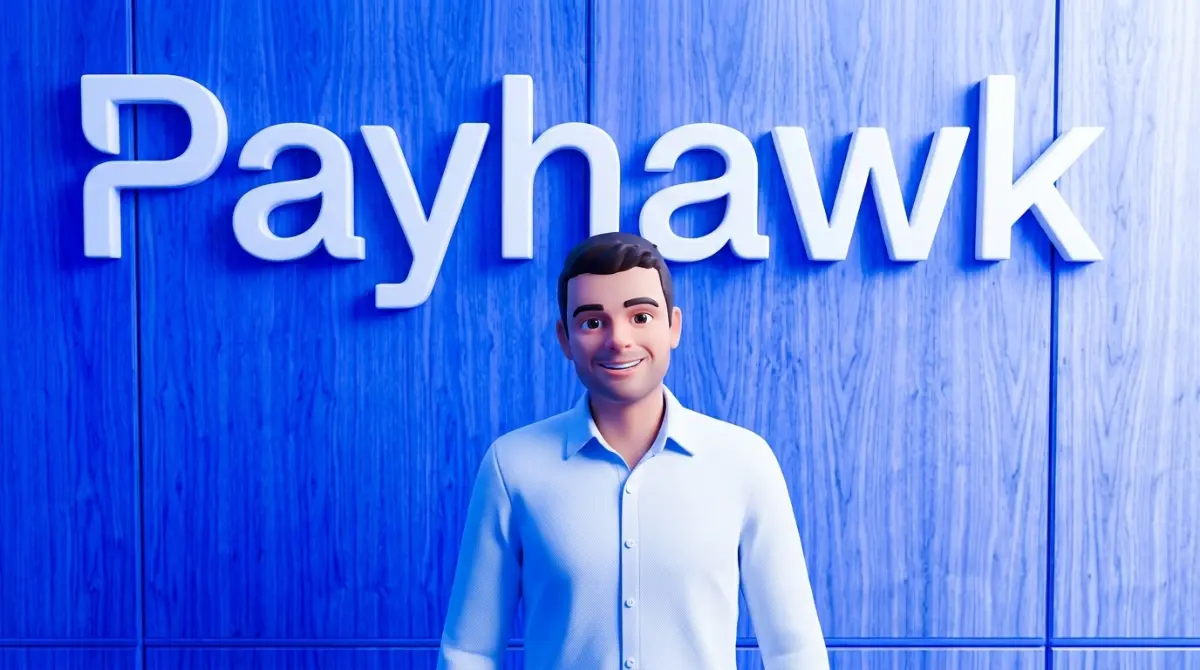
Payhawk Raises $280M Series C at $2B Valuation
European financial software maker Payhawk closed a $280M Series C funding round led by Goldman Sachs Alternatives at a $2B valuation, doubling its private price tag as it builds an autonomous operating system for corporate accounting and global payments.
Umar Thariwat | · 8 min read

Most enterprise software startups burn through venture capital long before they reach cash-flow breakeven, returning to Wall Street out of financial necessity rather than strength. Payhawk walked into Goldman Sachs with seventy percent of its previous $100M Series B round still sitting untouched in the bank. On Wednesday, November 18, 2026, the London-headquartered and Sofia-founded spend management company announced a $280M all-equity Series C financing round led by Growth Equity at Goldman Sachs Alternatives. The deal doubles Payhawk valuation to $2B from the $1B unicorn mark it set in 2022, lifting total capital raised above $515M. Joining Goldman Sachs in the round are returning institutional backers Greenoaks, Lightspeed Venture Partners, and QED Investors. Rather than patching an operating deficit, co-founder and chief executive Hristo Borisov is deploying fresh capital after achieving positive cash flow in the third quarter of 2026, aiming to turn Payhawk from a corporate card vendor into a unified financial operating system built around autonomous software agents. The financing arrives as corporate finance leaders re-evaluate enterprise software budgets, continuing capital allocation trends we analyzed in our report on the 2026 enterprise AI valuation reckoning.
The funding round stands among the largest European financial technology investments of 2026, sending a clear signal to public and private market investors who doubted whether continental software builders could compete with American giants. Founded in Bulgaria in 2018 by Borisov, Boyko Karadzhov, and Konstantin Dzhengozov, Payhawk now operates twelve offices across thirty-three countries, serving mid-sized and multinational companies that struggle with fragmented banking networks. According to the official Payhawk Series C announcement, the company will direct the $280M toward global commercial expansion and deeper engineering across payment rails, enterprise resource planning connectors, and autonomous accounting workflows. While American rivals like Ramp and Brex spent years chasing domestic Silicon Valley startups, Payhawk grew up navigating European value-added tax codes, multi-currency treasury settlements, and cross-border compliance rules that break simpler software tools. That early baptism in regulatory friction has become its strongest commercial weapon as global corporations look for unified financial software.
Beyond Corporate Cards: Building a Finance Operating System
To understand why Growth Equity at Goldman Sachs Alternatives wrote a nine-figure check at a $2B valuation, one must examine how corporate finance software is changing in late 2026. For nearly a decade, fintech startups won customers by issuing sleek plastic and virtual corporate cards paired with mobile receipt-scanning apps.
That first wave of spend management solved employee expense reports, yet left chief financial officers drowning in disconnected software tabs. A typical multinational company still uses one tool for procurement approvals, another for supplier invoice payments, a third for employee travel bookings, and an enterprise resource planning database like NetSuite or SAP to close the monthly books. Borisov argued in statements accompanying the Payhawk Series C funding update that simply adding conversational chatbots to separate finance tools fails to fix broken accounting workflows. Integrations move records between databases, and newer standards like Model Context Protocol let models read balances, yet neither eliminates manual reconciliation bottlenecks.
Payhawk is rebuilding its software around three connected architectural layers designed to run corporate finance operations end to end:
- Autonomous Financial Agents: Specialized software workers that audit incoming supplier invoices, match purchase orders against warehouse delivery receipts, chase missing tax documentation from employees, and prepare monthly ledger reconciliations automatically.
- Embedded Global Payment Rails: Direct multi-currency clearing infrastructure across local European, British, and North American banking networks that lets software agents execute domestic transfers, international wires, and vendor settlements without exporting batch files.
- Deterministic Enterprise Controls: Programmable spending policies, multi-tier approval thresholds, and audit trails that restrict what autonomous agents can execute on their own while routing high-value exceptions to human controllers.
This three-layer design reflects a broader commercial race across financial software, matching aggressive product expansions we tracked when American rival Ramp hit a $60B valuation on autonomous finance.
The Card-Independent Gamble in the United States
One of the boldest strategic moves buried inside Payhawk announcement is its decision to decouple software sales from proprietary credit cards in North America. Nearly every spend management startup relies on interchange fees: the small percentage collected from merchants every time an employee swipes a company-issued Visa or Mastercard.
Forcing large enterprises to cancel existing corporate card programs with JPMorgan Chase, American Express, or Citibank creates massive sales friction. Corporate treasurers hate reissuing thousands of employee cards, updating recurring software billing profiles, and forfeiting airline loyalty points or bank credit lines. Payhawk bypassed that obstacle by introducing a card-independent operating model in the United States. Under this setup, Payhawk Financial Controller Agent connects directly to a customer existing commercial bank cards and corporate accounts. Finance teams gain automated receipt matching, real-time policy enforcement, and instant ledger coding without replacing a single piece of plastic. By separating software subscription revenue from card interchange dependence, Payhawk can win large American accounts that would otherwise reject a European challenger. Enterprise financial planning and accounting software expansion across Europe also mirror institutional momentum we covered when French planning platform Pigment secured $250M in Series E funding.
Comparing Global Enterprise Spend Management Leaders
| Platform Company | Headquarters | Latest Valuation | Geographic Footprint | Primary Commercial Edge |
|---|---|---|---|---|
| Payhawk | London / Sofia | $2B (Nov 2026 Series C) | 33 countries, 12 offices | Multi-entity European tax & card-independent US agents |
| Ramp | New York | $60B (Late 2026) | Primarily US & global subsidiaries | Aggressive autonomous procurement & US card volume |
| Pleo | Copenhagen | ~$4.7B (Peak private mark) | 16+ European markets | Strong SMB adoption across Northern & Western Europe |
| Spendesk | Paris | ~$1.4B (Unicorn tier) | Core EU markets & UK | Procurement workflows & mid-market expense tracking |
| Airwallex | Melbourne / Singapore | $5.6B+ private mark | Global APAC, EU, and US rails | Cross-border foreign exchange & merchant acquiring |
The comparative table shows why Payhawk occupies a distinct middle ground between regional European card startups and massive American spend giants. Competitors like Pleo and Spendesk built strong followings among small businesses in France, Germany, and the Nordic region, yet often struggle when clients expand across dozens of international subsidiaries with separate local tax authorities. Meanwhile, American platforms like Ramp dominate domestic US mid-market companies but remain heavily weighted toward US dollar card interchange. Payhawk engineered its platform from day one for multi-entity enterprises operating simultaneously in London, Berlin, Madrid, Amsterdam, and New York. When a parent company acquires a subsidiary in Poland or opens a sales office in Stockholm, Payhawk connects local bank accounts, applies local VAT rules, and consolidates group spending in real time.
Why Europe Multi-Currency Complexity Became a Competitive Moat
Speaking with financial publications on Wednesday, Borisov emphasized that building a global financial category out of Sofia and London turned European regulatory fragmentation from a burden into an engineering advantage. In the United States, a software startup can launch in Delaware and serve fifty states using one currency, one federal tax code, and uniform ACH clearing rails.
In Europe, building financial infrastructure means integrating with dozens of national clearing schemes, distinct open-banking APIs, strict local invoicing mandates, and varying corporate audit laws across thirty-three jurisdictions. By solving that hard regulatory plumbing early, Payhawk created a defensible barrier that American rivals cannot replicate with a quick product update. Managing director at Goldman Sachs Alternatives Growth Equity highlighted this exact convergence of enterprise software, payment infrastructure, and autonomous workflows as the reason the Wall Street bank led the $280M round. European fintech champions scaling into global institutions also match the broader trajectory we analyzed when Revolut reached a $115B valuation challenging legacy banks.
Cash-Flow Discipline in a Skeptical Venture Market
Beyond product architecture, Payhawk financial discipline separates it from the high-burn fintech cohort of 2021 and 2022. During the zero-interest-rate boom, dozens of spend management startups subsidized customer acquisition with generous cash-back rewards and zero-fee software tiers, burning hundreds of millions of dollars while chasing top-line growth.
When interest rates climbed and venture funding tightened, many of those companies faced flat down-rounds, emergency layoffs, or forced mergers. Payhawk took a conservative operating path: holding onto seventy percent of the $100M it raised in 2022 while steadily raising gross margins and reaching positive operating cash flow in the third quarter of 2026. Entering a $2B Series C with positive cash flow and $70M in unspent Series B reserves means Payhawk does not need the $280M to keep the lights on. Instead, Borisov holds a war chest exceeding $350M in total cash to fund international hiring, acquire smaller regional compliance or procurement startups, and invest heavily in model engineering without worrying about short-term market swings. Institutional capital backing profitable financial infrastructure platforms mirrors trends we covered when Capitolis raised $220M at a $1.9B valuation.
The Governance Challenge of Autonomous Money Movement
As Payhawk pushes autonomous agents deeper into corporate accounting, its biggest technical test will be customer trust. Letting software categorize a coffee receipt is low risk; letting an autonomous agent approve a $250,000 vendor wire or modify supplier bank routing numbers carries severe fraud and compliance hazards.
Corporate controllers remain deeply cautious about handing payment execution keys to probabilistic models that can misread invoice line items or fall victim to social engineering bills. Payhawk answer is strict separation of duties: software agents prepare, verify, and flag anomalies across thousands of transactions, while deterministic policy engines block any payment that falls outside pre-approved vendor lists, budget ceilings, or dual-signature rules. Proving that autonomous agents can shave days off monthly financial close cycles without introducing accounting errors or unauthorized wires will decide whether Payhawk converts its $2B private valuation into a successful public market listing over the next two years.
Read More on TechRobust:
Tags:PayhawkGoldman Sachs AlternativesSeries Cspend managementfintech unicornHristo Borisoventerprise financetech business

Umar Thariwat
Umar Thariwat
Expertise:Tech News Reporting, Tech Business Analysis, Economic Foundations, Market Trends, Digital Economy
Award:Rising Voice of the Year 2025
Thariwat is a Staff Writer and Reporter covering tech news and enterprise trends at TechRobust. Blending daily reporting with her ongoing academic background in economics, she analyzes earnings, digital market, and the commercial strategies powering the global tech sector.
Related Stories
Intel Sued by Shareholders After 29% Stock Plunge Elon Musk Signs Petition to Reinstate Nvidia CEO Huang
 Jensen Huang Doubted Interim Nvidia CEO Colette Kress