
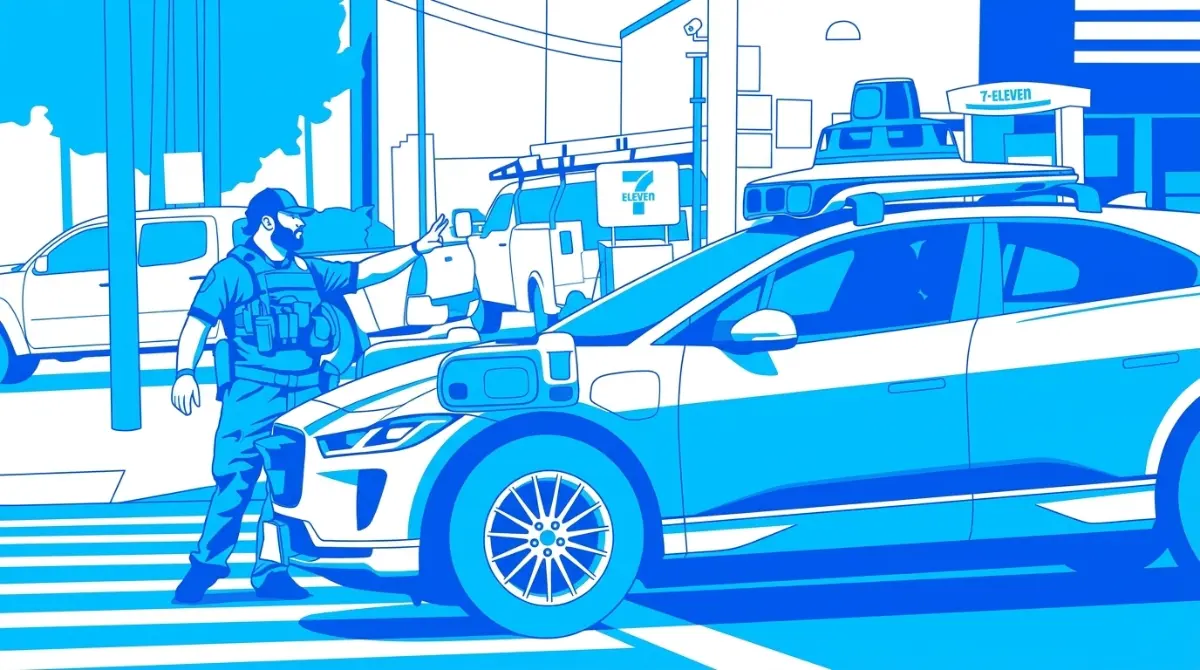


California Fines Robotaxis For Blocking First Responders
Governor Gavin Newsom signed strict legislation requiring autonomous vehicle operators to pay municipal penalties if their driverless cars obstruct fire trucks and ambulances during an active emergency.
Goriola Ayankoya | 2 Oct. 2026 · 8 min read

California is officially punishing technology companies that allow their automated vehicles to interfere with emergency personnel. Governor Gavin Newsom signed Senate Bill 1246 into law on October 1, establishing strict oversight and direct financial penalties for the autonomous vehicle sector. The new legislation, authored by Senator Dave Cortese, mandates that operators of driverless cars must pay fines to local jurisdictions if their hardware blocks a first responder during an active emergency for more than thirty minutes. The state government is aggressively declaring that public streets are not consequence-free testing zones for experimental software.
The core of the legislation directly targets a recurring logistical nightmare that has plagued San Francisco and Los Angeles over the past two years. Companies like Waymo and Cruise heavily expanded their uncrewed fleets across these cities. While these programs successfully transported thousands of paying customers, their operational failures were highly disruptive. The machines frequently stalled in the middle of busy intersections when their internal sensors became confused by heavy fog, construction zones, or sudden power blackouts. When these digital systems freeze, the physical car simply stops moving. This creates a severe hazard when a fire truck or ambulance needs to pass through the intersection to save a life.
Firefighters and paramedics repeatedly complained to city councils that these stalled vehicles forced them to abandon the fastest route to an emergency. A human driver will panic and swerve out of the way when they hear a siren. An automated car experiencing a system failure simply sits there like a heavy metal brick. The new law financially penalizes the companies for that specific failure. If a machine blocks an emergency response, the parent corporation writes a check directly to the local municipality. The legislation attempts to force hardware builders to internalize the cost of their public disruptions.
Mandating Human Supervision and Local Technicians
The financial penalties only represent one portion of the new regulatory package. Senate Bill 1246 also establishes strict geographic rules regarding who is allowed to rescue a confused machine. Under the new law, any remote driver or assistant operating a commercial autonomous vehicle must physically reside within the United States. Furthermore, those remote operators must hold a valid United States driver license. The state wants to ensure that the person taking remote control of a heavy vehicle travelling down a California highway actually understands American traffic laws and possesses domestic driving credentials.
Additionally, the legislation requires these corporations to guarantee that a physical human being can respond to an accident site quickly. The law mandates the creation of local incident technicians. These are specialized, on-site personnel employed by the autonomous vehicle companies who must arrive at the scene of an obstruction or collision to assist emergency crews. First responders previously expressed extreme frustration when trying to physically move a disabled driverless car. They had no idea how to unlock the wheels or disable the high-voltage batteries without electrocuting themselves. Providing a dedicated local technician ensures that police officers are not forced to play mechanic on an unfamiliar experimental machine. This push for strict physical accountability matches the regulatory pressure we saw when federal regulators probed Tesla cybercab deployment safety rules earlier this year.
System-Wide Failures and Corporate Transparency
A massive vulnerability within the automated vehicle ecosystem is the reliance on constant cellular connectivity. When a cellular network goes down, or a city experiences a massive power blackout, entire fleets of driverless cars lose their connection to the central dispatch servers. In a recent incident in San Francisco, dozens of uncrewed vehicles stopped simultaneously during a regional power failure, causing total gridlock. The companies operating the cars could not see where their vehicles were located or communicate with the trapped passengers.
The new law attacks this exact vulnerability. By July 1, 2028, all companies operating these networks must notify local jurisdictions immediately regarding the location and status of their vehicles during any system-wide failure. The city government demands the right to know exactly how many stalled cars are currently blocking their streets so they can reroute traffic and dispatch tow trucks. Keeping municipal leaders in the dark during a massive infrastructure collapse is no longer legally acceptable. The severe consequences of ignoring structural vulnerabilities became completely obvious when SpaceX issued a public apology following a major infrastructure outage that severed connectivity for millions.
The bill also demands increased transparency. The corporations must submit detailed reports calculating exactly how long it takes them to respond to these incidents. The data will prove whether the companies are actually resolving their software failures quickly or simply leaving their broken hardware sitting in the street for hours. Politicians want hard numbers to evaluate whether the technology is actually improving over time.
The Industry Perspective on Traffic Safety
The companies deploying these vehicles heavily resisted the new regulations. Industry lobbyists argue that establishing local fines specifically for driverless cars creates an unfair double standard. They frequently point to data showing their machines crash far less often than distracted human drivers. A human driver who double parks and blocks a fire lane receives a standard parking ticket. The technology companies argue that they should not face extreme, specialized penalties simply because their software occasionally gets confused.
However, lawmakers view the situation entirely differently. A human driver making a bad decision is an individual error. A software update that simultaneously paralyses thirty vehicles across a single downtown corridor is a systemic corporate failure. Municipal leaders argue that corporations must take total responsibility for systemic failures that threaten public safety. If a company wants to extract profit from city streets, they must pay for the chaos their products occasionally create. This debate over corporate accountability mirrors the exact legal friction we noticed when the FTC chair rejected treating AI agents as independent actors, insisting that the human creators hold the ultimate legal liability.
The Broader Regulatory Environment
California is setting a highly aggressive legal template for the rest of the country. This specific transportation bill was part of a massive package of technology regulations signed by the governor this week. The state also signed the No Robo Bosses Act, a separate law preventing corporations from using automated software to discipline or fire human workers without human review. The government is systematically placing boundaries around how automated logic interacts with physical society.
While the federal government stalls on creating unified national standards, individual states are writing their own rules. The technology sector desperately prefers a single set of national laws rather than navigating a fragmented map of fifty different state regulations. Yet, state governors are refusing to wait for Washington to act. We have seen this aggressive regional lawmaking expand globally, a reality proven when Africa implemented data protection and AI regulation policy to protect its own domestic markets. Regional lawmakers want absolute control over the machines operating in their backyards.
The financial impact of these fines will not bankrupt massive technology conglomerates. A $10K fine is functionally meaningless to a corporation backed by billions in venture capital. However, the legal precedent is massive. The law formally establishes that city governments possess the power to penalize automated networks for creating physical disruptions. The industry is officially on notice. The era of treating public infrastructure as a free beta testing environment is closing.
As the competition to replace human drivers intensifies, the companies that succeed will need to prove they can operate safely without annoying the local residents. We expect to see a rapid acceleration in testing protocols as competitors race to demonstrate superior reliability. The hardware is spreading quickly, a shift documented perfectly when Tesla rolls out commercial cybercab robotaxi rides for public testing. Every single manufacturer must now guarantee their vehicles know exactly what to do when a siren starts blaring behind them.
The intense focus on regulating automated hardware proves that public tolerance for technological mistakes is dropping fast. The public is highly skeptical of machines making unguided decisions. We watched this public skepticism force severe political reactions when tech executives fan AI doomsday fears while dodging rules. Citizens want the machines strictly controlled, and local politicians are happy to deliver those controls to secure votes. The implementation of this new transportation law represents a direct victory for human first responders over experimental silicon.
The requirement for American-based operators presents a unique logistical hurdle. Many software companies attempt to lower their operating costs by outsourcing their remote monitoring stations to cheaper international labor markets. By legally requiring operators to reside in the United States and hold domestic driving credentials, California protects local jobs while ensuring a baseline level of cultural driving competence. This restriction prevents a massive offshoring of the human supervision required to keep these networks running safely. Legislators are highly focused on protecting domestic infrastructure, a protective stance we saw harden when US Congress advances legislation to boost open source AI competitiveness against foreign rivals.
By 2028, the streets of major cities will look incredibly different. More automated vehicles will enter the traffic flow, serving as delivery vans, public shuttles, and private taxis. We already tracked the slow expansion of these specific use cases when Optimus Ride launched a self driving shuttle in Reston Virginia. As the physical density of these machines increases, their ability to cooperate with human emergency workers will define their ultimate commercial success. California just drew a very expensive line in the sand, demanding that public safety always overrides software innovation.
Read More on TechRobust:

Goriola Ayankoya
 LinkedIn
Goriola Ayankoya
Expertise:Consumer Hardware, Smartphone Trends, Gadget Reviews, Breaking Tech News, Mobile Ecosystems
Award:TechRobust Hardware Reporter of the Year 2025
Goriola is a Staff Writer and Reporter specializing in consumer technology, breaking tech news, and hands-on hardware analysis. He tracks fast-paced mobile developments, reviews modern gadgets, and unpacks product launches to give readers clear, practical insights into everyday consumer tech.