
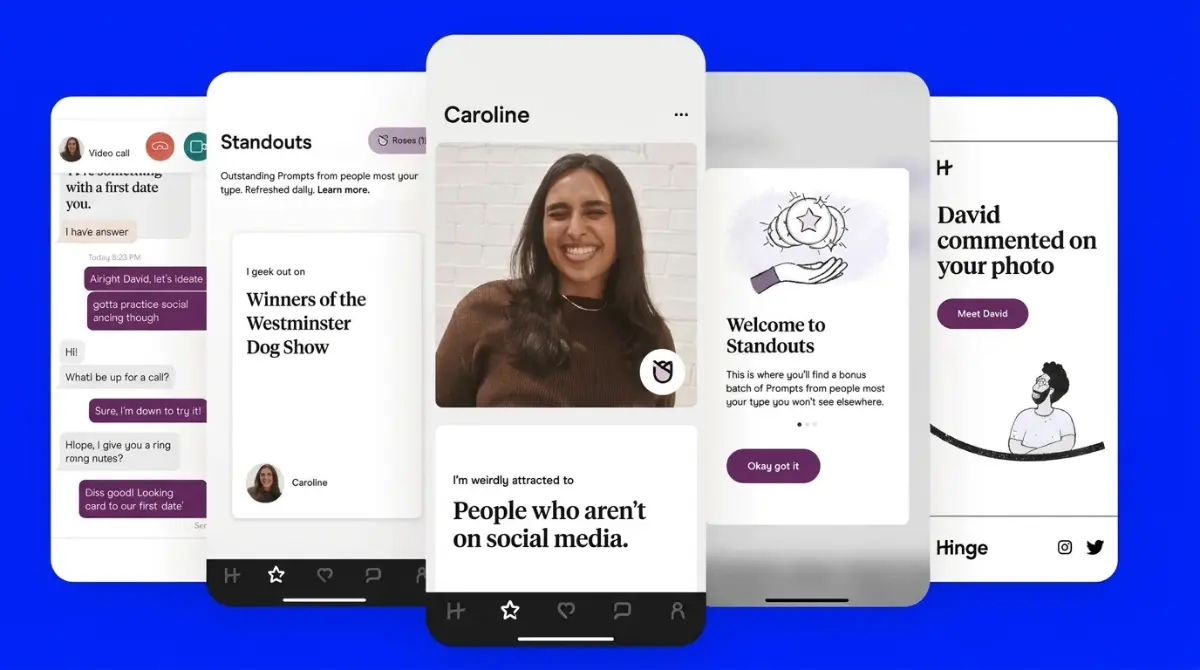


Hinge Tests Cheaper Tier as Dating App Fatigue Mounts
Hinge began testing an affordable subscription tier to re-engage frustrated singles as parent company Match Group confronts widespread user burnout, steep subscriber drops across flagship apps like Tinder, and growing resistance against monthly fees that reach sixty dollars.
Caleb Ogunkanbi | · 9 min read

Dating apps spent years turning human romance into a luxury subscription product. In boardrooms across Dallas and New York, product directors celebrated quarterly earnings by making basic social features prohibitively expensive. What started as casual smartphone tools to meet neighborhood singles transformed into algorithmic tollbooths. If you want to see which accounts sent you a message, you pay twenty dollars; if you want your profile seen by local users, you pay fifty dollars; and if you want to send digital roses, you purchase digital tokens priced like casino chips. Everyday singles responded to this monetized squeeze with open revolt. Millions of frustrated men and women deleted apps, abandoned paid tiers, and organized in-person run clubs and mixer events to escape repetitive swiping. Match Group flagship relationship app, Hinge, has decided to confront that pricing resistance directly. In a rare retreat from aggressive monetization, Hinge confirmed on Monday, November 2, 2026, that it began testing an affordable subscription tier. The test aims to capture price-sensitive daters who refuse to pay premium prices, signaling that dating platforms can no longer milk shrinking user pools with impunity. The pricing shift arrives as consumers push back against coercive mobile software design, continuing digital culture patterns we examined when users grew tired of manipulative digital platforms.
The decision to test an accessible tier marks a critical admission for Match Group executive leadership. For three years, corporate parent Match Group masked user churn by raising subscription prices on remaining customers. While total paying users at Tinder dropped five percent year-on-year to 8.5 million accounts, average revenue per payer rose to $17.90. At Hinge, aggressive pricing was pushed even further: revenue per payer reached $33.11 as management promoted HingeX, a top-shelf tier costing $49.99 monthly or up to $600 per year. That strategy delivered short-term revenue gains: Hinge direct revenue climbed twenty-two percent to $203.5M in recent quarters, making it the lone star in Match Group corporate portfolio. Wall Street analysts warned that extracting sixty dollars a month from lonely young professionals is not a sustainable long-term model. Gen Z daters are abandoning the category entirely, repelled by commercial paywalls that gate basic human connections. By introducing an introductory tier, Hinge hopes to rebuild goodwill with casual daters before platform burnout turns into permanent user departure. The commercial reckoning across consumer subscription businesses mirrors challenges we documented when Bumble went private in a $1.3B buyout after struggling with subscriber declines.
The Squeeze: How Dating Apps Became Cash Extractors
To inspect why daters are fed up, one must examine how online dating economics mutated over the past decade. When Tinder launched on college campuses in 2012, swiping was free, fast, and exciting. College students matched with classmates, exchanged witty text messages, and met for coffee without encountering credit card prompts.
Once platforms achieved global ubiquity, corporate managers altered the software mechanics. Algorithms were tweaked to restrict organic visibility: burying profiles unless users purchased weekly spotlight boosts or paid for gold subscriptions. Companies introduced tiered subscription hierarchies designed to induce social panic. On Hinge, standard users receive only eight free likes daily, while paying subscribers get unlimited likes, access to advanced filters, and priority placement in user feeds. Top-tier HingeX members are promised that their profiles are recommended to high-intent singles ahead of free accounts. The result is a pay-to-win environment where unpaid users feel invisible, while paying members feel exploited by recurring billing fees that exceed monthly gym memberships. Instead of helping users find partners and delete the software, apps created digital hamster wheels that keep singles paying month after month. The consumer rebellion against manipulative fee structures matches pushback we analyzed when Chariot raised $10M to fight hidden fees and dark patterns.
Dating App Fatigue and the Return to the Physical World
The consumer reaction to predatory app pricing is visible on city streets. In metropolitan centers like London, Chicago, and Berlin, singles are actively returning to real-world social events. Neighborhood running clubs, board game cafes, ceramics workshops, and speed-dating mixers are experiencing record attendance numbers.
Young adults openly complain about swipe burnout: the mental exhaustion of maintaining dozens of superficial chat conversations that lead to ghosting, awkward first dates, or outright deception. Women report receiving unprompted harassment and low-effort messages, while men report sending hundreds of likes into algorithmic voids without receiving a single reply. A survey by the Pew Research Center showed that forty-six percent of online dating users describe their overall experience as negative, citing commercial manipulation as a primary factor. When an individual pays fifty dollars a month for a service that delivers chronic frustration, canceling the subscription becomes an easy choice. Independent offline platforms and decentralized tools are capturing this disenchanted audience, continuing lifestyle movements we tracked when evaluating how consumer applications use behavioral incentives to change habits.
Comparing Major Dating Platform Subscription Structures
| Platform Brand | Free Daily Allowance | Standard Entry Tier | Premium High Tier | Annual Cost Ceiling | Primary Product Pitch |
|---|---|---|---|---|---|
| Hinge (Match Group) | 8 likes per day | Hinge+ ($16.99/mo) | HingeX ($49.99/mo) | Up to $600 per year | Designed to be deleted; relationship intent |
| Tinder (Match Group) | ~100 likes per day | Tinder Plus ($15.99/mo) | Tinder Platinum ($40+/mo) | Up to $480+ per year | Casual swipe volume and discovery |
| Bumble (Private / Ithaca) | 25 likes per day | Bumble Boost ($15.99/mo) | Bumble Premium+ ($39.99/mo) | Up to $480 per year | Women-first messaging and dating control |
| Grindr (Public) | Unlimited local grid | XTRA ($19.99/mo) | Unlimited ($39.99/mo) | Up to $480 per year | Location-based queer community connections |
| The League (Match Group) | 3 curated prospects/day | Member ($99/mo) | VIP Tier ($399/mo) | Up to $4,800 per year | Elite corporate networking and dating |
The comparative data illustrates why consumer anger reached a boiling point. Charging singles $480 to $600 per year for software that does not guarantee a single enjoyable dinner date is an aggressive sales model. While specialized platforms like The League charge thousands to wealthy professionals, mainstream apps like Tinder and Hinge depend on volume. When working-class young adults confront sixty-dollar monthly charges alongside student loan payments and grocery bills, app subscriptions are the first budget item cut. Consumer payment optimization and churn management match trends we explored when PayPal restructured checkout products to preserve customer margins.
The New Test: What Does a Cheaper Hinge Look Like?
The experimental tier being tested by Hinge represents an effort to establish a middle ground. Rather than demanding seventeen dollars for Hinge+ or fifty dollars for HingeX, the pilot plan provides essential features at an accessible monthly price point.
Internal test structures suggest the budget tier will sit around four to six dollars per month. At that entry price, users will not receive unlimited likes or priority feed placement; instead, the plan uncurtains practical utilities: granting users the ability to see who liked their profile, rewind accidental left swipes, and apply two additional search filters, such as height preferences or relationship goals. The strategy mimics the micro-subscription models popularized by streaming audio and digital storage platforms. Match Group calculations indicate that while average revenue per payer will dip on these accounts, total subscriber volume could double, capturing millions of singles who currently use the service for free. Diversifying subscription pricing across consumer apps reflects monetization strategies we followed when social platforms introduced direct consumer payment tools.
The Ghost of Bumble: Lessons from an Industry Crash
The urgency behind Hinge pricing pilot connects directly to the financial struggles of primary competitor Bumble. Founded by Whitney Wolfe Herd on the promise that women making the first move would fix online dating, Bumble expanded rapidly before hitting an operational wall.
Young women grew tired of having to initiate conversations, while high subscription fees caused customer cancellations to mount. In October 2026, Bumble agreed to a $1.3B take-private buyout by investment firm Ithaca Holdings, marking an eighty percent collapse from its post-IPO market valuation peak. Bumble made desperate product pivots before accepting the buyout: abandoning its famous women-make-the-first-move rule, allowing either party to send initial messages, and launching Opening Moves questions. Those product pivots failed to reverse subscriber drops because the platform refused to lower subscription prices. Hinge executive team watched Bumble decline carefully, recognizing that if Match Group does not address pricing fatigue voluntarily, public markets will penalize the stock. Subscription churn management across mature consumer digital platforms was detailed in our report on Netflix cutting corporate overhead to preserve media cash flows.
Regulatory Scrutiny: Automatic Renewals and Trapdoors
Dating app operators face mounting legal heat over how they bill consumers. Regulatory agencies in the United States, the United Kingdom, and the European Union have opened formal inquiries into automatic renewal mechanisms used across mobile app stores.
The Federal Trade Commission recently finalized Click-to-Cancel rules, requiring digital services to make subscription cancellation as simple as signing up. In past years, dating platforms made subscription cancellation an intentionally confusing maze: burying cancel buttons behind nested account menus, requiring users to submit web forms, or forcing customers to cancel through third-party app store settings pages while continuing to bill credit cards. State attorneys general have filed lawsuits accusing dating apps of deceptive billing, noting that millions of users paid for monthly renewals after deleting the app from their phones, mistakenly assuming that removing the icon canceled the recurring charge. Hinge new pricing test arrives alongside simplified cancellation prompts, as parent company Match Group seeks to avoid regulatory fines. Consumer protection and dark fee elimination in software were detailed in our report on Chariot raising funds to eliminate hidden digital fees.
Can Lower Prices Save Modern Dating?
While testing an affordable tier makes financial sense, lowering prices will not solve the deeper social crisis plaguing dating apps. The core problem confronting online romance is not that subscriptions cost too much; it is that the software incentives run counter to user success.
A dating app business model depends on customer failure. If an algorithm successfully matches two compatible individuals who enter a committed relationship, both users delete the application, wiping out two customer accounts. If the algorithm matches incompatible users who enjoy casual flings or superficial chats, those users stay on the platform, renewing monthly subscriptions indefinitely. Young daters have become wise to this conflict of interest. Lowering the price to five dollars a month will make the financial extraction less painful, but it will not fix the superficiality, bad behavior, and emotional exhaustion that define modern swipe culture. Dating apps must decide whether they want to remain commercial casinos that profit from loneliness, or genuine social utilities that help human beings connect. Until platforms align their algorithms with authentic human happiness, testing cheaper subscription tiers is merely putting a discount price tag on a broken social promise.
Read More on TechRobust:

Caleb Ogunkanbi
 LinkedIn
Caleb Ogunkanbi
Expertise:Practical AI Implementation, Head-to-Head Product Testing, Technical How-To Guides, Data Tools & Automation, Consumer Software Benchmarking
Award:TechRobust Guides & Insights Writer of the Year 2025
Caleb is a Staff Writer and Reporter breaking down the frontiers of artificial intelligence and actionable tech education. He produces rigorous head-to-head comparisons, demystifies data tools, and crafts step-by-step technical guides that help readers navigate complex software and AI workflows with ease.