
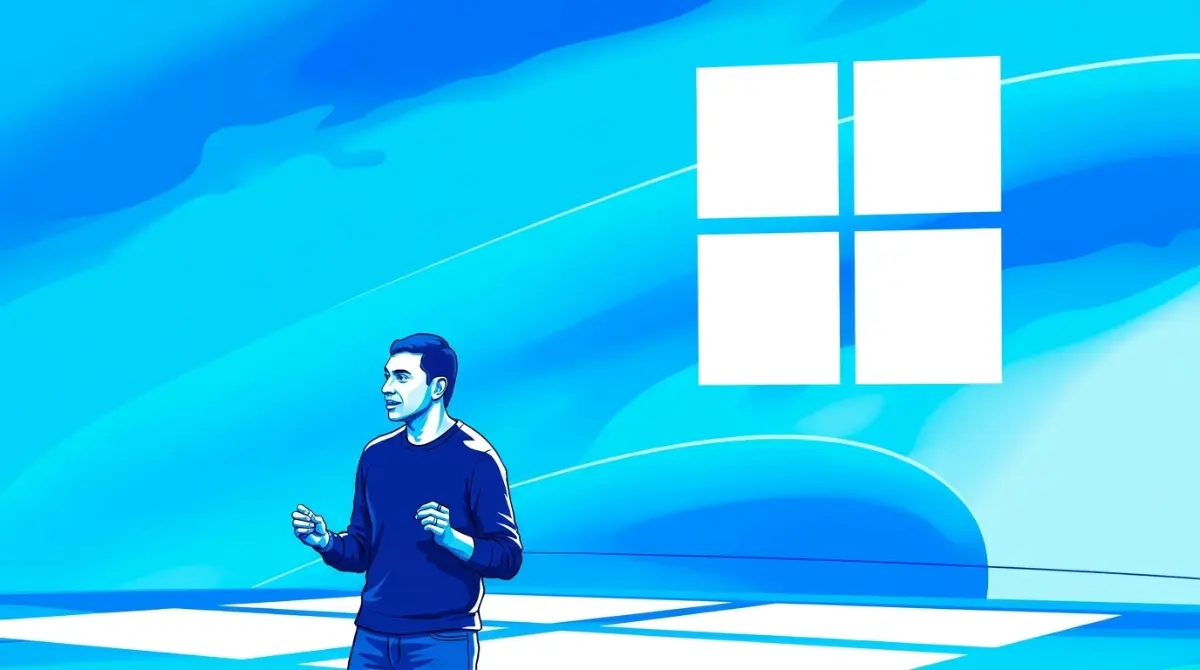


Microsoft Revamps Windows 11 With Hybrid AI Notepad
Microsoft redesigned core Windows utilities like Notepad with local hybrid intelligence models, seeking to win back frustrated desktop users after years of intrusive cloud popups and controversial telemetry experiments.
Umar Thariwat | 9 Oct. 2026, 7:00 PM · 7 min read

Desktop operating systems are fighting an identity crisis. For thirty years, personal computer owners expected their local machines to obey quiet, predictable commands. A person clicked an application icon, typed words into a local file, saved the document to an internal drive, and closed the window without third-party interference. Over recent years, that dependable local computing arrangement deteriorated. Windows users watched their Start menus turn into promotional bill-boards for cloud services, while basic system tools stuttered under background tracking scripts. Following fierce consumer pushback and executive promises to fix foundational annoyances, Microsoft used its October hardware gathering to alter direction. The Redmond software giant rolled out an updated build of Windows 11 that embeds hybrid local models straight into classic desktop programs like Notepad, Paint, and File Explorer. The update aims to convince frustrated PC owners that modern machine intelligence can respect desktop autonomy without forcing every keystroke through remote server farms. We tracked how software updates influence user sentiment in our report on Microsoft issuing emergency patches for Windows 11 update issues.
The technical centerpiece of this update is a re-engineered Windows Notepad. For decades, Notepad survived as the spartan refuge of programmers and writers who wanted zero formatting clutter, zero network delays, and instant startup speeds. The updated version introduces local model support through Microsoft MAI-Thinking-1 and small on-device neural weights. Users can highlight raw text strings, code snippets, or unformatted logs to generate summaries, rewrite drafts, or diagnose syntax errors directly inside the local application window. Crucially, tasks that process fewer than five thousand characters execute entirely on local silicon using the neural processing units built into modern PCs. The system keeps private draft notes off internet networks, addressing long-standing enterprise privacy complaints. If a user requests deeper reasoning across complex text files, the operating system asks for explicit permission before offloading the task to Microsoft Azure servers. The shift toward balanced local processing matches trends we evaluated when Google launched the Googlebook Gemini laptop with integrated intelligence features.
The Long Road Back From Windows Recall Backlash
To grasp why Microsoft is treading carefully with local intelligence features, one must recall the consumer disaster that surrounded Windows Recall earlier in the hardware cycle. When corporate executives initially announced that Windows would take continuous background snapshots of user screens every few seconds, the reaction from security professionals and ordinary consumers was immediate fury. Privacy researchers revealed that the unencrypted database stored passwords, credit card numbers, and confidential medical charts in plain text files that local malware could harvest in seconds.
The Recall blunder damaged consumer trust in the Windows brand, sparking a migration toward alternative platforms. Corporate technology managers delayed fleet migrations to Windows 11, while creative professionals bought Apple hardware to escape intrusive background telemetry. The October announcements demonstrate that Microsoft leadership learned expensive lessons from that public relations bruising. The new desktop tools operate under strict opt-in rules. No background screenshots are captured by default, local models require explicit user prompts before analyzing text, and all temporary scratch files are purged from memory the moment a window closes. Rebuilding software trust with skeptical consumers reflects broader privacy challenges we documented when Amazon introduced encryption updates to protect Ring camera privacy.
Mustafa Suleyman and the In-House Silicon Strategy
The architectural brains behind this desktop reset come from Microsoft consumer division, directed by Microsoft AI chief executive Mustafa Suleyman. Since joining the software giant, Suleyman has worked to free Microsoft from complete dependence on external partners like OpenAI. Running massive cloud models for every minor spelling check or text summary cost Microsoft fortunes in server electricity while introducing annoying network latency into basic desktop applications.
Under Suleyman direction, Microsoft engineering teams developed MAI-Thinking-1 alongside compact models designed to run within tight hardware constraints. These lightweight neural weights run on eight gigabytes of unified system memory, allowing desktop apps to execute text transformations in milliseconds without activating cooling fans or spinning up cloud servers. By pairing in-house models with local neural processing silicon, Microsoft can deploy intelligent desktop utilities without paying external API licensing fees on every user action. The corporate pivot toward proprietary models follows industry dynamics we analyzed when covering how Microsoft executives detailed autonomous software operating systems.
Rebuilding Paint and File Explorer Without Slop
Beyond the Notepad overhaul, Microsoft updated classic utilities that have anchored the operating system for generations. Paint receives local diffusion capabilities that allow users to sketch rough outlines on digital canvases and generate textured concept art using local hardware acceleration. The tool avoids the garish, over-saturated look of cheap web generators, focusing instead on practical graphic design tasks like transparent background isolation, vector path tracing, and precise color grading.
File Explorer introduces semantic search that functions without internet connections. In older Windows builds, searching for a misplaced invoice required remembering exact file names or waiting fifteen minutes while the indexing service crawled hard drives. The semantic index allows users to locate documents using everyday language queries, such as the spreadsheet with last summer travel expenses or the photo of the blue ceramic vase. The software scans local metadata and image tags offline, keeping private personal photos off corporate cloud storage. How operating systems refine local file management mirrors platform updates we explored in our coverage of Apple accelerating performance across thirty system areas.
Antitrust Scrutiny Over Cloud Bundling
The push to make Windows the default gateway for machine learning arrives amid renewed regulatory pressure in Washington and Brussels. Antitrust regulators are investigating whether Microsoft uses its desktop operating system dominance to crush competing software startups by bundling proprietary digital tools directly into Windows system code.
Regulators at the Federal Trade Commission and the European Commission are examining whether Microsoft licensing terms unfairly penalize customers who choose to run competing cloud services like Amazon Web Services or Google Cloud. If Microsoft hardcodes its own models into Notepad while restricting rival developers from tapping into the same system APIs, antitrust officials could file formal anti-monopoly lawsuits. To prevent regulatory intervention, Microsoft confirmed that developers can configure third-party models from Anthropic, Meta, or local open-weight repositories as the default reasoning engine inside Windows desktop tools. Managing corporate compliance against strict anti-monopoly laws was examined in our report detailing Apple appealing App Store legal findings to the Supreme Court.
The Battery Dilemma on Portable Hardware
While running local models protects user privacy and reduces cloud server costs, it introduces severe battery consumption challenges on mobile laptops. Neural processing units consume substantial wattage when crunching billions of mathematical weights. If an operating system runs continuous semantic indexing and local text generation in the background, laptop battery life degrades quickly.
Microsoft worked with semiconductor partners Qualcomm, Intel, and AMD to develop dynamic power states for local neural processing. When a laptop runs on battery power, the operating system dials back model precision, using smaller quantized weights that sip power rather than running full-precision math. If a user plugs into a wall outlet, the system unlocks higher-parameter models to deliver richer reasoning. Balancing silicon power consumption against battery life matches hardware engineering trends we followed when Framework restructured component pricing and power efficiency.
The True Battle for the Personal Computer
Microsoft update to Windows 11 shows that the company understands it cannot treat the desktop operating system as a billboard for internet advertising. For three years, tech giants assumed that consumers wanted every single computing task routed through cloud chat windows. The reality of modern work is different: people want fast, dependable local tools that get out of the way and let them finish their daily tasks.
By bringing quiet, private local intelligence into humble tools like Notepad and File Explorer, Microsoft is trying to modernize the PC without destroying the simplicity that made Windows essential in the first place. The success of this effort will depend on whether Microsoft can resist the urge to turn these new utilities into data-harvesting funnels. If the company keeps its promises regarding privacy, speed, and local autonomy, Windows 11 may finally earn back the respect of the millions of professionals who depend on it every day.
Read More on TechRobust:
Umar Thariwat
 LinkedIn
Umar Thariwat
Expertise:Tech News Reporting, Tech Business Analysis, Economic Foundations, Market Trends, Digital Economy
Award:Rising Voice of the Year 2025
Thariwat is a Staff Writer and Reporter covering tech news and enterprise trends at TechRobust. Blending daily reporting with her ongoing academic background in economics, she analyzes earnings, digital market, and the commercial strategies powering the global tech sector.