
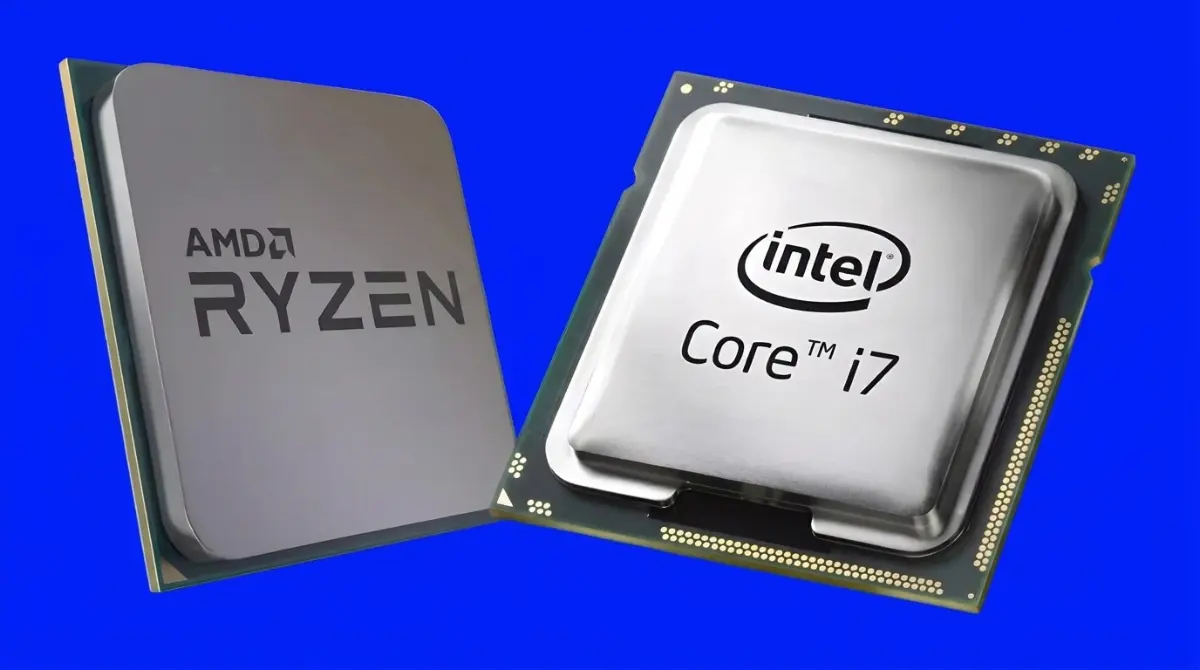


AMD and Intel Unify PyTorch AI Code Path on CPUs
AMD and Intel agreed to combine their deep learning optimization libraries under oneDNN, giving developers a single PyTorch code path for CPU inference while bringing ZenDNN features directly into the open UXL Foundation project to simplify deployment across modern x86 chips.
Chinedu | · 9 min read

Long-standing chip rivals AMD and Intel have united their software efforts to make artificial intelligence run faster on standard computer processors. On Wednesday, October 21, 2026, the two companies announced a joint initiative to build a single, shared code path for PyTorch inference on central processing units. Under the agreement, AMD will merge its custom ZenDNN math library directly into Intel oneDNN project, which is managed as an open-source tool by the Unified Acceleration Foundation, known as UXL. AMD will also join UXL as a steering committee member, paying an annual membership fee of $20,000 to direct the project. The decision eliminates a decade of software fragmentation that forced software engineers to maintain separate code branches when deploying machine models on competing x86 processors. The cooperative engineering push lands as cloud platforms seek alternative silicon strategies to lower computing expenses, a trend visible when Amazon made Trainium processors work with PyTorch.
The collaboration represents a pragmatic response to shifting data center economics. For three years, corporate attention centered almost exclusively on dedicated graphics processing units, with companies spending fortunes to acquire scarce accelerator clusters. Yet running live inference for smaller machine models, recommender systems, vector search pipelines, and enterprise data extraction does not always require a four-figure accelerator. Central processors handle the vast majority of everyday business computing, sitting in corporate servers that enterprises already own and operate. By standardizing execution libraries inside PyTorch, AMD and Intel are ensuring that developers can run deep learning tasks on x86 processors with minimal configuration hurdles. The move reflects broader commercial efforts to build multi-chip frameworks, matching technical approaches we evaluated when Upscale AI introduced Token Fabric for multi-vendor chips.
The Historical Burden of Dual Software Trees
To understand why this agreement matters to software teams, one must examine the friction of historical CPU machine learning pipelines. When data scientists write code in high-level frameworks like PyTorch or TensorFlow, those frameworks rely on lower-level math libraries to translate neural network operations into machine code for silicon dies.
For Intel chips, the framework routed instructions through oneDNN, using specialized micro-kernels tuned for Intel vector extensions such as AVX-512 and Advanced Matrix Extensions. To prevent its EPYC server chips and Ryzen desktop processors from falling behind on inference benchmarks, AMD created ZenDNN, a separate downstream fork tuned for the Zen microarchitecture. This split created operational headaches for corporate software teams. If a company operated a hybrid computing fleet containing both Intel Xeon and AMD EPYC servers, system engineers had to maintain distinct container images, deploy separate Python packages like zentorch or intel-extension-for-pytorch, and write dynamic detection scripts to route workloads. When updates landed in upstream PyTorch, one library would frequently lag behind, introducing bugs and performance drops. Merging ZenDNN directly into oneDNN creates a unified library that detects hardware capabilities at runtime, routing instructions to the correct execution kernels automatically. Standardizing server computing components matches market dynamics we documented when Nuvacore targeted a $2.5B valuation for data center CPUs.
The x86 Advisory Group Delivers Tangible Deliverables
The technical merger is the first major software deliverable produced by the x86 Ecosystem Advisory Group. Formed in late 2024 by Intel and AMD alongside founding partners like Google Cloud, Microsoft, Broadcom, and Meta, the advisory group was created to defend the x86 architecture against the rising influence of Arm and open-source RISC-V designs.
Historically, AMD and Intel competed so fiercely that collaboration on software standards seemed impossible. That historic rivalry allowed outside silicon competitors to exploit software divisions. While x86 chipmakers fought over proprietary microcode extensions, alternative architectures presented unified developer interfaces that made software migration attractive. Earlier this year, the advisory group demonstrated initial coordination by collaborating on AI Compute Extensions, known as ACE, to harmonize upcoming matrix instruction sets. Folding ZenDNN into oneDNN proves that both companies are willing to set aside corporate pride to protect their shared x86 software base. The strategic defense of server processing standards mirrors hardware procurement deals we tracked when HPE secured server contracts for AMD hardware.
Comparing Intel and AMD CPU AI Acceleration Technologies
| Technical Dimension | Intel Platform Architecture | AMD Platform Architecture | Unified oneDNN Implementation |
|---|---|---|---|
| Hardware Acceleration | AMX (Advanced Matrix Extensions) and AVX-512 VNNI | AVX-512 with dual 256-bit pipes and AVX-512 VNNI | Dynamic dispatch detects instruction sets at runtime |
| Previous Math Backend | oneDNN (upstream PyTorch default) | ZenDNN via out-of-tree zentorch plugin | Single upstream library maintained under UXL |
| Data Type Support | FP32, BF16, INT8, FP16 via hardware tiles | FP32, BF16, INT8, selective FP16 | Automated mixed-precision path for both vendors |
| Kernel Fusion Features | Graph fusions for Convolution and Linear post-ops | Fused RMSNorm and SwiGLU expert execution | Combined operator fusions shared across all x86 chips |
| Foundation Governance | UXL Foundation Founding Member | Newly joined UXL Steering Member ($20,000/yr) | Neutral Linux Foundation open-source governance |
The technical comparison demonstrates that while both chipmakers implement hardware acceleration differently at the silicon die level, the software mathematical steps required by deep learning operators are largely identical. Unifying the software interface allows each manufacturer to compete on silicon performance, core density, and energy consumption without punishing developers with fragmented tools.
The UXL Foundation Expands Its Multi-Vendor Alliance
AMD decision to join the Unified Acceleration Foundation as a steering member marks a significant win for open-source computing governance. Founded under the auspices of the Linux Foundation, UXL was established by a coalition including Intel, Arm, Qualcomm, and Google Cloud to build an open, multi-architecture alternative to proprietary programming interfaces.
Historically, critics questioned whether UXL could succeed without AMD full participation. AMD previously pursued its own software path through the ROCm platform, focusing heavily on graphics accelerators while maintaining ZenDNN for central processors. By bringing ZenDNN into the UXL umbrella and committing annual steering capital, AMD solidifies the foundation role as the primary neutral arbiter of open accelerator code. Although this specific announcement focuses on x86 chips, oneDNN is built to execute across Arm and RISC-V architectures as well. Having both major x86 manufacturers actively contributing to a single open repository ensures that enterprise software buyers are not locked into a single proprietary hardware vendor. The growth of multi-vendor computing platforms matches trends we explored when Qualcomm launched unified processing platforms.
The Commercial Case for Central Processor Inference
The broader commercial motivation behind the AMD and Intel alliance is the changing nature of artificial intelligence deployments. During the initial wave of large language model adoption, enterprises focused almost exclusively on model training, which demands thousands of interconnected graphics accelerators running for weeks at peak power draws.
As organizations move models into production, inference accounts for the vast majority of ongoing operational spending. Many enterprise workloads do not require massive trillion-parameter models that demand multiple high-end accelerators to generate a single response. Small language models, tabular fraud detection networks, customer sentiment analyzers, and text embedding models can run comfortably on modern multi-core server processors. Running inference on existing central processors saves enterprises millions of dollars in dedicated hardware leases, reduces data center power consumption, and avoids the scheduling queues common in graphics cluster environments. Standardizing PyTorch inference ensures that enterprise technology teams can deploy models across standard server fleets without hiring specialized compiler engineers. How enterprise software platforms manage complex computing pipelines was analyzed in our review of Meta research on model orchestration.
Runtime Kernel Selection and Memory Management
The engineering core of the unified oneDNN library centers on runtime hardware detection and memory management. When PyTorch executes an operation, such as a batched matrix multiplication or an attention calculation, oneDNN queries the processor CPUID flags.
If the software detects an Intel Xeon processor equipped with AMX tiles, it schedules the computation through specialized matrix registers. If it identifies an AMD EPYC processor running Zen cores with AVX-512 support, it executes through AMD optimized vector pathways. ZenDNN brings key memory optimizations into oneDNN, including advanced memory pools, buffer reuse heuristics, and zero-copy data transformations that minimize memory bus congestion. Furthermore, the unified library incorporates AMD fused operator kernels, such as fused Root Mean Square Normalization and gated activations tailored for Mixture-of-Experts architectures. By sharing these engineering optimizations, both chipmakers deliver faster execution to end users without requiring application code rewrites. The physical hardware demands of enterprise server facilities were examined in our report detailing custom processor deployments in enterprise data centers.
The Collective Defense Against Nvidia Software Gravity
While Intel and AMD continue to compete aggressively for server market share, both companies recognize that their most dangerous competitor is Nvidia. Nvidia dominance in enterprise computing is anchored in CUDA, a proprietary software stack that has locked developers into Nvidia graphics hardware for nearly two decades.
Nvidia market grip makes it difficult for rival hardware makers to win enterprise market share. Even when competing processors offer attractive hardware specifications and lower power consumption, software developers hesitate to adopt them because rewriting CUDA code is expensive and risky. By uniting behind PyTorch and the UXL Foundation, AMD and Intel are supporting an open software standard that belongs to the wider community rather than a single corporate entity. If PyTorch can deliver fast, reliable performance on open-standard processors out of the box, enterprise buyers will have greater freedom to purchase hardware based on price, availability, and energy considerations rather than software dependencies. The strategic value of accessible enterprise software was detailed in our report on Google Cloud releasing universal enterprise tools.
The Road Ahead for Unified x86 Computing
The integration of ZenDNN into oneDNN marks a necessary maturation for the personal computer and server hardware industries. For decades, x86 computing advanced through fierce proprietary battles, with each manufacturer attempting to trap customers inside closed instruction extensions. The modern computing era has made that insular strategy obsolete.
As alternative processor architectures challenge traditional server designs, cooperation on common software standards has become a condition of survival. Over the coming months, engineering teams from AMD and Intel will complete the code merge inside the UXL Foundation repository, ensuring that future PyTorch stable releases deliver unified x86 acceleration out of the box. If the x86 Ecosystem Advisory Group can maintain this collaborative momentum across upcoming hardware generations, it will preserve the competitive vitality of the x86 architecture for decades to come. For developers and enterprise technology directors, the announcement delivers an immediate, welcome victory: a computing world where code runs at peak speed across all modern processors without unnecessary complications.
Read More on TechRobust:

Chinedu
 LinkedIn
Chinedu
Expertise:Consumer Tech Reviews, Comparative Analysis (Versus Testing), Product Benchmarking, Technical Tutorials, Consumer Buying Advice
Award:TechRobust Reviewer of the Year 2025
Chinedu serves as Editor-at-Large overseeing TechRobust’s buyer guidance and utility verticals. He specializes in methodical product teardowns, head-to-head showdowns, curated buyer lists, and deep-dive instructional guides, delivering actionable, evidence-driven verdicts that help readers make informed hardware and software decisions.