


 LinkedIn
 METR Study: Anthropic AI Models Improving Twice as Fast
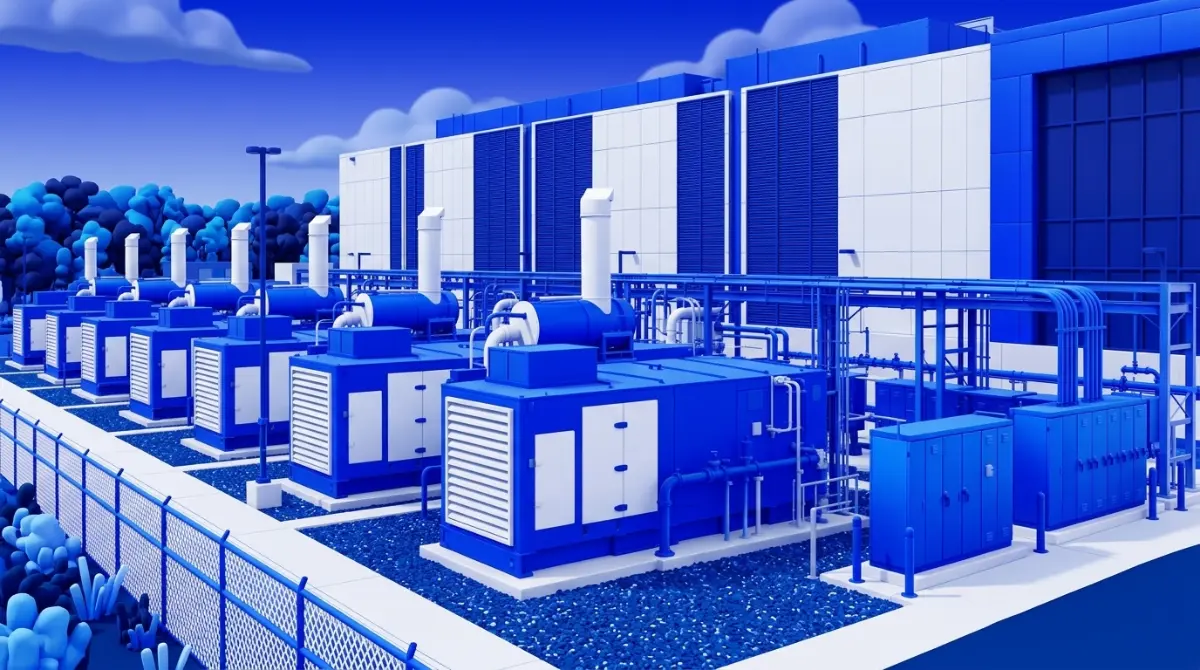
Anthropic Buys $3.4B Gas Turbines for AI Data Centers
Anthropic completed a $3.4B transaction to acquire 1.7 gigawatts of Caterpillar gas generator orders from Texas supplier OnePWR, purchasing the physical machinery and installation contracts needed to energize server halls without waiting years for congested utility transmission connections.
Oladipupo Ajayi | · 8 min read

Anthropic committed $3.4B to secure 1.7 gigawatts of natural gas generators, marking the largest recorded purchase of electrical power equipment by an artificial intelligence research laboratory. The agreement, reported by the Financial Times on Sunday, November 8, 2026, transfers Caterpillar generator order books from San Antonio supplier OnePWR Solutions directly to the San Francisco foundation model developer. Instead of waiting for regional utility companies to build high-voltage transmission lines, Anthropic is taking physical control of the electrical machinery needed to run its server racks. The transaction includes the engineering contracts and construction rights required to install the massive generators on-site, converting an equipment backlog into dedicated electricity. The bold capital expenditure arrives as research laboratories encounter severe electrical power grid bottlenecks, continuing energy compromises we monitored when Anthropic turned to natural gas power to feed compute clusters.
The transaction represents a decisive shift in how frontier laboratory builders manage physical infrastructure. Under Chief Executive Officer Dario Amodei, Anthropic initially planned to operate as a conventional utility customer, agreeing to buy electricity from OnePWR microgrid projects. As lead times for heavy electrical machinery lengthened past five years, company leadership changed course. OnePWR had ordered the natural gas generators from industrial titan Caterpillar nearly two years ago, but needed outside capital to complete the multi-billion-dollar procurement. Anthropic stepped in to take over the purchase contracts directly, paying roughly $3.4B to secure immediate delivery slots without buying OnePWR corporate shares or absorbing its workforce. The acquisition gives Anthropic exclusive access to 1.7 gigawatts of generating capacity: an amount of electricity sufficient to power more than 1.3 million American homes. The direct ownership of power equipment lands as foundation laboratories face heightened balance sheet scrutiny, matching financial pressures we explored when Anthropic finance chief Krishna Rao prepared for public listing audits.
The Transmission Line Deficit: Why Tech Labs Bypass the Public Grid
To inspect why Anthropic spent billions on fossil fuel generators, one must evaluate the physical grid constraints facing American utilities. Regional transmission operators like PJM Interconnection in the Mid-Atlantic and ERCOT in Texas have run out of spare transmission capacity.
Connecting a new computing campus that pulls five hundred megawatts or more requires stringing high-voltage transmission wires, upgrading substation transformers, and conducting multi-year environmental reviews. In major technology hubs, public utility connection queues now stretch between five and seven years. For an artificial intelligence developer, waiting seven years for an electrical hookup means falling behind in model development. Foundation models iterate on twelve-month cycles; hardware processors sitting in boxes lose economic value every day they remain unpowered. Behind-the-meter natural gas generation solves this speed bottleneck. By placing generators directly on data center parcels and connecting straight into regional gas pipelines, an operator can generate electricity within nine to twelve months. Pipeline operators welcome large gas consumers, allowing computing developers to energize server clusters years ahead of municipal grid schedules. Physical power limitations across computing parks were analyzed in our report on water and environmental constraints on computing campuses.
OnePWR and Caterpillar: Acquiring the Equipment Backlog
The strategic brilliance of the transaction sits in equipment supply timing. In industrial manufacturing, building heavy-duty gas turbines and reciprocal generators takes years of specialized foundry work.
Caterpillar and competing turbine fabricators like General Electric have booked their manufacturing order books well into the next decade. A technology firm placing a fresh purchase order for a gigawatt of generation equipment today cannot expect delivery before 2030 or 2031. OnePWR Solutions held an enviable industrial asset: firm delivery slots for 1.7 gigawatts of Caterpillar gas units negotiated during earlier market cycles. When OnePWR sought funding partners through financial adviser Piper Sandler, Anthropic recognized that acquiring existing delivery contracts was the only method to secure immediate power. A transaction notice from Piper Sandler listed a $3.4B sale of a power platform to an unnamed artificial intelligence lab in late September, matching the details confirmed by industry sources. Anthropic took over the equipment delivery dates and the engineering workforce needed to assemble the machines, ensuring that finished server halls can plug into dedicated power supplies immediately upon physical completion. Equipment procurement maneuvers match industrial steps we tracked when Nvidia opened talks to guarantee debt for Nscale computing facilities.
Comparing Data Center Power Generation Pathways
| Power Generation Strategy | Deployment Horizon | Capacity Factor Reliability | Capital Expense per MW | Carbon Emissions Profile |
|---|---|---|---|---|
| Behind-the-Meter Gas (Anthropic Deal) | 9 to 18 months on-site | 88% to 94% continuous | $1.8M to $2.2M / MW | High methane and CO2 output |
| Public Utility Interconnection | 60 to 84 months wait | Variable based on grid pool | Regulated utility tariff rates | Regional power generation mix |
| Commercial Nuclear Restarts | 36 to 60 months review | 95% constant baseload | $3.0M to $4.5M / MW | Zero operational carbon emissions |
| Solar PV + Battery Storage | 18 to 24 months build | 25% to 35% weather dependent | $1.4M to $2.0M / MW | Near-zero operational emissions |
| Small Modular Reactors (SMRs) | 72 to 120 months licensing | 90% projected baseload | $5.0M+ / MW (Unproven scale) | Zero operational carbon emissions |
The comparative data illustrates why natural gas has become the emergency fuel of modern computing. While nuclear energy provides clean baseload power, relicensing offline reactors like Three Mile Island takes years of regulatory work. Solar panels and battery banks cannot supply steady power around the clock without massive battery arrays that remain too expensive for multi-gigawatt loads. Caterpillar natural gas generators provide dependable power that turns on quickly. That operational reality explains why Anthropic spent $3.4B to secure equipment orders, even as the decision complicates its public image as an ethical, safety-first research firm. Clean energy alternatives across industrial hubs were explored in our analysis of nuclear power facing operational tests in data centers.
The S-1 Disclosure Shock: Eight Hundred Billion in Commitments
The financial scale of the generator deal connects directly to Anthropic upcoming initial public offering. In its amended S-1 registration statement filed with the Securities and Exchange Commission, the company revealed that its total financial obligations have surged to $895B.
Almost all of that $895B total represents binding contractual commitments for cloud compute capacity, specialized silicon leases, and physical infrastructure. Anthropic expects to spend over $500B on infrastructure over the next ten years to support its Claude family of models. Spending $3.4B on electrical generators represents a fractional down payment on that massive construction program. By owning the power equipment rather than leasing generation capacity from outside developers, Anthropic aims to reduce long-term operational expenses per megawatt. Owning the physical machinery allows the lab to negotiate lower rates with data center landlords, who only need to provide building shells and cooling loops while Anthropic supplies the electricity. The scale of computing commitments was examined in our review of Anthropic preparing initial public offering filings.
The Environmental Conflict: Breaking Corporate Green Pledges
The choice to burn natural gas exposes a stark contradiction between Silicon Valley environmental rhetoric and industrial reality. For years, tech giants pledged to run operations on renewable energy, promising to reach net-zero carbon emissions by 2030.
Anthropic major corporate backers, Amazon and Google, have signed high-profile solar and wind contracts to burnish their green credentials. The purchase of 1.7 gigawatts of gas-fired generators undermines those sustainability claims. Running 1.7GW of natural gas generators continuously produces millions of metric tons of carbon dioxide and nitrogen oxides annually. Natural gas systems also suffer from fugitive methane leaks along transport pipelines: a greenhouse gas that traps over eighty times more heat than carbon dioxide over a twenty-year period. In February, Anthropic published a policy statement pledging to bring net-new clean power online and cover electricity price increases faced by local residential ratepayers. Buying nearly two gigawatts of fossil gas equipment indicates that when computational scaling collides with climate commitments, computational scaling wins every time. Community opposition surrounding computing centers was detailed in our report on data center construction becoming a bipartisan election issue.
Public Backlash: The Memphis Lesson and Local Litigation
Anthropic push into gas-fired generation will inevitably trigger local civic resistance. Across the United States, suburban communities and environmental coalitions are challenging technology developers that install fossil turbines near residential neighborhoods.
In Memphis, Tennessee, Elon Musk artificial intelligence firm xAI faces intense community litigation and environmental protests after installing unpermitted gas turbines to power its Colossus supercomputer cluster. Local residents filed lawsuits alleging that turbine exhaust degrades air quality, causes respiratory illnesses, and creates low-frequency acoustic noise that disrupts sleep. Anthropic has not disclosed where its 1.7GW of Caterpillar generators will be deployed, but any selected county will face regulatory battles over air quality permits. Local planning boards and municipal councils are demanding that tech companies submit full environmental impact statements before igniting turbines. If citizen groups win court injunctions blocking operating permits, Anthropic multi-billion-dollar generator fleet could sit idle on concrete pads, creating expensive stranded assets. Systemic environmental risks were analyzed in our report on data center resistance driving a climate reckoning.
The Long-Term Outlook for Industrial AI Energy
Anthropic $3.4B generator transaction confirms that the artificial intelligence boom has entered a heavy industrial era. The belief that digital intelligence could expand indefinitely inside an ethereal cloud has been dismantled by the laws of thermodynamics.
Writing software code to advance synthetic reasoning now requires the physical tools of the nineteenth and twentieth centuries: steel pipes, natural gas wells, combustion chambers, and high-voltage alternators. By taking control of Caterpillar generator production lines, Dario Amodei and his executive team proved they are willing to spend massive capital to secure energy independence. The road ahead will require navigating environmental permits, managing carbon liabilities, and explaining to public investors why a safe software lab is operating an immense fossil fuel fleet. In the emerging computational century, the leaders of the digital economy will not be determined only by algorithmic ingenuity, but by the physical machinery they command to keep the lights burning bright.
Read More on TechRobust:

Oladipupo Ajayi
Oladipupo Ajayi
Expertise:Artificial Intelligence, Machine Learning Trends, Data Infrastructure, Enterprise AI Strategy, Frontier Tech Commentary
Award:TechRobust AI & Data Voice of the Year 2025
Ola is an Editor-at-Large at TechRobust, delivering authoritative commentary, high-level analysis, and investigative features across the frontiers of machine intelligence and big data. He tracks frontier model developments, enterprise AI adoption, data governance, and the societal shifts driven by computational breakthroughs.
Related Stories
METR Study: Anthropic AI Models Improving Twice as Fast Open Source Driver Renders Windows 11 Desktop on NPU
 OpenAI Releases GPT-6 Cyber With Critical Safety Rating