


 LinkedIn
 OpenAI Releases GPT-6 Cyber With Critical Safety Rating
Open Source Driver Renders Windows 11 Desktop on NPU
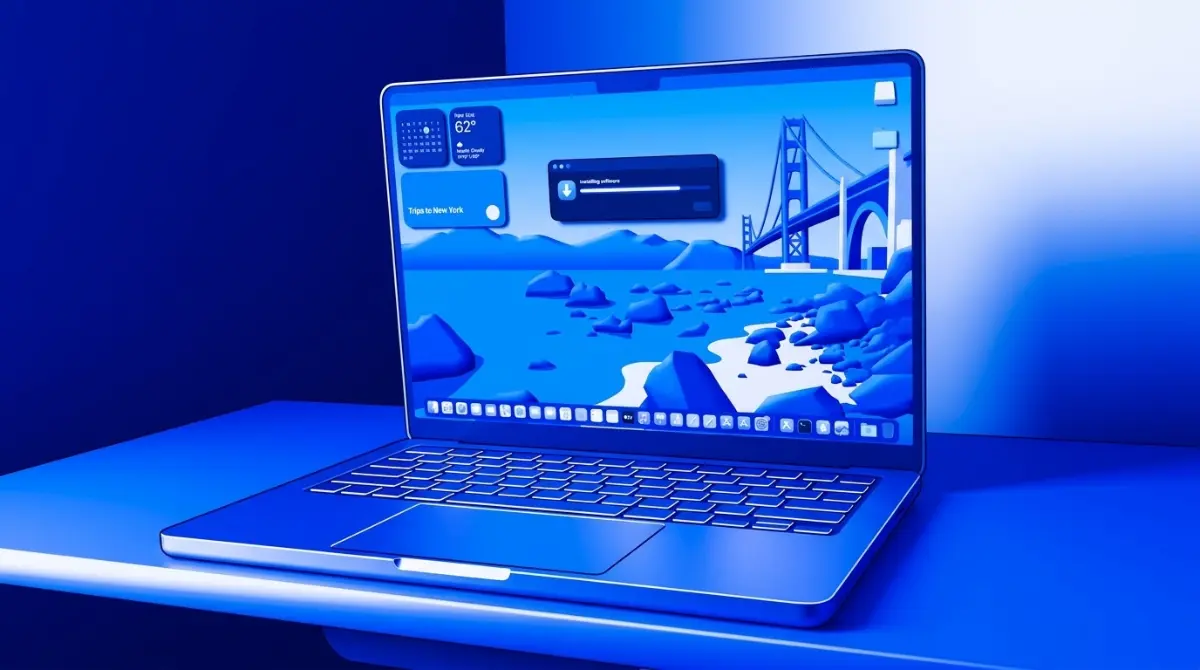
Developer group labscommunity published npu-driver, an experimental open-source project that renders the Windows 11 desktop on neural processing units at two to three frames per second, offloading composition tasks from graphics hardware onto idle neural silicon.
Oladipupo Ajayi | · 7 min read

Neural processing units inside modern consumer laptops spend most of their silicon lifespans doing nothing. When a computer buyer purchases a Copilot+ PC or an Intel Core Ultra workstation, marketing materials boast of dedicated neural silicon capable of processing forty-five trillion operations per second. In everyday office life, those specialized silicon cores sit idle: waking up for two seconds to blur a webcam background on a Zoom call, or generating an automated text summary in Microsoft Word before returning to deep electronic sleep. Meanwhile, the primary graphics processor consumes continuous battery power to render window transparency, composite desktop shadows, and draw mouse cursors across high-refresh screens. An independent group of open-source software developers decided to test whether that idle neural silicon could do actual visual work. On Wednesday, November 4, 2026, developer group labscommunity released npu-driver: an experimental open-source Windows 11 graphics driver that shifts desktop composition from the graphics processing unit to the neural processing unit. The research software renders the entire Windows desktop and application windows on neural silicon, achieving a modest refresh rate of two to three frames per second. While impractical for daily gaming, the project proves that neural processors can execute general-purpose graphics workloads, continuing software experimentation we followed when AMD and Intel unified software execution paths.
The release of npu-driver, published on GitHub under the permissive Apache 2.0 license, provides a fascinating look into the future of unified processor architectures. Tested on pre-release Intel Panther Lake laptop silicon featuring fifth-generation NPU architecture, the driver intercepts the Windows Desktop Window Manager composition pipeline. Instead of passing Direct3D draw calls to the integrated graphics engine, the driver compiles composition shaders into neural matrix multiplication tensors, executing the visual rasterization across NPU tensor cores. In testing, the driver drops 3D GPU utilization from 3.4% down to just 0.6%, freeing up graphics silicon for other background tasks. Because neural silicon is engineered for low-frequency matrix mathematics rather than high-frequency raster graphics, current output runs at roughly two to three hertz, with occasional dips to 0.6 frames per second. Moving mouse cursors and dragging File Explorer windows feels like wading through thick molasses. The development team emphasized that the driver is a research prototype rather than a finished consumer product, targeting thirty hertz refresh rates in future revisions. Desktop operating system modernizations were examined in our review of Googlebook desktop software systems.
The Technical Architecture: Compiling Direct3D Calls Into Matrix Math
To inspect why running a desktop on an NPU is difficult, one must evaluate the architectural divide separating graphics processors from neural engines. Graphics processing units are mass-parallel rasterization engines engineered to calculate millions of floating-point polygon vertices and pixel shaders every millisecond.
Neural processing units are specialized matrix multiplication engines. They excel at processing massive arrays of 8-bit and 16-bit integers (INT8 and FP16), the mathematical operations used in deep learning inference. An NPU does not possess dedicated triangle rasterization units, texture mapping hardware, or display output timing controllers. The labscommunity engineering team solved this mismatch by writing a software translation layer. The npu-driver takes incoming desktop draw calls from the Windows composition engine, converts pixel blending equations into linear algebraic matrix multiplications, and feeds the tensors to the Intel NPU driver runtime. The neural processor computes the final blended pixel colors for each screen coordinate, writing the finished frame into system memory buffers. The integrated graphics display engine then reads that memory buffer to send the signal to the laptop screen. Translating graphical instructions into neural mathematics represents an impressive compiler achievement. Processing architectures across personal computing match themes we detailed when Apple integrated neural accelerators inside graphics processing dies.
The Frame Rate Problem: Why Two Hertz is Hard to Use
While the technical demonstration succeeds in proving feasibility, the current performance ceiling makes the driver completely unusable for daily computing. Human optical perception expects desktop interactions to refresh at sixty to one hundred and twenty hertz.
At two to three hertz, the desktop draws a new frame only once every three hundred to five hundred milliseconds. When you move your mouse across the desk, the cursor teleports across the screen in discrete jumps. Typing a sentence in Notepad requires typing blind, waiting two seconds for the letters to appear on screen. Dragging a browser window produces severe visual tearing and delayed redraw trails. The bottleneck sits in instruction overhead: neural processors are designed to process massive batches of data in parallel, but have high instruction launch latency. Converting individual desktop drawing instructions into neural tensors creates scheduling overhead that clogs processor queues. To protect users from permanent system freezes, labscommunity built automated fallback mechanisms into the driver. If the driver detects an unrecoverable kernel error or if the user presses a designated emergency keyboard shortcut, the system switches desktop composition back to the graphics processor within fifty milliseconds, restoring smooth sixty-hertz rendering without requiring a computer reboot. Software stability controls match principles we tracked when Flow Engineering secured growth capital for industrial software.
Comparing Processor Workload Allocations in Modern PCs
| Hardware Execution Engine | Primary Architectural Strength | Target Desktop Workload | Power Draw Profile | Desktop Refresh Capability |
|---|---|---|---|---|
| NPU Prototype (npu-driver) | Dense matrix tensor multiplication | Experimental desktop composition | Extremely low (1 to 3 Watts) | 2 to 3 Hz (Targeting 30 Hz) |
| Integrated GPU (iGPU) | Massive parallel pixel rasterization | Standard Windows desktop & media | Low to moderate (5 to 15 Watts) | 60 Hz to 120 Hz smooth |
| Discrete GPU (dGPU) | High-frequency ray tracing & 3D | Heavy 3D gaming & 4K video editing | High (35 to 175 Watts) | 144 Hz to 360 Hz competitive |
| Central Processor (CPU WARP) | Sequential high-speed scalar logic | Software fallback rasterizer | Moderate (15 to 45 Watts) | 15 to 30 Hz software fallback |
| Display Controller HW | Fixed-function hardware scanout | Hardware display overlays | Near-zero (<1 Watt) | Hardware display native |
The comparative data illustrates why the concept of NPU desktop rendering holds long-term promise despite early performance limits. In modern mobile computing, battery conservation is the defining engineering priority. If developers can optimize the driver to achieve thirty hertz: a frame rate acceptable for basic word processing and reading text: laptops could power down graphics processors during simple office work, extending battery runtimes by several hours. Silicon power conservation was analyzed in our review of Framework modular laptop engineering.
The Road to Thirty Hertz: Tensor Compilation and Hardware Upgrades
The labscommunity development roadmap outlines clear technical milestones required to reach thirty frames per second. The primary performance gain will come from replacing runtime shader translation with pre-compiled neural graphs.
Currently, the driver translates graphics calls on the fly, creating CPU overhead. The team is developing pre-compiled tensor templates for common desktop operations: such as solid color fills, font glyph rendering, and Gaussian blur passes. When Windows requests a window blur, the NPU can execute an optimized tensor kernel without compilation delays. Hardware advancements will also assist performance. While current Intel Panther Lake processors feature fifth-generation neural silicon delivering roughly fifty TOPS of compute, upcoming Nova Lake architectures will introduce sixth-generation neural processors with expanded memory bandwidth and higher clock frequencies. If neural processors double matrix execution speeds and software compilers eliminate instruction overhead, reaching thirty hertz on desktop composition becomes achievable within twelve months. Silicon roadmaps across computing hardware were detailed in our analysis of Dell laptops testing new processor architectures.
The Future Outlook for Silicon Versatility
The open-source npu-driver project delivers a valuable reminder to the semiconductor industry: fixed-function hardware silos are an inefficient use of silicon area. When chipmakers add dedicated neural processors, graphics engines, and media decoders to laptop dies, those specialized circuits sit dark whenever their narrow task is not active.
The future of computing belongs to flexible, heterogeneous software architectures that can route workloads to whatever silicon engine is most energy-efficient at that moment. The developers at labscommunity proved that with clever software compilers, an idle neural processor can draw desktop windows. Running a desktop at two frames per second will not replace graphics cards tomorrow, but it has opened a door to a future where every transistor on a silicon die works cooperatively, proving that independent open-source developers still lead the way in showing what hardware can truly do.
Read More on TechRobust:

Oladipupo Ajayi
Oladipupo Ajayi
Expertise:Artificial Intelligence, Machine Learning Trends, Data Infrastructure, Enterprise AI Strategy, Frontier Tech Commentary
Award:TechRobust AI & Data Voice of the Year 2025
Ola is an Editor-at-Large at TechRobust, delivering authoritative commentary, high-level analysis, and investigative features across the frontiers of machine intelligence and big data. He tracks frontier model developments, enterprise AI adoption, data governance, and the societal shifts driven by computational breakthroughs.
Related Stories
OpenAI Releases GPT-6 Cyber With Critical Safety Rating Isomorphic Labs Seeks $5B at $50B Valuation for AI Drugs
 Data Centers Turn to Retired Jet Engines for Power