


 LinkedIn
 Anthropic FlashProve System Verifies AI Model Identity
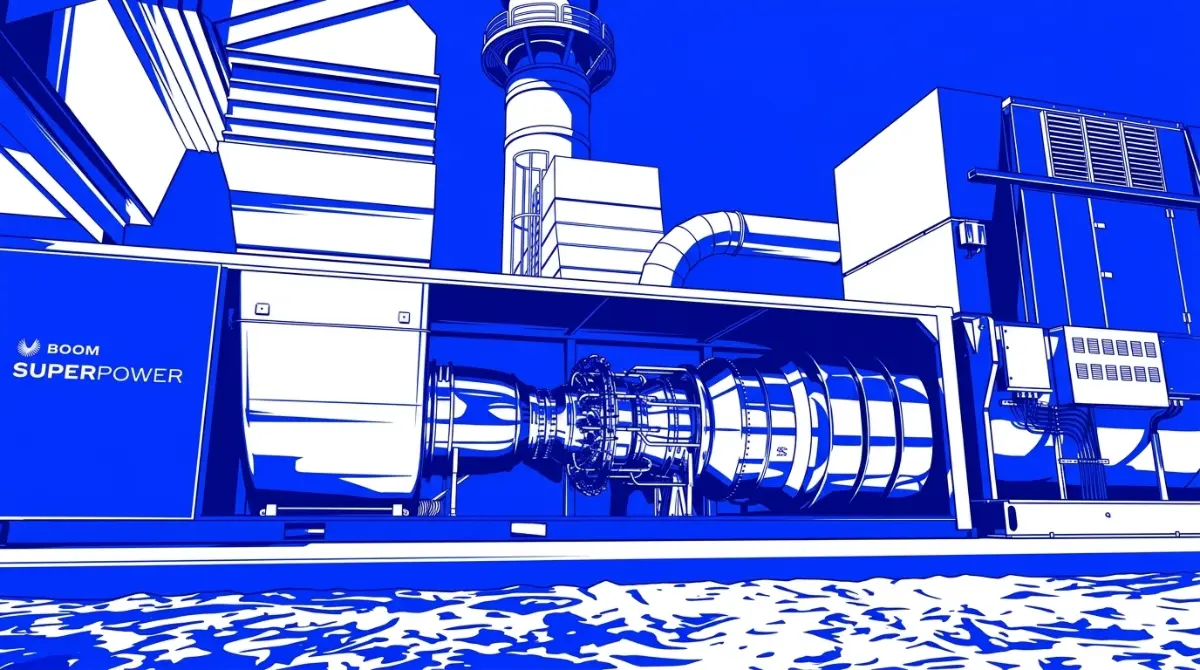
Data Centers Turn to Retired Jet Engines for Power
Computing center operators are retrofitting retired commercial aircraft jet engines into on-site natural gas generators to bypass multi-year electrical utility connection delays, drawing sharp protests from environmental groups over soaring carbon pollution.
Oladipupo Ajayi | · 8 min read

Waiting years for municipal electrical lines has forced server developers to strip engines off airplanes. Across major computing corridors in North America and Western Europe, constructing high-density server halls has collided with an unyielding physical barrier: electrical power grids have run out of transmission capacity. In technology hubs like Northern Virginia, central Ohio, and West Texas, regional utility companies face connection queues stretching past five years. In the artificial intelligence race, a company that waits five years for power will be bankrupt before its computers turn on. Infrastructure developers have taken an aggressive industrial shortcut. Technology reporting on Tuesday, November 3, 2026, revealed that data center builders are purchasing retired commercial jet engines, retrofitting them into aeroderivative natural gas turbines, and parking them outside server buildings to generate electricity on-site. The practice burns millions of cubic feet of fossil fuels daily, allowing operators to energize processor clusters years ahead of municipal grid timelines while generating emissions that alarm environmental groups. The controversial energy workaround lands as community resistance to server facilities spreads nationwide, continuing political battles we documented when data center construction became a bipartisan midterm election issue.
The adoption of aeroderivative gas turbines exposes the desperate measures required to sustain modern computing growth. An aeroderivative turbine is essentially an aircraft jet engine: such as a General Electric LM6000 or Pratt & Whitney FT8: converted to run on pressurized natural gas or diesel rather than aviation kerosene. Because these engines were originally engineered to propel wide-body passenger jets into the stratosphere, they pack immense power into compact steel frames: spinning up from dead stop to full electrical output in under ten minutes. A single modified jet engine mounted on a flatbed trailer produces between thirty and sixty megawatts of continuous electricity, enough to power twenty thousand residential homes. Server operators are buying clusters of these turbines, dropping them onto gravel pads adjacent to regional gas pipelines, and creating private microgrids that operate completely off the public grid. While the setup circumvents utility connection backlogs, it burns massive volumes of fossil methane, undermining corporate net-zero pledges made by tech giants like Microsoft, Amazon, and Google. Environmental compromises surrounding computing power were analyzed in our report on Anthropic turning to natural gas power to feed compute clusters.
The Transmission Line Wall: Why Utilities Cannot Keep Up
To inspect why server companies are buying aircraft engines, one must examine the congested state of American electrical grids. For three decades, electrical demand across Western nations grew at a predictable one percent annually, allowing power companies to maintain balance with existing plants.
The construction of machine learning server complexes shattered that equilibrium. A modern server campus housing one hundred thousand liquid-cooled graphics processors pulls between five hundred megawatts and one gigawatt of continuous electrical current: an electrical load equivalent to a mid-sized commercial city. Regional grid operators like PJM Interconnection and ERCOT face hundreds of competing interconnection requests. Stringing high-voltage transmission lines, building substations, and securing environmental permits requires five to seven years of civil construction. In the artificial intelligence race, foundation models iterate on twelve-month cycles. Tech companies cannot wait until 2031 to plug in chips that will be obsolete by 2028. Aeroderivative turbines can be acquired on secondary industrial markets, installed on concrete pads, and plumbed into gas pipelines within nine months, providing an immediate power source that beats utility timelines. Modular server infrastructure deployments match concepts we explored when Runware moved to mass-produce modular data centers in shipping containers.
The Physics of Aeroderivative Turbines: Aviation Power on Land
The mechanical attraction of aeroderivative gas turbines lies in power density and operational flexibility. Unlike heavy industrial turbines that require weeks of pre-heating and permanent concrete foundations, jet engines are built for extreme operational stress.
A converted aircraft engine operates through a high-velocity thermodynamic cycle:
- Air Compression: Multi-stage titanium compressor blades pull in massive volumes of ambient air, compressing gas to thirty times atmospheric pressure.
- High-Temperature Combustion: Pressurized natural gas injected into the combustion chamber burns at temperatures exceeding 1,200 degrees Celsius, creating high-velocity exhaust gases.
- Power Turbine Expansion: The expanding exhaust spins a power turbine connected to an electrical generator shaft, producing alternating current electricity at sixty hertz.
- Rapid Throttle Response: The turbine adjusts electrical output within seconds, matching dynamic power fluctuations as server racks shift between heavy model training and idle states.
Because the engines are mounted on modular transport trailers, operators can deploy them in scalable banks: placing five units together to produce two hundred megawatts of capacity. If an engine requires overhaul after ten thousand operating hours, technicians disconnect the module, lift it onto a flatbed truck with an industrial crane, and slide a replacement engine into the cradle within twenty-four hours, keeping server downtime minimal. Server hardware management across enterprise campuses was detailed in our review of Schneider Electric raising revenue targets on data hall demand.
Comparing On-Site Data Center Power Generation Sources
| Power Generation Method | Deployment Timeline | Capacity Factor Rating | Emissions and Pollution | Capital Cost per Megawatt |
|---|---|---|---|---|
| Aeroderivative Jet Turbines | 6 to 12 months on-site | 85% to 92% continuous | High NOx, carbon dioxide, and noise | $900,000 to $1.4M / MW |
| Heavy Industrial Combined-Cycle | 36 to 48 months build | 90% to 95% baseload | Moderate emissions (High efficiency) | $1.2M to $1.8M / MW |
| Utility Grid Interconnection | 48 to 84 months backlog | Variable based on grid | Regional power utility blend | Regulated ratepayer tariff |
| Commercial Nuclear Restarts | 36 to 60 months review | 95% continuous power | Zero operational carbon output | $2.5M to $4.0M / MW |
| Solar PV + Battery Arrays | 18 to 24 months build | 25% to 35% weather tied | Zero operational emissions | $1.5M to $2.2M / MW |
The comparative data illustrates why aeroderivative jet engines have become the emergency band-aid of the computing boom. While nuclear restarts take years and solar arrays cannot deliver twenty-four-hour continuous baseload current, retrofitted jet engines combine fast deployment with high reliability. That operational calculation explains why developers are willing to pay millions on secondary markets for decommissioned aircraft engines. Clean energy transitions across industrial hubs were explored in our analysis of nuclear power facing operational tests in data centers.
The Environmental Toll: Peaker Emissions in Suburban Backyards
The dark side of the jet engine boom is environmental pollution. Aeroderivative turbines operate in simple-cycle mode: meaning they burn fuel to spin a turbine without capturing waste heat to run a secondary steam generator.
Simple-cycle turbines are significantly less fuel-efficient than modern combined-cycle power plants, burning more natural gas per kilowatt-hour produced. The exhaust releases significant volumes of nitrogen oxides, fine particulate matter, and unburned methane into surrounding air basins. Nitrogen oxides react with sunlight to produce ground-level ozone, triggering asthma attacks and respiratory illnesses in nearby communities. In suburban counties where massive computing parks border residential neighborhoods and schools, families are organizing resistance. Local citizens point out that tech platforms are effectively operating unpermitted fossil power plants in residential backyards simply to run automated software tools. Furthermore, the acoustic whine of jet turbines running at continuous load produces high decibel noise that travels through soil and penetrates home walls, disturbing sleep and eroding local property values. Environmental liabilities surrounding computing campuses were detailed in our report on water and environmental constraints on computing facilities.
The Climate Contradiction: Net-Zero Pledges Melt Away
The widespread deployment of on-site gas turbines exposes a glaring contradiction inside Big Tech environmental policies. For a decade, Silicon Valley corporations published glossy sustainability brochures, pledging to achieve net-zero carbon emissions by 2030.
Executives boasted of purchasing green energy credits and financing solar farms. When confronted with the choice between slowing down artificial intelligence development to meet climate goals, or burning fossil fuels to keep server processors running, technology companies chose fossil fuels. By burning natural gas behind the meter, tech operators generate physical carbon emissions that do not appear on municipal utility bills. Environmental watchdogs warn that the technology sector computational appetite is single-handedly extending the commercial lifespan of fossil fuel infrastructure, ensuring that pipeline companies continue expanding gas drilling fields. Capital allocations across infrastructure developers match patterns we tracked when Microsoft launched a $25B bond sale to fund server construction.
The Long-Term Outlook for Data Center Energy Architecture
The reliance on retrofitted aircraft engines delivers an undeniable verdict on the state of computing infrastructure: software ambition has outpaced the physical carrying capacity of modern energy systems. For decades, the digital economy operated under the illusion that writing code carried zero physical weight.
As computational models scale into multi-gigawatt complexes, that digital illusion has shattered. The race to achieve synthetic reasoning is now directly competing with human civilization for electricity, clean water, and breathable air. Burning aircraft engines on gravel pads is an emergency hack, not a sustainable industrial strategy. If the technology sector wishes to preserve its social license to operate, tech leadership must stop using short-term fossil workarounds and invest capital into building genuine clean energy infrastructure: financing small modular nuclear reactors, funding deep geothermal drilling, and engineering energy-frugal model architectures. The true measure of technological intelligence will not be how many server racks we can energize with jet engines, but whether we can build the future of computing without sacrificing the physical health of the planet to power it.
Read More on TechRobust:

Oladipupo Ajayi
Oladipupo Ajayi
Expertise:Artificial Intelligence, Machine Learning Trends, Data Infrastructure, Enterprise AI Strategy, Frontier Tech Commentary
Award:TechRobust AI & Data Voice of the Year 2025
Ola is an Editor-at-Large at TechRobust, delivering authoritative commentary, high-level analysis, and investigative features across the frontiers of machine intelligence and big data. He tracks frontier model developments, enterprise AI adoption, data governance, and the societal shifts driven by computational breakthroughs.
Related Stories
Anthropic FlashProve System Verifies AI Model Identity Yvonne Bajela Closes $17M Debut Fund Evertrue Capital
 Garry Tan Spends $200K Yearly on AI Agent Tokens