
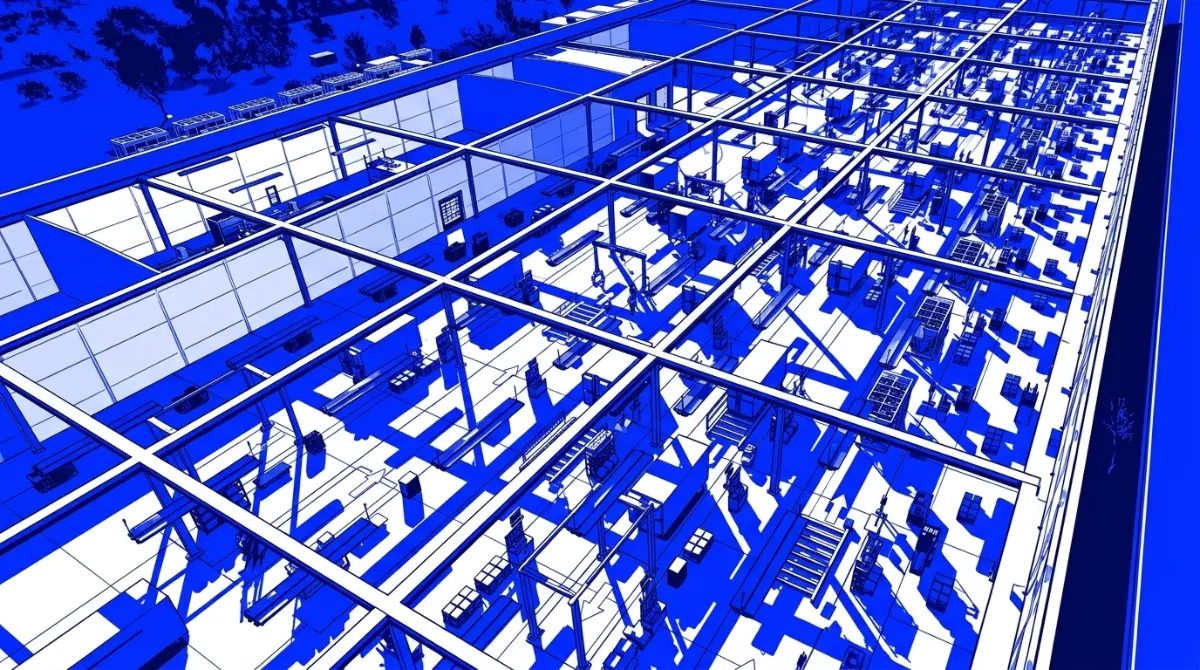


Runware Aims to Mass Produce AI Data Centers Like Cars
Infrastructure startup Runware plans to mass-produce modular data centers inside twenty-foot shipping containers, aiming for thirty megawatts of daily factory output by 2028 and forty-eight-hour on-site setup to bypass traditional building delays.
Inioluwa Ademidun | · 9 min read

Building computing server facilities has become one of the slowest civil engineering projects in modern industry. When a technology conglomerate sets out to construct a server campus, the process takes up to four years: buying hundreds of acres of agricultural land, pouring reinforced concrete foundations, negotiating utility transmission line hookups, and assembling custom liquid-cooling plumbing inside cavernous warehouses. In the artificial intelligence race, waiting four years for server space is commercial suicide. Computational model requirements double every six months, leaving research teams stranded with nowhere to plug in advanced graphics processors. European infrastructure startup Runware moved to solve that physical construction logjam on Friday, October 30, 2026. The company announced that it is building an automated manufacturing factory to turn out prefabricated modular server facilities on an assembly line, treating computing centers like mass-produced passenger cars. Anchored by its proprietary product, the Sonic Pod, Runware aims to produce thirty megawatts of modular computing capacity every single day by 2028, with container pods capable of being energized on-site within forty-eight hours of delivery. The bold industrial push arrives as computing infrastructure encounters severe construction delays, continuing physical capacity strains we documented when America computing infrastructure expansion began to stall.
The manufacturing initiative represents an ambitious attempt to commoditize computational real estate. Founded by Chief Executive Officer Flaviu Radulescu, Runware operates on a simple premise: computing hardware should be assembled in controlled factory cleanrooms rather than on muddy outdoor construction sites. The Sonic Pod packages one megawatt of computing equipment: housing roughly 1,200 server graphics processors: into a standard twenty-foot intermodal shipping container equipped with integrated rooftop cooling systems. Instead of waiting years for contractors to build concrete server halls, enterprise customers can order Sonic Pods by the dozen, ship them via standard container trucks, drop them onto gravel pads beside electrical substations, and connect power cables within two days. Radulescu confirmed that Runware will ramp up its primary manufacturing plant in Romania starting in 2027, with a second automated factory planned for North America. Customers can rent computing capacity directly from Runware or supply their own graphics processors, paying an ongoing monthly maintenance fee that includes spare parts replacement. The rapid emergence of alternative infrastructure platforms matches venture funding patterns we tracked when General Compute raised $100M for inference computing.
The Construction Trap: Why Concrete Server Halls Fail the AI Boom
To grasp why prefabricated modular pods are attracting commercial interest, one must examine why traditional data center construction is failing modern tech demands. Building a traditional enterprise data center resembles constructing a municipal power plant or a sports stadium.
Developers spend twelve to eighteen months securing municipal zoning approvals, fighting neighborhood noise complaints, and negotiating environmental impact permits. Once ground is broken, construction crews spend two years coordinating concrete pours, installing heavy steel trusses, assembling custom electrical switchgear, and plumbing complex liquid-cooling pipes across expansive raised floors. If supply chain disruptions delay a single industrial chiller or high-voltage transformer, the entire multi-hundred-million-dollar facility sits idle. By the time the building opens its doors four years later, the server hardware it was designed to house is often two generations obsolete. Runware eliminates this civil construction cycle. By building standardized pods inside an automated factory, the company applies automotive manufacturing efficiencies: standardizing parts, using robotic welding arms, and testing electrical connections before units leave factory gates. Prefabrication turns custom construction into repeatable industrial manufacturing. Infrastructure challenges facing large server hubs were examined in our report detailing Bank of America projecting global data center spending to hit two trillion dollars.
The Sonic Pod Architecture: One Megawatt in a Twenty-Foot Box
The technical achievement enabling Runware deployment speed is the high-density packaging inside the Sonic Pod. Fitting one megawatt of computing power and 1,200 graphics processors into a standard twenty-foot shipping container presents brutal thermal and electrical challenges.
A standard twenty-foot shipping container has a physical volume of roughly thirty-three cubic meters. Packing 1,200 high-performance graphics cards into that tiny footprint generates intense heat: sufficient thermal energy to heat hundreds of residential homes. Traditional air conditioning systems cannot move air quickly enough through a sealed container to prevent processors from thermal throttling. Runware solved this cooling hurdle by designing an integrated closed-loop liquid cooling system that mounts directly onto the container roof. The rooftop unit houses high-efficiency fluid chillers, pumps, and heat exchangers that circulate dielectric coolant directly across processor cold plates. The container walls are lined with acoustic dampening panels that suppress industrial fan noise, allowing pods to operate quietly near commercial offices. The pod includes automated fire suppression systems, environmental humidity sensors, and redundant power distribution units that step down high-voltage currents to server rack voltages. The entire container is weather-sealed against dust, rain, and snow, allowing pods to operate outdoors in extreme desert heat or freezing arctic winters without protective external buildings. Server thermal management innovations match hardware techniques we explored in our review of Schneider Electric raising revenue targets on data hall demand.
Comparing Data Center Construction Methodologies
| Deployment Strategy | Time to Initial Operation | Power Density Profile | Civil Construction Requirement | Scalability Mechanics |
|---|---|---|---|---|
| Runware Sonic Pods | 48 hours on-site post-delivery | 1 MW per 20-foot container | Zero (Gravel pad + utility drop) | Modular: stack pods like Lego blocks |
| Traditional Hyperscale Halls | 36 to 48 months | 15 to 40 MW per warehouse hall | Heavy reinforced concrete & structural steel | Rigid: requires multi-year planning |
| Commercial Colocation Leases | 3 to 6 months (If space exists) | 10 to 20 kW per server cabinet | Pre-built shared commercial real estate | Constrained by available commercial vacancies |
| Converted Industrial Sites | 12 to 18 months retrofit | Variable based on legacy wiring | Extensive electrical and plumbing overhaul | Limited by existing factory footprints |
| Subsea Capsule Facilities | 18 to 24 months marine deployment | 800 kW per sealed pressure vessel | Specialized naval marine engineering | Complex maintenance; requires recovery ships |
The comparative data illustrates why modular prefabrication is disrupting traditional real estate. Hyperscale warehouses require multi-year capital commitments that leave developers exposed to technological obsolescence. Runware modular containers allow cloud operators to match capital deployment with customer demand: ordering five pods today, ten pods next quarter, and adding capacity incrementally as software workloads expand. If a regional electrical utility faces power shortages, the operator can disconnect the pods, load them onto flatbed trucks, and relocate them to an alternative site with surplus power. Portable server strategies match infrastructure models we tracked when Crusoe restructured multi-billion-dollar energy agreements.
The Romanian Assembly Plant: Factory Automation at Scale
The operational hub driving Runware expansion is located in Romania. While Silicon Valley software companies focus purely on digital code, Runware is investing heavily in physical industrial automation.
Flaviu Radulescu selected Romania for the company primary manufacturing facility to capitalize on Eastern Europe established automotive manufacturing supply chains and skilled mechanical engineering talent. The factory uses automated guided vehicles, precision laser cutters, and robotic wiring cells to assemble Sonic Pods on an assembly line. Standardizing the manufacturing process allows Runware to reduce assembly errors, calibrate liquid cooling systems under controlled conditions, and conduct multi-hour electrical stress tests before pods are packaged for international transport. The company thirty-megawatt daily output target by 2028 is extraordinarily ambitious: producing thirty finished pods every twenty-four hours would represent an industrial manufacturing volume unprecedented in computing history. If Runware achieves even half of that production rate, the Romanian plant will output more computing capacity annually than several major cloud hosting providers combined. Industrial manufacturing automation across Europe was analyzed in our review of Siemens and Nvidia deploying industrial automation tools.
Solving the Electrical Interconnection Bottleneck
The most compelling commercial advantage of the Sonic Pod is its ability to bypass utility interconnection delays. In traditional data center hubs like Northern Virginia and Silicon Valley, commercial developers face utility connection queues stretching between five and seven years.
Because Sonic Pods are mobile and self-contained, operators can deploy them behind the meter: placing containers directly adjacent to stranded energy assets. Cloud operators can drop Sonic Pods next to rural solar farms, hydroelectric dams, natural gas peaker plants, or industrial wind installations, consuming electricity that would otherwise be wasted due to lack of local transmission lines. By bringing the computer servers directly to the power source rather than waiting for power utilities to build expensive transmission lines to cities, Runware unlocks gigawatts of clean electricity that traditional data center builders cannot access. The political friction surrounding industrial energy consumption was detailed in our report on data center construction becoming a bipartisan midterm election issue.
The Flexible Business Model: Rented Compute or BYO-GPU
Runware commercial strategy combines hardware manufacturing with recurring software services. The company offers two distinct procurement models for enterprise clients:
- Rented Compute Capacity: Enterprise clients rent computing time on fully equipped Sonic Pods owned and operated by Runware, paying hourly or monthly usage fees for low-latency model inference.
- Bring-Your-Own-GPU (BYO-GPU): Enterprise customers supply their own graphics processor chips, paying Runware a monthly hosting fee that covers the container pod, physical maintenance, and operations.
Under both models, customers pay separately for actual electricity and internet bandwidth, ensuring transparent operating costs. Runware also provides replacement parts: maintaining spare graphics cards, power supplies, and cooling pumps on-site to replace defective components within minutes of failure. Providing hardware maintenance as part of a managed subscription lowers technical hurdles for non-technology enterprises that want dedicated server capacity without hiring specialized data center facility staff. Venture capital dynamics across computing infrastructure were examined in our review of Elon Musk warning that independent compute providers face extinction.
The Long-Term Outlook for Mobile Computing Infrastructure
Runware plan to mass-produce modular server facilities delivers a necessary disruption to the computing industry. The assumption that digital intelligence must be housed inside billion-dollar concrete monuments is an obsolete relic of twentieth-century civil engineering.
As computational models become distributed and specialized, server infrastructure must become agile, portable, and fast to deploy. By transforming data center construction into an automated factory assembly line, Flaviu Radulescu and his team are establishing a blueprint for modern computing delivery. Producing thirty megawatts of computing capacity daily will test the limits of factory logistics and global semiconductor supply chains. If Runware succeeds, the company will have dismantled the construction bottleneck that has long held back the technological revolution: proving that the future of computing will not be poured in concrete, but rolled off assembly lines and plugged into the wall in forty-eight hours flat.
Read More on TechRobust:

Inioluwa Ademidun
 LinkedIn
Inioluwa Ademidun
Expertise:African Tech Ecosystem, Early-Stage Startups, Emerging Market Dynamics, Venture Capital & Tech Reporting, Product Management
Award:TechRobust Contributor of the Year 2025
Inioluwa is a Senior Product Manager by day and an investigative technology reporter by night, bridging the gap between scalable software architecture and high-impact journalism. She delivers deep-dive analysis on venture-backed founders, regulatory shifts, and grassroots tech ecosystems across Africa and global emerging markets.