
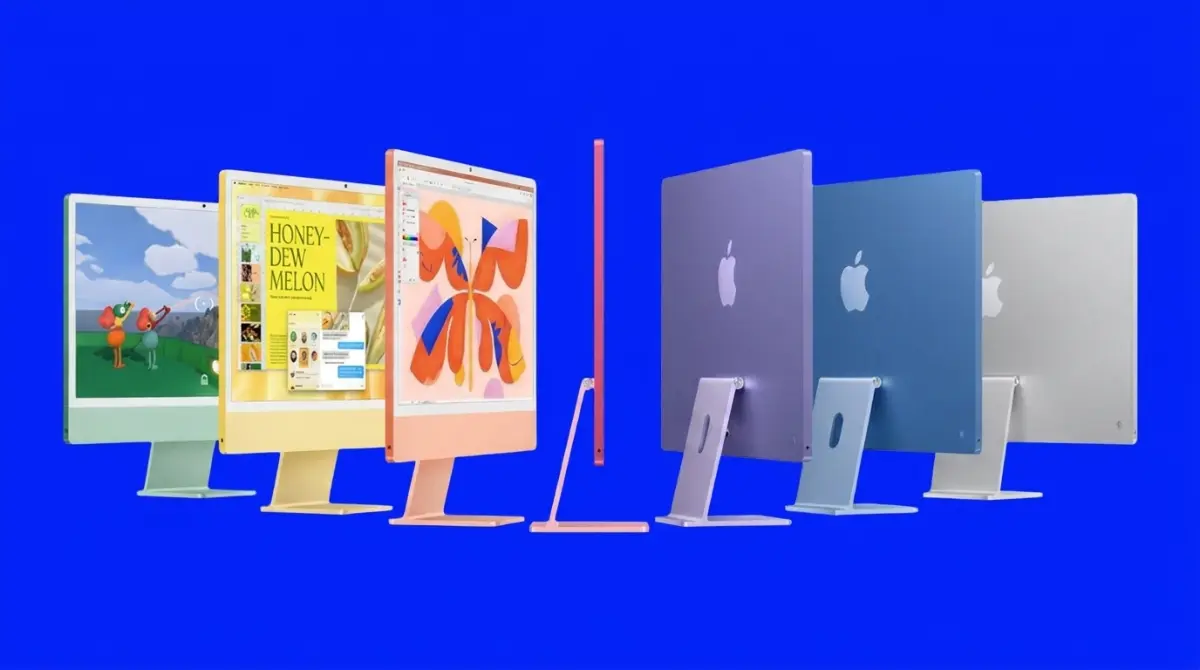


Apple Unveils M6 14-Inch MacBook Pro and Updated iMac
Apple introduced its M6 processor inside the redesigned 14-inch MacBook Pro and 24-inch iMac, delivering a 12-core CPU, dual neural engines, twenty-four hours of battery endurance, and macOS 27 Golden Gate system features for creators worldwide.
Caleb Ogunkanbi | · 8 min read

Personal computer updates often settle for modest clock speed bumps. Computer makers adjust silicon frequencies by a few hundred megahertz, add a fresh exterior paint finish, and claim massive performance leaps in marketing materials. Apple chose a more comprehensive hardware overhaul on Tuesday, October 27, 2026. The Cupertino technology company introduced the M6 processor inside the updated 14-inch MacBook Pro and 24-inch iMac. Fabricated on TSMC advanced two-nanometer production lines, the M6 brings a twelve-core central processor, a twelve-core graphics engine with dedicated neural accelerators inside every graphics core, and a dual sixteen-core Neural Engine. The hardware configuration delivers up to twenty-four hours of continuous battery life on the 14-inch MacBook Pro: the longest battery endurance ever recorded in a Macintosh notebook. Supported by sixteen gigabytes of unified memory as standard and running macOS 27 Golden Gate, the hardware establishes a fresh performance benchmark for mobile creative professionals. The release continues Apple custom silicon deployment, following desktop hardware reviews we tracked in our Apple M6 Mac mini hardware review.
The hardware announcement represents an important strategic move as PC makers compete over on-device machine intelligence. Rather than relying entirely on remote cloud servers to process language prompts and photo edits, Apple engineered the M6 to run machine models locally. The dual sixteen-core Neural Engine delivers up to 1.9 times faster processing speeds than the previous M5 chip, executing on-device language queries and image generation scripts while drawing minimal electrical power. Unified memory bandwidth climbed to 170 gigabytes per second, allowing creative workers to compile complex software projects and edit multiple streams of 8K video without experiencing system slowdowns. Pricing for the 14-inch MacBook Pro starts at $1,599, while the updated 24-inch iMac begins at $1,299, with retail deliveries scheduled to begin next week. The laptop release arrives as PC manufacturers introduce competing hardware platforms, continuing laptop market comparisons we analyzed when evaluating Dell alternatives to Apple laptops.
The 2nm Silicon Architecture: Twelve Cores and Neural GPU Accelerators
To grasp why the M6 represents a meaningful leap in personal computing, one must inspect the physical silicon layout. Moving from three-nanometer to two-nanometer foundry nodes allowed Apple chip architects to pack billions of additional transistors onto the silicon die without increasing physical processor dimensions.
The central processing unit features twelve cores: configured with six high-performance cores and six high-efficiency cores. This configuration adds two physical cores compared to the base M5, delivering a thirty percent improvement in multi-threaded computing speeds during code compilation and 3D rendering. The twelve-core graphics processor features third-generation ray-tracing hardware and dynamic caching memory management. The notable architectural change is the addition of dedicated neural accelerators embedded directly inside each individual GPU core. When a creative professional runs a visual generation model or applies neural upscaling to a photograph, the GPU and Neural Engine process the mathematical matrices in parallel, achieving up to twenty-five percent faster prompt processing times compared to previous chips. Hardware silicon advancements were detailed in our analysis of Asus ProArt laptops with dedicated graphics accelerators.
Twenty-Four Hour Battery Endurance and Thermal Behavior
The headline engineering achievement of the 14-inch MacBook Pro is its twenty-four-hour battery rating. Laptop buyers historically had to pick between fast performance that required noisy cooling fans, or weak low-power processors that lasted through a full workday.
The M6 eliminates that compromise through electrical instruction efficiency. Because the two-nanometer process node reduces electrical leakage, the six high-efficiency CPU cores handle everyday office tasks: web browsing, document writing, and video conferencing: while consuming less than three watts of power. During continuous video playback tests, the 14-inch MacBook Pro ran for twenty-four hours on a single charge of its seventy-watt-hour battery pack. In everyday professional workflows involving dozens of browser tabs and background communications, the machine easily delivers sixteen to eighteen hours of real-world battery life. Furthermore, performance remains identical whether the laptop is plugged into a wall outlet or running on battery power. Competing Windows laptops often reduce processor performance by thirty to forty percent on battery power to prevent rapid battery drain; Apple unified memory architecture maintains maximum clock speeds across all operating modes. Laptop durability and battery hardware were explored in our analysis of Framework modular laptop engineering.
Comparing Apple M-Series Laptop Platforms
| Hardware Specification | MacBook Pro 14" (M6) | MacBook Pro 14" (M5) | MacBook Pro 14" (M4) |
|---|---|---|---|
| Manufacturing Node | TSMC 2nm foundry node | TSMC 3nm second-generation | TSMC 3nm first-generation |
| CPU Core Configuration | 12 cores (6 Perf + 6 Eff) | 10 cores (4 Perf + 6 Eff) | 10 cores (4 Perf + 6 Eff) |
| GPU Graphics Cores | 12 cores with Neural Accel | 10 cores with Dynamic Cache | 10 cores standard |
| Neural Engine Design | Dual 16-core (1.9x faster) | Single 16-core | Single 16-core |
| Memory Bandwidth | 170 GB/s unified bandwidth | 153 GB/s unified bandwidth | 120 GB/s unified bandwidth |
| Rated Battery Endurance | Up to 24 hours playback | Up to 22 hours playback | Up to 18 hours playback |
The comparative table demonstrates that the M6 provides a substantial performance leap over previous generations. Adding two additional CPU cores, dual neural engines, and neural GPU accelerators gives the M6 noticeable advantages during heavy creative workloads. Competing desktop alternatives were examined in our review of Googlebook desktop software systems.
macOS 27 Golden Gate and Liquid Glass Controls
The updated MacBook Pro and iMac launch with macOS 27 Golden Gate, introducing system-level interface updates and integrated machine intelligence features. The operating system integrates Siri AI directly into desktop search and application menus.
Siri AI can search through local emails, notes, photographs, and documents to answer complex questions without uploading personal files to remote servers. A keyboard shortcut activates Visual Intelligence, allowing users to ask questions about whatever image, chart, or text is displayed on their screen. In the Safari web browser, automated tools organize dozens of open browser tabs into project topics, notify users of price drops on retail sites, and generate custom browser extensions from plain text descriptions. macOS 27 also refines Apple Liquid Glass interface aesthetics. Following customer feedback regarding earlier transparent window designs, Apple added a dedicated personalization slider inside system settings, allowing users to adjust window transparency from ultra-clear glass to fully opaque solid tint. Desktop operating system features were detailed in our review of Apple upcoming product launch waves.
The 24-Inch iMac: Studio Design Meets Family Utility
Alongside the professional notebook, Apple brought the M6 processor to its all-in-one desktop: the 24-inch iMac. The desktop retains its clean 11.5-millimeter profile, available in seven vibrant pastel colors with color-matched power cords, keyboards, and mice.
The 4.5K Retina display delivers five hundred nits of brightness and supports wide P3 color gamuts, offering an optional nano-texture glass coating to reduce reflections in brightly lit home offices. The desktop incorporates a 12MP Center Stage webcam that automatically keeps speakers framed during family FaceTime calls, supported by studio-quality microphone arrays that eliminate background room echo. With the M6 processor inside, the iMac serves as a capable home workstation: allowing children to play graphics-heavy games while parents edit family video projects without fan noise. The starting price of $1,299 includes sixteen gigabytes of unified memory as standard, resolving customer complaints regarding older eight-gigabyte entry models. Hardware comparisons for student laptops were analyzed in our buyer guide covering the best budget laptops for students and home offices.
Challenging Windows Copilot+ PC Hardware
The introduction of the M6 hardware arrives as Microsoft and Qualcomm attempt to expand their Windows on Arm initiative. For the past six months, PC manufacturers promoted Copilot+ PCs powered by Snapdragon X Elite processors, claiming they matched MacBook performance.
The M6 establishes clear blue water between Apple Silicon and competing ARM chips. While Snapdragon processors deliver solid battery life during simple web browsing, their graphical performance and single-core CPU speeds trail Apple silicon during demanding creative workloads like video encoding and 3D modeling. Furthermore, Windows software developers have struggled to translate legacy x86 audio and video plugins to run natively on ARM chips without compatibility bugs. Apple macOS ecosystem benefits from six years of native Apple Silicon optimization: every major creative application from Adobe, Blackmagic Design, and Ableton runs natively on M-series chips with zero translation overhead. Apple enterprise computing strategy was explored in our analysis of Apple targeting enterprise computing expenses with Mac hardware.
The Verdict on Apple M6 Personal Computing Push
The release of the M6 14-inch MacBook Pro and updated iMac confirms that Apple custom semiconductor division continues to set the pace for personal computer hardware. By pairing two-nanometer processor manufacturing with dual neural engines, twenty-four hours of battery endurance, and sixteen gigabytes of baseline memory, Apple delivered a meaningful upgrade for working professionals.
For owners of older Intel-based Macintoshes or early M1 systems, the performance leap will be transformative: compiling code in seconds, editing 8K video timelines without dropped frames, and working away from wall chargers for multiple days. While owners of M4 or M5 hardware can comfortably skip this generation, the M6 proves that personal computer hardware innovation is far from exhausted. Apple built a versatile, durable machine that will anchor the creative computing industry for years to come.
Read More on TechRobust:

Caleb Ogunkanbi
 LinkedIn
Caleb Ogunkanbi
Expertise:Practical AI Implementation, Head-to-Head Product Testing, Technical How-To Guides, Data Tools & Automation, Consumer Software Benchmarking
Award:TechRobust Guides & Insights Writer of the Year 2025
Caleb is a Staff Writer and Reporter breaking down the frontiers of artificial intelligence and actionable tech education. He produces rigorous head-to-head comparisons, demystifies data tools, and crafts step-by-step technical guides that help readers navigate complex software and AI workflows with ease.