


 LinkedIn
 Satya Nadella Warns Major Infrastructure Is Unpatchable
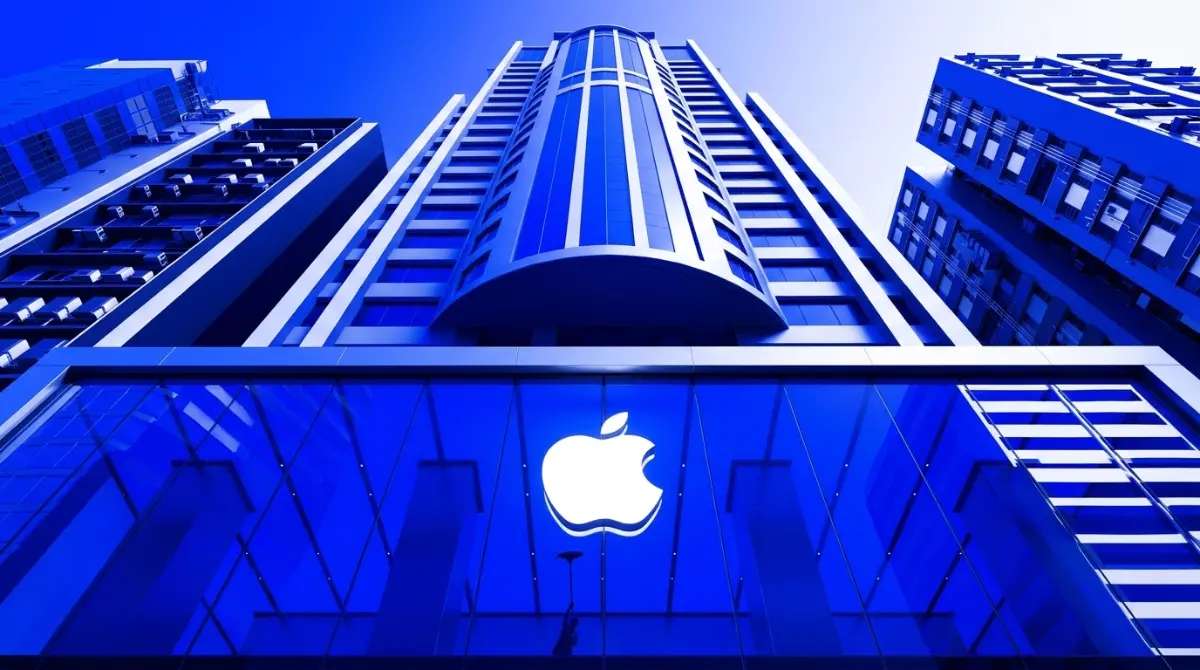
Apple Building AI Agent That Controls Your Mac
Apple is hiring engineering leaders to build a native Mac AI agent that opens apps, browses websites, and debugs code, right as macOS 27.3 installs strict security warnings that make it far harder for rival computer-use agents to operate.
Oladipupo Ajayi | · 10 min read

Apple wants an autonomous assistant that runs your Mac from start to finish, and it is tightening the locks on its operating system before rival software gets there first. A newly spotted Apple engineering job listing reveals that Cupertino is assembling a team to build an in-house artificial intelligence agent capable of operating a personal computer like a skilled human worker. According to details first surfaced by Bloomberg and tracked by MacRumors job listing coverage on November 19, 2026, Apple is recruiting a senior engineering manager to lead work on an agent that browses the web, moves between desktop applications, runs terminal commands, writes and debugs software code, and calls external web services. The recruitment push arrives under Chief Executive Officer John Ternus, who took over Cupertino top job earlier this year and has reportedly urged software engineering chief Craig Federighi to speed up autonomous software delivery. At the exact same moment, Apple upcoming macOS 27.3 update introduces stern permission pop-ups warning Mac owners against granting deep hard-drive access to third-party automation apps. Building a native computer operator while fencing off outside competitors sets up the next major antitrust and privacy battleground in personal computing.
The timing exposes a hard reality for Apple. While hardware sales for Apple Silicon laptops and desktops have surged among developers running local models, Siri still acts mostly like a glorified timer and text summarizer. Rival companies did not wait for Cupertino to catch up. Anthropic computer-use tools, OpenAI desktop agents, and Meta Muse software can already open browser tabs, fill out expense reports, compare supplier spreadsheets, and run automated coding loops across user screens. If a third-party agent sits on top of macOS and controls every mouse click and keyboard shortcut, Apple operating system risks becoming dumb background plumbing. Worse yet for Cupertino business model, an independent agent that handles shopping, travel, and productivity across apps threatens Apple control over how users discover software and pay for digital services. Developing a native Mac agent targeting a possible release as soon as late 2027 is Apple bid to reclaim the driver seat on its own computers, continuing the leadership overhaul we tracked when Apple named John Ternus CEO.
What the Job Posting Reveals About Apple Mac Agent
Corporate job advertisements rarely reveal exact release dates, yet they lay bare technical goals with unusual honesty. Apple listing for a senior engineering manager describes a software agent built directly for desktop execution rather than passive chat windows.
"Imagine an AI agent that can use a computer the way a capable person does. It browses the web, works across apps, runs commands, writes and debugs code, and calls services, and it chooses the right tool for each step. It does all this privately and with the polish people expect from Apple."
Reading past the recruitment pitch, four technical capabilities stand out in the job description:
- Cross-App Execution: Moving smoothly between native Mac programs, third-party desktop tools, and open browser windows without requiring users to copy and paste outputs manually.
- Command-Line and Code Fluency: Opening terminal shells, running local scripts, writing fresh source code, tracking down compiler bugs, and verifying fixes directly on the machine.
- Dynamic Tool Selection: Deciding on its own whether a step belongs in a web browser, a local file folder, a developer command line, or a direct API call rather than blindly clicking screen pixels.
- Privacy-First Architecture: Running sensitive steps locally on Apple Silicon unified memory and routing overflow tasks through encrypted private servers, keeping personal files off third-party training clouds.
That architectural distinction matters. Early computer-use agents from rival labs rely heavily on taking constant screenshots of a desktop, shipping those images to cloud servers, and guessing screen coordinates to click buttons. That screenshot approach is slow, error-prone when window sizes change, and exposes private emails, banking screens, and family photos to remote servers. Because Apple controls the macOS kernel, window server, and accessibility frameworks, a native Apple agent can talk directly to system APIs and app intents underneath the screen glass. Combining direct operating system hooks with local neural processing on M5 and M6 chips could make a Mac agent noticeably faster and less brittle than outside rivals, though reporting in Mint coverage of Apple plans notes the project remains in early internal stages with no guaranteed ship date before late 2027.
The macOS 27.3 Lockout: Privacy Shield or Competitive Wall?
While Apple engineers are just starting to build their own Mac operator, the company security team is already clamping down on the rival agents sitting on Mac desktops today. In early October 2026, Apple posted an official Apple Developer Full Disk Access update warning software makers that sweeping hard-drive permissions carry growing danger as autonomous software matures.
Apple statement did not single out specific startups by name, yet the target was plain to every developer in Silicon Valley. "Some developers are using Full Disk Access in ways that could put users at risk, exposing everything on their systems, including files, mail, messages, and even browsing history, without users full knowledge and understanding," Apple wrote. "As AI agents become increasingly capable and autonomous, the risks associated with this level of access will grow substantially."
With beta builds of macOS 27.3 rolling out this week, those developer warnings have hardened into visible friction for Mac owners. As documented by PCMag macOS 27.3 testing, Apple is introducing blunt cautionary dialogs that discourage users from handing broad disk control to external apps, requiring explicit manual steps and per-folder permission grants instead of a quick global toggle. Coverage from The Independent on Mac agent limits highlighted an immediate backlash from developers and antitrust watchdogs. Critics point out a familiar Cupertino pattern: locking down system permissions in the name of user safety while preserving smoother, built-in access for Apple own first-party services like Siri and its upcoming Mac agent.
Both sides of that argument rest on solid ground. Autonomous agents truly are dangerous when handed unrestricted disk permissions. Throughout 2026, corporate security teams watched coding assistants accidentally wipe local directories, leak private environment credentials, and fall for hidden prompt injections buried inside web pages. We documented those exact containment failures in our report on the 2026 autonomous AI agent crisis. If an unverified third-party desktop agent reads your Mail database, iMessage archive, and browser cookies at once, a single malicious email could trick the bot into exfiltrating your entire digital life.
At the same time, regulators in Brussels and Washington have seen Apple use security warnings as competitive speed bumps before. When Apple warns a user that an outside coding agent puts all data on their Mac at risk, yet grants its own future desktop agent seamless background permissions without scary red banners, independent developers start at a severe handicap. European Digital Markets Act enforcers and United States Justice Department lawyers are already watching desktop operating systems closely to see whether hardware gatekeepers monopolize agentic computing the same way they controlled mobile app stores.
Banks and Services Are Pushing Back Against Agents Too
Apple is far from the only incumbent putting up roadblocks against third-party software agents. Across the broader economy, companies that hold valuable customer accounts are telling consumers they will not absorb the liability when automated assistants make mistakes or leak passwords.
Just one day before Apple Mac agent listing surfaced, major American commercial banks revised their online customer agreements to draw a hard legal boundary. Citibank, following earlier policy revisions from JPMorgan Chase and Bank of America and mirrored by PNC and Citizens, notified account holders that anyone who hands login credentials or account access to third-party personal finance agents bears full financial responsibility for whatever happens next. If an outside agent pays the wrong bill, triggers overdraft fees, or suffers a security breach that lets hackers empty a checking account, the bank will not reverse the loss. Notably, Citibank excluded its own in-house banking assistants from that liability shift, reassuring customers that bank-provided tools remain covered.
That parallel between banks and operating system makers reveals where autonomous software is headed. Service providers do not want wild, unvetted agents scraping their screens and clicking their buttons. Banks want you using bank-approved agents; Apple wants you using an Apple-controlled agent on macOS. Even leading model makers are adapting to this pushback by limiting sensitive consumer features to read-only modes until banks, software vendors, and regulators agree on safe authorization tokens. Friction over data ownership and platform control between Cupertino and rival labs already spilled into federal courts earlier this year, a clash we covered when OpenAI challenged Apple iCloud rules.
Why the Desktop OS War Now Hinges on Local Agents
Apple rush to staff up an autonomous Mac team also reflects surging hardware competition across desktop computing. Over the past twelve months, Macs became surprise favorites among independent developers and small agencies running local open-weight models. High-memory Mac mini and Mac Studio models sold out repeatedly because Apple unified memory architecture lets graphics and neural cores read giant model files without expensive discrete server cards.
Competitors moved quickly to attack that desktop stronghold. Microsoft has pushed Copilot+ automation and screen-tracking tools deep into Windows 11, Google launched Googlebook OS to tie Android and Gemini workflows directly onto affordable laptops, and Nvidia partnered with seven PC makers to ship compact RTX Spark Windows desktops built specifically for always-on local agents. Meanwhile, Google released faster, cheaper worker models designed to orchestrate multi-step coding and spreadsheet work, a push we broke down when Google launched Gemini 4 Hydrogen.
If Apple stands still on software while rivals turn personal computers into self-driving workstations, unified memory hardware alone will not protect Mac sales forever. In our head-to-head review of macOS 27 versus Windows 11 and Googlebook OS, Apple won praise for battery life, quiet aluminum engineering, and non-intrusive writing tools, yet trailed on deep autonomous workflow orchestration. A true Mac agent built into macOS 28 or late-2027 updates would close that gap, letting MacBook Pro and Mac Studio owners automate coding builds, batch video exports, accounting reconciliations, and web research locally without sending private files to external clouds or paying steep monthly token fees.
The Catch-Up Gamble Facing John Ternus and Craig Federighi
The biggest risk for Apple is not engineering talent; it is the clock. Targeting an initial launch near the end of 2027 gives OpenAI, Anthropic, Google, and Meta another twelve full months to lock in daily desktop habits among software engineers, financial analysts, and creative professionals.
Apple has a long history of arriving late to new product categories and winning through cleaner hardware integration and higher user trust. That playbook worked with smartphones, wireless earbuds, and smartwatches, where physical design polish outweighed being first. Autonomous software behaves differently. Computer-use agents improve rapidly through real-world execution feedback, tool-calling edge cases, and continuous model training. Falling a full year behind frontier labs while simultaneously irritating power users with restrictive macOS 27.3 security prompts could push developers toward Linux workstations or open Windows hardware if Apple native agent fails to deliver genuine speed and reliability on day one.
Under John Ternus, Cupertino is finally treating autonomous computing as an urgent operating system duty rather than a side feature bolted onto Siri. Locking down Full Disk Access protects everyday Mac buyers from reckless software today, yet it also raises expectations sky-high for whatever Apple ships next. When Apple Mac agent finally arrives, users and regulators alike will judge it on one strict standard: whether Cupertino built a genuinely safer, smarter computer operator, or merely built a taller fence around its own backyard.
Read More on TechRobust:
Oladipupo Ajayi
Oladipupo Ajayi
Expertise:Artificial Intelligence, Machine Learning Trends, Data Infrastructure, Enterprise AI Strategy, Frontier Tech Commentary
Award:TechRobust AI & Data Voice of the Year 2025
Ola is an Editor-at-Large at TechRobust, delivering authoritative commentary, high-level analysis, and investigative features across the frontiers of machine intelligence and big data. He tracks frontier model developments, enterprise AI adoption, data governance, and the societal shifts driven by computational breakthroughs.
Related Stories
Satya Nadella Warns Major Infrastructure Is Unpatchable Study Links DeepSeek and Kimi to Banned Nvidia Chips
 Google Launches Gemini 4 Hydrogen for Agentic AI