


 LinkedIn
 Study Links DeepSeek and Kimi to Banned Nvidia Chips

Satya Nadella Warns Major Infrastructure Is Unpatchable
Microsoft chief executive Satya Nadella warned at the DealBook Summit that aging firmware inside internet-linked chillers, HVAC equipment, and transit networks cannot be patched, creating a dangerous collision as automated bug-hunting software speeds up cyberattacks and breaks software update testing.
Umar Abubakar | · 9 min read

Connecting building heaters, server room chillers, and rail switches to the public internet saved companies money for twenty years, until automated bug hunters started reading their code. Microsoft Chief Executive Officer Satya Nadella delivered a stark warning about that hidden vulnerability on Wednesday, November 18, 2026, telling attendees at the New York Times DealBook Summit that huge slices of American physical hardware run on software that engineers simply cannot fix. Speaking onstage with Andrew Ross Sorkin, Nadella pointed directly to everyday industrial gear sitting behind office walls and transit depots. "Think about all the firmware and the chillers and the HVAC systems everywhere else," Nadella said. "All of that, by the way, they are on the internet." His remarks came just days after a global Microsoft 365 blackout disrupted hospitals, courts, and government ministries across more than seventy countries, fueling public worry that hostile actors are probing fragile digital backbones.
Nadella argument cuts deeper than a single bad week for cloud email. For decades, corporate defenders counted on human slowness as a natural buffer: finding a deep software flaw took skilled researchers weeks of manual code auditing, giving vendors breathing room to test fixes before criminals noticed. Automated artificial intelligence models have erased that safety window. Modern code-scanning models locate fresh zero-day flaws in minutes rather than months, forcing defenders to push emergency patches straight into live production servers without normal testing. That rush creates a painful paradox where speeding up security updates causes software crashes, while millions of older physical controllers remain permanently exposed because manufacturers stopped updating their firmware years ago. This collision between fast machine offense and brittle physical equipment builds directly on warnings we tracked when Anthropic warned AI cuts cyberattack costs across global networks.
The Hidden World of Unpatchable Industrial Firmware
Most people picture cybersecurity as protecting laptops, corporate email accounts, and cloud databases. Yet modern offices, hospitals, airports, and data centers depend on millions of quiet embedded controllers running stripped-down firmware inside physical machinery. Cooling chillers keep server racks from melting; heating, ventilation, and air conditioning (HVAC) boards regulate hospital air pressure; transit signal controllers manage commuter rail switches and highway traffic loops.
Over the past two decades, facility contractors wired those machines onto corporate networks and public internet gateways so maintenance technicians could check temperatures or restart pumps from a phone screen instead of driving across town. Nadella highlighted transportation gear in particular, noting that experts recently briefed him on how much discoverable transit hardware still runs on firmware that cannot accept remote security updates. Unlike a smartphone or desktop operating system that downloads monthly fixes automatically, legacy industrial boards often lack spare memory, cryptographic signing keys, or active manufacturer support. Once a vendor declares an industrial controller end of life, every flaw buried inside its code stays open forever unless an owner spends millions ripping out and replacing the physical hardware.
That risk stopped being theoretical weeks before Nadella stepped onto the DealBook stage. In mid-October 2026, attackers hijacked internet-exposed refrigeration controllers made by Danfoss and Copeland across hundreds of French supermarkets, forcing cold-storage units into continuous defrost cycles that pushed case temperatures near 50 degrees Celsius and spoiled millions of euros in food inventory. Technical records from the Danfoss supermarket cyberattack timeline confirmed that many breached controllers were legacy models discontinued years earlier, leaving store owners with devices that will never receive another vendor fix. Responding to the wave of cold-chain intrusions, the Cybersecurity and Infrastructure Security Agency issued a CISA industrial refrigeration advisory on November 5 urging operators to disconnect temperature controllers from the open internet immediately. Separate reporting from The Hacker News on refrigeration threats noted that tampered temperature controls can spark equipment fires and destroy perishable medicine or food supplies overnight.
Why Automated Bug Hunting Breaks the Patching Cycle
Even for modern cloud software that can accept remote updates, Nadella argued that artificial intelligence has broken the traditional repair schedule. In the past, when a security team discovered a flaw inside an operating system or network router, engineers spent days or weeks writing a patch, testing it across staging clusters, checking for conflicts with customer applications, and rolling it out gradually by region.
Automated code analysis tools have compressed that timeline to near zero. Security researchers recently demonstrated automated tools uncovering half a dozen pre-authentication flaws inside a single industrial controller firmware image within sixty minutes. Once a vulnerability becomes public, criminal groups and state hackers use automated scripts to turn patch notes into working exploits inside hours. "We now have a very powerful tool that finds vulnerabilities," Nadella said onstage, explaining that software makers no longer enjoy the luxury of slow staging tests. "The patch needs to go instantly from being available to being patched in production, because it is being exploited in the wild, right? So that is going to create instability."
That candid admission puts software buyers in a bind. Delaying a security patch by forty-eight hours leaves servers open to automated ransomware and data theft; deploying an untested patch within minutes risks crashing live banking, healthcare, and email services. As noted in CryptoBriefing coverage of Nadella remarks, the Microsoft chief compared today digital fragility to the Y2K scare of 1999, pointing out one grim difference: Y2K was a single known calendar bug fixed on one fixed deadline, whereas automated flaw discovery creates unpredictable software failures every week.
The Outlook Blackout and the Latent Bug Problem
Nadella warnings landed against a backdrop of major service outages across government and consumer technology, including recent disruptions tied to Apple, federal aviation systems, intelligence networks, and Microsoft own cloud suite. Although government officials and company executives denied that hostile hackers caused those incidents, public skepticism grew fast after Exchange Online went dark on November 12 and stayed disrupted across more than seventy countries.
Addressing the Exchange Online failure directly at DealBook, Nadella confirmed that no outside attacker breached Microsoft mail servers. Instead, he blamed a "latent bug" introduced during an earlier July 2026 network update that sat quietly inside server code for months before colliding with November traffic conditions to create a "perfect storm." He promised that Microsoft will take upstream architectural and operational lessons from its incident response to harden mail routing against cascading overloads. Yet for hospitals in Britain that fell back to pen and paper or courts forced to delay legal filings, the distinction between an accidental bug and a hostile attack offered little comfort. Both failures stem from giant, tightly coupled software systems moving faster than human verification can keep pace, a pattern we examined closely when the Microsoft email outage hit 74 countries.
Chillers, Data Centers, and Physical Vulnerability
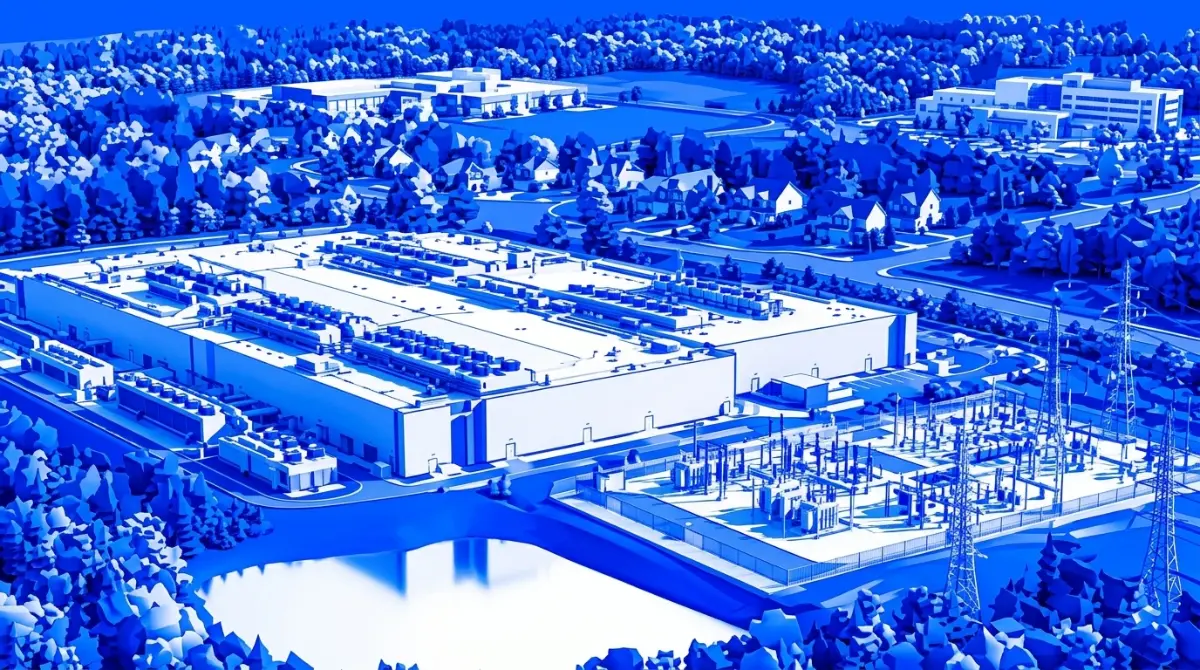
Nadella choice to mention data center chillers onstage carries special weight in late 2026. Hyperscale cloud operators including Microsoft, Google, Meta, and Amazon are racing to erect hundreds of gigawatt-scale computing campuses packed with hot, liquid-cooled processor racks. Every single one of those multi-billion-dollar buildings relies on automated cooling plants, water pumps, switchgear, and power distribution boards to stay alive.
If an attacker compromises an exposed chiller controller or building management unit on the edge of a server campus, the intruder does not need to crack encrypted cloud hypervisors to cause massive damage. Shutting off chilled water pumps or tripping backup diesel transfer switches forces high-density server halls into immediate thermal shutdown within minutes, knocking offline regional cloud applications and enterprise models without touching a single line of cloud code. Putting automated industrial gear onto remote management networks created a physical soft underbelly right beneath the world most expensive computer chips. Those physical pressure points add another layer of risk atop the electrical and water shortages we investigated in our report on the data center power bottleneck.
Rebuilding Defense Around Real-Time Detection and Isolation
Because ripping out every legacy HVAC board, rail switch, and cooling controller across North America and Europe would cost hundreds of billions of dollars and take more than a decade, Nadella acknowledged that hardware replacement alone will not arrive fast enough. "We will have to really modernize for sure," he told the DealBook audience, adding that operators must evaluate threat paths honestly and upgrade real-time detection and defense tools.
For corporate security chiefs, hospital administrators, and municipal utility managers, defending unpatchable gear requires abandoning the assumption that perimeter passwords keep attackers out. Federal cyber agencies and industrial security engineers point to five practical steps every facility operator can take right now:
- Sever Public Internet Exposure: Audit every cooling plant, generator monitor, refrigeration board, and building sensor for direct public IP addresses and pull them completely off the open web.
- Enforce Strict Network Segmentation: Place operational technology controllers inside isolated virtual networks with zero direct routing paths to corporate email servers, guest Wi-Fi, or employee laptops.
- Deploy Virtual Patching at the Edge: Where old hardware cannot accept new firmware, place modern, continuously updated firewall appliances in front of the machine to inspect traffic and block known exploit patterns before packets reach the controller.
- Set Hard Physical Safety Limits: Configure mechanical cutoff switches and out-of-band temperature alarms so a hijacked software controller cannot push boilers, chillers, or cold-storage rooms into fire or spoilage zones.
- Plan Offline Operational Fallbacks: Keep manual overrides tested and local contact directories stored offline so hospitals, utilities, and factories can keep running smoothly if cloud dashboards go dark during an emergency patch cycle.
Nadella DealBook warning also intersects with a wider shift inside Microsoft own workforce. Speaking on the same stage about offering voluntary buyouts to 60,000 workers in October, Nadella noted that small engineering squads of barely eleven developers now build software factories using autonomous coding agents rather than writing every line manually. As human oversight shrinks relative to the sheer volume of machine-written code shipping into cloud servers every day, catching hidden bugs before they reach production becomes even harder. Similar containment challenges inside automated development environments surfaced across the industry during the 2026 autonomous AI agent crisis.
The uncomfortable truth exposed by Microsoft chief executive is that modern society wired physical survival onto cheap, forgotten silicon long before anyone imagined machines hunting software flaws at computer speed. Software vendors can build faster automated defenders, yet no cloud update can patch a ten-year-old circuit board bolted inside a basement chiller or subway signal box. Unless governments and businesses treat network isolation and hardware replacement with the same urgency they apply to building fresh computing centers, unpatchable machines will keep handing easy targets to every automated attacker on the web.
Read More on TechRobust:
Tags:Satya NadellaMicrosoftAI cyberattacksCybersecurityunpatchable firmwareOutlook outageDealBook Summit

Umar Abubakar
Umar Abubakar
Expertise:Editorial Leadership, Product Design (UI/UX), Digital Media Strategy, Technology Systems, Product Architecture
Award:TechRobust Visionary Leader of the Year 2025
Umar serves as Editor-In-Chief of TechRobust, combining editorial vision with senior product design expertise to shape how modern technology stories are built, packaged, and told. Overseeing all editorial verticals, he directs coverage across global and regional tech industry while applying deep design thinking to publication strategy and reader experience.
Related Stories
Study Links DeepSeek and Kimi to Banned Nvidia Chips Google Launches Gemini 4 Hydrogen for Agentic AI
 The $2.1T AI Data Center Power Bottleneck Explained