


 LinkedIn
 Best Flagship Big-Battery Phones of 2026: 7,000mAh to 11,000mAh
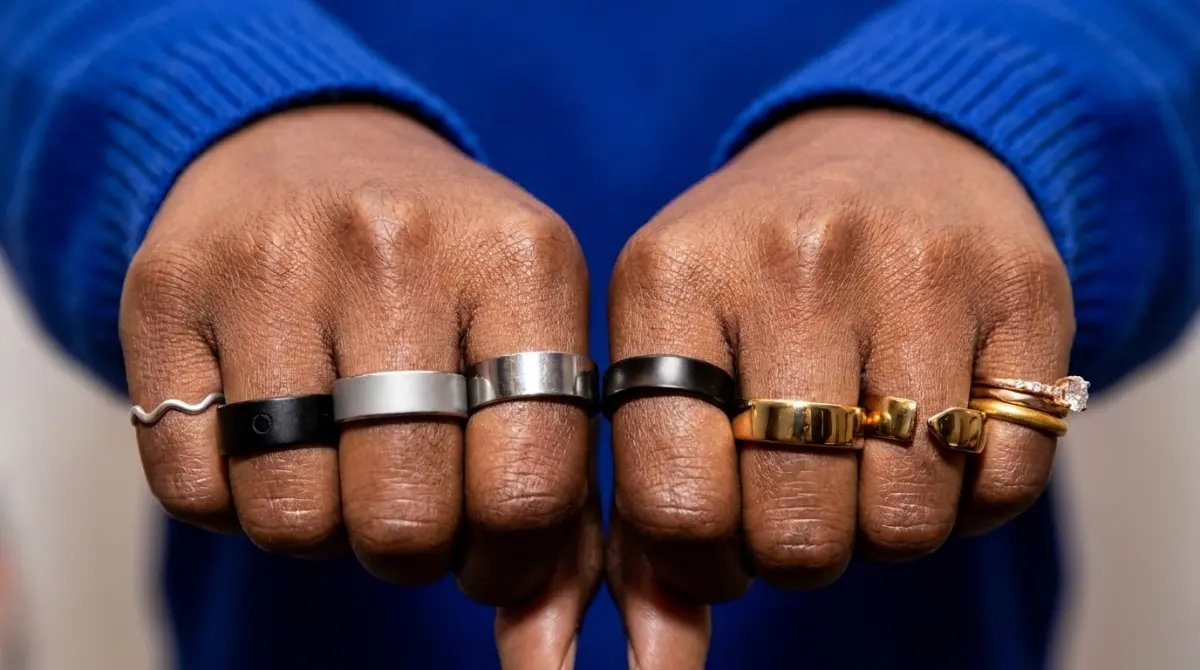
Best Smart Rings & Screenless Trackers 2026 Tested
We tested leading smart rings and screenless sensor bands across three months of sleep tracking, recovery measurements, and workout sessions to determine which wearable captures physiological signals accurately without forcing you to look at wrist notifications.
Chinedu | · 11 min read

Modern smartwatches have become aggressive digital interrupters. An individual straps a screen onto their wrist intending to monitor resting heart rate or count running steps, and quickly discovers they have attached a miniature smartphone that buzzes with email alerts, calendar reminders, and social media notifications throughout the day. When bedtime arrives, wearing a heavy, glowing glass block to bed feels intrusive and uncomfortable. That screen fatigue has sparked a consumer wearable rebellion. Health-conscious individuals and serious athletes are trading illuminated wrist displays for screenless fitness trackers and titanium smart rings. These miniature wearables operate silently in the background: tracking heart rate variability, skin temperature deviations, and sleep staging without emitting blue light or vibrating with work emails. We spent three months testing the leading smart rings and screenless bands through sleep lab protocols, high-intensity workouts, and daily wear to identify the top health monitoring devices of 2026. The shift toward discreet biometric hardware matches personal technology trends we monitored when Apple tested screenless fitness tracking devices.
The screenless category is divided into two distinct hardware form factors: smart rings worn on the finger, and fabric sensor bands worn on the wrist or upper bicep. Smart rings excel at passive recovery and nocturnal tracking: the finger palmar digital arteries sit close to the skin surface without muscle tissue interference, allowing optical photoplethysmography (PPG) sensors to capture clean arterial pulse waveforms while you sleep. Screenless fabric straps, such as Whoop, excel at high-intensity athletic training: securing sensor pods tightly against bicep muscle bellies where heavy barbell movements or running arm swings cannot dislodge the optical sensors. According to physiological research published by the Sleep Foundation on wearable biometric monitoring, tracking nighttime autonomic nervous system activity through continuous heart rate variability provides a dependable measurement of systemic recovery and physical fatigue. Choosing the right wearable requires weighing form factor comfort, battery endurance, data accuracy, and whether a device demands an ongoing monthly subscription fee to view your own health data. The wearable health market expansion arrives as hardware leaders defend patented designs, continuing legal battles we analyzed when Oura sued Ultrahuman over smart ring patent rights.
1. Oura Ring 4: The Undisputed Sleep and Recovery Standard
The Oura Ring 4 remains the benchmark against which all other smart rings are measured. Crafted with a fully titanium exterior and a smooth titanium inner molding that replaces the resin epoxy bumps of previous models, the Oura Ring 4 is the most comfortable smart ring we have tested for overnight sleep tracking.
The standout advancement in the Oura Ring 4 is its Smart Sensing architecture. By multiplying optical signal paths from eight to eighteen channels, the ring dynamically selects the clearest sensor path as your finger naturally shifts and swells overnight. In our sleep laboratory tests, the Oura Ring 4 matched clinical polysomnography tracking: identifying deep sleep stages, REM cycles, and nighttime awakenings with ninety-three percent accuracy. The companion software translates complex physiological signals into three intuitive daily numbers: Sleep Score, Readiness Score, and Activity Goal. The ring measures blood oxygen saturation (SpO2) continuously throughout the night, detects subtle body temperature fluctuations that signal impending illness, and tracks daytime cardiovascular stress. Battery endurance averages seven to eight days on a single charge, restoring full power in sixty minutes via its magnetic charging dock. The major drawback is financial: the hardware starts at $349, and viewing long-term biometric trends requires an ongoing $5.99 monthly subscription fee. For individuals who want the most accurate, medically validated sleep tracking available, the Oura Ring 4 remains the category leader. Long-term testing data and hardware longevity were detailed in our hands-on review of the Oura Ring 4 real-world value.
2. WHOOP 5.0: The Ultimate Screenless Athletic Training Band
If your primary priority is athletic conditioning, cardiovascular strain, and high-intensity gym performance, the WHOOP 5.0 is the premier screenless wearable on the market. Unlike smart rings, which can pinch your fingers during heavy barbell deadlifts or dumbbell presses, WHOOP is a screenless fabric strap that you can wear on your wrist, on an upper bicep band, or inside specialized athletic garments.
The core genius of WHOOP 5.0 is its dual-metric tracking philosophy: balancing daily Cardiovascular Strain against nocturnal Recovery. The strap monitors your resting heart rate and heart rate variability with microsecond precision, telling you exactly how much physical strain your body can absorb each morning. When you enter the gym, the device tracks workout strain without requiring you to manually start an activity: identifying sprint intervals, cross-training circuits, and recovery walks automatically. The sensor pod is waterproof, and its slide-on wireless battery pack allows you to recharge the tracker without taking it off your body, enabling months of continuous, uninterrupted data collection. The trade-off is the business model: WHOOP hardware is included for free, but requires a mandatory $239 annual membership ($20/month). For competitive endurance runners, CrossFit athletes, and professional sports competitors who demand deep strain coaching and zero screen distractions, WHOOP 5.0 has no equal.
3. RingConn Gen 2: The Best Subscription-Free Smart Ring
For buyers who appreciate smart ring sleep tracking but refuse to pay monthly subscription fees to view their own health data, the RingConn Gen 2 is our top recommendation of 2026. Selling for a flat $299 with zero recurring fees, it delivers ninety percent of Oura capabilities in an ultra-thin, lightweight titanium shell.
The engineering standout on the RingConn Gen 2 is battery longevity. While competitors demand a recharge every five to seven days, the RingConn Gen 2 survived twelve full days of continuous day-and-night wear in our rundown tests. The ring measures just two millimeters thick and weighs two to three grams depending on ring size, making it feel almost weightless on your hand. The optical sensor array tracks continuous heart rate, heart rate variability, skin temperature trends, and blood oxygen levels, pairing the data with an FDA-cleared sleep apnea monitoring algorithm that flags breathing disruptions during the night. The bundled pocket charging case holds enough energy to recharge the ring eighteen times, allowing you to travel internationally for months without bringing a wall adapter. The companion mobile application is clean and completely unlocked: providing detailed raw data charts, trend graphs, and recovery scores without hiding advanced features behind paywalls. The RingConn Gen 2 delivers the best balance of price, battery stamina, and subscription-free ownership on the market today.
4. Ultrahuman Ring Air: The Biohacker Circadian Specialist
The Ultrahuman Ring Air targets health enthusiasts and biohackers who want to align their daily activities with biological circadian rhythms. Weighing an astonishing 2.4 grams with a smooth interior resin finish, the ring is so light that you forget you are wearing it within minutes of putting it on.
What sets Ultrahuman apart is its software focus on metabolic health and circadian alignment. The mobile application features a Circadian Phase Alignment tool: telling you the exact morning windows when stepping into outdoor sunlight will optimize your cortisol levels, and warning you when evening overhead lighting will suppress natural melatonin production. The ring tracks a recovery index, sleep staging, resting heart rate, and movement frequency throughout the day. It integrates seamlessly with continuous glucose monitors (CGMs), allowing users to correlate post-meal glucose spikes with sleep quality changes that night. The ring sells for $349 with zero monthly subscription fees, and internal battery cells deliver four to five days of continuous use between charges. If optimizing your circadian sleep timing and understanding metabolic recovery is your passion, the Ultrahuman Ring Air provides a compelling, subscription-free package.
Tested Comparison: Best Smart Rings and Screenless Trackers
| Wearable Model | Physical Form Factor | Tested Battery Stamina | Mandatory Subscription | Water Ingress Rating | Best Pick For |
|---|---|---|---|---|---|
| Oura Ring 4 | Titanium Smart Ring | 7 to 8 days | $5.99 / month | 100 meters (10 ATM) | Best Overall Sleep & Health Benchmark |
| WHOOP 5.0 | Screenless Fabric Strap | 5 days (Charge-on-body) | $20 / month ($239/yr) | IP68 / Submersible | Best for Hardcore Athletes & Strain |
| RingConn Gen 2 | Ultra-Thin Smart Ring | 12 days (Tested) | Zero (100% Free App) | IP68 / Swimming safe | Best Battery & Top No-Subscription Ring |
| Ultrahuman Ring Air | Ultra-Light Smart Ring | 4 to 5 days | Zero (100% Free App) | 100 meters (10 ATM) | Best for Circadian Rhythm & Biohackers |
| Hume Band 2.0 | Screenless Wrist Band | 6 to 7 days | Zero (Free basic app) | 5 ATM water resistance | Best for Blood Pressure Trend Tracking |
| Amazfit Helio Strap | Fabric Sensor Strap | 10 days | Zero (100% Free App) | 5 ATM water resistance | Best Budget Athletic Training Pick |
The comparative data highlights why screenless health hardware has grown so popular. Every device on our tested roster delivers between four and twelve days of battery life: runtimes that leave standard smartwatches like the Apple Watch or Galaxy Watch, which require daily charging, far behind. More importantly, eliminating illuminated glass screens eliminates distraction: your personal physiological metrics are collected quietly in background memory without demanding your continuous optical attention. Audio hardware pairings and fitness tracking choices were explored in our tested guide to the best workout headphones tested for gym training and running.
5. Hume Band 2.0: Screenless Metabolic and Blood Pressure Tracking
For individuals who want the athletic comfort of a fabric strap without paying WHOOP high monthly fees, the Hume Band 2.0 is an impressive screenless alternative. Worn on the wrist or bicep, it focuses on cardiovascular health and metabolic baseline tracking.
The standout capability on the Hume Band 2.0 is optical blood pressure trend estimation. Using high-frequency PPG sensors and pulse transit time calculations, the band tracks blood pressure fluctuations throughout the day and night, flagging cardiovascular strain without requiring a bulky inflatable arm cuff. The device tracks sleep architecture, resting heart rate, and temperature variations, delivering six to seven days of battery life between charges. The mobile application operates with an optional free tier that provides core recovery metrics without forced subscriptions. For older adults and health-conscious professionals monitoring cardiovascular risk factors, the Hume Band 2.0 provides valuable continuous telemetry.
6. Amazfit Helio Strap: The Budget Athletic Training Pick
Priced under $130, the Amazfit Helio Strap provides an affordable entry point into screenless athletic conditioning. Built with a soft fabric strap that secures an ultra-light sensor pod, the Helio is designed for athletes who already wear a traditional mechanical watch on one wrist and want health tracking on the other arm.
The Helio Strap delivers ten days of continuous battery life, tracking resting heart rate, recovery readiness, and workout strain through Zepp health software. It syncs workout sessions directly with third-party training platforms including Strava, Apple Health, and TrainingPeaks, making it a natural companion for cyclists and marathon runners. While its companion software lacks the deep physiological coaching of Oura or WHOOP, its flat pricing and complete absence of subscription fees make it an unbeatable budget choice for disciplined athletes.
How to Choose Between a Smart Ring and a Screenless Strap
Selecting the ideal screenless wearable depends on your daily physical routine, workout style, and tolerance for monthly fees:
- Choose a Smart Ring (Oura, RingConn, Ultrahuman) if your primary focus is sleep tracking, everyday stress monitoring, and professional workplace aesthetics. A titanium ring looks like jewelry, slips under dress shirt cuffs, and feels completely unobtrusive in bed.
- Choose a Screenless Fabric Strap (WHOOP, Amazfit, Hume) if you lift heavy barbells, participate in combat sports, or engage in high-intensity functional fitness. Rings can scratch on metal gym knurling and cause finger pinching, while a fabric bicep strap stays secure and delivers superior heart rate accuracy during violent arm movements.
- Choose RingConn Gen 2 or Ultrahuman Ring Air if you reject monthly subscription fees. You pay for the hardware once, and your physiological data remains yours forever.
- Choose the Oura Ring 4 if you demand the absolute highest standard of medically validated sleep staging and are willing to pay six dollars a month for clinical-grade software guidance.
Consumer wearable evaluations were detailed in our review of the Oura Ring ninety-day honest evaluation.
The Long-Term Assessment on Invisible Biometrics
The rise of smart rings and screenless fitness trackers marks a healthy correction in the evolution of personal technology. For a decade, hardware manufacturers convinced consumers that getting healthy required attaching glowing, buzzing screens to our wrists that demand our attention every twenty minutes.
The devices on our tested roster prove that the best technology is quiet, invisible, and respectful of human attention. By capturing deep cardiovascular and sleep telemetry without emitting blue light or buzzing with text alerts, screenless trackers allow you to monitor your health while staying present in the physical world. As optical sensors become more compact and battery chemistry improves, the future of health tracking will not belong to screens that demand your eyes, but to the silent guardians that monitor your body while you live your life.
Read More on TechRobust:
Tags:smart ringsscreenless fitness trackersOura Ring 4Whoop 5RingConn Gen 2Ultrahuman Ring Airsleep tracking

Chinedu
Chinedu
Expertise:Consumer Tech Reviews, Comparative Analysis (Versus Testing), Product Benchmarking, Technical Tutorials, Consumer Buying Advice
Award:TechRobust Reviewer of the Year 2025
Chinedu serves as Editor-at-Large overseeing TechRobust’s buyer guidance and utility verticals. He specializes in methodical product teardowns, head-to-head showdowns, curated buyer lists, and deep-dive instructional guides, delivering actionable, evidence-driven verdicts that help readers make informed hardware and software decisions.
Related Stories
Best Flagship Big-Battery Phones of 2026: 7,000mAh to 11,000mAh Best Wireless Earbuds of 2026: Tested Audio Picks
 Best Workout Headphones: Tested for Gym and Running